
CBD and Drug Interactions: What to Know
CBD drug interactions can affect common medications. Learn the risks, red flags, and safe questions to ask before mixing CBD with medicine.

CBD drug interactions deserve more attention than they usually get. CBD is often discussed as a gentle wellness product, and for many adults it can fit comfortably into a responsible routine. But CBD is still biologically active. It can affect liver enzymes, change how some medicines are processed, and increase the chance of side effects when combined with certain prescriptions, over the counter products, alcohol, or sedating supplements.
The goal is not to scare people away from CBD. It is to make CBD use smarter. The U.S. Food and Drug Administration has repeatedly warned consumers that cannabidiol can interact with medicines, and clinical experience with prescription CBD has confirmed that the issue is real. If you take regular medication, especially for blood clotting, seizures, sleep, mood, heart health, immune suppression, or pain, a quick pharmacist check before starting CBD is not overkill. It is basic self protection.
Why CBD Drug Interactions Happen
Most important CBD interactions start in the liver and gut. Many medicines are broken down by a family of enzymes called cytochrome P450, often shortened to CYP450. A useful review in Cannabis and Cannabinoid Research explains that cannabinoids, including CBD, may inhibit several CYP enzymes that help process common drugs. When those enzymes slow down, a medicine can stay in the bloodstream longer or reach higher levels than expected.
This is why CBD is often compared to grapefruit. Grapefruit can interfere with CYP3A4, one of the major enzymes involved in drug metabolism. The NHS grapefruit guidance uses simple language: grapefruit can increase the amount of certain medicines in your blood. CBD is not grapefruit, but the warning logic is similar. If your medication label says to avoid grapefruit, that is a strong signal to ask about CBD too.
✓ Key Safety Takeaways
- ✓ CBD can slow the breakdown of certain medicines.
- ✓ Higher CBD doses usually create higher interaction risk.
- ✓ Grapefruit warnings are a practical red flag.
- ✓ Pharmacists are often the fastest source for interaction checks.
Medications That Need Extra Caution
The highest risk medicines are usually those with a narrow therapeutic window, meaning a small change in blood level can matter. Blood thinners are the classic example. Warfarin needs careful monitoring, and published case literature has described INR changes when CBD was added. The MedlinePlus cannabidiol monograph lists several interaction concerns and is a good plain English starting point for consumers.
Anti seizure medications also deserve caution. Prescription cannabidiol is approved in specific epilepsy conditions, but the FDA Epidiolex label includes warnings about liver enzymes, sleepiness, and interactions with drugs such as clobazam and valproate. That does not mean every CBD oil works like prescription Epidiolex. It does mean CBD has proven pharmacology, and the dose, product quality, and other medicines all matter.
Sedatives are another group to treat carefully. Benzodiazepines, sleep medicines, some antihistamines, muscle relaxants, opioids, and alcohol can all add to drowsiness. The CDC cannabis health effects overview notes that cannabis products can affect coordination, judgment, and mental state. Combining calming substances can turn mild relaxation into unsafe sedation, especially if driving or operating equipment is involved.
Dose, Product Type, and Timing Matter
Not every CBD product creates the same risk. A low strength topical used on a small area is different from a high dose oral tincture taken every night. Oral CBD is more likely to enter the bloodstream in meaningful amounts, especially oils, capsules, gummies, and drinks. Inhaled products work faster but still introduce cannabinoids systemically. Topicals may have lower systemic absorption, but strong transdermal formulations can be different.
Dose is the big lever. The Harvard Health review on CBD and medications recommends caution because CBD can change levels of other medicines, especially at higher doses. A person taking 10 mg occasionally is not in the same category as someone taking hundreds of milligrams daily. Still, sensitive individuals and high risk medicines make blanket rules dangerous.
Timing can help with some supplements, but it does not solve enzyme inhibition by itself. Taking CBD four hours away from a medicine may reduce stomach level overlap, but if CBD inhibits an enzyme for longer than that, the interaction may still occur. This is why a clinician or pharmacist should guide timing, dose changes, and monitoring plans rather than relying on internet spacing rules.
💡 Pro Tip
Before buying CBD, make one medication list: prescriptions, over the counter painkillers, sleep aids, antihistamines, supplements, and alcohol use. Show that full list to a pharmacist.
A Practical CBD Safety Checklist
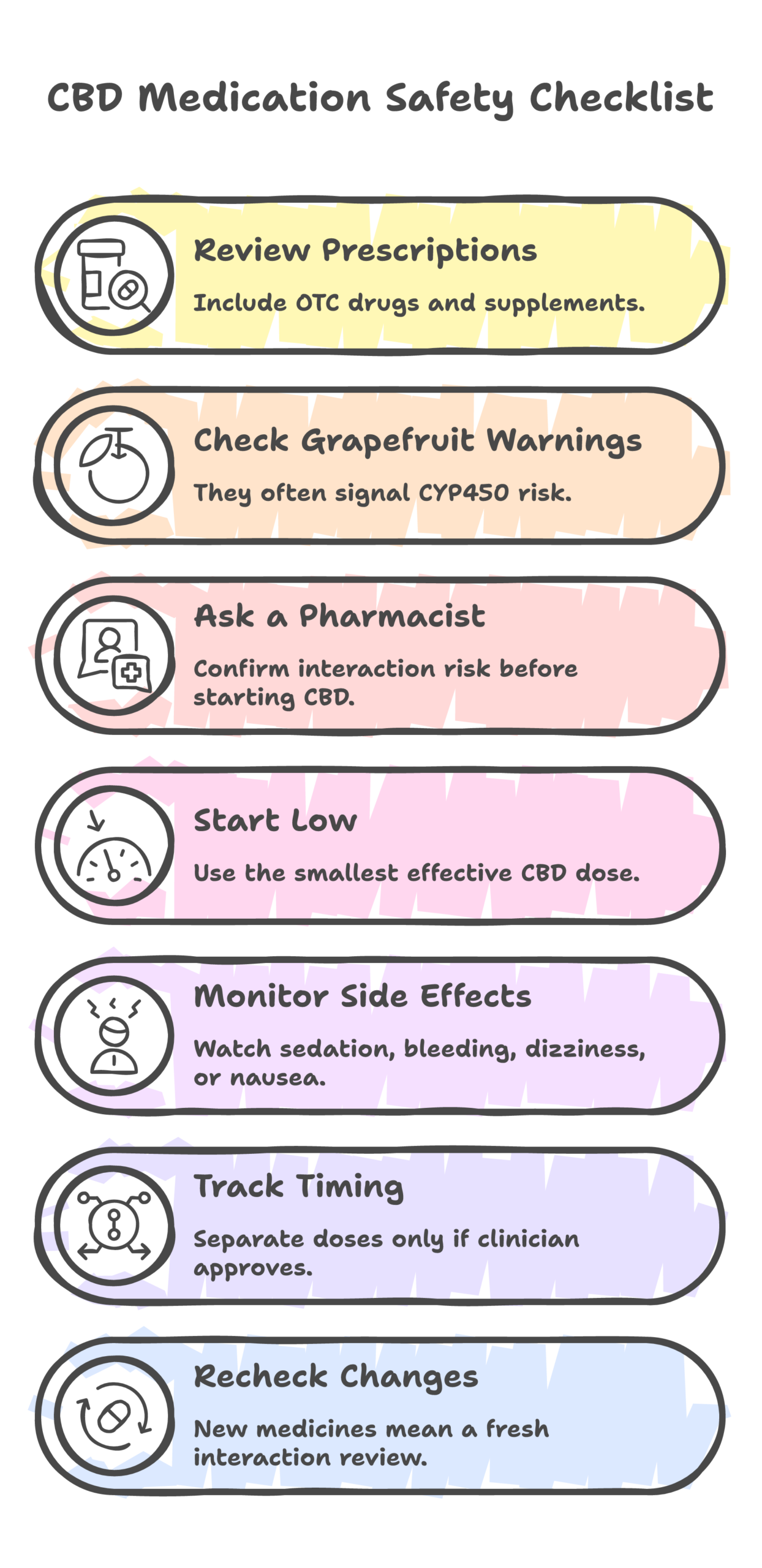
Use this checklist before mixing CBD with medication. First, look for grapefruit warnings on labels or patient leaflets. Second, identify medicines where blood levels matter, such as anticoagulants, anti seizure drugs, transplant medicines, certain heart medicines, and some psychiatric medications. Third, ask whether your CBD product is full spectrum, broad spectrum, or isolate, because full spectrum products may contain small amounts of THC and other cannabinoids.
Fourth, start with the lowest reasonable CBD dose only after professional guidance. Fifth, monitor for changes: unusual bruising, bleeding, dizziness, heavy sedation, confusion, nausea, diarrhea, appetite change, mood shifts, or unexpected medicine side effects. The NCCIH cannabis and cannabinoids guide is clear that research is still developing, so careful tracking matters.
Finally, choose products with transparent testing. A certificate of analysis does not prove a product is safe for your medication plan, but it helps confirm cannabinoid strength and screen for contaminants. If you need help understanding reports, our COA guide explains what to check before buying.
How This Applies to Common CBD Products
CBD oils are popular because dosing is flexible. If you are comparing strengths, our CBD dosage calculator can help you understand serving sizes, but it cannot replace medical advice for interactions. Products such as CBD Oil 10 10ml, CBD Oil 20 Full Spectrum 10ml, and Anti Stress 20 Broad Spectrum CBD Oil should be approached with the same responsible question: does this fit my medicine list?
CBD vapes and flower appeal to adults who prefer fast onset. They are not automatically interaction free. If a product enters the bloodstream, it can still contribute to CBD drug interactions, sedation, or additive effects. Our cannabis consumption methods guide compares onset and duration so you can understand why oils, edibles, vapes, and flower feel different in the body.
📝 Important Note
Do not stop or change prescribed medication because of CBD content online. If you want to add CBD, ask the prescriber or pharmacist how to do it safely.
When to Speak With a Professional First
Speak with a professional before CBD if you take anticoagulants, anti seizure medicines, benzodiazepines, antidepressants, antipsychotics, opioids, statins, calcium channel blockers, transplant medicines, chemotherapy drugs, HIV antivirals, or any medicine with a grapefruit warning. You should also ask first if you are pregnant, trying to conceive, breastfeeding, have liver disease, or regularly drink alcohol.
The World Health Organization has recognized that pure CBD generally shows a favorable safety profile, but favorable does not mean interaction free. A 2024 review in PMC on cannabinoid drug interactions reinforces the same practical point: interactions depend on the cannabinoid, the dose, the other drug, and the patient.
For many adults, the answer will be simple: use a modest dose, choose a tested product, avoid mixing with alcohol or sedatives, and monitor how you feel. For others, especially people on high risk medicines, the answer may involve lab monitoring or avoiding CBD entirely. That is not a failure of CBD. It is the same responsible thinking that applies to any active wellness product.
✓ Smart Questions to Ask
- ✓ Does any medicine on my list use CYP3A4, CYP2C9, or CYP2C19?
- ✓ Does my medication have a grapefruit warning?
- ✓ Should I monitor blood levels, INR, liver enzymes, or side effects?
- ✓ What dose range is reasonable for my situation?
Bottom Line on CBD Drug Interactions
CBD can be a useful wellness tool, but it is not invisible to the body. The safest approach is simple: treat CBD like an active supplement, not like a harmless flavor. Check your medicine list, respect grapefruit warnings, choose tested products, start low only when appropriate, and involve a pharmacist when regular prescriptions are part of your life.
If you are new to cannabinoids, read our THC vs CBD guide and our cannabis tinctures guide before choosing a product format. Better information leads to better decisions, and with CBD, the best decision is the one that fits both your wellness goals and your medication reality.
⚠️ Disclaimer
This article is for informational purposes only and does not constitute medical advice. The information provided about medical cannabis and CBD safety is current as of May 2026 but may change. Always consult with qualified healthcare professionals for medical advice and treatment options. Decisions about CBD and medication use should be made in consultation with authorized healthcare providers who understand your specific medical history and conditions. For our full disclaimer, visit cannastoreams.gr/disclaimer.
Frequently Asked Questions
Can CBD interact with prescription medication?
Yes. CBD may affect enzymes that process some prescription medicines, which can raise or change drug levels. Ask a pharmacist if you take regular medication.
Which medicines are most concerning with CBD?
Blood thinners, anti seizure medicines, sedatives, opioids, certain heart medicines, transplant drugs, and medicines with grapefruit warnings deserve extra caution.
Is low dose CBD always safe with medication?
Not always. Lower doses may reduce risk, but sensitive people and high risk medicines still need professional guidance.
Does taking CBD at a different time prevent interactions?
Sometimes timing helps, but it does not reliably prevent enzyme based interactions. Ask a clinician before relying on dose spacing.
Should I stop my medication if I want to use CBD?
No. Never stop or change prescribed medication without medical supervision. Discuss CBD first and follow professional advice.
