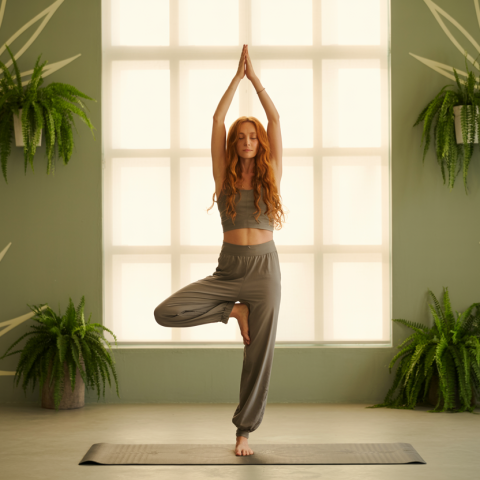
Why cannabis and yoga keep showing up together
Cannabis and yoga have a shared history that goes back thousands of years. In ancient India, sadhus (holy men) used cannabis as part of spiritual rituals, and the plant appears in the Atharva Veda as one of five sacred plants. Fast forward to today, and a growing number of yoga practitioners in the US and Europe are combining the two for a more focused, relaxed session on the mat.
This isn’t about getting high and doing downward dog. The people who swear by cannabis-enhanced yoga say it helps them tune into physical sensations they’d normally rush past, hold poses with more patience, and actually enjoy the meditative parts instead of spending them thinking about lunch. There’s some science backing this up, too.
Both cannabis and yoga interact with the endocannabinoid system (ECS), a network of receptors throughout your body that regulates mood, pain, appetite, and stress response. Yoga stimulates natural endocannabinoid production, especially a compound called anandamide, sometimes called the “bliss molecule.” Cannabis compounds like THC and CBD bind to the same receptors. When you combine both practices, you’re essentially giving that system a double nudge toward relaxation and body awareness.
📺 Video guide
What the research actually says
Let’s be honest: there aren’t large-scale clinical trials specifically on cannabis and yoga combined. Most of the evidence is either anecdotal or comes from adjacent research on cannabis and exercise more broadly.
A 2019 study from the University of Colorado Boulder found that people who used cannabis before or after exercise reported greater enjoyment, better recovery, and more motivation to work out again. The researchers noted that cannabis users in the study actually exercised more minutes per week than non-users, which contradicts the old “lazy stoner” stereotype.
A separate review published in Frontiers in Neurology found that CBD has anti-inflammatory and analgesic properties that could help with post-exercise recovery. For yoga specifically, that might mean less soreness after an intense vinyasa flow or a deep yin session.
Research from the World Health Organization’s 2018 CBD report confirmed that CBD is generally well-tolerated with a good safety profile, which is relevant if you’re considering using it before physical activity.
💡 Pro tip
If you’re new to combining cannabis and yoga, start with a CBD-dominant product. You get the relaxation and anti-inflammatory benefits without the psychoactive effects that might throw off your balance in tricky poses.
How cannabis changes the yoga experience
People who practice cannabis-enhanced yoga regularly describe a few consistent shifts in their experience:
Body awareness gets louder. Small sensations you’d normally filter out become more noticeable. You might feel a stretch in your hip flexor that you’ve been ignoring for months, or notice that you carry tension in your jaw during balance poses. This heightened interoception (your brain’s ability to sense internal body states) can make your practice more informative.
The mental chatter slows down. One of the biggest barriers to meditation during yoga is the constant narration in your head. Cannabis, especially strains high in myrcene or linalool, tends to quiet that inner monologue. You spend less energy fighting thoughts and more time in the actual pose.
Time feels different. Holding a pigeon pose for two minutes can feel like an eternity when your mind is racing. Cannabis tends to alter time perception in a way that makes longer holds feel more manageable. A 90-minute yin class can feel like it passes in 30 minutes.
Breathwork clicks more naturally. Pranayama (breathing exercises) is one of the hardest parts of yoga for many students. Cannabis can make it easier to drop into rhythmic, diaphragmatic breathing because you’re less distracted by external stimuli. Some practitioners report that breath retention exercises feel more accessible after using cannabis.
Best cannabis strains for yoga
Not every strain is a good match for yoga. High-THC sativas that give you racing thoughts are the opposite of what you want on the mat. Here are some strains that experienced practitioners tend to recommend:
Harlequin is a CBD-dominant strain (roughly 5:2 CBD to THC ratio) that keeps you clear-headed while taking the edge off tension. It’s one of the most popular choices for yoga because it won’t compromise your balance or spatial awareness.
Blue Dream is a balanced hybrid that delivers gentle euphoria with a relaxed body feel. The THC content is moderate (around 17-21%), so it won’t floor you, but it’s noticeable enough to shift your awareness inward. Good for flow-style yoga.
Granddaddy Purple is an indica-leaning strain that works well for slower practices like yin or restorative yoga. It relaxes muscles and reduces physical tension, making deep stretches feel more accessible. Not ideal for power yoga since it can make you drowsy.
ACDC has a CBD-to-THC ratio of roughly 20:1, making it almost entirely non-psychoactive. If you want the anti-inflammatory and calming benefits of cannabis without any head change at all, this is your strain. According to Leafly’s strain database, it’s commonly recommended for daytime use and gentle physical activities.
✓ Best strain types by yoga style
- ✓ Vinyasa/Flow: Balanced hybrids (Blue Dream, Cannatonic)
- ✓ Yin/Restorative: Indica-leaning (Granddaddy Purple, Northern Lights)
- ✓ Hot yoga: CBD-dominant only (Harlequin, ACDC) since heat amplifies THC
- ✓ Meditation-focused: High CBD, low THC (ACDC, Charlotte’s Web)
- ✓ Power/Ashtanga: Consider skipping cannabis or using CBD-only products
Choosing the right consumption method
How you consume cannabis before yoga matters as much as what strain you pick. Each method has different onset times and duration, which affects how you time your session.
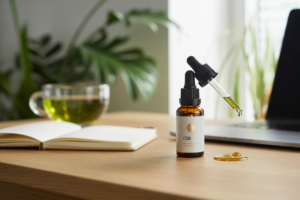
Tinctures are the most popular choice among yoga practitioners. Drop them under your tongue about 15-30 minutes before class. The effects are predictable, the dosing is precise (usually measured in milligrams), and they don’t irritate your lungs right before you’re about to do 60 minutes of deep breathing. A cannabis tinctures guide can help you get started with proper dosing.
Edibles can work, but timing is tricky. They take 45-90 minutes to kick in and the effects last 4-6 hours. If your timing is off, you might start feeling it halfway through savasana when the class is almost over. If you go the edibles route, use low-dose options (2.5-5mg THC) and take them about an hour before practice.
Vaporizing gives you the fastest onset (within minutes) and lets you fine-tune the dose by taking a puff and waiting. The downside is that vapor can still irritate airways, which isn’t ideal when you’re about to focus on breathing exercises. Learn more about the differences between vape options to choose wisely.
Topicals are an underrated option. Cannabis-infused balms applied to tight muscles before class can reduce localized pain and stiffness without any psychoactive effect. They’re a good entry point if you want cannabis benefits during yoga but aren’t comfortable with getting high. Our cannabis topicals recovery guide covers application techniques for athletes.
Dosing guide for cannabis yoga
The biggest mistake people make with cannabis and yoga is using too much. You want to be in a state where your senses are heightened and your mind is calmer, not where the room is spinning and you can’t remember which foot is your left one.
For THC products, the recommended range for yoga is 2.5-5mg if you have some tolerance, and 1-2.5mg if you’re a beginner. This is what’s often called a “microdose.” At this level, you’ll feel a subtle mood lift and physical relaxation without impaired coordination. If you’re curious about this approach, we’ve written about microdosing THC in more detail.
For CBD products, you can be more generous since there’s no psychoactive effect. Most practitioners use 15-25mg of CBD before a session. Some prefer a 1:1 ratio product (equal parts CBD and THC) for a balanced experience. Our CBD dosage calculator can help you find your sweet spot based on body weight and experience.
The FDA’s consumer guidance on cannabis products reminds consumers that individual responses vary widely, so start low and go slow.
📝 Important note
Cannabis affects balance and proprioception. Avoid inversions (headstands, shoulderstands) and complex arm balances until you know exactly how a specific dose affects you. Stick with grounded poses for your first few cannabis yoga sessions.
Setting up your cannabis yoga practice at home
Home practice is where cannabis and yoga work best together, for obvious reasons. You’re in a safe space, you can control the environment, and there’s no pressure to keep up with a class.
Create the right environment. Dim the lights or use candles. Put on ambient music or a nature soundscape. Turn your phone off (not just on silent). The sensory heightening from cannabis means you’ll notice every notification buzz, and it’ll pull you right out of your practice.
Hydrate before you start. Cannabis causes dry mouth, and yoga makes you sweat. Drink a full glass of water before your session and keep a bottle nearby. This is especially true for hot yoga, where dehydration risks multiply according to the American College of Sports Medicine hydration guidelines.
Choose a guided session. YouTube has excellent free yoga classes. Look for ones labeled “gentle,” “slow flow,” or “restorative.” The combination of cannabis and an instructor guiding your attention can produce a deeply meditative experience that’s hard to replicate otherwise.
Plan for a longer savasana. The final resting pose at the end of yoga takes on new dimensions with cannabis. Instead of the usual 3-5 minutes, give yourself 10-15. This is where a lot of the mental benefits happen: that floating, deeply relaxed state where your body processes the physical work you just did.
Cannabis yoga classes are growing worldwide
The “ganja yoga” movement started gaining traction around 2017 when Dee Dussault published her book Ganja Yoga and began teaching classes in San Francisco and Toronto. Since then, cannabis yoga studios have opened in Colorado, Oregon, California, and several Canadian cities where recreational cannabis is legal.
These classes typically follow a structure: participants consume cannabis (usually provided or BYO depending on local law) in a social setting, then move through a gentle 60-75 minute yoga sequence, and finish with a guided meditation or sound bath. Some studios offer CBD-only sessions for people who want the wellness benefits without THC.
In Europe, the scene is smaller but growing. Barcelona hosted cannabis yoga sessions at the 2023 Yoga Conference, and several dispensaries in the Netherlands offer occasional yoga events. In Greece, where CBD products are legal and cannabis wellness culture is evolving, interest in combining the two practices is picking up among younger adults.
A Gallup poll has consistently shown increasing cannabis acceptance, and the yoga industry has tracked a similar normalization curve over the past decade. The overlap was probably inevitable.
Safety considerations you shouldn’t skip
Cannabis and yoga are both generally safe on their own, but combining them introduces a few risks worth knowing about.
Blood pressure drops. Both cannabis and certain yoga poses (especially inversions and forward folds) can lower blood pressure. Combining them might cause dizziness or lightheadedness when transitioning between poses. Move slowly, especially when going from a lying to standing position. The American Heart Association notes that sudden blood pressure changes can cause fainting in susceptible individuals.
Impaired spatial awareness. THC affects your cerebellum, which controls coordination and balance. Tree pose and warrior III are already challenging sober. Under the influence, they can become genuinely unsafe if you fall. Use a wall for balance support, and skip headstands entirely.
Overextension risk. Cannabis reduces pain perception. That can be a benefit for tight muscles, but it also means you might push into a stretch further than your body is ready for, risking injury. The Mayo Clinic’s stretching guidelines emphasize that you should never stretch to the point of pain, and cannabis makes it harder to feel where that line is.
Anxiety in some users. High-THC cannabis can trigger anxiety or paranoia, especially in people who are prone to it. If you’re in a group class and start feeling anxious, the social pressure to stay on the mat can make things worse. Know your limits, and don’t hesitate to step out and sit quietly if needed. NIMH’s anxiety resources provide more context on cannabis and anxiety interactions.
⚠️ Warning
If you take blood pressure medication, blood thinners, or anti-anxiety medication, consult your doctor before combining cannabis with any physical activity. Cannabis can interact with several prescription drugs, altering their effectiveness.
A simple cannabis yoga routine for beginners
Here’s a 45-minute routine you can try at home. Consume your chosen cannabis product 15-30 minutes before starting (adjust timing for edibles).
Minutes 1-5: Seated breathing. Sit cross-legged on your mat. Close your eyes. Breathe in through your nose for 4 counts, hold for 4, exhale for 6. Repeat 10 times. The extended exhale activates your parasympathetic nervous system and works with the cannabis to settle you into your body.
Minutes 5-15: Gentle warm-up. Cat-cow stretches (8-10 rounds, moving with your breath). Thread the needle (30 seconds each side). Child’s pose with wide knees (hold for 1 minute). Low cobra (3 rounds, 5 breaths each).
Minutes 15-25: Standing flow. Mountain pose to forward fold (5 rounds). Warrior II (hold 1 minute each side). Triangle pose (hold 30 seconds each side). Tree pose near a wall for balance support (hold 30 seconds each side).
Minutes 25-35: Floor work. Pigeon pose (2 minutes each side; this is where cannabis really helps with hip opening). Supine twist (1 minute each side). Happy baby (hold 1 minute). Legs up the wall (hold 3 minutes).
Minutes 35-45: Savasana and meditation. Lie flat on your back with a blanket over you. Let your body sink into the floor. Focus on the weight of your body against the mat. Stay here for 10 full minutes. This extended savasana is often described as the best part of cannabis yoga: a state of deep physical relaxation with a quiet, present mind.
Terpenes that complement yoga
If you understand terpenes, you can pick cannabis products that are specifically suited for yoga. Terpenes are aromatic compounds in cannabis that influence the plant’s effects beyond just THC and CBD content.
Myrcene is the most common terpene in cannabis and has sedative, muscle-relaxant properties. It’s found in high concentrations in indica strains and is ideal for yin or restorative yoga where deep muscle relaxation is the goal.
Linalool is also found in lavender and has calming, anti-anxiety effects. Strains high in linalool pair well with meditation-focused yoga sessions. Some practitioners even diffuse lavender essential oil alongside cannabis use for a combined effect, a technique supported by research from the National Center for Complementary and Integrative Health.
Limonene has mood-elevating properties and is found in citrusy strains. If you’re doing a more energetic morning flow, a limonene-rich sativa can give you a bright, uplifting energy that’s different from the caffeine jitter.
Beta-caryophyllene is unique because it binds directly to CB2 receptors, giving it anti-inflammatory properties without psychoactive effects. Look for strains high in this terpene if you’re using cannabis primarily for physical recovery after challenging yoga sessions.
Frequently asked questions
Is it safe to do yoga while high?
At low doses (microdose to low dose), yoga with cannabis is generally safe for healthy adults. The main risks are impaired balance and overextension of muscles due to reduced pain perception. Stick with grounded poses, avoid inversions, and use a wall for balance support until you know how cannabis affects your coordination.
What type of yoga works best with cannabis?
Slow-paced styles like yin, restorative, and gentle hatha yoga pair best with cannabis. These styles involve long-held poses, deep breathing, and meditative focus, all of which benefit from the heightened body awareness and mental calm that cannabis can provide. Fast-paced power yoga or Bikram in a heated room aren’t recommended with THC.
Should I use CBD or THC for yoga?
Beginners should start with CBD-only products. CBD provides anti-inflammatory benefits, muscle relaxation, and anxiety reduction without altering perception or balance. Once you’re comfortable, you can try a low-dose THC product (2.5-5mg) or a balanced CBD:THC ratio product for a deeper experience.
How long before yoga should I take cannabis?
Timing depends on your consumption method. Tinctures: 15-30 minutes before. Vaporizing: 5-10 minutes before. Edibles: 60-90 minutes before. Topicals: 15-20 minutes before applying to target areas. Always start your session with gentle movements while you gauge the effects.
Can cannabis help with yoga flexibility?
Cannabis doesn’t actually increase flexibility in your muscles or joints. What it does is reduce pain perception and muscle tension, which can make it easier to relax into deeper stretches. This can feel like improved flexibility, but the physical range of motion comes from consistent practice over time, not from cannabis use.