
Cannabis for IBS: Digestive Relief Guide
Cannabis for IBS: evidence-based guide to CBD, THC, gut-brain balance, digestive relief, risks, dosing, and safer product choices.

For adults dealing with unpredictable bloating, cramping, urgency, or gut discomfort, cannabis for IBS is a topic that deserves a calm, evidence-based conversation. Irritable bowel syndrome is not simply “a sensitive stomach”; it is a gut-brain condition where stress signals, pain sensitivity, motility, sleep, diet, and nervous system balance can all interact. Cannabis and CBD products are being discussed because the body’s endocannabinoid system is active in the gut, and researchers are studying how cannabinoids may influence pain, motility, nausea, appetite, and stress response.
📺 Video Guide
Cannabis for IBS: What the Evidence Actually Says
IBS is typically defined by recurring abdominal pain connected with changes in bowel habits, without the visible inflammation or tissue damage seen in inflammatory bowel disease. The NIDDK overview of irritable bowel syndrome explains that symptoms can include pain, bloating, diarrhea, constipation, or a mixed pattern. That variation matters because a product that helps one person’s cramping or diarrhea may be the wrong fit for someone whose main problem is constipation.
The scientific interest comes from the endocannabinoid system. A PubMed-indexed review on the endocannabinoid system in irritable bowel syndrome describes how cannabinoid signaling may be involved in visceral pain, intestinal movement, immune signaling, and gut-brain communication. Another review on targeting the endocannabinoid system for IBS pain points to visceral hypersensitivity as one reason cannabinoids remain an area of active study.
That does not mean cannabis is a proven IBS cure. It means the mechanism is plausible and the research is still catching up. Existing studies are mixed, often small, and sometimes focus on synthetic THC, hospital data, or IBD rather than IBS alone. The smart approach is not hype. It is symptom matching, cautious dosing, quality products, and medical guidance when symptoms are persistent or severe.
✓ Key Takeaways
- ✓ Cannabis may support symptom management, not cure IBS.
- ✓ THC may slow gut movement, which can help IBS-D but worsen constipation.
- ✓ CBD may be better tolerated, but human IBS data are still limited.
- ✓ Tracking symptoms is essential because IBS responses are highly individual.
How the Gut-Brain Axis Connects Stress, Pain, and Digestion
Many people notice IBS flares during stress, poor sleep, travel, or emotional overload. That pattern is not imaginary. The Mayo Clinic IBS guide highlights how gut contractions, nervous system changes, severe infection, early life stress, and microbial shifts can contribute. The digestive tract is heavily wired to the brain, which is why anxiety can trigger urgency and gut discomfort can trigger anxiety in return.
Cannabinoids may matter here because CB1 receptors are found in the nervous system and gut pathways, while CB2 receptors are associated more with immune activity. THC binds more directly to CB1 receptors, creating psychoactive effects but also influencing pain perception and motility. CBD is more indirect and appears to interact with multiple receptor systems, which may explain why some users describe steadier relaxation without intoxication. For a broader primer on cannabinoid basics, our THC vs CBD guide is a useful companion read.
This is also where lifestyle matters. Cannabis may reduce the perceived intensity of symptoms for some adults, but it works best when paired with fundamentals: enough sleep, steady hydration, a food trigger plan, gentle movement, and stress regulation. If a product makes someone anxious, sedated, or foggy, that is not wellness. It is a signal to stop, reduce dose, or choose a different approach.
Potential Benefits for IBS-D, IBS-C, and Mixed IBS
IBS-D, where diarrhea and urgency dominate, is the subtype where THC-related motility effects are most often discussed. Research on dronabinol, a synthetic THC medicine, found measurable effects on colonic motility in IBS patients. A trial indexed on PubMed reported that dronabinol affected colonic motility and sensation, especially in diarrhea-predominant patterns. This does not prove that every THC product helps IBS-D, but it explains why some adults report reduced urgency or cramping.
IBS-C is different. If constipation is already a problem, THC’s tendency to slow movement may backfire. For constipation-predominant IBS, non-intoxicating CBD products may feel more appropriate to some consumers, but human IBS evidence for CBD alone remains thin. The FDA consumer update on cannabis and CBD is clear that CBD products are not approved as IBS treatments and can carry safety concerns, especially around drug interactions and product quality.
Mixed IBS requires the most patience because symptoms can swing. A product that feels helpful during a cramping diarrhea flare might not suit a constipation week. For this reason, adults exploring cannabis for IBS should define the exact target before buying anything: pain, urgency, nausea, sleep, anxiety, bloating, or appetite. “Digestive relief” is too broad unless you know which symptom you want to change.
💡 Pro Tip
Before trying any cannabinoid product, write down your IBS subtype, top three symptoms, current medications, and what “success” would look like after two weeks.
Product Forms: Oils, Capsules, Vapes, and Edibles
Product format changes the experience. Oils and tinctures are popular because they can be measured gradually and adjusted. Our cannabis tinctures guide explains why sublingual products are often easier to titrate than edibles. For customers looking for non-intoxicating options, products such as CBD Oil 10 10ml or CBD Oil 20 Full Spectrum 10ml may be easier to compare than high-potency THC formats.
Capsules and softgels feel simple because the dose is pre-measured, but they take longer to work and may be harder to adjust in tiny increments. Edibles can last longer, yet they are also easier to overdo because onset can be delayed. The CDC cannabis health effects resource warns that cannabis can impair coordination, attention, and reaction time, which matters even more when an edible surprises someone two hours later.
Vapes act faster, which some people prefer for sudden nausea or cramping, but inhalation is not ideal for everyone. Anyone with lung sensitivity, asthma, or a preference for smoke-free wellness should consider oral or sublingual options instead. If you are comparing formats, our CBD gummies vs oil comparison breaks down timing, flexibility, and practicality.
A Practical Symptom-Tracking Framework
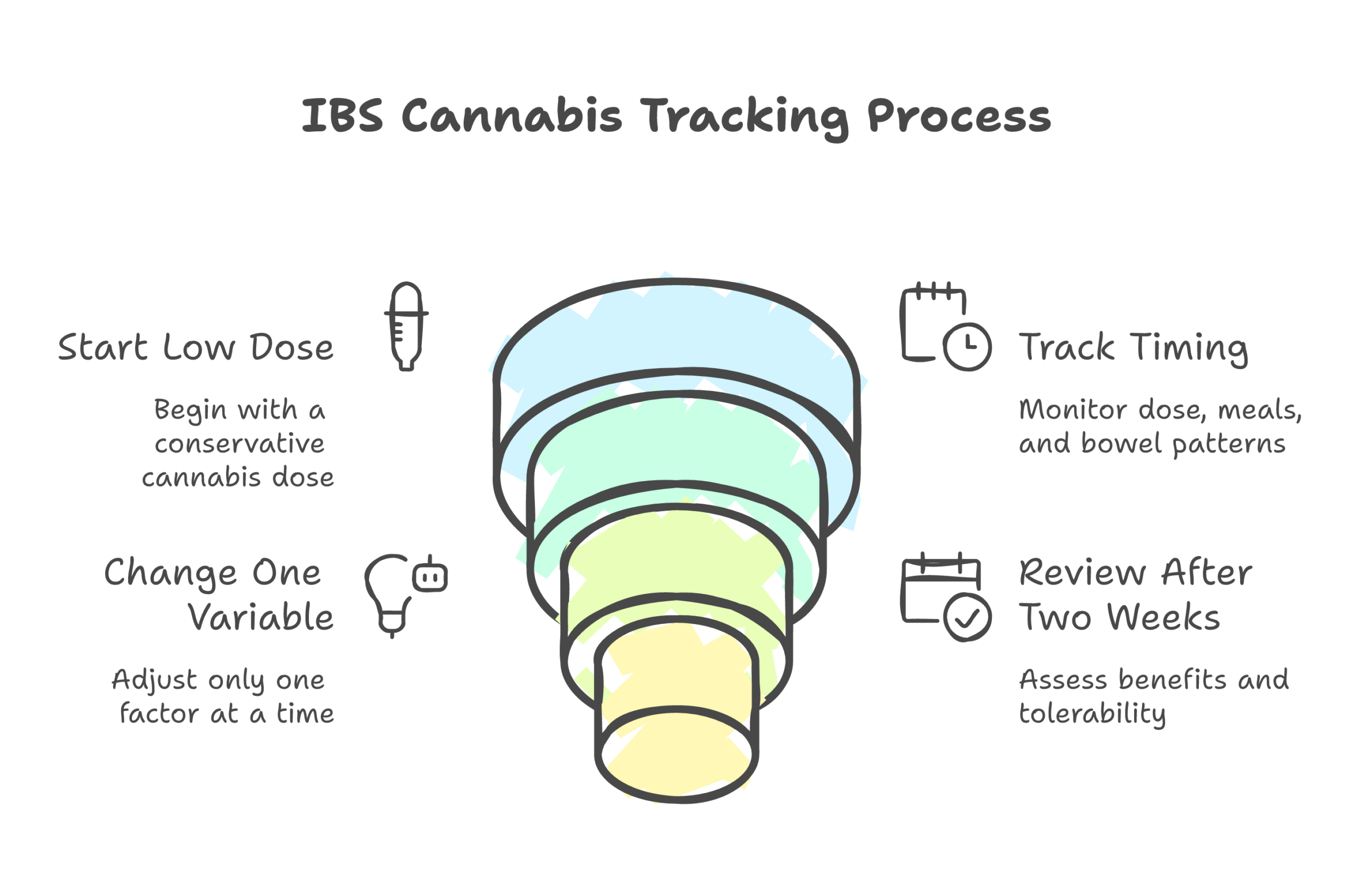
The best way to evaluate cannabis for IBS is not by vibes. It is by notes. Track product type, dose, time taken, meal timing, stress level, pain score, bloating, bowel movement frequency, stool form, sleep, and side effects. This turns a confusing experience into a pattern you can actually judge. The International Foundation for Gastrointestinal Disorders also emphasizes education and symptom pattern recognition as part of IBS management.
Keep the trial boring on purpose. Change one variable at a time. Do not start a new CBD oil, a new probiotic, a low-FODMAP experiment, and a new sleep supplement in the same week. If symptoms improve, you will not know what helped. If symptoms worsen, you will not know what caused it. A steady two-week log gives better answers than a random weekend experiment.
For adults who already use cannabis, this framework is still valuable. Tolerance, dose creep, and changing product potency can all distort the picture. If you notice that higher doses are producing less benefit, our cannabis tolerance break guide explains how tolerance can build and why intentional breaks may help some users reset.
Risks, Interactions, and When to Avoid Cannabis
Cannabis is not automatically gentle because it is plant-derived. THC can cause anxiety, dizziness, rapid heartbeat, impaired memory, dry mouth, and poor coordination. High-THC products can be a bad match for people prone to panic or paranoia. CBD is usually described as better tolerated, but it can still cause fatigue, diarrhea, appetite changes, and medication interactions. The NCCIH cannabis and cannabinoids resource gives a balanced overview of known benefits, uncertainties, and risks.
One risk is especially relevant to digestive symptoms: cannabinoid hyperemesis syndrome. The NCBI Bookshelf review of cannabinoid hyperemesis syndrome describes a pattern of recurrent nausea, vomiting, and abdominal pain linked to chronic cannabis use. It is uncommon, but it matters because someone using cannabis for gut relief could misread worsening nausea as “more IBS” instead of a cannabis-related problem.
Medication interactions matter too. CBD can affect liver enzyme pathways involved in metabolizing many drugs. If you take anticoagulants, antiepileptics, antidepressants, sedatives, heart medication, or multiple prescriptions, speak with a clinician before experimenting. The same caution applies during pregnancy, breastfeeding, serious psychiatric history, substance use disorder, or unexplained weight loss, bleeding, fever, or persistent severe pain.
📝 Important Note
Seek medical evaluation before self-treating IBS symptoms if you have blood in stool, unexplained weight loss, fever, anemia, nighttime diarrhea, or new symptoms after age 50.
How to Choose a Safer Wellness Approach
Quality matters as much as cannabinoid type. Choose products with clear labeling, batch information, realistic claims, and preferably lab testing. If a product promises to cure IBS, avoid it. Responsible cannabis wellness language should sound measured, not magical. Our guide to reading cannabis lab reports explains what to look for in a certificate of analysis, including cannabinoid levels and contaminant testing.
Start low and go slow is still the most useful rule. For CBD, many adults begin with a low daily amount and adjust gradually based on response. For THC-containing products, caution matters even more because psychoactive effects can be uncomfortable and long-lasting. The World Health Organization cannabis Q&A notes that cannabis use can affect mental and physical health, especially with frequent or high-risk use patterns.
The most balanced plan is layered: medical diagnosis, diet strategy, stress support, exercise, sleep, and carefully selected cannabinoid products only when they make sense. For a gentle wellness-focused option, some customers prefer broad-spectrum oils such as Phyto Relax 10 Broad Spectrum CBD Oil because they avoid a strong intoxicating profile. Still, product choice should follow your symptom pattern, not marketing trends.
⚠️ Disclaimer
This article is for informational purposes only and does not constitute medical advice. The information provided about medical cannabis in Greece is current as of May 2026 but may change. Always consult with qualified healthcare professionals for medical advice and treatment options. Decisions about medical cannabis should be made in consultation with authorized healthcare providers who understand your specific medical history and conditions. For our full disclaimer, visit cannastoreams.gr/disclaimer.
Frequently Asked Questions
Can cannabis cure IBS?
No. Cannabis is not an approved cure for IBS. Some adults explore it for symptom management, especially pain, nausea, sleep, stress, or diarrhea-predominant flares, but evidence remains limited.
Is CBD better than THC for digestive relief?
CBD may be easier for many adults to tolerate because it is not intoxicating, but IBS-specific human research is still limited. THC has stronger evidence for slowing gut movement, but it also carries more psychoactive risk.
Can THC make constipation worse?
Yes, it can for some people. THC may slow intestinal movement, which is why constipation-predominant IBS needs extra caution and medical guidance.
What is the safest way to try cannabis for IBS?
Speak with a healthcare professional, choose clearly labeled products, start with a low dose, avoid mixing with alcohol or sedatives, and track symptoms carefully for at least two weeks.
Should I smoke cannabis for IBS symptoms?
Smoking is not the best wellness-first option because combustion irritants affect the lungs. Oils, tinctures, or capsules often allow more controlled dosing, though they act more slowly.
