
Cannabis Terpenes Guide: Myrcene, Limonene & Pinene
Cannabis terpenes guide covering myrcene, limonene, pinene, safer use, lab reports, and wellness-focused product selection.

Cannabis terpenes are the aromatic compounds that give flower, oils, and vapes their citrus, pine, herbal, peppery, or earthy character. They are also one reason two products with similar cannabinoid percentages can feel different in real life. THC and CBD get most of the attention, but terpene profile, dose, delivery method, tolerance, and setting all shape the final experience.
This guide focuses on three of the most discussed terpenes: myrcene, limonene, and pinene. You will learn what each one smells like, how consumers commonly describe the experience, what the research can and cannot prove, and how to use terpene information responsibly when choosing wellness products in Greece.
📺 Video Guide
Cannabis Terpenes Guide: Why Aroma Matters
Terpenes are naturally found across plants, fruits, herbs, and trees. Limonene is associated with citrus peel, pinene with pine needles and rosemary, and myrcene with mango, hops, thyme, and earthy cannabis varieties. In cannabis, these molecules sit alongside cannabinoids, flavonoids, and other plant constituents. The National Academies review of cannabis evidence makes clear that cannabis effects are complex and vary by product, person, and context.
Aroma is not a medical diagnosis tool, but it is a useful quality signal. Fresh, clean, strain-appropriate aroma can suggest careful storage and handling. Flat, hay-like, musty, or chemical notes may point to age, poor curing, contamination, or added flavoring. That is why terpene literacy pairs well with our complete COA guide: aroma gives you a first impression, while lab reports show what is actually measured.
The research landscape is promising but not settled. A widely cited review in the British Journal of Pharmacology popularized discussion of cannabinoid-terpene synergy, often called the entourage effect. At the same time, agencies like the FDA and CDC remind consumers that cannabis-derived products require cautious, evidence-aware use, especially when health conditions or medications are involved.
✓ Key Benefits of Reading Terpene Profiles
- ✓ Helps compare products beyond THC or CBD percentage alone
- ✓ Supports better matching between aroma preference and wellness goals
- ✓ Encourages consumers to ask for lab reports and freshness details
- ✓ Makes responsible low-dose experimentation more structured
Myrcene: Earthy, Herbal, and Common in Relaxing Profiles
Myrcene is often described as earthy, musky, herbal, clove-like, or slightly fruity. Consumers commonly associate myrcene-rich profiles with evening use, body relaxation, and calm routines. That does not mean myrcene is a sleeping pill, and it does not mean every myrcene-forward product will feel sedating. Cannabinoid content, dose, route of administration, tolerance, and expectations still matter.
Preclinical research has explored myrcene in relation to inflammation and pain pathways. For example, PubMed-indexed work on myrcene and analgesic activity is often referenced in terpene discussions. The important word is preclinical: these findings do not automatically translate into predictable human outcomes from commercial cannabis products. For consumers, myrcene is best treated as a product characteristic to track, not a guaranteed effect.
If you prefer calming wellness routines, compare myrcene-forward flower with low-THC or CBD-dominant options such as Amnesia Haze Superior CBD Flower. Pair this with the practical dosing mindset in our CBD dosage calculator: start low, observe carefully, and avoid stacking multiple products too quickly.
Limonene: Bright Citrus Notes for Daytime Wellness
Limonene brings the familiar smell of lemon, orange peel, and fresh citrus. In cannabis products, limonene-heavy profiles are often marketed as uplifting, bright, or social. Many adults choose them for daytime routines, creative sessions, or low-pressure relaxation where they do not want an overly heavy feel.
The wellness conversation around limonene is broader than cannabis. The PubMed literature on limonene includes research on stress-related and biological pathways, but cannabis shoppers should be careful with overconfident claims. A citrus aroma does not prove an antidepressant, anti-anxiety, or medical effect. It simply gives you one more data point when comparing products.
For CBD users, limonene can make oils and vapes feel fresher and more approachable. If you are comparing formats, our cannabis consumption methods guide explains why onset time differs so much between inhaled products, tinctures, and edibles. You can also explore broad-spectrum oils such as Anti Stress 20 Broad Spectrum CBD Oil when you want a more controlled, measured routine.
💡 Pro Tip
When comparing terpene-rich products, write down the product name, dose, time, setting, aroma notes, and how you felt after 30, 90, and 180 minutes. Patterns beat guesses.
Pinene: Pine Aroma, Clarity, and Fresh Herbal Character
Pinene smells like pine forest, rosemary, basil, dill, and fresh herbs. It appears as alpha-pinene and beta-pinene, and many consumers associate pinene-rich cannabis with a cleaner, more alert aromatic profile. Some prefer it when they want a product that feels less heavy than earthy nighttime flower.
Scientific interest in pinene includes inflammation, respiratory, and neurological pathways. A review on alpha-pinene biological activity summarizes several areas of investigation, but again, this does not make a pinene-rich cannabis product a treatment. The responsible takeaway is narrower: pinene is a meaningful aroma marker that may influence the overall product experience.
Pinene also highlights why strain names alone are not enough. One “Haze” product may smell bright and piney, while another batch may lean citrus or floral. Storage, harvest timing, and lab-tested terpene percentages all matter. If freshness is your concern, read our cannabis storage guide before buying larger quantities.
How to Compare Terpenes Without Overthinking It
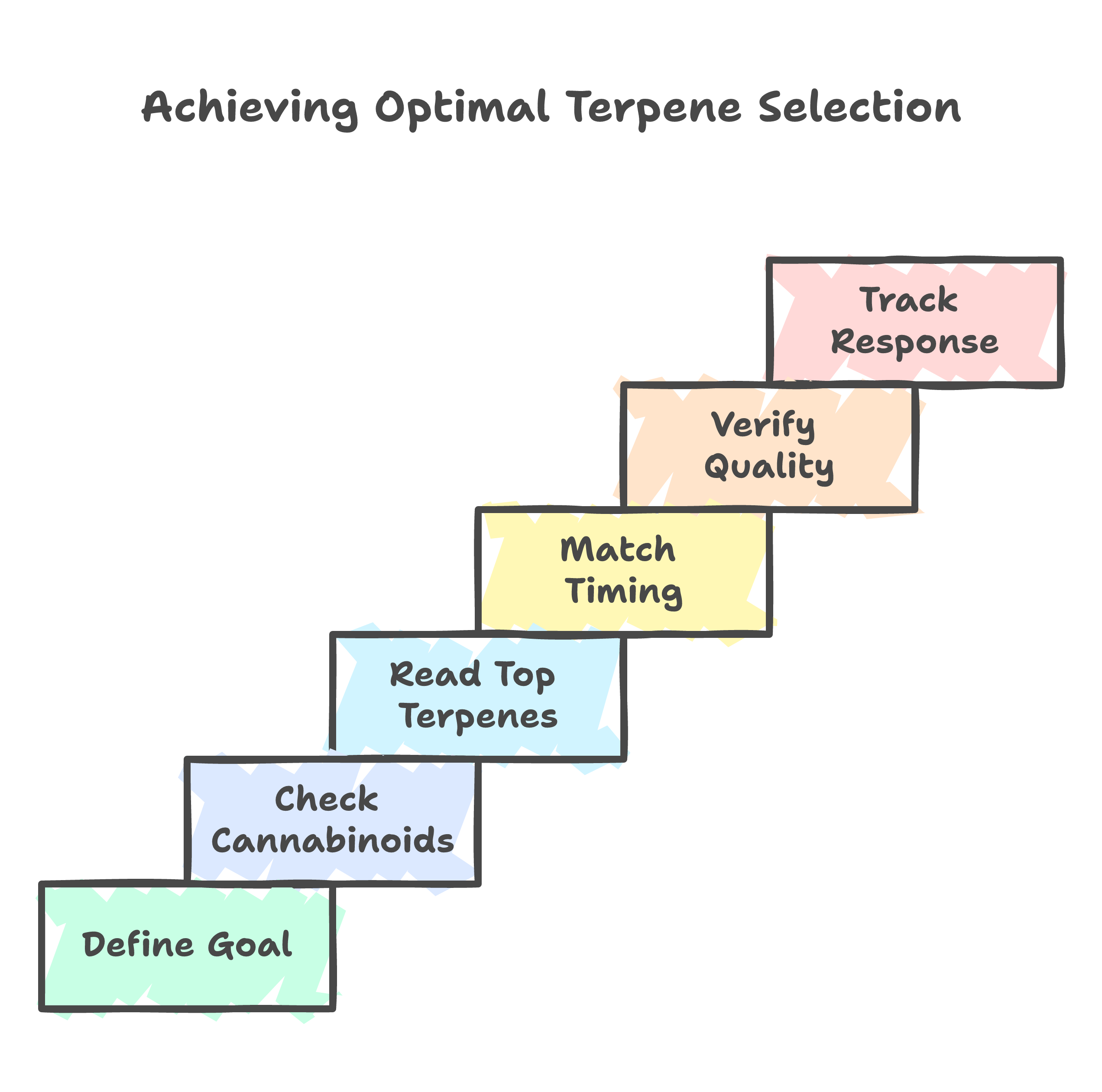
A practical terpene comparison does not require a chemistry degree. It requires a clear goal, a clean product, and realistic expectations. Use this simple framework when reading menus, COAs, or product descriptions:
- Start with the cannabinoid profile. Know whether the product is CBD-dominant, THC-dominant, balanced, or minor-cannabinoid focused.
- Check the top three terpenes. Myrcene, limonene, pinene, linalool, caryophyllene, and humulene often shape aroma most clearly.
- Match the time of day. Earthy-heavy profiles may suit evening routines, while citrus or pine profiles may feel more daytime-friendly for some adults.
- Respect the dose. A terpene profile cannot rescue a dose that is too high for your tolerance.
- Review lab and safety information. Look for batch testing, contaminant screening, and clear ingredient lists.
- Track your own response. Your body, medications, sleep, food, and stress level affect the outcome.
For broader cannabis safety context, the National Institute on Drug Abuse, NCCIH, and MedlinePlus all provide consumer-friendly overviews. For product-quality thinking, our CBD entourage effect guide explains how cannabinoids and aromatic compounds are often discussed together.
Safety, Legality, and Responsible Use in Greece
Terpene education should never replace legal awareness. Laws around cannabis, hemp-derived cannabinoids, medical access, and novel semi-synthetic compounds continue to change across Europe. The European Union Drugs Agency cannabis policy overview is a useful starting point for understanding how fragmented the European picture can be. In Greece, always buy from legitimate retailers and avoid products with unclear origin or exaggerated medical promises.
If you use medication, have a medical condition, are pregnant, or have a history of psychosis, anxiety disorder, cardiovascular concerns, or substance-use problems, talk to a qualified clinician before using cannabis-derived products. The Health Canada cannabis health effects guide is especially clear on impairment, delayed onset, and vulnerable groups.
Also remember that terpene additives are not automatically safer because they smell natural. Concentrated terpenes can be irritating when misused, especially in inhaled products. The DEA marijuana fact sheet and public-health materials from official bodies may be stricter than wellness marketing, but they are useful counterweights to hype.
📝 Important Note
Avoid buying products that promise guaranteed medical outcomes from a terpene profile. A legitimate seller should be comfortable discussing lab reports, ingredients, responsible use, and legal status.
Choosing Terpene-Rich Products at Puff n Pass
At Puff n Pass, the best terpene conversation starts with your goal: relaxation, flavor exploration, CBD wellness, a measured tincture routine, or a fresh aromatic flower experience. If you want a discreet option, tinctures and oils are easier to dose consistently. If you care most about aroma, flower and vape products tend to make terpene character more obvious. If you want simple freshness, products like Cannabis Mint Drops can fit into a lighter wellness routine.
The strongest move is to combine product education with patience. Choose one product at a time, use the lowest reasonable serving, avoid alcohol mixing, and give the product enough time before deciding whether to take more. For tinctures specifically, our cannabis tinctures guide explains dosing, onset, and how to compare formulas without getting lost in marketing language.
Cannabis terpenes are not magic, but they are useful. They help you ask better questions, notice product quality, and build a more personalized, responsible wellness routine. When in doubt, prioritize lab-tested products, clear labels, moderate dosing, and honest advice over big promises.
⚠️ Disclaimer
This article is for informational purposes only and does not constitute medical advice. The information provided about medical cannabis in Greece is current as of May 2026 but may change. Always consult with qualified healthcare professionals for medical advice and treatment options. Decisions about medical cannabis should be made in consultation with authorized healthcare providers who understand your specific medical history and conditions. For our full disclaimer, visit cannastoreams.gr/disclaimer.
Frequently Asked Questions
What are cannabis terpenes?
Cannabis terpenes are aromatic compounds that shape smell and flavor. They may also influence the overall product experience, but effects depend on cannabinoids, dose, delivery method, and the individual user.
Is myrcene always sedating?
No. Myrcene is commonly associated with earthy, relaxing profiles, but no terpene guarantees a specific effect. Product potency, dose, tolerance, and setting matter more than one compound alone.
Which terpene smells like citrus?
Limonene is the terpene most associated with lemon, orange peel, and bright citrus aromas. Many consumers prefer limonene-forward products for daytime or social routines.
Can terpenes prove a product is high quality?
Not by themselves. A fresh aroma is useful, but quality should also include lab testing, clean ingredients, proper storage, clear legal status, and responsible retailer guidance.
Should beginners choose products by terpene profile?
Beginners can use terpene profiles as a helpful guide, but they should prioritize low doses, clear labels, CBD or balanced products when appropriate, and professional advice if they have health concerns.
