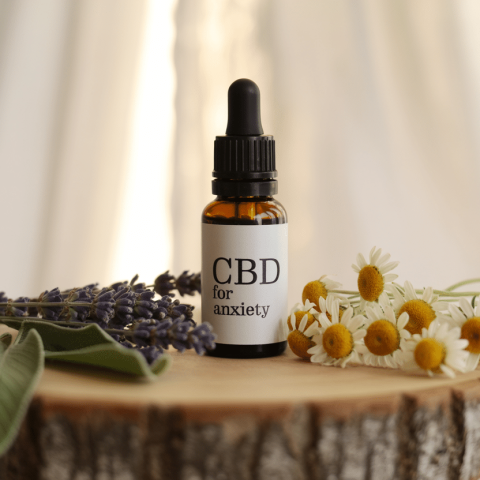
What does the science actually say about CBD and anxiety?
CBD for anxiety is one of the most searched wellness topics online right now. Walk into any health store, scroll through any wellness feed, and you’ll find someone claiming that CBD oil changed their life. But here’s the thing: personal stories aren’t clinical trials. So what does the actual research tell us about using CBD to manage anxiety? The answer is more interesting than you might expect.
Over the past decade, researchers have published dozens of studies examining how cannabidiol interacts with the brain’s anxiety circuits. Some results are genuinely promising. Others raise more questions than they answer. This article breaks down the current state of CBD anxiety research, what works, what doesn’t, and how to use what we know if you decide to try it yourself.
How CBD works on anxiety in the brain
Your body already produces its own cannabinoids. They’re called endocannabinoids, and they play a role in regulating mood, stress, and fear responses. The most studied one, anandamide (sometimes called the “bliss molecule”), gets broken down by an enzyme called FAAH. CBD appears to inhibit this enzyme, which lets anandamide stick around longer and do more of its calming work.
But that’s only part of the picture. CBD also interacts with serotonin receptors, specifically the 5-HT1A receptor that’s targeted by common anxiety medications like buspirone. And it modulates GABA receptors, the same system that benzodiazepines act on, though through a different mechanism. Think of it as turning up the volume on your brain’s built-in calming signals without the sedation or dependency risks that come with prescription options.
Neuroimaging studies have shown something else worth noting: when people take CBD before an anxiety-provoking task, brain scans reveal reduced activity in the amygdala, hippocampus, and cingulate cortex. These are the regions that light up when you feel fear or stress. In people with social anxiety disorder, CBD specifically reduced activity in the parahippocampal gyrus, an area tied to contextual fear processing.
✓ How CBD affects anxiety pathways
- ✓ Inhibits FAAH enzyme, boosting anandamide levels
- ✓ Activates serotonin 5-HT1A receptors
- ✓ Modulates GABA-A receptors to amplify calming signals
- ✓ Reduces activity in fear-processing brain regions
- ✓ May lower cortisol and heart rate during stressful situations
The clinical evidence: what studies have found
The most consistent results come from acute dosing studies. In several trials, single doses of 300 to 600 mg of CBD significantly reduced anxiety in both healthy volunteers and people with social anxiety disorder during simulated public speaking tests. A large case series published in The Permanente Journal found that anxiety scores decreased within the first month in 79.2% of patients and remained low throughout the study period.
More recent work has expanded on these findings. A 2024 phase 3 randomized controlled trial in India tested 300 to 600 mg daily of oral CBD against placebo over 15 weeks in 178 adults with mild-to-moderate anxiety. The results showed both efficacy and safety benefits. Meanwhile, an open-label trial using full-spectrum CBD at just 30 mg per day found significant improvements in anxiety, mood, and sleep quality after 4 to 6 weeks.
At Dana-Farber Cancer Institute, researchers tested CBD in women with advanced breast cancer and anxiety. Participants reported significantly lower anxiety three hours after taking CBD compared to placebo, though the primary endpoint for sustained change over time didn’t reach statistical significance. The researchers described the findings as “intriguing” and called for larger follow-up studies.
A University of Colorado study added another layer. They compared CBD-dominant cannabis products against THC-dominant ones and a non-cannabis control group. The CBD group experienced greater reductions in tension and anxiety with fewer side effects like paranoia, something that can actually worsen anxiety with THC-heavy products.
Where the evidence falls short
I want to be straight with you here: the research is still early-stage. Most studies have small sample sizes, and many are open-label, meaning participants know they’re taking CBD, which introduces placebo effects. A review of eight randomized controlled trials found only two that showed clear single-dose benefits, specifically for social anxiety. For generalized anxiety disorder, panic disorder, and PTSD, the evidence is thinner.
The Anxiety and Depression Association of America puts it bluntly: there isn’t enough evidence from large-scale, properly controlled trials to recommend CBD as a treatment for anxiety disorders. That doesn’t mean it doesn’t work. It means we need bigger, better-designed studies to know for sure. Several are underway, including one at Wayne State University investigating whether CBD can enhance the effects of cognitive behavioral therapy for GAD.
There’s also the dosing question. Studies have used anywhere from 30 mg to 800 mg daily. That’s a huge range, and we don’t yet have a clear dose-response curve. Some evidence suggests there might be a “sweet spot” around 300 mg for acute anxiety relief, but chronic dosing protocols are less established.
📝 Important context
CBD research is progressing quickly, but most studies so far have been small and short-term. If you’re dealing with a diagnosed anxiety disorder, work with a healthcare provider rather than self-treating. CBD may complement existing treatments, but it’s not a proven replacement for them.
Different types of anxiety and what CBD can (and can’t) do
Social anxiety disorder (SAD): This is where the evidence is strongest. Multiple studies show that CBD reduces subjective anxiety and physiological stress markers during social performance tasks. If you get anxious before presentations, meetings, or social gatherings, this is the most research-backed use case.
Generalized anxiety disorder (GAD): The picture here is mixed. Some patients report improvement with daily CBD use, but controlled trials haven’t consistently shown benefits over placebo for GAD specifically. The Wayne State University study currently underway may clarify things.
PTSD: Early retrospective studies show reduced anxiety in PTSD patients, and CBD’s ability to modulate fear-related brain activity makes it a plausible candidate. But we’re still waiting for large-scale controlled data.
Panic disorder and OCD: Very limited evidence here. A few case reports exist, but nothing close to clinical-trial level support. If you’re experiencing panic attacks or OCD symptoms, talk to a doctor first.
Everyday stress and situational anxiety: This is where most people actually use CBD, and anecdotally, many report benefits. While this use case hasn’t been the focus of major clinical trials, it aligns with what we know about CBD’s effects on cortisol and the endocannabinoid system. If you’re not dealing with a clinical disorder but just want to take the edge off a stressful day, CBD has a favorable safety profile for that purpose.
Practical tips for using CBD for anxiety
If you’ve read the evidence and want to try CBD for anxiety, here are some research-informed guidelines to get the most out of it.
Start low and go slow. Many experts recommend starting with 10 to 25 mg daily and increasing gradually. While clinical trials often use 300+ mg, these are pharmaceutical-grade formulations under medical supervision. For everyday use, lower doses may be sufficient, and some people respond well to as little as 15 to 25 mg.
Choose the right delivery method. Sublingual oils (under the tongue) offer faster absorption than capsules or gummies, typically within 15 to 30 minutes. If you want quick relief before a stressful event, sublingual tinctures are your best bet. Capsules and edibles take longer to kick in (1 to 2 hours) but may provide more sustained effects.
Consider full-spectrum products. The University of Colorado study found that full-spectrum CBD products (containing trace amounts of THC and other cannabinoids) produced greater anxiety reduction than CBD isolate. This aligns with the “entourage effect” theory, where cannabinoids work better together. If you’re sensitive to THC, broad-spectrum products offer a middle ground, keeping other cannabinoids and terpenes while removing THC.
Time it right. For situational anxiety (a flight, a presentation, a difficult conversation), take CBD 30 to 60 minutes before the event. For general anxiety management, consistent daily dosing appears more effective than as-needed use, based on the trials showing benefits at 4 to 6 weeks of regular use.
💡 Pro tip
Keep a simple journal when you start using CBD. Note the dose, timing, product type, and how you felt before and after. Anxiety is subjective, and what works varies between individuals. Tracking your response over 2 to 4 weeks gives you actual data instead of guessing.
What to look for in a CBD product
Not all CBD products are created equal, and quality matters more than you might think. A 2020 study found that only about 30% of CBD products sold online contained the amount of CBD stated on the label. Some had significantly less, some had more, and some contained undisclosed THC. Here’s how to protect yourself:
Third-party lab testing is non-negotiable. Look for a Certificate of Analysis (COA) from an independent laboratory. This should confirm the CBD content, verify that THC levels are within legal limits, and screen for contaminants like heavy metals, pesticides, and residual solvents. If a brand doesn’t publish their lab reports, move on.
Know your extract types. Full-spectrum contains all cannabinoids including trace THC. Broad-spectrum removes THC but keeps other compounds. Isolate is pure CBD only. For anxiety, the research slightly favors full-spectrum, but all three types have their uses depending on your sensitivity and any drug testing concerns.
Check the source. Hemp-derived CBD is federally legal in the US and widely available in Europe. Look for products made from organically grown hemp, ideally with clear information about sourcing. European and US-grown hemp tends to have stricter quality controls than some imported alternatives.
Safety, side effects, and drug interactions
The good news: CBD has a favorable safety profile. The World Health Organization has stated that CBD exhibits no effects indicative of abuse or dependence potential. Most people tolerate it well, even at high doses used in clinical trials (up to 800 mg daily).
Common side effects are generally mild: drowsiness, dry mouth, reduced appetite, and occasional digestive discomfort. These tend to be dose-dependent, meaning lower doses cause fewer issues.
The main concern is drug interactions. CBD is metabolized by the cytochrome P450 enzyme system, the same system that processes many common medications. This means CBD can interfere with how your body breaks down certain drugs, potentially increasing or decreasing their effects. Blood thinners, some anti-seizure medications, and certain antidepressants are among those that may interact with CBD.
If you’re taking any prescription medications, especially for anxiety or depression, talk to your doctor before adding CBD to your routine. This isn’t just a standard disclaimer. Drug interactions with CBD are real and documented.
⚠️ Warning
Do not replace prescribed anxiety medication with CBD without consulting your healthcare provider. Abruptly stopping medications like benzodiazepines or SSRIs can cause serious withdrawal effects. CBD may be a useful complement to existing treatment, but it should not be treated as a substitute without medical guidance.
CBD and other anxiety-management strategies
CBD doesn’t exist in a vacuum. The people who report the best results tend to combine it with other evidence-based anxiety management techniques. That Wayne State University study I mentioned earlier is actually testing this idea directly: whether CBD combined with cognitive behavioral therapy produces better outcomes than either approach alone.
Exercise is one of the most powerful anxiety reducers we know of, and some people find that CBD before a workout helps them stay present rather than spiraling into anxious thoughts. Yoga and mindfulness practices pair naturally with CBD for similar reasons. And basic sleep hygiene matters enormously, since anxiety and poor sleep feed each other in a vicious cycle that CBD may help interrupt.
The bottom line is that CBD works best as part of a toolkit rather than a standalone solution. If you’re dealing with anxiety, consider it one piece of a larger strategy that includes movement, sleep, therapy (if needed), and lifestyle adjustments.
Frequently asked questions
How quickly does CBD work for anxiety?
Sublingual oils typically take 15 to 30 minutes to take effect. Capsules and edibles can take 1 to 2 hours. Vaping provides the fastest onset (within minutes) but carries lung health concerns. For situational anxiety, sublingual administration 30 to 60 minutes before the triggering event works best for most people.
What dose of CBD should I take for anxiety?
There’s no universal dose. Clinical trials have used 25 mg to 600 mg daily with positive results. Most experts recommend starting with 10 to 25 mg per day and increasing gradually every week until you find what works. Keeping a journal helps identify your effective dose.
Can CBD make anxiety worse?
Pure CBD is unlikely to worsen anxiety. However, products containing significant amounts of THC can increase anxiety and paranoia in some people. Stick to CBD-dominant products with minimal THC content if you’re anxiety-prone. Starting with a very low dose also reduces the chance of any negative response.
Is CBD better than prescription anxiety medication?
CBD and prescription medications serve different purposes. SSRIs, SNRIs, and benzodiazepines have decades of clinical evidence and are proven treatments for diagnosed anxiety disorders. CBD may be helpful for mild anxiety or as a complement to existing treatment, but it hasn’t been shown to be superior to established medications in head-to-head trials. Discuss your options with a healthcare provider.
Will CBD show up on a drug test?
Pure CBD isolate should not trigger a positive drug test. However, full-spectrum products contain trace amounts of THC (up to 0.3%), which could accumulate with regular use and potentially cause a positive result, especially with sensitive tests. If drug testing is a concern, use broad-spectrum or isolate products and verify THC content through third-party lab reports.
Can I take CBD with my current anxiety medication?
Possibly, but not without checking with your doctor first. CBD can interact with medications metabolized by cytochrome P450 enzymes, including some SSRIs, benzodiazepines, and blood thinners. Your doctor can evaluate potential interactions based on your specific medications and advise on safe use.
⚠️ Disclaimer
This article is for informational purposes only and does not constitute medical advice. The information provided about medical cannabis in Greece is current as of February 2026 but may change. Always consult with qualified healthcare professionals for medical advice and treatment options. Decisions about medical cannabis should be made in consultation with authorized healthcare providers who understand your specific medical history and conditions. For our full disclaimer, visit cannastoreams.gr/disclaimer.