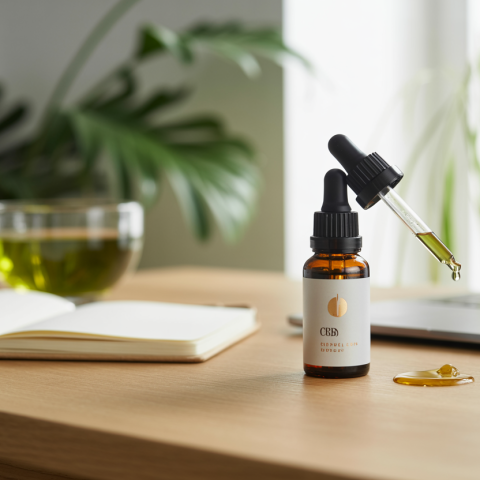
If you have been searching for a natural way to sharpen your mental edge without the jittery crash of a third espresso, CBD for focus is probably on your radar by now. Cannabidiol, the non-intoxicating compound extracted from hemp, has quietly become a go-to tool for knowledge workers, students, and parents trying to stay present through a busy day. It will not turn you into a productivity machine overnight, but a growing body of research and real-world use suggests it can help clear the mental fog that stress, anxiety and poor sleep pile onto your brain.
In this guide we cut through the hype. You will learn how CBD interacts with the endocannabinoid system, what the science actually shows about attention and cognition, how to dose it for focus rather than relaxation, and which product formats work best when you need to get things done. We will also flag who should skip it, what to pair it with, and the red flags to watch for when buying.
📺 Video Guide
How CBD Actually Affects the Brain
CBD works through the endocannabinoid system, a network of receptors that helps regulate mood, stress response, sleep and inflammation. Research published on PubMed Central shows that CBD modulates the CB1 and CB2 receptors indirectly, while also interacting with serotonin 5-HT1A receptors, which are heavily involved in anxiety and cognitive control.
Unlike THC, CBD does not bind strongly to CB1 receptors in the brain, which is why it will not get you high. What it does do, according to a 2023 review from the National Institutes of Health, is dampen the overactive signalling that stress produces in the amygdala and prefrontal cortex. Those two brain regions drive worry, distraction and rumination, the exact things that wreck your ability to concentrate.
There is a nuance worth stating plainly. Most studies do not show CBD directly boosting raw cognitive performance in healthy adults. What it does is remove obstacles. If anxiety, pain or poor sleep are dragging your attention sideways, CBD can reduce that load and let your normal focus return. The FDA has only approved one CBD medication so far, Epidiolex, for rare forms of epilepsy, so everything else remains off-label and worth discussing with a clinician.
✓ Focus Benefits Reported by CBD Users
- ✓ Calmer baseline mood during demanding tasks
- ✓ Fewer intrusive thoughts during deep work
- ✓ Reduced jaw tension and shoulder stress
- ✓ Smoother transitions between meetings
- ✓ Better sleep the night before heavy cognitive days
- ✓ Less caffeine needed to feel alert
What the Research Says About CBD and Cognition
A 2019 clinical study published in The Permanente Journal tracked 72 adults with anxiety or sleep complaints taking 25 to 75 mg of CBD daily. Anxiety scores dropped in 79 percent of participants within the first month, and sleep scores improved in 66 percent. Both outcomes matter for focus because anxious, sleep-deprived brains cannot concentrate on anything for long.
Neuroimaging work summarised by Nature Neuropsychopharmacology found that a single 600 mg dose of CBD increased cerebral blood flow to the hippocampus and prefrontal cortex in healthy volunteers. More blood flow to those regions is associated with better working memory and executive function. The sample size was small, so treat this as promising rather than settled science.
A separate meta-analysis covered by the World Health Organization concluded that CBD has a good safety profile and does not appear to cause the memory impairments that high-THC cannabis can produce. That matters if you want an aid you can take during a workday without paying for it the next morning.
For a deeper look at how stress hormones sabotage attention, the CDC mental health resources explain the cortisol and distraction loop in plain language. CBD appears to soften that loop for many people, which is the mechanism most users describe when they say it helps them concentrate.
💡 Pro Tip
Track your focus with a simple 1 to 10 rating three times a day for two weeks before and after starting CBD. Subjective data beats guessing, and it helps you spot whether the benefit is real or placebo.
Finding the Right Dose for Focus
Dosing CBD for focus is different from dosing it for sleep. Higher amounts tend to be sedating, while lower amounts are more likely to feel clear-headed and alert. Most focus-oriented users land somewhere between 10 and 25 mg per serving, taken once in the morning and optionally again after lunch. For a deeper breakdown of serving sizes by body weight, our CBD dosage calculator guide walks through the math step by step.
Start low. A reasonable first week is 10 mg taken with breakfast. If you feel nothing after seven days, step up to 15 mg, then 20 mg. Jumping straight to 50 mg to see if you feel anything is a common mistake that usually just makes people sleepy at their desk. The Mayo Clinic recommends the same slow titration approach for any cannabinoid product.
Timing matters too. CBD taken sublingually peaks in the bloodstream within 30 to 90 minutes and lasts four to six hours. Taken with food, especially something fatty, it absorbs better but kicks in more slowly. Plan your dose the way you would plan coffee. Hit it before the work window, not during the panic moment when deadlines are already sliding.
📝 Important Note
CBD can interact with medications metabolised by the liver enzyme CYP450, including blood thinners, seizure medications and some antidepressants. If you take any prescription drug, ask your pharmacist before starting CBD. This single check can prevent a nasty surprise.
Best Product Formats for Daytime Focus
Not every CBD product is built for a workday. Format changes absorption speed, duration and, honestly, how annoying it is to use at your desk. Here is what works in practice.
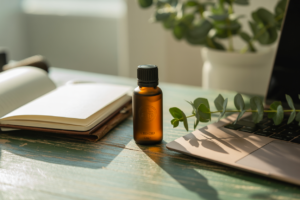
Sublingual oils and tinctures are the classic choice. You place drops under the tongue, hold for 60 seconds, and feel the effect within half an hour. Dosing is precise, and quality brands publish third-party lab results you can cross-check against the standards outlined by USP. Our guide on full spectrum versus broad spectrum versus isolate covers which type to pick.
Capsules and softgels trade speed for convenience. They take 45 to 90 minutes to kick in but deliver a fixed dose with no taste and no dropper math. Good for people who forget to re-dose or hate the grassy flavour of full-spectrum oils.
Vape products act fastest, within minutes, and are useful when a stress spike hits mid-meeting. Be aware that the American Lung Association has ongoing concerns about long-term lung health with any vaping, so treat this as an occasional tool rather than a daily habit.
Gummies and mints are the slow burn option. They take up to two hours to peak because they pass through the digestive system, but the effect lasts longer. Useful if you want coverage through an entire afternoon of meetings. See our breakdown of CBD gummies versus oil for a deeper comparison.
CBD vs Other Focus Aids
Caffeine is still the most widely used cognitive enhancer on the planet. It works, but it comes with tolerance, anxiety at higher doses, and the familiar afternoon crash. CBD is not a caffeine replacement. It is more like a quiet co-pilot. Many users stack a smaller dose of caffeine with 10 to 15 mg of CBD and report better sustained attention without the usual edginess.
L-theanine, the amino acid in green tea, pairs beautifully with both. A 2019 study cited by Healthline showed that 200 mg of L-theanine alongside caffeine improved attention and reaction time more than caffeine alone. Add CBD on top and you get a calm-alert blend that does not spike your heart rate.
Prescription stimulants like Adderall or Ritalin are a different conversation. They are powerful, tightly regulated and prescribed for specific diagnoses. CBD is not a substitute for ADHD medication, and the SAMHSA resources on cognitive support are a better starting point if you suspect an attention disorder. What CBD can do is sit alongside other lifestyle tools like sleep hygiene, exercise and meditation without introducing new side effects for most people.
If anxiety is your main focus blocker, our article on CBD for anxiety scientific evidence covers dosing strategies that overlap directly with concentration support.
How to Choose a Quality CBD Product
The CBD market is crowded and wildly inconsistent. A 2017 analysis published in JAMA found that nearly 70 percent of CBD products sold online were mislabelled for potency. Things have improved, but only among brands that invest in proper testing. Before you buy, check four things.
Certificate of analysis. Every reputable brand links to a third-party lab report on the product page. It should list cannabinoid content, pesticides, heavy metals and residual solvents. If the COA is missing or older than 12 months, walk away.
Source of hemp. Look for organically grown hemp from countries with strict agricultural standards. The European Union enforces limits on heavy metal contamination that align with recommendations from the European Food Safety Authority.
Extraction method. CO2 extraction is the cleanest and preserves cannabinoids and terpenes without harsh solvents. Cheaper products sometimes use ethanol, which is fine if done well, or petroleum-based solvents, which you want to avoid.
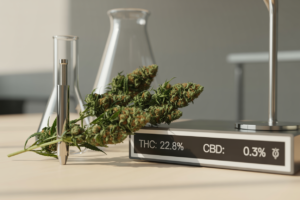
Cannabinoid profile. Full-spectrum products contain trace THC (below 0.3 percent) plus other cannabinoids and terpenes that may contribute to the entourage effect. Broad-spectrum removes the THC. Isolate is pure CBD. For focus, many users prefer broad-spectrum: all the supporting compounds, none of the THC.
Who Should Skip CBD for Focus
CBD is well tolerated by most adults, but it is not for everyone. If you are pregnant or breastfeeding, the FDA advises against it due to insufficient safety data. If you take medications that carry a grapefruit warning, the same interaction risk applies to CBD, so check with your pharmacist.
People subject to workplace drug testing should be cautious. Full-spectrum products contain trace THC that can accumulate over time and potentially trigger a positive screen. Broad-spectrum or isolate is safer for this group, and some employers are updating their policies as cannabis laws evolve around the world.
Anyone under 18 should not use CBD without medical supervision. Developing brains and cannabinoids do not have enough long-term research behind them yet to make casual use a smart call.
Building a Sustainable Focus Routine
CBD is one tool. It is not a substitute for the foundation work. The most effective focus routine combines seven to nine hours of sleep, regular movement, protein at breakfast, limited blue light at night and a clear plan for the workday. Layer CBD on top of those habits and you will actually feel the difference. Layer it on top of four hours of sleep and a bag of chips, and you will probably notice nothing.
Pair CBD with a simple time-boxing method like the Pomodoro technique. Twenty-five minutes of focused work, five-minute break, repeat. Many users find that the calming effect of CBD helps them stay in the box longer without checking their phone. Mindfulness apps and short breathing exercises amplify this further, which the American Psychological Association has documented extensively.
Finally, take breaks. Tolerance to CBD builds slowly, but if you feel the effect fading after months of daily use, a three to five day pause usually resets sensitivity. This is cheaper than chasing higher doses.
Frequently Asked Questions
Will CBD make me drowsy at work?
At low doses (10 to 25 mg) most people feel calm and clear-headed, not sleepy. Drowsiness usually shows up above 50 mg or when combined with other sedating substances. Start low and adjust.
How fast does CBD work for focus?
Sublingual oils peak within 30 to 90 minutes. Capsules and edibles take 45 minutes to 2 hours. Vapes act in under 10 minutes but wear off faster. Take it before you need it, not during a stress spike.
Can I mix CBD with coffee?
Yes, and many users do. The common pattern is a smaller coffee than usual plus 10 to 15 mg of CBD. The combination tends to feel alert without the jittery edge of caffeine alone.
Is CBD legal where I live?
In most of the EU, United Kingdom and United States, CBD derived from hemp with less than 0.2 or 0.3 percent THC is legal. Rules vary, so check your local regulations before purchasing or travelling with CBD.
How long until I notice results?
Some people feel a calming effect on day one. For others, the subtle improvements in focus show up after one to two weeks of consistent daily use. Give it a fair trial before deciding it does not work.
Does CBD help with ADHD focus problems?
Evidence is limited and mixed. Some adults with ADHD report benefits, others see nothing. CBD is not a replacement for prescribed ADHD medication. Talk to your doctor before adding it to your routine.
⚠️ Disclaimer
This article is for informational purposes only and does not constitute medical advice. The information provided about CBD and cannabis is current as of April 2026 but may change. Always consult with qualified healthcare professionals for medical advice and treatment options. Decisions about CBD and medical cannabis should be made in consultation with authorized healthcare providers who understand your specific medical history and conditions. For our full disclaimer, visit cannastoreams.gr/disclaimer.