
CBD for Sleep: Evidence, Timing & Safety Guide
CBD for sleep guide: evidence, timing, dosing, safety, interactions, and quality checks for a smarter bedtime routine.

CBD for sleep has become one of the most common wellness questions adults ask when nighttime feels inconsistent: can a non-intoxicating cannabinoid help you wind down, stay comfortable, and wake up clearer? The honest answer is balanced. CBD is not a proven cure for insomnia, and it should never replace medical care for chronic sleep problems. But for some adults, especially when stress, mild discomfort, or an overactive evening routine is part of the problem, a carefully chosen CBD product may support a calmer bedtime ritual.
📺 Video Guide
CBD for Sleep: What the Evidence Actually Says
The strongest place to begin is with expectations. Cannabidiol, or CBD, is one of the major compounds found in cannabis and hemp. Unlike THC, CBD does not usually produce intoxication. The FDA’s cannabis and CBD overview makes clear that CBD products vary widely and that many wellness uses still need stronger clinical research. That matters for sleep because marketing language can sound much more certain than the science.
Current evidence suggests CBD may help sleep indirectly for certain people. It may support relaxation, reduce stress perception, or make physical discomfort less distracting, but that is different from saying CBD is a direct sleeping pill. A review indexed by PubMed’s cannabidiol sleep research shows a mixed field: promising signals, small studies, different doses, and a need for better trials. The National Academies review on cannabis and health also highlights how cannabinoid evidence depends heavily on the condition, formulation, and study design.
So the practical takeaway is simple: CBD may be worth a structured trial for some adults, but it works best when treated as one part of sleep hygiene, not as a miracle fix. If your sleep problem is severe, persistent, linked to breathing issues, or tied to anxiety, depression, pain, or medication changes, speak with a qualified clinician first.
✓ Key Benefits
- ✓ May support evening relaxation without intoxication
- ✓ Can fit into a consistent bedtime routine
- ✓ Oils and capsules allow measured, repeatable dosing
- ✓ Quality-tested products help reduce guesswork
How CBD May Influence Your Nighttime Routine
CBD interacts with the body’s endocannabinoid system, a signaling network involved in balance across mood, discomfort, appetite, and sleep-wake patterns. The NCBI literature on the endocannabinoid system and sleep shows why researchers are interested in this area, but it also shows why simple claims are risky. Sleep is not controlled by one switch. It is shaped by circadian rhythm, light exposure, stress hormones, temperature, caffeine, alcohol, screen habits, and underlying health.
For many adults, CBD’s value is less about forcing sleep and more about building a calmer transition. Taking a measured oil or capsule 60 to 90 minutes before bed can become a cue: dim the lights, put the phone down, stretch, read, and let the nervous system shift out of work mode. The CDC sleep hygiene guidance still matters more than any supplement. A CBD product cannot overcome late caffeine, heavy alcohol, scrolling in bright light, or an irregular sleep schedule.
This is where a structured approach helps. If you try CBD, keep everything else stable for two weeks. Use the same bedtime window, the same dose, and the same product. Track how long it takes to fall asleep, how many times you wake, and how you feel the next morning. Without tracking, it is easy to confuse a good night, a stressful day, or placebo effect with product performance.
Choosing the Right CBD Format for Sleep
The format you choose changes the experience. CBD oils and tinctures are popular because they are easy to measure and adjust. If you are new, a product like CBD Oil 10 10ml can be easier to trial than a stronger product because smaller serving changes are simpler. For adults who already know they tolerate CBD, CBD Oil 20 Full Spectrum 10ml may be relevant, but full-spectrum products can contain trace cannabinoids and should be chosen with awareness of local rules, workplace testing, and sensitivity.
Capsules and softgels can feel more predictable because each serving is pre-measured. They usually take longer to absorb than oils, which may suit people who want a steady evening routine rather than rapid onset. If you are comparing formats, our CBD capsules vs softgels guide explains the practical differences. Oils may be better for adjusting dose slowly, while capsules may be better for consistency and convenience.
Vapes and smokeable products act faster, but they are usually not the best first choice for sleep-focused wellness. Inhalation can make timing easier, but it also makes dose tracking less precise. For bedtime, most adults do better with measured products, clear labels, and a calm routine. If you prefer a flower-based product, read labels carefully and make sure you understand the cannabinoid profile before using it at night.
💡 Pro Tip
For a first sleep trial, choose one measured CBD product and keep the dose consistent for several nights before changing anything. Changing product, dose, bedtime, and caffeine all at once makes results impossible to read.
A Simple CBD for Sleep Trial Plan
There is no universal CBD dose for sleep. Body size, metabolism, product type, food intake, medications, and individual sensitivity all matter. The safest general principle is start low and go slow. Many adults begin with a small evening serving, observe for several nights, and only increase gradually if needed. The NCCIH overview of cannabis and cannabinoids encourages caution because products, effects, and evidence vary.
A practical trial can look like this: choose a CBD oil or capsule, take it 60 to 90 minutes before your target bedtime, avoid alcohol, avoid adding new supplements, and write down your results. If there is no benefit after several consistent nights and no side effects, some adults increase slightly. If you feel groggy, dizzy, nauseated, or unusually tired the next day, reduce the dose or stop. More is not always better, and higher doses may increase side effects.
The point is not to chase sedation. The point is to find the smallest amount that supports a calmer evening without creating next-day drag. Our CBD dosage calculator can help you think in measured steps, but it should not replace advice from a healthcare professional if you take medication or have a health condition.
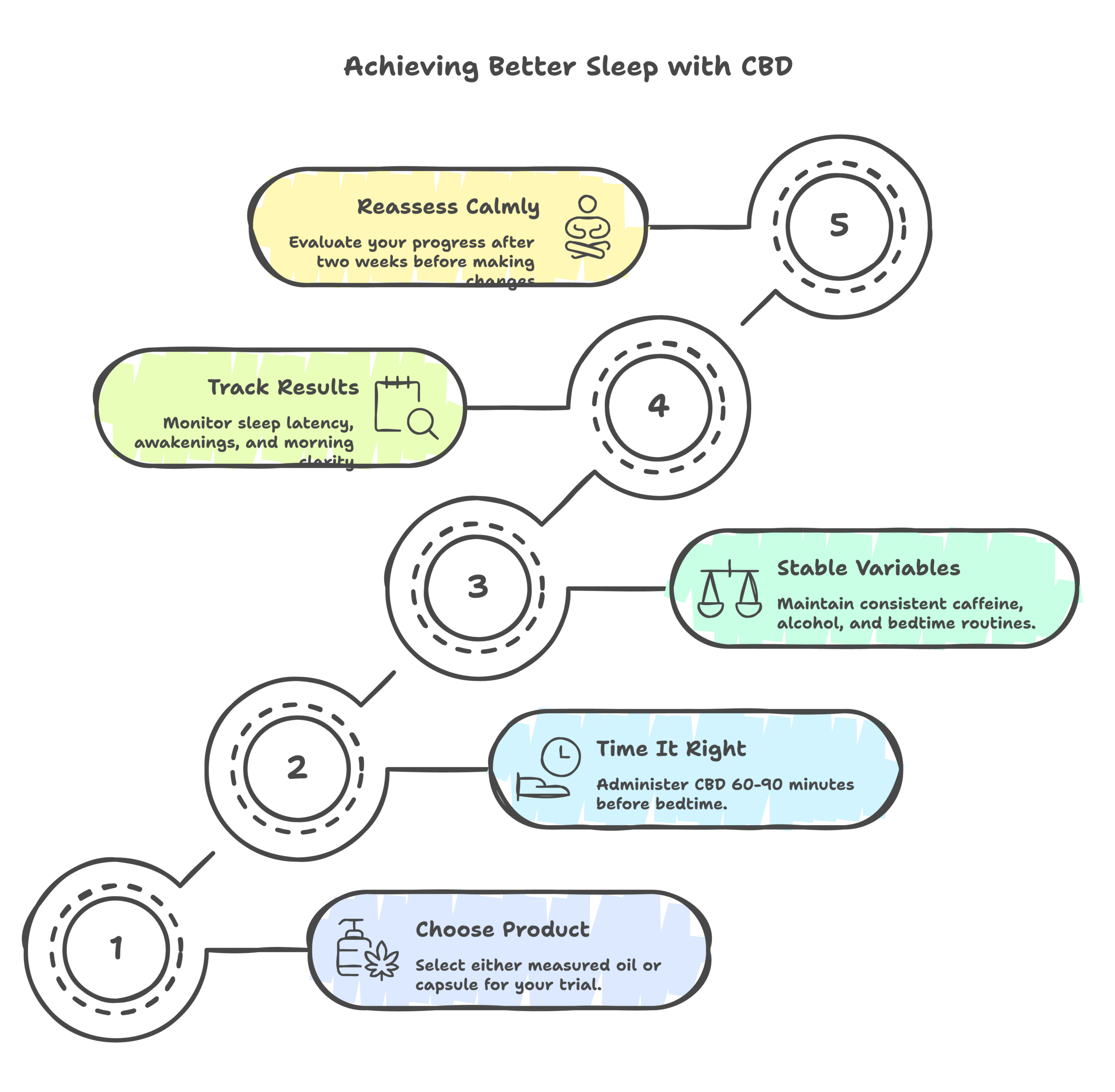
✓ 5-Step Evening Trial
- ✓ Pick one measured oil or capsule
- ✓ Take it 60 to 90 minutes before bed
- ✓ Keep caffeine, alcohol, and bedtime consistent
- ✓ Track sleep latency, awakenings, and next-day clarity
- ✓ Reassess after two weeks instead of escalating endlessly
Safety, Interactions, and Who Should Be Careful
CBD is often described as gentle, but gentle does not mean risk-free. The FDA consumer update on CBD notes potential concerns including liver effects, sleepiness, diarrhea, appetite changes, and medication interactions. The biggest issue for many adults is not CBD alone. It is CBD combined with prescriptions, sedatives, alcohol, or other supplements.
CBD can interact with enzymes involved in drug metabolism, especially the CYP450 family. The NCBI review literature on cannabinoid drug interactions is a useful reminder that people using blood thinners, anti-seizure medicines, antidepressants, heart medications, immunosuppressants, or sedatives should talk to a clinician before experimenting. If you have liver disease, are pregnant or breastfeeding, or have complex medical conditions, do not self-direct CBD use.
Also be careful with THC-containing products at night. THC may feel sedating in the short term, but it can impair coordination, memory, reaction time, and next-day clarity. Some people also experience anxiety or racing thoughts, especially with stronger products. The CDC cannabis health effects page gives a broad safety overview that is worth reading before combining cannabinoids.
📝 Important Note
Do not mix CBD with alcohol, sleeping tablets, sedatives, or prescription medication unless a qualified healthcare professional confirms it is appropriate for you.
Quality Checks Before You Buy
Quality is where CBD for sleep succeeds or fails. A bedtime product should have clear labeling, batch testing, and a certificate of analysis. A COA should show CBD amount, THC amount, and screening for contaminants such as pesticides, heavy metals, microbes, and residual solvents. If a brand cannot show recent testing, choose something else. Our COA guide explains how to read those documents without getting lost in lab language.
Independent research has found that some CBD products are mislabeled. The JAMA study on CBD product labeling reported substantial variation between labels and actual contents in online products. That is why reputable sourcing matters. The WHO cannabidiol Q&A also distinguishes pure CBD from poorly controlled consumer products, which can contain other cannabinoids or contaminants.
At Puff ‘n Pass, the better buying mindset is not “what is strongest?” It is “what is measured, transparent, appropriate, and repeatable?” For nighttime wellness, that usually means avoiding mystery blends, exaggerated claims, and products that hide basic testing details.
Combining CBD with Better Sleep Habits
The best results usually come from stacking small, boring habits. Keep a consistent wake time. Get morning daylight. Reduce bright light at night. Stop caffeine earlier. Avoid heavy meals too close to bed. Keep the room cool and dark. The Sleep Foundation’s sleep hygiene guide is useful because it focuses on routines you can control before buying anything.
If your mind races at night, combine CBD with a predictable wind-down ritual: ten minutes of stretching, a shower, low light, and a notebook to park tomorrow’s tasks. If you already enjoy mindfulness, our cannabis and meditation guide offers a more intentional way to connect cannabinoid use with relaxation rather than passive consumption.
If insomnia lasts more than a few weeks, consider professional support. Cognitive behavioral therapy for insomnia has stronger evidence than supplements, and the NHLBI sleep deprivation resource explains why chronic poor sleep deserves attention. CBD can be part of a wellness toolkit, but it should not distract from diagnosing the real cause of persistent sleep disruption.
⚠️ Disclaimer
This article is for informational purposes only and does not constitute medical advice. The information provided about cannabis and CBD wellness products is current as of May 2026 but may change. Always consult qualified healthcare professionals for medical advice, especially if you use medication, have a medical condition, are pregnant, or are breastfeeding. For our full disclaimer, visit cannastoreams.gr/disclaimer.
Frequently Asked Questions
Does CBD make you sleepy immediately?
Not usually. CBD is not a classic sedative. Some adults feel calmer or sleepier, while others notice little effect. Oils and capsules often fit best 60 to 90 minutes before bed.
What is the best CBD product for sleep?
For most beginners, a measured CBD oil or capsule is easier to track than inhaled products. Look for clear strength, batch testing, and a recent certificate of analysis.
Can I take CBD with sleeping pills?
Do not combine CBD with sleeping pills, sedatives, alcohol, or prescription medications unless a qualified healthcare professional says it is safe for your situation.
Is CBD better than THC for sleep?
CBD is non-intoxicating for most adults, while THC can impair coordination, memory, and reaction time. THC may feel sedating for some people, but it carries more impairment risk.
How long should I test CBD before judging results?
A consistent two-week trial is reasonable for many adults. Keep your product, timing, bedtime, caffeine, and alcohol habits stable so you can actually read the results.
