- Nourish Your Skin Naturally
CBD Skincare: Benefits for Your Skin Health
Contents
Contents
What Is CBD Skincare and Why Does It Work?
CBD skincare refers to topical products, from creams and serums to balms and face masks, that contain cannabidiol extracted from the hemp plant. Unlike THC, CBD won’t get you high. What it does, according to a growing body of dermatological research, is interact with your skin’s own endocannabinoid system (ECS), which plays a direct role in regulating oil production, inflammation, and cell turnover.
Your skin is your largest organ, and it has its own network of cannabinoid receptors (CB1 and CB2). When CBD is applied topically, it binds to these receptors locally. It doesn’t enter the bloodstream in meaningful amounts, which is one reason dermatologists have been more open to studying it than other cannabis-derived compounds. A 2019 review published in the Journal of the American Academy of Dermatology found that cannabinoids showed therapeutic potential for conditions including acne, psoriasis, and atopic dermatitis.
If you’ve been exploring how different cannabinoids compare, you already know CBD is the most studied of the bunch. In skincare, that research advantage matters because it means there’s actual clinical data behind the claims, not just marketing hype.
CBD for Acne: How It Targets Breakouts at the Source
Acne is essentially an inflammatory condition driven by excess sebum, clogged pores, and bacterial overgrowth. CBD addresses multiple parts of this chain. A landmark 2014 study in the Journal of Clinical Investigation demonstrated that CBD acted as a “universal” anti-acne agent by suppressing sebocyte lipid synthesis (translation: it reduced oil production) and had anti-inflammatory effects on human sebaceous glands.
This isn’t the same as drying out your skin with benzoyl peroxide or salicylic acid. CBD appears to regulate sebum production rather than strip it entirely, which is why people with combination skin often report that CBD products balance oiliness without causing flaking or tightness.
A 2020 study published by researchers at the University of Modena found that a CBD-enriched ointment significantly improved skin parameters in patients with inflammatory skin conditions, including visible reduction in scarring. For anyone tired of cycling through harsh acne treatments, CBD skincare offers a different approach. It works with your skin’s biology instead of against it.
✓ Why CBD Works for Acne-Prone Skin
- ✓ Reduces excess sebum without over-drying
- ✓ Anti-inflammatory action calms active breakouts
- ✓ Antibacterial properties help keep pores clear
- ✓ May reduce post-inflammatory scarring over time
Anti-Aging Properties of CBD in Skincare
CBD is a potent antioxidant. The World Health Organization’s 2018 report on CBD acknowledged its antioxidant properties, and research from the National Institutes of Health has shown that CBD can neutralize free radicals, the unstable molecules that break down collagen and accelerate visible aging.
Free radical damage comes from UV exposure, pollution, stress, and just… living. Your skin deals with oxidative stress every day. Antioxidants are the counter to that damage, and CBD has been shown to be more effective than both vitamin C and vitamin E in certain antioxidant assays, according to a 1998 patent filing by the U.S. Department of Health and Human Services.
Beyond antioxidant activity, CBD may also support collagen production indirectly by reducing the chronic low-grade inflammation that degrades skin structure over time. People who use CBD serums consistently often notice improved skin texture and tone within 4 to 8 weeks, though individual results vary based on skin type, product concentration, and other factors in your routine.
CBD Skincare for Sensitive and Reactive Skin
If your skin freaks out at the slightest provocation, redness, stinging, or that lovely burning sensation from products that claim to be “gentle,” CBD might be worth trying. Its anti-inflammatory mechanism works through multiple pathways, including TRPV1 receptor modulation, which is the same receptor involved in pain and temperature sensation.
For eczema and psoriasis specifically, CBD shows promise because these conditions involve an overactive immune response in the skin. A 2019 clinical study published in Molecules observed that topical CBD application reduced itching, dryness, and visible inflammation in patients with eczema-like conditions. The participants reported improved sleep quality too, likely because they weren’t scratching all night.
If you’re dealing with seasonal skin issues, our guide on cannabis for winter wellness covers how cold weather exacerbates these conditions and what to do about it.
💡 Pro Tip
Start with a patch test. Apply a small amount of CBD product to the inside of your wrist and wait 24 hours. Even though CBD is generally well-tolerated, other ingredients in the formula (fragrances, preservatives) can trigger reactions. The CBD itself is rarely the problem.
How to Choose the Right CBD Skincare Product
The CBD skincare market has exploded, and honestly, a lot of products out there are underdosed junk with a hemp leaf on the label. Here’s what to look for when shopping:
Check the concentration. A product should list CBD content in milligrams, not just say “contains hemp extract.” For a face cream, look for at least 100-300mg of CBD per container. Anything less and you’re paying for scented moisturizer. The FDA has warned consumers about products that contain little to no CBD despite labeling claims.
Look for third-party lab testing. Reputable brands publish Certificates of Analysis (COA) from independent laboratories. These verify the actual CBD content and confirm the product is free of heavy metals, pesticides, and residual solvents. If you need a refresher on reading lab reports, our guide to cannabis lab results walks you through it.
Full spectrum vs. isolate matters. Full-spectrum CBD products contain other cannabinoids and terpenes that may enhance effectiveness through the entourage effect. Broad-spectrum removes THC while keeping other compounds. Isolate is pure CBD only. For skincare, full or broad spectrum tends to perform better in user reports, though isolate works fine if you’re concerned about drug testing.
Consider the base formula. CBD is one ingredient. What it’s suspended in matters just as much. Look for formulas that combine CBD with proven skincare actives like hyaluronic acid, niacinamide, or ceramides. Avoid products loaded with synthetic fragrances or alcohol.
Types of CBD Skincare Products
CBD Face Serums are lightweight and absorb quickly. They typically have higher CBD concentrations per milliliter and work well layered under moisturizer. Best for anti-aging and brightening concerns.
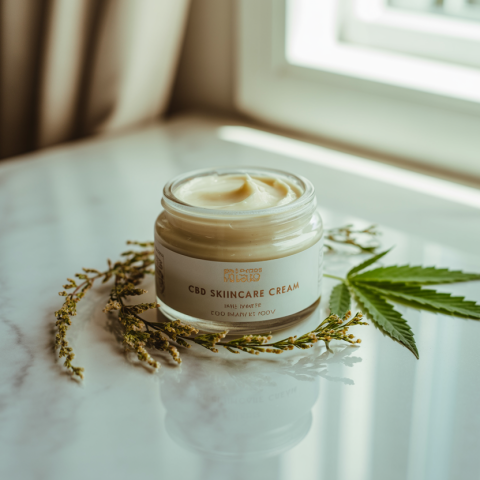
CBD Moisturizers and Creams combine CBD with emollients and humectants. They provide hydration while delivering CBD over a longer period. Good for daily use, especially on dry or combination skin.
CBD Body Lotions are formulated for larger areas. If you’re dealing with body acne, rough patches, or just want the anti-inflammatory benefits across more skin surface, these are the practical choice. Athletes recovering from workouts sometimes pair them with broad-spectrum CBD oils for a combined internal and external approach.
CBD Face Masks offer concentrated, short-term treatment. You apply for 15 to 20 minutes, then remove. They’re useful for weekly treatments targeting inflammation or dullness.
CBD Lip Balms protect and hydrate chapped lips. The anti-inflammatory properties make them particularly good for cold-weather cracking or sun-damaged lips.
📝 Important Note
CBD skincare products are not regulated by the FDA as drugs. The FDA’s current position is that CBD cannot be marketed as a dietary supplement or added to food, and labeling claims about treating specific conditions are not permitted without approval. Always buy from brands that provide transparent lab testing.
Building a CBD Skincare Routine
You don’t need to replace your entire skincare routine with CBD products. Most people get the best results by adding one or two CBD products into their existing regimen.
Morning routine: Cleanser, CBD serum (if using), moisturizer with SPF. The anti-inflammatory properties of CBD can help calm overnight redness before you start your day. Don’t skip sunscreen, CBD is an antioxidant but it is not a substitute for UV protection.
Evening routine: Cleanser, any active treatments (retinol, AHA/BHA), CBD cream or moisturizer. Nighttime is when your skin does most of its repair work, and CBD’s anti-inflammatory properties support that recovery process. If you’re using retinol, apply CBD cream on top, the soothing properties can offset retinol irritation.
Consistency matters more than concentration. Using a moderate-strength CBD product daily will outperform a high-concentration product you use once a week. Give any new CBD skincare product at least 4 weeks before judging whether it’s working.
For those interested in understanding the right dosing for internal CBD products that complement your skincare routine, the CBD dosage calculator is a helpful starting point.
What the Research Says (and What It Doesn’t)
Let’s be honest about where the science stands. The existing research on CBD skincare is promising but still early-stage. Most studies have been small, and many used CBD formulations that differ from commercial products on the market. The American Academy of Dermatology has acknowledged interest in cannabinoid-based therapies but hasn’t issued formal treatment guidelines for CBD skincare yet.
What we know with reasonable confidence: CBD has anti-inflammatory properties when applied topically. It can modulate sebum production. It acts as an antioxidant. These are documented mechanisms. What we’re still figuring out: optimal concentrations for different skin conditions, long-term effects of daily use, and how CBD interacts with other active skincare ingredients.
A 2022 systematic review in the Journal of Dermatological Treatment analyzed 14 studies on cannabinoids in dermatology and concluded that while results were encouraging, larger randomized controlled trials are needed before CBD can be formally recommended as a dermatological treatment. That’s fair. It’s also true that plenty of widely used skincare ingredients (looking at you, niacinamide) were adopted by consumers well before clinical guidelines caught up.
Side Effects and Who Should Be Careful
Topical CBD is generally well-tolerated. The WHO has stated that CBD exhibits no effects indicative of abuse or dependence potential, and topical application has even fewer concerns since it doesn’t enter systemic circulation in significant amounts.
That said, some people experience mild reactions like redness or irritation, usually from other ingredients in the product rather than CBD itself. If you have very sensitive skin, choose fragrance-free formulations and introduce the product gradually.
Pregnant or breastfeeding individuals should avoid CBD products, including topicals, as there isn’t enough safety data for these populations. The same applies to anyone on immunosuppressant medications, since CBD interacts with the cytochrome P450 enzyme system. If you’re on prescription medications, check with your dermatologist. For a broader look at how CBD and medications interact, the stress relief and CBD guide touches on some of those considerations.
Frequently Asked Questions
Does CBD skincare get you high?
No. Topical CBD products do not produce psychoactive effects. Even full-spectrum products contain less than 0.3% THC (the legal limit), and topical application does not deliver enough THC to the bloodstream to cause any intoxication. You can use CBD face cream daily without any cognitive effects.
How long does CBD skincare take to work?
Anti-inflammatory effects can be noticeable within a few days for some people. For acne reduction, texture improvement, and anti-aging benefits, expect to wait 4 to 8 weeks of consistent use. Skin cell turnover cycles take roughly 28 days, so you need at least one full cycle to see meaningful changes.
Can I use CBD skincare with retinol?
Yes, and they actually complement each other well. Retinol can cause dryness and irritation, especially when you first start using it. CBD’s anti-inflammatory properties can help soothe that irritation. Apply retinol first, let it absorb for a few minutes, then layer CBD cream on top.
Is CBD skincare legal?
In most countries and U.S. states, CBD skincare products derived from hemp (containing less than 0.3% THC) are legal to buy and use. However, regulations vary. In the EU, CBD cosmetics are permitted under the Novel Foods framework. In Greece, CBD products are legal as long as they contain less than 0.2% THC. Always check your local regulations.
What concentration of CBD should I look for in skincare?
For facial products, look for at least 100-300mg of CBD per container (typically 30-50ml). For body lotions, 200-500mg is a reasonable range. Products listing CBD in percentages should contain at least 0.5% CBD. Anything below these thresholds is unlikely to deliver meaningful results beyond basic moisturization.
⚠️ Disclaimer
This article is for informational purposes only and does not constitute medical or dermatological advice. The information provided about CBD skincare is current as of March 2026 but may change as new research emerges. Always consult with a qualified dermatologist or healthcare professional before starting any new skincare treatment, especially if you have existing skin conditions or are taking medications. For our full disclaimer, visit cannastoreams.gr/disclaimer.
Recent Visitors: 17
Related Articles
Cannabis Products

5 March 2026
No Comments
Cannabis Products
4 March 2026
1 Comment