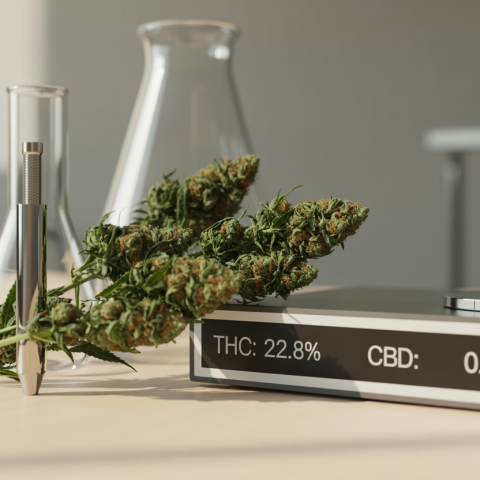
You pick up a jar of cannabis flower, and there it is on the label: 24% THC, 0.3% CBD. But what do those numbers actually tell you about your experience? Less than you might think. Cannabis potency numbers are one of the most misunderstood aspects of buying cannabis, and chasing the highest THC percentage is a mistake that even experienced consumers make. This guide breaks down what every number on a cannabis label means, why some matter more than others, and how to use potency data to make smarter purchasing decisions.
📺 Video Guide
What cannabis potency actually measures
Cannabis potency refers to the concentration of cannabinoids in a given product, expressed as a percentage of total weight. When a label says 20% THC, that means 20% of the product’s dry weight consists of THC (tetrahydrocannabinol), the primary psychoactive compound. Similarly, CBD percentages tell you how much cannabidiol is present.
Testing labs use two main methods to determine these numbers. High-Performance Liquid Chromatography (HPLC) can distinguish between the acid form (THCa) and the active form (THC) without heating the sample. Gas Chromatography (GC) heats the sample during testing, converting all THCa to THC, and gives you a single total number.
Here’s something worth knowing: the raw cannabis plant doesn’t actually contain much active THC. It contains THCa, a non-psychoactive precursor. When you light a joint or heat a vaporizer, THCa converts to THC through a process called decarboxylation. The conversion isn’t perfect either, roughly 87.7% of THCa weight converts to THC, meaning some potency is lost in the process.
THC percentages: what the ranges mean for you
Modern cannabis flower typically ranges from 10% to 35% THC, a massive jump from the 3-4% averages seen in the 1990s according to data tracked by the National Institute on Drug Abuse. But not all THC ranges produce the same experience.
Below 10% THC: Mild effects. Good for beginners, microdosers, or anyone who wants a functional, clear-headed experience. Many CBD-dominant strains fall here.
10-20% THC: Moderate range. This is where a lot of solid, well-balanced flower lives. You’ll feel noticeable effects without being overwhelmed. Many hybrid strains with balanced effects land in this zone.
20-30% THC: Strong. This is the range that dominates dispensary shelves. According to a 2025 Headset report, products in the 28-30% range outsell lower-potency options in many U.S. markets, even though higher THC doesn’t always translate to a better experience.
Above 30% THC: Very potent. Uncommon in flower, more typical in pre-rolls or specially selected cultivars. Best reserved for experienced consumers with established tolerance.
📝 Important Note
A 2025 study from Colorado found that labels frequently overstate potency, with actual THC content averaging around 21% on products labeled significantly higher. The takeaway? Treat label percentages as estimates, not guarantees.
CBD percentages and why they matter more than you think
Most recreational cannabis products list CBD at 0% or close to it. That’s a problem. CBD moderates the effects of THC, potentially reducing anxiety and paranoia that high-THC products can trigger. When CBD is absent, you’re getting the full unmodulated force of THC.
Research published in the Journal of Cannabis Research found that 72-100% of products in studied markets contained almost no CBD. If you’ve ever had an unpleasant experience with cannabis, the lack of CBD could be why.
For a deeper dive into how these two compounds interact, our guide on THC vs CBD differences covers the pharmacology in detail.
THC:CBD ratios and what they tell you
Ratios give you a faster read on what to expect than raw percentages alone. The ratio compares THC content to CBD content, and it significantly changes the character of the experience.
High THC, no CBD (20:1 or higher): Full psychoactive experience. Euphoria, altered perception, possible anxiety at high doses. This is what most recreational flower looks like.
Balanced (1:1): Noticeable but smoother effects. CBD tempers the THC, reducing the chance of overconsumption. Increasingly popular with medical patients and casual users who want control over their experience.
CBD-dominant (1:5 or higher): Minimal psychoactive effects. Therapeutic focus on pain, inflammation, and relaxation. Some users report light mood elevation without impairment. Studies from the World Health Organization have noted CBD’s favorable safety profile at these ratios.
💡 Pro Tip
If you’re new to cannabis or returning after a long break, start with a 1:1 THC:CBD product. You’ll still feel the effects of THC, but CBD acts as a buffer against the uncomfortable side effects that catch beginners off guard. Check out our edibles dosing guide for more on finding your starting point.
Beyond THC and CBD: the other numbers on the label
A proper lab report includes far more than just THC and CBD. Here are the other numbers worth paying attention to.
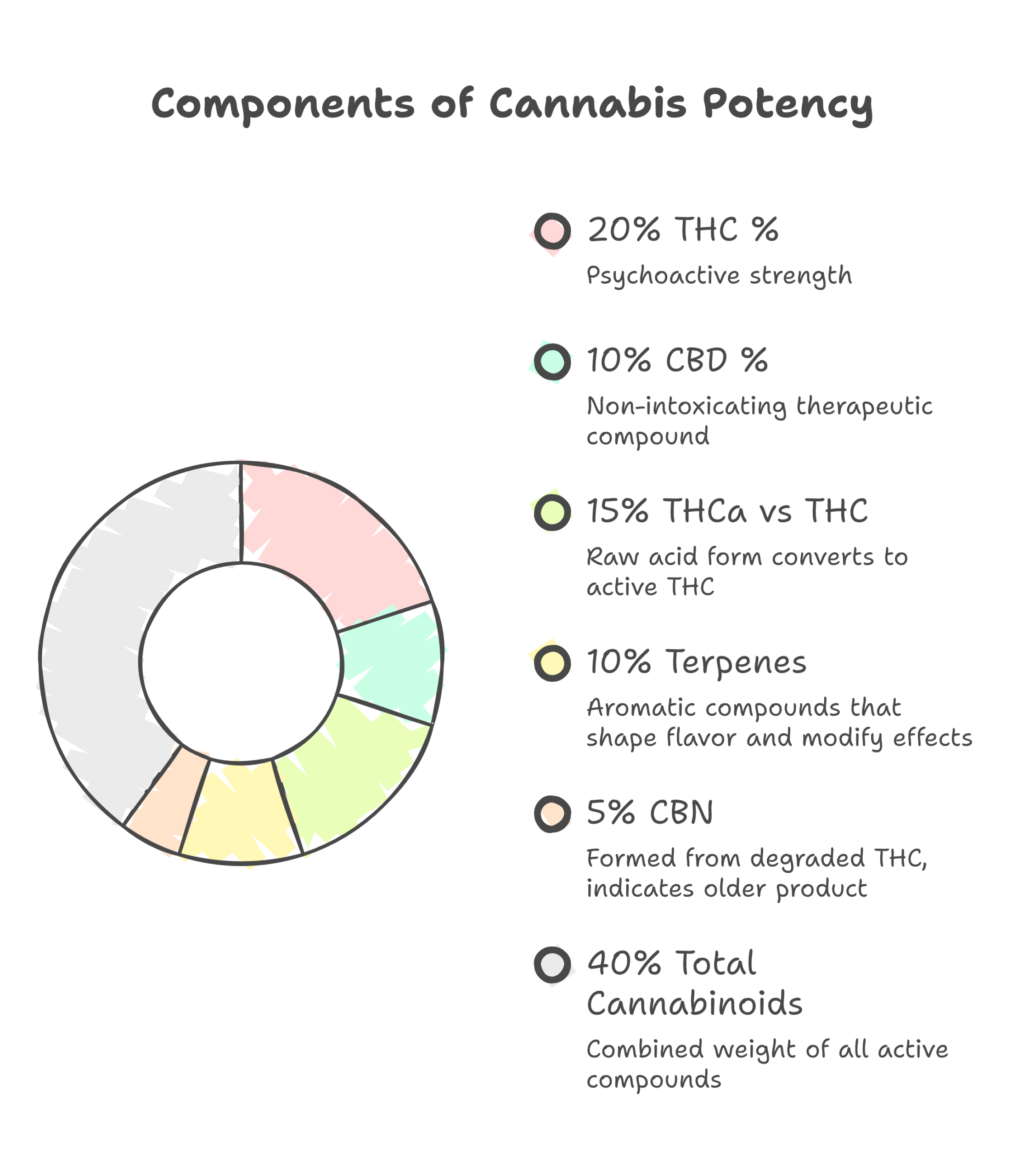
CBN (Cannabinol): Formed when THC degrades over time. Higher CBN levels suggest older product or specific curing processes. CBN is associated with sedation, though research is limited. If you see noticeable CBN on a lab report, the product may have been stored for a while.
CBG (Cannabigerol): Sometimes called the “mother cannabinoid” because other cannabinoids derive from its acid form. CBG is non-psychoactive and is being studied for anti-inflammatory properties. Products listing CBG content are becoming more common.
Terpene profile: Terpenes are aromatic compounds that influence both flavor and effect. Myrcene promotes relaxation, limonene lifts mood, and pinene may improve alertness. A growing body of research suggests terpenes are at least as important as THC percentage in determining how a product makes you feel. Our post on understanding terpenes goes deeper into this topic.
Total cannabinoids: Some labels show a “total cannabinoids” figure, which adds up THC, CBD, CBN, CBG, and trace compounds. A product with 25% total cannabinoids and a diverse profile may produce different effects than one with 25% THC and nothing else.
Why chasing the highest THC percentage is a trap
Here’s the uncomfortable truth that dispensary budtenders wish more people understood: THC percentage is a poor predictor of how high you’ll get. A study from the University of Colorado found that participants who used high-potency concentrates (70%+ THC) weren’t significantly more impaired than those who used moderate-potency flower (16% THC). Blood THC levels were higher, but functional impairment was similar.
Several factors explain this disconnect. Your individual endocannabinoid system, tolerance level, metabolism, and even how you consumed the product all play a role. The American Psychological Association has noted that rising potency levels bring increased risk of dependency and mental health effects, particularly for younger users.
The entourage effect, a theory supported by pharmacological research published in the British Journal of Pharmacology, suggests that cannabinoids and terpenes work together synergistically. A flower with 18% THC, 2% CBD, and a rich terpene profile can produce a more enjoyable experience than a 30% THC strain with nothing else going on.
✓ What to look for instead of raw THC %
- ✓ Terpene diversity and total terpene content (aim for 2%+ total terpenes)
- ✓ Presence of CBD, even in small amounts (0.5-2% makes a difference)
- ✓ Fresh harvest and testing dates (potency degrades over time)
- ✓ Clean lab results showing no pesticides, heavy metals, or mold
- ✓ The strain’s known effect profile and your personal response history
Potency numbers across different product types
Potency numbers mean different things depending on the product format. Comparing percentages across categories without context leads to confusion.
Flower: Percentages represent cannabinoid concentration by dry weight. Typical range is 15-30% THC. This is the most familiar format and where potency percentages originated.
Concentrates: Products like wax, shatter, and live resin range from 60-95% THC. These numbers look alarming, but you consume far less material per use compared to flower. A single dab might contain 20-50mg of THC.
Edibles: Measured in milligrams per serving, not percentages. According to Washington State’s Liquor and Cannabis Board, standard servings are 5-10mg THC. A 100mg chocolate bar with 10 servings is very different from a 100mg single gummy, even though the total THC is identical.
Vape cartridges: Usually list percentages similar to concentrates (70-90% THC). The key variable here is hardware. Different cartridges heat oil at different temperatures, which affects how much THC you actually inhale per puff.
Tinctures: Measured in milligrams per milliliter (mg/mL). A 30mL bottle labeled as 1000mg total THC contains roughly 33mg per dropper. Tinctures absorbed under the tongue hit faster than edibles because they bypass the digestive system.
How to read a cannabis lab report like a pro
Lab reports (Certificates of Analysis, or COAs) are the gold standard for understanding what you’re consuming. If a product doesn’t have an accessible COA, that’s a red flag. Our detailed guide on reading cannabis lab results walks through every section, but here are the essentials.
Look at the cannabinoid profile first. This section lists THC, THCa, CBD, CBDa, CBN, CBG, and sometimes minor cannabinoids like CBC or THCV. The “Total THC” line applies the conversion formula: Total THC = THC + (THCa x 0.877).
Next, check the terpene analysis if available. Total terpene content above 2% usually correlates with more aromatic, flavorful flower that tends to produce more nuanced effects.
Then review the contaminant testing sections: pesticide residues, heavy metals (lead, cadmium, mercury, arsenic), microbial contamination, and residual solvents (for extracts). All of these should show “pass” or “ND” (not detected).
Finally, check the test date. Cannabis degrades over time. THC converts to CBN, terpenes evaporate, and moisture levels change. A COA from six months ago may not reflect the product’s current state.
The label accuracy problem: can you trust potency numbers?
This is the part most brands don’t want to talk about. A 2025 study published in Science Daily found that 44% of cannabis flower products in Colorado had inflated THC levels on their labels. The actual THC content averaged around 21%, regardless of what was printed on the package.
Why does this happen? Several reasons. Labs compete for business, and producers can shop for labs that consistently return higher numbers. Testing methodologies vary. Sample preparation differences lead to different results. And in some markets, there’s direct financial incentive to inflate numbers because higher-potency products command premium prices.
Some states are cracking down. Oregon now requires random compliance testing in addition to the standard pre-sale testing. Other states are implementing stricter lab accreditation requirements. But for now, treat potency labels as ballpark figures, not precision measurements.
Practical tips for using potency information
Knowing what the numbers mean is only useful if you apply that knowledge. Here’s how to put cannabis potency data to work.
Keep a consumption journal. Track the product, its potency numbers, your dose, and how you felt. After a few weeks, patterns emerge. You might discover that you consistently enjoy flower in the 18-22% range more than 28%+ options, or that products with myrcene-dominant terpene profiles work better for your sleep than high-THC alone.
Start low, go slow. This cliche exists because it works. For edibles, begin with 2.5-5mg THC and wait at least two hours before considering more. For flower, take one small puff and wait 15 minutes. The CDC recommends this approach especially for anyone unfamiliar with a new product.
Compare within product types, not across them. 20% THC flower and 20% THC in an edible will produce completely different experiences due to how your body processes each format. Smoking delivers THC to the brain within seconds; edibles take 30 minutes to 2 hours and produce a different metabolite (11-hydroxy-THC) that’s more potent.
Ask about harvest and test dates. Fresher product with a slightly lower THC percentage will often outperform older product that tested higher months ago. Understanding proper cannabis storage helps you maintain whatever potency you start with.
💡 Pro Tip
If you’re comparing two products and one has 25% THC with 0% CBD and the other has 20% THC with 1% CBD, try the lower-THC option first. The presence of CBD often creates a more pleasant, rounded experience that raw THC percentage doesn’t capture.
Frequently Asked Questions
Is higher THC percentage always better?
No. Research consistently shows that THC percentage alone is a poor predictor of subjective effects. Factors like terpene profile, CBD content, your personal tolerance, and consumption method all play significant roles. Many experienced consumers prefer moderate-potency products with diverse cannabinoid and terpene profiles over single-dimension high-THC flower.
What’s the difference between THC and THCa on a label?
THCa is the raw, non-psychoactive acid form found in the living plant. THC is the active form that produces psychoactive effects. When you smoke or vape cannabis, heat converts THCa into THC. The conversion is about 87.7% efficient, so 20% THCa translates to roughly 17.5% active THC. Most labels show “Total THC” which accounts for this conversion.
How accurate are cannabis potency labels?
Studies suggest significant variability. A 2025 Colorado study found that 44% of flower products had inflated THC percentages, with real potency averaging around 21% regardless of label claims. Lab shopping, testing inconsistencies, and financial incentives all contribute to the problem. Treat labels as rough estimates and prioritize overall product quality.
What THC percentage should a beginner start with?
Beginners should start with flower in the 10-15% THC range, ideally with some CBD content (1:1 ratio products are a great starting point). For edibles, begin with 2.5-5mg THC per serving. The goal is to find your minimum effective dose before gradually increasing if needed.
Do terpenes affect potency?
Terpenes don’t directly increase THC levels, but they can modify how you experience cannabis through the entourage effect. Myrcene may enhance THC absorption, while limonene and linalool are associated with mood-lifting and calming effects respectively. Products with 2%+ total terpenes and a diverse terpene profile often produce more complex, satisfying experiences than high-THC products with minimal terpenes.
⚠️ Disclaimer
This article is for informational purposes only and does not constitute medical advice. The information provided about cannabis potency is current as of March 2026 but may change as regulations and testing standards evolve. Always consult with qualified healthcare professionals before using cannabis for medical purposes. Cannabis laws vary by jurisdiction. For our full disclaimer, visit cannastoreams.gr/disclaimer.