
- Popular Strains
Understanding Cannabis Strains: Indica, Sativa, and Hybrid
Contents
Contents
Walk into any dispensary and you’ll see the same three labels everywhere: indica, sativa, hybrid. These categories have shaped how people buy and talk about cannabis for decades. But what do they actually mean? And more importantly, do they still hold up in 2026, when nearly every strain on the market is some form of crossbreed? This guide breaks down the real differences between indica, sativa, and hybrid cannabis strains, what science says about their effects, and how to pick the right one for you.
What Are Cannabis Strains?
A cannabis strain is a specific variety of the cannabis plant bred to have particular characteristics. Think of it like dog breeds: a Golden Retriever and a Chihuahua are both dogs, but they look, behave, and feel very different. Cannabis strains work the same way. Each one has a unique combination of cannabinoids (like THC and CBD), terpenes, flavonoids, and other compounds that create distinct effects, flavors, and aromas.
The classification system most people know splits cannabis into three groups: indica, sativa, and hybrid. This system dates back to the 18th century, when French biologist Jean-Baptiste Lamarck identified Cannabis indica as a separate species from Cannabis sativa based on the plant’s physical appearance. Lamarck noticed that Indian hemp plants were shorter, bushier, and more resinous than the taller European varieties already classified by Carl Linnaeus.
Over time, growers and consumers started associating these physical differences with specific effects. Indicas became “the relaxing ones” and sativas became “the energizing ones.” Whether that mapping is accurate is a whole other question, which we’ll get into below.
Indica Strains: Origins, Traits, and Effects
Indica strains trace their roots to the Hindu Kush mountain region spanning Afghanistan, Pakistan, and northern India. These plants evolved in harsh, high-altitude environments with short growing seasons, which is why they developed a compact, bushy structure. A typical indica plant stands between 2 and 4 feet tall with thick stems, wide fan leaves, and dense flower clusters. They mature faster than sativas, usually flowering in 8 to 9 weeks, which made them popular with growers in northern climates.
The traditional view says indicas produce a heavy body high. People describe it as a full-body relaxation that can leave you glued to the couch. That “couch-lock” reputation is why indicas are commonly recommended for evening use, sleep problems, chronic pain, and muscle tension. According to a 2022 study published in the Journal of Cannabis Research, consumers consistently associate indica labels with sedative effects, regardless of the actual chemical profile of the product.
Well-known indica strains include Granddaddy Purple, Northern Lights, Bubba Kush, and Afghan Kush. These tend to have earthy, musky, or sweet grape-like aromas from terpenes like myrcene and linalool.
✓ Common Indica Effects
- ✓ Deep physical relaxation and muscle relief
- ✓ Sedation and sleepiness at higher doses
- ✓ Appetite stimulation
- ✓ Reduced nausea and pain perception
- ✓ Calming mental effects
Sativa Strains: Origins, Traits, and Effects
Sativa strains come from equatorial regions: Southeast Asia, Central America, Africa, and parts of South America. With long, warm growing seasons available year-round, these plants grew tall and lanky, sometimes reaching 12 feet or more. Their leaves are thin and finger-like, and the buds are more spread out and airy compared to the dense nuggets you see on indicas. Sativas take longer to flower, often 10 to 16 weeks, which is why pure sativas are less common in commercial growing operations.
The conventional wisdom says sativas produce a cerebral, uplifting high. Users report feeling more talkative, creative, and focused. This is why sativa strains are often recommended for daytime use, social settings, creative projects, and mood elevation. Research from the Frontiers in Pharmacology journal has explored how different cannabinoid and terpene ratios may contribute to these varying subjective experiences.
Popular sativa strains include Durban Poison, Jack Herer, Sour Diesel, and Amnesia Haze. These often have citrus, pine, or diesel-like aromas driven by terpenes such as limonene and pinene.
💡 Quick Comparison
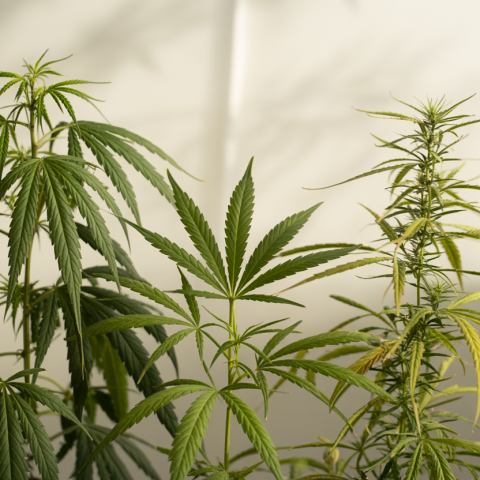
Indica plants are short and bushy with broad leaves and dense buds. Sativa plants are tall and thin with narrow leaves and airy buds. These physical differences are the most reliable distinction between the two. The effect differences (relaxing vs. energizing) are less consistent than most people assume.
Hybrid Strains: The Best of Both
Hybrids are crosses between indica and sativa plants. And honestly, they dominate the modern cannabis market. Very few strains available today are pure indicas or pure sativas. Most have been crossbred so many times that their genetics are a mix. When a dispensary labels something as “hybrid,” they’re usually telling you it doesn’t lean heavily in either direction, or that its lineage includes both types.
Breeders create hybrids to combine desirable traits. Maybe they want the relaxing body effects of an indica with the shorter flowering time, or the uplifting head high of a sativa with better yield. The result is an enormous variety of strains with effects that fall somewhere on a spectrum rather than into neat categories.
Hybrids are typically described as indica-dominant, sativa-dominant, or balanced (50/50). An indica-dominant hybrid like Girl Scout Cookies might give you body relaxation with mild mental stimulation. A sativa-dominant hybrid like Blue Dream could provide energy and focus with a gentle physical calm underneath. Balanced hybrids aim for an even split.
Some of the most popular strains in the world are hybrids: OG Kush, Wedding Cake, Gelato, Gorilla Glue, and Pineapple Express. The Leafly strain database classifies the vast majority of its entries as hybrids.
The Science Behind Cannabis Strain Effects
Here’s where things get interesting. The indica/sativa classification tells you about the plant’s physical structure. It was never designed to predict how a strain will make you feel. A 2020 study in PLOS ONE analyzed hundreds of cannabis samples and found no consistent relationship between indica/sativa labels and cannabinoid or terpene profiles. In other words, two strains both labeled “indica” could have completely different chemical makeups.
What actually determines how cannabis affects you? The answer is the terpene and cannabinoid profile, combined with your own biology.
Cannabinoids are the primary active compounds. THC is psychoactive and responsible for the high. CBD is non-psychoactive and can moderate THC’s intensity. But there are over 100 known cannabinoids, and many of them interact in ways scientists are still working out. The ratio of THC to CBD matters more than whether the plant is short and bushy or tall and lanky.
Terpenes are aromatic compounds that give each strain its smell and taste. They also influence effects. Myrcene, found in many indica-labeled strains, has sedative properties according to research published in the British Journal of Pharmacology. Limonene, common in sativa-labeled strains, is associated with mood elevation. Pinene may improve alertness. This concept, called the entourage effect, suggests that cannabinoids and terpenes work together to shape the overall experience.
Individual biology plays a role too. Your endocannabinoid system, tolerance level, metabolism, and even your mood when you consume all affect the outcome. Two people can smoke the same strain and have very different experiences. A 2021 study in Nature Scientific Reports found that subjective cannabis effects varied significantly between individuals even when using identical products.
📝 The Real Takeaway
Indica and sativa labels are useful starting points, but they’re not reliable predictors of effects. If you want to know how a strain will affect you, look at its terpene profile, cannabinoid ratios, and, when possible, lab test results. Your budtender can help translate those numbers into practical recommendations.
How to Choose the Right Strain for You
Knowing the indica/sativa/hybrid system’s limitations doesn’t mean you should ignore it entirely. It’s still a useful shorthand. But here’s a better approach to finding strains that work for your needs:
Start with your goal. Are you looking to unwind after work? Boost creativity for a project? Manage pain? Sleep better? Your intended use narrows down the options faster than any label.
Check the THC:CBD ratio. High-THC strains (20%+) produce stronger psychoactive effects. Balanced ratios (1:1 THC:CBD) tend to be more mellow and manageable. CBD-dominant strains offer therapeutic benefits with little to no high. The FDA continues to study how different cannabinoid ratios affect consumers, and this data is getting more accessible every year.
Look at the terpene profile. If the dispensary provides lab results or terpene data, use it. Strains high in myrcene tend to be more sedating. Strains high in limonene or terpinolene tend to be more uplifting. Caryophyllene may help with inflammation. Learning even a few terpenes gives you much better predictive power than indica vs. sativa labels alone. You can learn more in our guide on understanding terpenes.
Start low, go slow. If you’re new to cannabis, begin with a low-THC strain or a balanced hybrid. You can always try something stronger next time. First-timers should also consider the CDC’s guidelines on cannabis use for general safety information.
Keep a journal. Track what you try, the strain name, THC/CBD percentages, terpene info if available, the dose, and how it made you feel. After a few sessions, patterns emerge that are far more useful than any label system. Our guide to reading cannabis lab results can help you interpret those numbers.
Popular Strains by Category
To give you a practical starting point, here are some widely available strains in each category, along with their typical terpene profiles and reported effects:
Indica strains:
- Granddaddy Purple — Grape and berry aroma (myrcene, pinene). Known for deep relaxation and appetite stimulation.
- Northern Lights — Sweet, earthy scent (myrcene, caryophyllene). One of the most popular sleep strains worldwide.
- Bubba Kush — Coffee and chocolate notes (caryophyllene, limonene). Heavy body effects with tranquilizing qualities.
Sativa strains:
- Durban Poison — Sweet, spicy aroma (terpinolene, myrcene). Often described as energizing with clear-headed focus.
- Jack Herer — Pine and spice (terpinolene, pinene). Named after the cannabis activist, valued for creative stimulation.
- Sour Diesel — Fuel-like smell (caryophyllene, limonene). Fast-acting and cerebral.
Hybrid strains:
- Blue Dream — Sweet berry scent (myrcene, pinene). Balanced effects with gentle relaxation and mental clarity.
- OG Kush — Earthy, pine, sour (myrcene, limonene, caryophyllene). Parent strain to dozens of modern hybrids.
- Gelato — Sweet, dessert-like (caryophyllene, limonene). Known for euphoria with physical relaxation.
Common Myths About Cannabis Strains
Myth: Indica always makes you sleepy, sativa always gives you energy.
Not necessarily. A high-THC sativa can put some people on the couch, while a low-THC indica might barely register. Your individual response, the dose, and the specific chemical profile matter more than the label. Research from NCBI confirms that consumer expectations (placebo effect) may influence perceived effects more than the indica/sativa classification itself.
Myth: Higher THC means a better strain.
THC percentage gets too much attention. A strain with 18% THC and a rich terpene profile can feel more potent and enjoyable than a 30% THC strain with a flat terpene content. The University of Colorado published research showing that higher THC didn’t necessarily correlate with stronger subjective effects.
Myth: Strain names guarantee consistency.
A “Blue Dream” from one grower might have a very different chemical profile than “Blue Dream” from another. Without standardized genetics and growing conditions, strain names are guidelines, not guarantees. This is why lab testing and third-party certificates of analysis (COAs) are increasingly important.
Frequently Asked Questions
What is the strongest type of cannabis strain?
Strength depends on THC content, not on whether a strain is indica, sativa, or hybrid. Some of the highest-THC strains (25-35%) are hybrids like Godfather OG or Grease Monkey. But “strongest” shouldn’t be your only criteria. A strain with lower THC but a well-rounded terpene profile often provides a more enjoyable and therapeutic experience.
Can I use indica strains during the day?
Yes. Lower doses of indica strains can be functional during the day, especially strains with moderate THC levels. The sedating reputation comes from higher doses. If you know your tolerance and dose appropriately, there’s no rule that says indicas are off-limits before sunset.
Are there any pure indica or sativa strains left?
Very few. Decades of crossbreeding mean most commercial strains are hybrids to some degree. Landrace strains, which are varieties that developed naturally in specific geographic regions without human intervention, are the closest to pure genetics. Examples include Afghan Kush (indica landrace) and Durban Poison (sativa landrace). Some seed banks and specialty growers still preserve these genetics.
Should I choose a strain based on indica/sativa labels or terpenes?
Ideally, use both. The indica/sativa label gives you a rough direction. Terpene data gives you precision. If a dispensary provides lab results with terpene breakdowns, prioritize those. If you only have the label to go by, it’s still a reasonable starting point, just not the whole picture.
How do I know if a hybrid is indica-dominant or sativa-dominant?
Most dispensaries and seed banks list the ratio (e.g., 70% indica / 30% sativa). Online databases like Leafly and Seedfinder also provide this information. Keep in mind that these ratios describe the plant’s genetic lineage, not a guaranteed ratio of effects. Testing the strain yourself in a low dose is the most reliable way to know how it will affect you personally.
⚠️ Disclaimer
This article is for informational purposes only and does not constitute medical advice. The information provided about cannabis strains is current as of March 2026 but may change as new research emerges. Always consult with qualified healthcare professionals for medical advice and treatment options. Cannabis affects everyone differently, and responsible use is essential. For our full disclaimer, visit cannastoreams.gr/disclaimer.
Recent Visitors: 96
Related Articles

Cannabis Products

24 March 2026
No Comments

Cannabis Products
23 March 2026
No Comments