
Best CBD Brands Reviewed for 2026
Best CBD brands reviewed for 2026, with lab testing, hemp sourcing, pricing, and safety tips to help you choose the right CBD oil, gummies, or capsules.

The best CBD brands in 2026 are not just the ones with slick packaging or big claims. The brands worth your money are the ones that publish current lab reports, explain where their hemp comes from, disclose extraction methods, and make it easy to compare potency, spectrum type, and price. After reviewing transparency, product range, certificates of analysis, and real buying signals, five names keep showing up for the right reasons: Joy Organics, Cornbread Hemp, NuLeaf Naturals, Charlotte’s Web, and CBDfx.
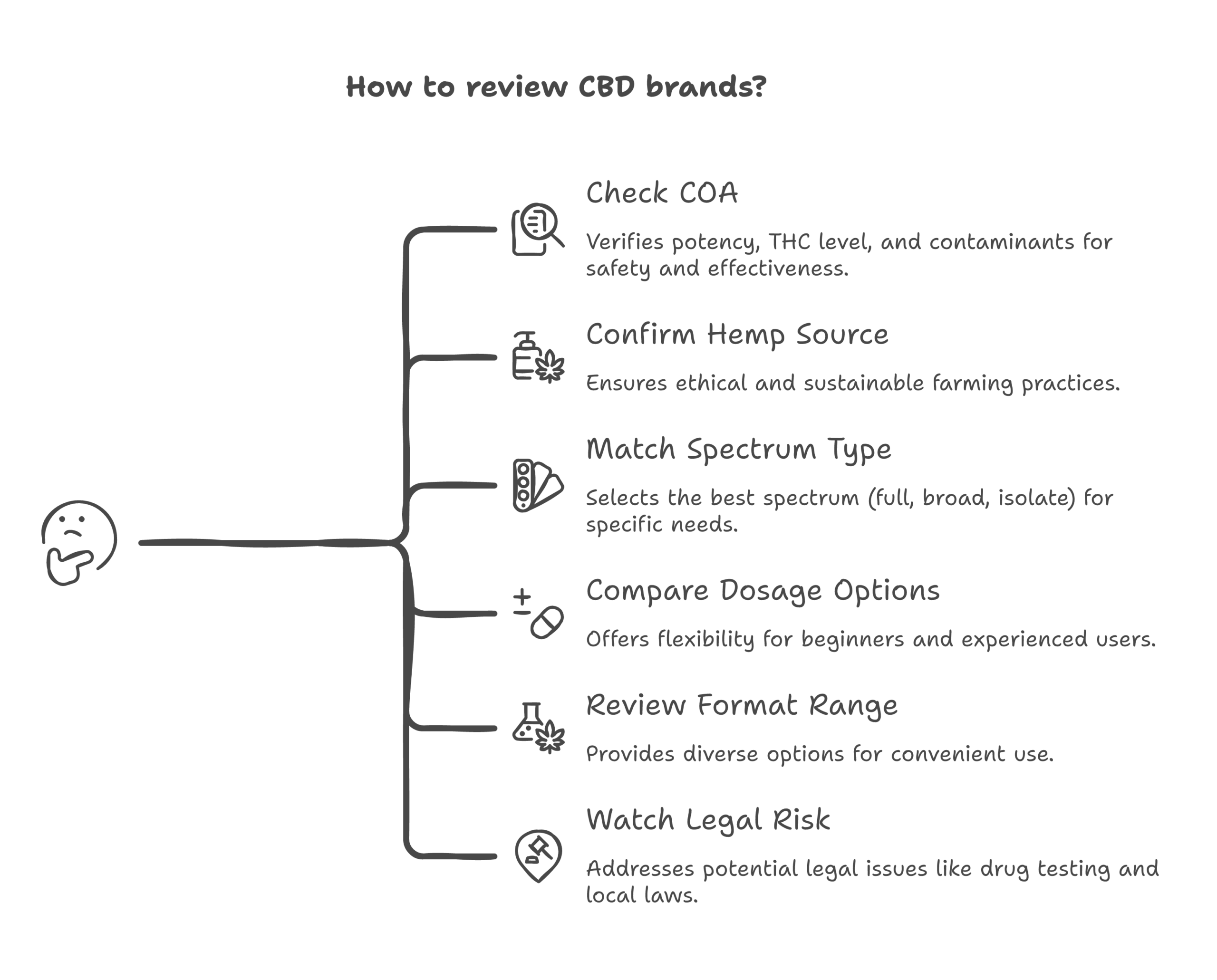
That does not mean one brand is perfect for everyone. Some shoppers want broad-spectrum formulas with no detectable THC. Others want full-spectrum oils with a richer cannabinoid profile. Some care most about sleep support, others about flavor, price, or whether a brand offers gummies, capsules, and topicals in the same product line. The smart move is to compare the brands through a few boring but important filters: third-party testing, hemp source, labeling clarity, dosage options, and how easy it is to verify what is inside the bottle.
If you are still figuring out potency, it helps to start with a practical guide like how to choose the right CBD oil strength before spending on a stronger formula than you actually need.
📺 Video Guide
How we reviewed the best CBD brands
A decent CBD review starts with trust signals, not hype. We looked for brands that publish accessible COAs from independent labs, explain whether they use full-spectrum, broad-spectrum, or isolate extracts, and share clear serving information. The FDA still warns consumers that nonprescription CBD products are not approved before sale, so testing and labeling do a lot of the heavy lifting when you are deciding what to buy.
We also checked how these brands line up with current consumer guidance from the U.S. National Center for Complementary and Integrative Health, which notes that evidence for CBD is still limited outside a few narrow medical uses. That matters because plenty of weak brands try to sell certainty where the research still has open questions. We gave more weight to brands that stay conservative in their claims and let the product data speak for itself.
Finally, we used outside review coverage to cross-check the short list. Outlets like Medical News Today and Forbes Health regularly surface the same handful of transparent brands. That kind of overlap is not a guarantee, but it is a useful filter when combined with direct product documentation.
✓ Key Benefits
- ✓ Verified COAs are easier to trust than marketing copy
- ✓ Clear potency options make dosing simpler for beginners
- ✓ Brands with broad product lines are easier to stick with long term
Best CBD brands reviewed for 2026
1. Joy Organics, best for broad-spectrum shoppers
Joy Organics is a strong fit for people who want THC-free or broad-spectrum options without digging through messy product pages. The brand publishes lab results and product details clearly, and its catalog covers oils, gummies, softgels, and topicals. If your main goal is to avoid even small amounts of THC while keeping a polished user experience, Joy Organics stays near the top of the pack. You can review the brand’s own lab reports page before you buy.
This is the kind of brand that makes sense for first-time buyers comparing tinctures with other formats like CBD gummies vs oil. If you want convenience and softer flavor profiles, that comparison matters more than brand hype.
2. Cornbread Hemp, best for full-spectrum simplicity
Cornbread Hemp has built a clear identity around full-spectrum hemp products and relatively simple formulas. That matters because full-spectrum CBD can appeal to shoppers who want minor cannabinoids and trace THC in the mix, rather than a stripped-down isolate. The brand’s certificate of analysis archive is easy to find, which is a basic standard more CBD companies should meet.
If you are still sorting out spectrum types, start with full-spectrum vs broad-spectrum vs isolate CBD before assuming the richest extract is automatically the right one for you. Better effect for one person can mean an unwanted drug-test risk for someone else.
3. NuLeaf Naturals, best for high-potency straightforward formulas
NuLeaf Naturals keeps things simple, which is honestly refreshing in a crowded market. The brand is known for concentrated oils and a stripped-back catalog that feels more focused than trend-driven. For experienced users who already know they respond well to cannabinoid-rich tinctures, that simplicity can be a plus. The brand makes its third-party lab reports easy to inspect before checkout.
NuLeaf is not always the cheapest option, but it tends to work well for shoppers who care more about concentration and consistency than flavor variety. If you are using CBD as part of a stress routine, pairing brand quality with realistic expectations matters, which is why our CBD for anxiety guide stays useful here.
4. Charlotte’s Web, best-known legacy name
Charlotte’s Web is one of the most recognizable CBD brands in the market, and brand familiarity still counts for something when you are buying online. The company has a broad catalog, mainstream visibility, and a long-running position in the hemp wellness space. Its COA lookup tools make it easier to check a batch before purchase, which should be normal everywhere but still is not.
The tradeoff is price. Charlotte’s Web can feel expensive if you are buying daily-use tinctures or gummies. That said, brand maturity, lot tracking, and a broad support library matter if you prefer an established company over a lower-cost upstart.
5. CBDfx, best for variety across formats
CBDfx is hard to ignore if product variety is your top priority. The company carries oils, gummies, capsules, drinks, and topicals in a way that covers most entry points for new users. That makes it easier to experiment with delivery formats without switching brands every few weeks. The company also maintains a public lab report hub, which is another non-negotiable checkpoint.
CBDfx is usually a better fit for buyers who want menu depth more than minimalist curation. If that sounds like you, keep an eye on ingredient lists and serving sizes. Bigger catalogs sometimes come with more noise.
💡 Pro Tip
Before buying any product from a “best CBD brands” list, open the brand’s COA page and check the exact batch. If you cannot find recent lab data in under a minute, move on.
What separates a strong CBD brand from a weak one
The strongest CBD brands tend to do the small practical things right. They publish cannabinoid potency, contaminant screening, and serving details without forcing you through three landing pages. That matters because hemp extracts can vary a lot by batch, and a label alone does not tell the whole story. The USDA’s hemp guidance and the DEA’s federal cannabis information both reinforce how tightly legal classification can depend on THC thresholds and product origin.
Another separator is restraint. A brand that promises to cure everything usually deserves side-eye. The FTC’s advertising guidance for CBD products is worth reading because it shows how easily marketing can drift into claims that are not backed up. Good brands talk about ingredients, testing, and intended use. Weak brands talk like a miracle is hiding in every gummy.
Price transparency matters too. High cost is not proof of quality, but suspiciously cheap products should make you ask harder questions about hemp source, extraction, and whether the batch was tested for pesticides, heavy metals, and residual solvents. If you want to read a report correctly, our guide to cannabis lab results breaks down what those fields mean in plain English.
Which CBD format fits your routine
Brand choice is only half the decision. Format changes the experience. Oils and tinctures make dosage adjustments easier because you can start low and move up slowly. Gummies are simpler and more discreet, but they take longer to kick in. Capsules work well for routine users who want consistency. Topicals are a separate category altogether because they are usually bought for local, not whole-body, use.
If you are shopping on cannastoreams, brand research gets more useful when paired with real product pages. For example, shoppers comparing broad-spectrum oils can look at products like Anti Stress 20 Broad Spectrum CBD Oil and Anti Stress 25 Broad Spectrum CBD Oil to see how concentration shifts the value equation. People who prefer something lighter might compare those with CBD Drops Olive Oil 3%.
There is no universal winner here. The best CBD brands give you enough range to match the format to your routine, your tolerance, and your budget without guessing.
📝 Important Note
Full-spectrum CBD may contain trace THC. If workplace testing matters to you, broad-spectrum or isolate products are usually the safer starting point, but you should still check the batch report before buying.
Safety and legal checks before you buy
CBD still sits in an awkward legal and medical gray zone. The 2018 Farm Bill definition of hemp created room for hemp-derived CBD with less than 0.3% THC at the federal level in the U.S., but state rules and enforcement still vary. If you are traveling or ordering across borders, that detail matters more than any brand ranking.
Safety is not just about legality. CBD can interact with medications, and the research base is still developing. The NIH LiverTox database tracks possible liver-related concerns, while published clinical reviews on PubMed show why dosage, duration, and product consistency matter so much. If you are on prescription medication, talk to a clinician before treating online reviews like medical guidance.
The short version is simple. Treat the best CBD brands as a shortlist, not a substitute for judgment. The safest buyer is the one who checks the label, the lab report, the serving size, and the local rules before clicking buy.
⚠️ Disclaimer
This article is for informational purposes only and does not constitute medical advice. Information about CBD products and regulations is current as of April 2026 and may change. Always review the latest local laws and speak with a qualified healthcare professional if you have medical conditions, take prescription drugs, or need treatment advice. For our full disclaimer, visit cannastoreams.gr/disclaimer.
Final verdict on the best CBD brands in 2026
If you want the cleanest starting point, Joy Organics is the easiest recommendation for broad-spectrum shoppers. If you want full-spectrum depth and a cleaner product philosophy, Cornbread Hemp is a strong pick. If you want potency and simplicity, NuLeaf Naturals still earns its spot. If you value brand familiarity and a long market presence, Charlotte’s Web remains relevant. If you want the widest menu, CBDfx gives you the most room to experiment.
Still, the real winner is not a logo. It is the brand that matches your needs, publishes honest data, and does not make you work to verify the basics. That is the filter worth carrying into every CBD purchase.
Frequently Asked Questions
What should I check first when comparing the best CBD brands?
Check the batch-specific COA, spectrum type, potency per serving, and hemp source. If those are hard to find, the brand has already failed the first test.
Are full-spectrum CBD brands better than broad-spectrum brands?
Not automatically. Full-spectrum products may suit people who want a fuller cannabinoid profile, while broad-spectrum products are often a better fit for shoppers trying to avoid THC exposure.
Can CBD products trigger a drug test?
Yes, some can. Full-spectrum products may contain trace THC, and mislabeling is still a risk in the wider market. Broad-spectrum and isolate options reduce risk but do not erase it completely.
How many milligrams of CBD should a beginner start with?
There is no single correct number, but beginners usually do better starting low and increasing slowly. The right starting point depends on body size, product type, and personal sensitivity.
Are expensive CBD brands always better?
No. Higher price can reflect stronger potency, better packaging, or broader testing, but it can also reflect branding overhead. The better metric is value per verified milligram plus transparent testing.
