How to Decarboxylate Cannabis Properly
Learn how to decarboxylate cannabis properly with safe oven timing, temperature tips, storage advice, and beginner dosing reminders.

Learning how to decarboxylate cannabis properly is the difference between a controlled homemade infusion and a disappointing batch of inactive plant material. Decarboxylation sounds technical, but the idea is simple: gentle heat converts acidic cannabinoids such as THCA and CBDA into the neutral forms THC and CBD. That activation step matters before making butter, oils, capsules, or culinary infusions, especially if you want predictable results and responsible dosing.
📺 Video Guide
⚠️ Disclaimer
This guide is for adults in jurisdictions where cannabis possession and preparation are legal. Laws vary widely, and information about cannabis regulation in Greece and Europe is current as of May 2026 but may change. Do not drive after consuming THC, keep all cannabis products away from children and pets, and consult a qualified healthcare professional if you use medication or have a medical condition.
Why You Need to Decarboxylate Cannabis First
Raw cannabis contains a large share of cannabinoids in acidic form. THCA and CBDA are not the same as THC and CBD, and they behave differently in the body. Scientific reviews indexed by PubMed describe decarboxylation as a heat-driven chemical change where carbon dioxide is released from acidic cannabinoids. In practical kitchen terms, heat is what prepares cannabis for edible use.
Smoking or vaporizing performs this conversion instantly because the flower is heated during use. Edibles are different. If you place raw flower directly into butter without warming it first, some activation may happen during infusion, but it is usually uneven. That can make potency inconsistent. For a broader safety context, the CDC cannabis health effects guidance reminds consumers that edible effects can be delayed and stronger than expected.
Decarboxylation is also a quality step. Controlled heat helps preserve aroma and reduce waste. Too little heat means weak results. Too much heat can degrade cannabinoids and drive off volatile terpenes, the aromatic compounds discussed in our guide to cannabis terpenes. The goal is not to roast cannabis aggressively. The goal is to warm it gently and evenly.
✓ Key Benefits
- ✓ More consistent potency in butter, oil, and edible recipes
- ✓ Better cannabinoid activation before low-temperature infusions
- ✓ Less waste compared with guessing during cooking
- ✓ Easier beginner dosing when the starting material is prepared consistently
The Best Temperature and Time for Decarboxylation
For most dried cannabis flower, a reliable beginner range is 110-120°C for 30-45 minutes. Many home guides use 115°C as the practical midpoint. This range is warm enough to activate cannabinoids, but not so hot that the flower quickly becomes scorched. Laboratory and extraction literature, including cannabis chemistry material available through NCBI, generally supports the idea that time and temperature must be balanced rather than maximized.
Ovens are not precision instruments. A kitchen oven set to 115°C may swing above and below that number. If you plan to make infusions regularly, use a simple oven thermometer. This is the same practical mindset we recommend in our cannabis lab results guide: numbers only help if you know what they actually mean.
CBD-dominant flower can require slightly longer timing than THC-dominant material because CBDA conversion often benefits from more sustained heat. That does not mean you should crank the temperature. A longer, controlled window is safer than a hotter shortcut. The FDA cannabis and CBD overview is a useful reminder that product composition, intended use, and consumer safety all matter when handling cannabinoids.
💡 Pro Tip
If your oven runs hot, use 110°C and extend the time slightly. Dark brown or burnt-smelling flower means you have gone too far.
Step-by-Step: How to Decarboxylate Cannabis Properly
Step 1: Preheat gently. Set your oven to 115°C and give it time to stabilize. Place an oven thermometer inside if you have one.
Step 2: Prepare the flower. Break cannabis into small, even pieces by hand or with scissors. Avoid grinding it into powder, because fine particles can toast too quickly and make straining harder later.
Step 3: Spread evenly. Line a baking tray with parchment paper and spread the cannabis in a thin layer. For better aroma control, use an oven-safe glass dish with a lid.
Step 4: Heat for 30-45 minutes. Stir gently halfway through. The cannabis should become dry, lightly golden, and aromatic. It should not smoke, blacken, or smell burnt.
Step 5: Cool before opening. Let the tray or covered dish rest for 10-15 minutes. Cooling makes handling easier and may help keep more aroma in the material.
Step 6: Use or store. Add the decarboxylated cannabis to butter, coconut oil, olive oil, capsules, or a recipe. If you are not using it immediately, store it in a sealed jar in a cool, dark place. Our cannabis storage guide explains why air, light, and heat are the enemies of freshness.
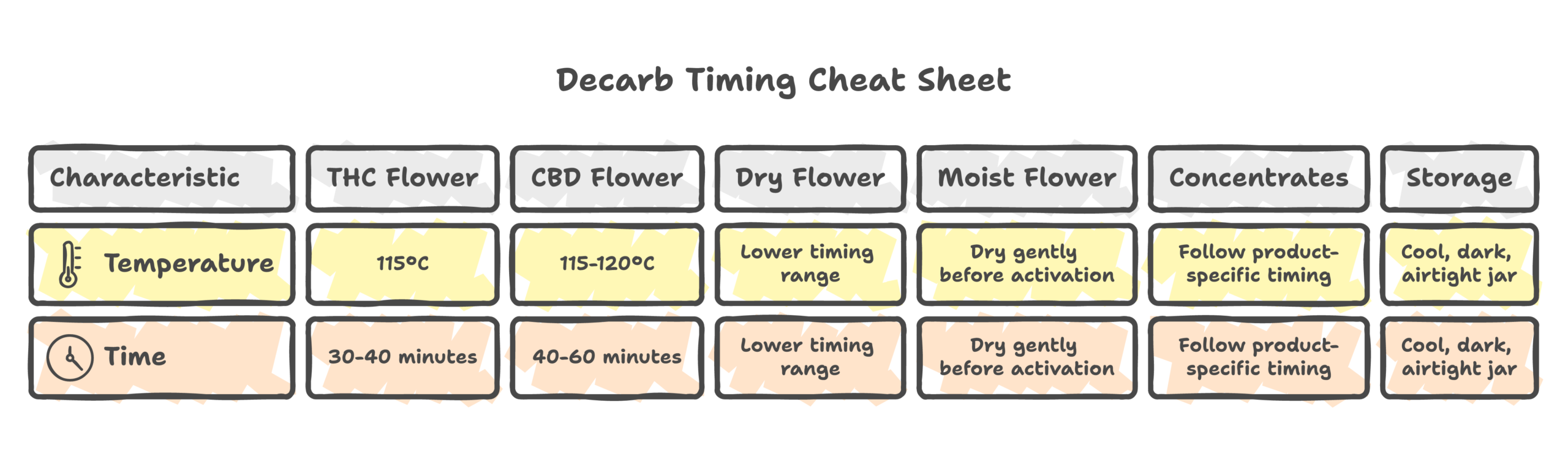
Decarb Timing Cheat Sheet
Use this as a practical starting point, not a laboratory guarantee. Flower moisture, age, grind size, oven stability, and cannabinoid profile all affect results. Organizations such as Health Canada emphasize that cannabis products can vary significantly, which is exactly why consistency matters at home.
- THC-dominant flower: 115°C for 30-40 minutes.
- CBD-dominant flower: 115-120°C for 40-60 minutes.
- Older, very dry flower: lower end of the timing range.
- Fresh or slightly moist flower: dry gently first, then decarb.
- Concentrates: timing varies by texture and purity, so follow product-specific guidance.
Common Mistakes That Ruin a Batch
Using too much heat is the biggest mistake. Higher temperature feels faster, but it can degrade cannabinoids and flatten aroma. Cannabis science educators at Leafly also frame decarb as a controlled activation process, not a high-heat cooking sprint.
Grinding too finely is another problem. Powdered cannabis exposes more surface area to heat and can taste grassy or harsh after infusion. Coarse, even pieces are easier to heat evenly and easier to strain.
Skipping dosing math is where beginners get into trouble. Decarboxylation does not tell you how strong a brownie, capsule, or teaspoon of oil will be. Potency depends on starting cannabinoid percentage, extraction efficiency, infusion volume, and serving size. Read our edibles dosing guide before serving infused food to anyone.
Forgetting legal and health context is also a mistake. The European Monitoring Centre for Drugs and Drug Addiction tracks cannabis policy differences across Europe, while the DEA marijuana fact sheet reflects the stricter federal position in the United States. Always follow local law.
📝 Important Note
Edibles can take 30 minutes to 2 hours to feel noticeable. Do not take more just because nothing happens immediately.
What to Do After Decarboxylation
Once you decarboxylate cannabis, you can infuse it into fat. Butter, coconut oil, and olive oil are common because cannabinoids bind well to fats. If you are cooking, keep the infusion heat low. Do not fry decarboxylated cannabis directly in a pan. Low and slow is cleaner.
Beginners often start with cannabutter because it is familiar and easy to portion. Our full guide on how to make cannabis butter at home walks through infusion and straining after the decarb step. For a simpler wellness routine, some adults prefer ready-made CBD oils such as CBD Oil 10 10ml or higher-strength options like CBD Oil 20 Full Spectrum 10ml, where labeling is easier to follow than homemade batches.
If your goal is flavor rather than strong effects, consider using less plant material and pairing it with herbs, citrus, mint, or chocolate. Products like Cannabis Mint Drops show how format and flavor can change the experience without requiring a full edible recipe. Still, if THC is involved, dose conservatively.
Safety, Storage, and Responsible Use
The safest edible is the one clearly labeled, measured, and stored away from anyone who should not consume it. The FDA quality considerations for cannabis-derived compounds highlight why composition and consistency matter. Homemade products rarely have lab confirmation, so treat them with extra caution.
Never leave infused butter, oil, gummies, or baked goods in ordinary food containers. Label them clearly. Store them in child-resistant packaging if possible. The National Capital Poison Center has warned about accidental edible ingestion, especially when products look like normal sweets.
Adults using prescription medication should be especially careful with CBD and THC. The NHS medical cannabis guidance notes that cannabis-based medicines are not suitable for everyone and should be discussed with clinicians. If you use sedatives, blood thinners, antidepressants, or seizure medication, ask a professional before experimenting.
✓ Responsible Decarb Checklist
- ✓ Confirm cannabis preparation is legal where you live
- ✓ Use a thermometer instead of trusting oven settings blindly
- ✓ Start with low edible servings and wait before taking more
- ✓ Label and lock away all infused products
- ✓ Avoid THC before driving, working, or caring for children
Frequently Asked Questions
Can you decarboxylate cannabis at a lower temperature?
Yes. Lower temperatures can work, but they usually require more time. The advantage is better protection against scorching and terpene loss.
Does decarboxylation make cannabis smell?
Yes, it can smell strongly. A covered oven-safe dish can reduce odor, but it will not eliminate it completely.
Can I decarb cannabis in the microwave?
It is not recommended. Microwaves heat unevenly, which can cause hot spots, weak activation, or burnt material.
Do I need to decarb before making cannabis butter?
Yes, decarbing first is the cleaner method. Some activation happens during infusion, but it is less predictable.
How should I store decarboxylated cannabis?
Use an airtight jar, keep it cool and dark, and label it clearly. For longer storage, refrigeration or freezing can help preserve freshness.
⚠️ Disclaimer
This article is for informational purposes only and does not constitute medical advice. The information provided about medical cannabis in Greece is current as of May 2026 but may change. Always consult with qualified healthcare professionals for medical advice and treatment options. Decisions about medical cannabis should be made in consultation with authorized healthcare providers who understand your specific medical history and conditions. For our full disclaimer, visit cannastoreams.gr/disclaimer.
