Microdosing Cannabis: Benefits & Best Practices
Discover how microdosing cannabis (1-5mg THC/CBD) can boost mood, focus, and sleep without the high. Complete guide with dosing tips, safety advice, and best practices for 2026.

Microdosing Cannabis: Benefits & Best Practices
Microdosing cannabis has emerged as one of the most talked-about wellness trends in recent years, offering a subtle yet effective approach to experiencing the therapeutic benefits of cannabis without the psychoactive effects that many users want to avoid. By consuming very small, controlled doses typically ranging from 1-5mg of THC or CBD, users report experiencing relief from various symptoms while maintaining clear-headedness and daily functionality.
According to recent research published in the National Library of Medicine, microdosing represents a paradigm shift in cannabis consumption, moving away from traditional recreational use toward more medicinal, purpose-driven consumption patterns. This approach aligns perfectly with the growing demand for cannabis products that support wellness rather than simply intoxication.
The concept of microdosing isn’t entirely new—it has roots in pharmaceutical practices where medications are prescribed at the smallest effective dose. However, cannabis microdosing has gained significant mainstream attention in recent years, supported by anecdotal evidence from users and increasing scientific interest in the potential therapeutic benefits of low-dose cannabis consumption.
📺 Video Guide
What Exactly Is Cannabis Microdosing?
Cannabis microdosing refers to the practice of consuming sub-perceptual doses of cannabis—amounts so small they typically don’t produce noticeable psychoactive effects. The doses are carefully calibrated to provide therapeutic benefits while maintaining mental clarity and normal daily functioning. According to Harvard Medical School research, these microdoses are usually 1/10th to 1/20th of what would be considered a typical recreational dose.
The practice typically involves taking small doses throughout the day (usually 2-3 times daily) rather than a single larger dose. This steady, low-level approach allows cannabinoids to maintain consistent levels in the bloodstream, potentially providing more stable effects than intermittent higher dosing.
Microdosing can be done with various forms of cannabis, including oils, tinctures, capsules, and even low-dose edibles. The key principle is consistency—maintaining the same dose at regular intervals to assess its effects accurately. Forbes Business Council notes that successful microdosers often keep detailed journals to track their experiences and fine-tune their dosing over time. For a comprehensive comparison of different consumption methods, our complete guide to cannabis consumption methods covers all the options available to microdosers.
Key Benefits of Microdosing Cannabis
The reported benefits of cannabis microdosing are wide-ranging, covering both mental and physical health applications. Users consistently report improvements in mood, focus, pain management, and sleep quality—all while maintaining their ability to function normally in daily activities.
Research published in Addictive Behaviors journal suggests that microdosing may help reduce anxiety and improve emotional regulation without the sedative effects often associated with higher doses of cannabis. This makes microdosing particularly appealing for individuals seeking relief from anxiety while maintaining mental clarity. For more on cannabis’s therapeutic applications, our article on the medical benefits of cannabis covers its pain relief to seizure management applications.
Perhaps one of the most significant benefits is the reduced risk of adverse effects compared to higher-dose cannabis consumption. According to CDC guidelines, lower doses significantly reduce the likelihood of experiencing paranoia, impaired coordination, or cognitive impairment—making microdosing a safer option for new cannabis users or those sensitive to THC.
✓ Key Benefits
- ✓ Reduced anxiety and improved mood regulation
- ✓ Enhanced focus and cognitive function
- ✓ Better sleep quality and duration
- ✓ Pain management with minimal impairment
- ✓ Lower risk of adverse effects compared to higher doses
Mental Health Benefits
One of the most well-documented benefits of cannabis microdosing is its positive impact on mental health. Many users report significant improvements in symptoms related to anxiety, depression, and PTSD when using microdosing protocols consistently over time.
According to NIMH (National Institute of Mental Health) research, low-dose THC may help modulate the endocannabinoid system, which plays a crucial role in regulating mood, stress responses, and emotional processing. Microdosing appears to provide these mood-regulating benefits without the anxiety or paranoia that some individuals experience with higher doses.
For individuals with depression, microdosing may offer an alternative to traditional antidepressants, often with fewer side effects. Psychology Today reports that many users experience improved mood, reduced anhedonia (loss of pleasure), and increased motivation through regular microdosing. For specific dosage guidance, our comprehensive CBD dosage calculator can help you find your perfect dose.
Sleep quality is another area where microdosing shows significant promise. By helping to calm the nervous system and regulate sleep-wake cycles, microdosing can address both difficulty falling asleep and staying asleep. Sleep Foundation research suggests that microdosing may help reset disrupted sleep patterns without the next-day grogginess sometimes associated with higher doses.
💡 Pro Tip
Take your microdose in the morning rather than evening if you’re using it primarily for focus and mood enhancement. Evening dosing may be more beneficial if your primary goal is improved sleep quality.
Physical Health Benefits
Beyond mental health, cannabis microdosing offers numerous physical health benefits. The anti-inflammatory properties of cannabinoids like THC and CBD can help manage chronic pain conditions without the need for prescription pain medications that often come with significant side effects.
Research from National Institutes of Health shows that low-dose cannabis can be effective for managing conditions like arthritis, fibromyalgia, and neuropathic pain. Microdosing provides consistent pain relief while minimizing the cognitive impairment that can interfere with daily activities and work performance. For detailed information on cannabis’s anti-inflammatory properties, see our article on cannabis for inflammation and its natural relief benefits.
For individuals with autoimmune conditions, microdosing may help modulate the immune response and reduce inflammation throughout the body. Arthritis Foundation reports that many patients with rheumatoid arthritis and lupus experience reduced joint pain and improved mobility through regular microdosing protocols.
Appetite stimulation is another potential benefit, particularly valuable for individuals experiencing appetite loss due to medical treatments like chemotherapy. National Cancer Institute research confirms that cannabinoids can stimulate appetite without the intense hunger or “munchies” often associated with higher doses, making microdosing more manageable for maintaining a healthy diet.
How to Start Cannabis Microdosing
Starting a microdosing protocol requires careful planning and attention to detail. Unlike recreational cannabis use, microdosing is a precise practice that benefits from methodical approach and consistent monitoring of effects.
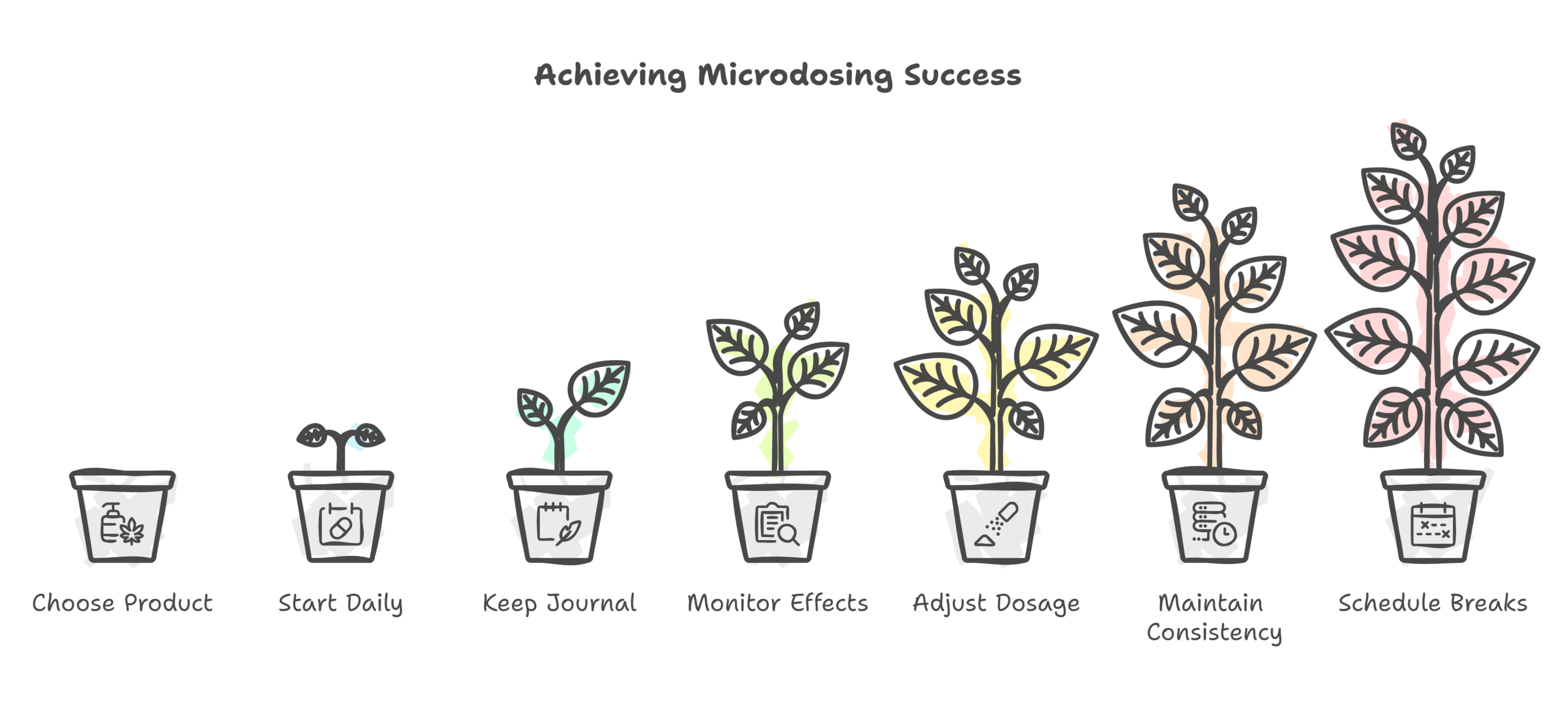
The first step is to choose the right cannabis product and starting dose. Most experts recommend starting with 1-2mg of THC or CBD, depending on your experience level and goals. Healthline’s cannabis experts emphasize that it’s crucial to start with the lowest possible dose and increase gradually only if needed.
Timing is another critical factor. For most users, taking microdoses 2-3 times daily (morning, afternoon, and early evening) provides the most consistent effects. Leafly’s cannabis researchers recommend keeping a detailed journal to track timing, dosage, and effects to identify the optimal schedule for your individual needs.
Consistency is perhaps the most important principle of successful microdosing. Taking your doses at the same time each day and using the same product helps maintain stable cannabinoid levels in your system and makes it easier to track your progress. Clinical research shows that consistent microdosing protocols produce more predictable and beneficial effects compared to irregular dosing patterns.
✓ Getting Started Steps
- ✓ Choose a low-dose product (1-2mg per serving)
- ✓ Start with once daily, gradually increase to 2-3 times
- ✓ Keep detailed journal of effects and timing
- ✓ Monitor for both positive effects and any side effects
- ✓ Adjust dosage only after 2-3 weeks of consistent use
Choosing the Right Products for Microdosing
Not all cannabis products are suitable for microdosing. When selecting products for microdosing, you want those that provide precise, measurable doses and offer consistent effects. Oil tinctures and capsules are generally preferred over flower or edibles for their accuracy and ease of use.
Oil tinctures are often the best choice for beginners due to their precise dosing capabilities. Most tinctures come with droppers marked in milligrams, allowing you to measure exact amounts. Project CBD dosing experts recommend looking for tinctures with clearly labeled potency (mg per drop) and proper third-party lab testing to ensure accuracy.
Capsules offer another excellent option for microdosers who prefer consistent, pre-measured doses. Unlike tinctures, capsules eliminate the need for careful measurement and provide the same dose every time. PubMed research shows that capsules provide more stable blood levels of cannabinoids compared to other methods, making them ideal for maintaining consistent effects.
When selecting cannabis strains for microdosing, you’ll want to consider both THC:CBD ratios and terpene profiles. Leafly’s strain database recommends strains with balanced THC:CBD ratios (1:1 or 1:2) for beginners, as the CBD can help mitigate potential anxiety from THC. High-CBD, low-THC options are often the safest starting point for new microdosers.
💡 Pro Tip
Always choose products that have been third-party lab tested to verify their potency and purity. Look for certificates of analysis (COAs) that confirm the THC and CBD levels are accurate and that the product is free of contaminants like pesticides, heavy metals, and mold.
Monitoring and Adjusting Your Dose
Effective microdosing requires ongoing monitoring and adjustment as you learn how your body responds to different doses and schedules. Keeping a detailed journal is essential for tracking your progress and making informed decisions about your protocol.
Your journal should include several key pieces of information: the exact dose taken, the time of day, any immediate effects, and how you feel several hours later. Harvard Medical School researchers recommend rating your symptoms and mood on a scale of 1-10 before and after each dose to objectively measure the effects.
After consistently using the same dose for 2-3 weeks, you can evaluate whether it’s providing the desired benefits. If you’re not experiencing the effects you’re looking for, you might consider a slight increase in dose—typically 0.5-1mg at a time. Clinical guidelines emphasize making changes slowly and one at a time to identify what’s working.
It’s important to distinguish between the absence of effects and inadequate dosing. Many beginners mistake lack of noticeable psychoactive effects for “not working,” but the benefits of microdosing are often subtle. Forbes Business Council experts note that the therapeutic effects of microdosing may take several weeks to become apparent as your endocannabinoid system adapts to the new regimen.
Safety Considerations and Best Practices
While microdosing is generally considered safer than higher-dose cannabis consumption, there are still important safety considerations to keep in mind. Understanding these potential risks and taking appropriate precautions can help ensure a positive microdosing experience.
One of the most important safety considerations is drug interactions. Cannabis can interact with various medications, including blood thinners, antidepressants, and sedatives. FDA guidelines recommend consulting with a healthcare provider before starting cannabis microdosing, especially if you’re taking any prescription medications, to ensure there are no potentially dangerous interactions.
Tolerance development is another important consideration. While microdosing typically results in slower tolerance development compared to higher doses, it can still occur over time. Research published in the National Library of Medicine suggests that occasional tolerance breaks (taking a week off every 2-3 months) may help maintain effectiveness and prevent needing increasingly higher doses.
Quality control is essential when selecting cannabis products for microdosing. Always choose products that have been third-party tested for potency, purity, and safety. CDC safety guidelines emphasize avoiding products that contain pesticides, heavy metals, or other contaminants that could pose health risks, especially with regular, long-term use.
📝 Important Note
Never drive or operate heavy machinery while under the influence of cannabis, even at microdosing levels. While microdosing typically doesn’t produce significant impairment, individual responses can vary, and it’s better to err on the side of caution when it comes to safety-sensitive activities.
Different Microdosing Methods
There are several different methods for cannabis microdosing, each with its own advantages and considerations. Understanding these different approaches can help you choose the method that best fits your lifestyle, preferences, and specific wellness goals.
Sublingual administration (placing drops under the tongue) is one of the most popular microdosing methods due to its rapid onset and precise dosing capabilities. Healthline’s cannabis experts note that sublingual absorption bypasses the digestive system, allowing cannabinoids to enter the bloodstream more quickly and providing effects within 15-30 minutes, with peak effects typically occurring within 1-2 hours.
Capsule microdosing offers convenience and consistency, making it ideal for users who prefer set-and-forget dosing. PubMed research shows that capsules provide slower, more gradual absorption compared to sublingual methods, with effects typically lasting longer but taking 1-2 hours to begin. This makes capsules a good choice for users who prefer sustained, all-day effects rather than rapid onset.
Topical microdosing is a less common but increasingly popular method for localized relief. Creams, balms, and transdermal patches can provide targeted relief from pain or inflammation without systemic effects. National Institutes of Health research shows that transdermal delivery can provide consistent, long-lasting effects while minimizing psychoactive effects, making it ideal for users who need targeted relief without mental impairment.
Creating Your Microdosing Schedule
An effective microdosing schedule aligns with your daily routine and wellness goals. While there’s no one-size-fits-all approach, several common patterns have emerged based on user experiences and clinical observations.
The most common microdosing schedule involves taking doses 2-3 times daily: once in the morning, once in the early afternoon, and optionally once in the evening. Leafly’s cannabis researchers note that this pattern helps maintain consistent cannabinoid levels throughout the day, providing steady benefits without peaks and valleys that can occur with single daily dosing.
For specific goals, different timing approaches may be more effective. If you’re using microdosing primarily for anxiety management, you might take doses before known stressors (like work meetings or social events). Psychology Today anxiety experts recommend dosing 30-60 minutes before anticipated stress for optimal effect.
For sleep-focused microdosing, evening dosing may be more beneficial. Sleep Foundation sleep specialists recommend taking microdoses 1-2 hours before bedtime for best results, as this allows the cannabinoids to begin working before you go to sleep while minimizing any potential next-day grogginess.
✓ Sample Microdosing Schedule
- ✓ Morning (8:00 AM): 1mg for focus and mood
- ✓ Afternoon (1:00 PM): 1mg for stress management
- ✓ Evening (6:00 PM): 1mg for relaxation and preparation for sleep
- ✓ Weekend schedule: Can be reduced to 2 daily doses for rest days
Legal Considerations
The legal status of cannabis varies significantly by location, and it’s essential to understand the laws in your area before starting a microdosing protocol. While cannabis laws are evolving rapidly, there are still important legal considerations to keep in mind.
In the United States, cannabis legality varies by state, with some states allowing recreational use, others allowing only medical use, and some prohibiting cannabis entirely. DEA guidelines classify cannabis as a Schedule I controlled substance at the federal level, though individual state laws may differ. It’s important to research your specific state and local laws regarding possession, use, and cultivation of cannabis.
In international contexts, cannabis laws can be even more restrictive. United Nations Office on Drugs and Crime data shows that while many countries have begun to reform their cannabis laws, many still maintain strict prohibition. If you’re traveling internationally, it’s crucial to research the cannabis laws of your destination country before bringing any cannabis products.
Even in jurisdictions where cannabis is legal, there are often restrictions on where you can consume it. Most public places prohibit cannabis use, and some states prohibit driving under the influence. NHTSA guidelines emphasize that driving while impaired by cannabis is illegal and dangerous, regardless of the dose consumed.
Common Challenges and Solutions
Despite its many benefits, microdosing cannabis can present various challenges for users. Understanding these common issues and knowing how to address them can help you navigate your microdosing journey more effectively.
One of the most common challenges is finding the right starting dose. Many beginners start with doses that are either too low to be effective or too high to be comfortable. Harvard Medical School researchers recommend starting with 0.5-1mg and increasing gradually by 0.5mg increments every 2-3 weeks until you find your optimal dose.
Another challenge is maintaining consistency in dosing and timing. Life’s demands often make it difficult to maintain a perfect microdosing schedule. Project CBD experts suggest using reminders, setting alarms on your phone, or integrating dosing into existing daily routines (like brushing your teeth) to help maintain consistency.
Product variability can also pose challenges for microdosers. Different batches of cannabis products can vary significantly in potency, even from the same manufacturer. Leafly’s cannabis experts recommend purchasing from reputable dispensaries with consistent quality control and always checking lab results for each new batch of product.
Integrating Microdosing with Other Wellness Practices
Cannabis microdosing works best when integrated with other wellness practices that support overall health and wellbeing. Combining microdosing with lifestyle modifications, mindfulness practices, and other therapeutic approaches can enhance its benefits and create a comprehensive wellness strategy.
Mindfulness practices complement cannabis microdosing beautifully, as both aim to enhance present-moment awareness and reduce reactivity. Clinical research suggests that mindfulness meditation can enhance the therapeutic effects of cannabis by helping users become more attuned to subtle effects and develop healthier relationships with their cannabis use.
Regular exercise and physical activity can enhance the benefits of cannabis microdosing by promoting endocannabinoid system health through natural exercise-induced endocannabinoid release. Harvard Medical School research shows that regular physical activity increases endocannabinoid levels, potentially making the endocannabinoid system more responsive to cannabis microdosing.
Proper nutrition and hydration are also crucial when microdosing cannabis. A balanced diet rich in omega-3 fatty acids, antioxidants, and micronutrients supports endocannabinoid system function and enhances the therapeutic effects of cannabis. Nutritional science research suggests that certain foods can influence endocannabinoid signaling, potentially complementing the effects of cannabis microdosing.
Understanding the Science Behind Microdosing
The therapeutic effects of cannabis microdosing are rooted in the interaction between cannabinoids and the endocannabinoid system (ECS), a complex network of receptors and signaling molecules that plays a crucial role in regulating various physiological processes.
The endocannabinoid system consists of cannabinoid receptors (CB1 and CB2), endocannabinoids (natural cannabis-like compounds produced by the body), and enzymes that regulate the production and breakdown of these compounds. NIMH researchers explain that when we consume cannabis, the THC and CBD compounds interact with this existing system, modulating its activity and producing various therapeutic effects.
Microdosing works by providing gentle, consistent stimulation of the endocannabinoid system without overwhelming it. This approach may help restore balance to a system that might be underactive due to various factors like chronic stress, poor diet, or lack of exercise. Clinical studies suggest that low-dose cannabis can enhance endocannabinoid tone—the overall activity level of the system—potentially leading to improved regulation of mood, pain perception, and immune function.
The concept of “sub-perceptual” dosing is central to microdosing effectiveness. At microdoses, THC doesn’t typically produce noticeable psychoactive effects, but it still interacts with cannabinoid receptors and influences various physiological processes. Harvard Medical School researchers explain that these subtle biochemical interactions can produce significant therapeutic benefits without the mental effects that many users wish to avoid.
Potential Side Effects and How to Manage Them
While microdosing is generally well-tolerated, some users may experience side effects, particularly when starting out or when doses are too high. Understanding these potential side effects and knowing how to manage them can help ensure a positive microdosing experience.
The most common side effects of cannabis microdosing include mild dizziness, dry mouth, slight changes in appetite, and subtle mood shifts. CDC guidelines note that these side effects are typically mild and short-lived, often resolving within a few hours as the body adjusts to the new dosing regimen.
Mild anxiety or increased heart rate can occur in some individuals, particularly if they’re sensitive to THC or if their dose is too high. Harvard Medical School anxiety specialists recommend reducing the dose if anxiety occurs and ensuring adequate hydration, as dehydration can sometimes amplify anxiety symptoms.
Cognitive effects, while typically minimal at microdoses, can still affect some users. If you experience difficulty concentrating or memory issues, research published in the National Library of Medicine suggests adjusting the timing of your doses or reducing the amount, as these cognitive effects are often dose-dependent and temporary.
✓ Side Effect Management
- ✓ Stay well-hydrated throughout the day
- ✓ Take doses with food to reduce stomach upset
- ✓ Adjust timing if cognitive effects interfere with activities
- ✓ Monitor symptoms in a journal to identify patterns
- ✓ Consult healthcare provider if side effects persist or worsen
Long-Term Considerations
When considering long-term cannabis microdosing, it’s important to think about sustainability, potential tolerance development, and the overall impact on your health and wellbeing. While microdosing is generally considered safe for extended use, there are some important long-term considerations to keep in mind.
Tolerance development is an important long-term consideration. While microdosing typically results in slower tolerance development compared to higher doses, it can still occur over extended periods. Research published in the National Library of Medicine suggests that occasional tolerance breaks (taking 1-2 weeks off every 2-3 months) may help maintain effectiveness and prevent needing increasingly higher doses over time.
The financial aspect of long-term microdosing is another consideration. While microdosing uses less cannabis than recreational use, regular purchasing can still add up over time. Forbes Business Council financial analysts suggest budgeting for cannabis costs and exploring bulk purchasing or subscription options to make long-term microdosing more affordable.
From a health perspective, regular monitoring becomes increasingly important with long-term use. While research suggests that microdosing is generally safe, CDC guidelines recommend regular health check-ups and blood work to monitor liver function, cardiovascular health, and other important health metrics when using cannabis regularly over extended periods.
Creating a Personalized Microdosing Plan
Creating a personalized microdosing plan involves considering your individual needs, goals, preferences, and biological factors. A one-size-fits-all approach rarely works for microdosing, as individual responses can vary significantly based on genetics, body chemistry, lifestyle, and specific health conditions.
The first step in creating your personalized plan is to clearly define your goals. Are you seeking relief from anxiety, improved sleep, pain management, enhanced focus, or mood support? Different goals may require different approaches in terms of timing, dosage, and product selection. Harvard Medical School researchers recommend writing down specific, measurable goals and regularly reassessing your progress toward those goals.
Your individual biology plays a significant role in determining your optimal microdosing protocol. Factors like metabolism, body weight, cannabinoid receptor density, and overall endocannabinoid system health can all influence how you respond to cannabis microdosing. Clinical research suggests that smaller individuals and those with faster metabolisms may need slightly lower doses than larger individuals or those with slower metabolisms.
Lifestyle factors should also be considered when developing your microdosing plan. Your work schedule, stress levels, sleep patterns, and daily activities can all influence the optimal timing and dosage for your needs. Project CBD lifestyle experts recommend aligning your microdosing schedule with your natural circadian rhythms and daily routine for best results.
✓ Personalized Planning Checklist
- ✓ Define specific, measurable goals
- ✓ Consider individual biological factors
- ✓ Align with lifestyle and daily routine
- ✓ Choose appropriate products and methods
- ✓ Plan for ongoing monitoring and adjustment
Frequently Asked Questions
How long does it take to see effects from microdosing?
Effects from cannabis microdosing can vary depending on the method of administration. Sublingual methods typically produce effects within 15-30 minutes, while capsules may take 1-2 hours to begin working. Many users report noticing subtle changes within the first week, but more significant benefits often emerge after 2-4 weeks of consistent use as the endocannabinoid system adapts to the new regimen.
Can I microdose while taking prescription medications?
It’s crucial to consult with your healthcare provider before combining cannabis microdosing with prescription medications. Cannabis can interact with various medications, including blood thinners, antidepressants, and sedatives. FDA guidelines emphasize the importance of professional medical supervision when combining cannabis with other medications to ensure safety and avoid potentially dangerous interactions.
Is microdosing addictive?
Research suggests that microdosing carries a lower risk of addiction compared to higher-dose cannabis use. Clinical studies indicate that low-dose cannabis use typically doesn’t produce the same level of dependence or craving that can occur with higher doses. However, any form of cannabis use carries some potential for psychological dependence, especially if used to escape rather than enhance wellbeing.
What’s the best time of day to microdose?
The optimal timing for microdosing depends on your goals. For focus and mood enhancement, morning dosing (8-9 AM) is typically most effective. For anxiety management, dosing before known stressors (30-60 minutes before meetings or events) works well. For sleep improvement, evening dosing (6-8 PM) is usually best. Most users find success with 2-3 daily doses spaced throughout the day for consistent effects.
How do I know if my dose is too high?
Signs that your dose may be too high include noticeable psychoactive effects (elevated heart rate, anxiety, paranoia), cognitive impairment (difficulty concentrating, memory issues), or physical discomfort. If you experience any of these effects, consider reducing your dose by 0.5-1mg. Microdosing should enhance rather than impair your daily functioning, so any interference with normal activities is a sign that your dose may need adjustment.
Can I microdose if I have no cannabis experience?
Absolutely! Microdosing is actually an excellent approach for beginners to cannabis. Starting with very low doses (0.5-1mg) allows you to experience the potential benefits while minimizing the risk of unwanted psychoactive effects. Healthline’s cannabis experts recommend starting with high-CBD, low-THC products for beginners and gradually increasing THC content as you become more comfortable with cannabis.
⚠️ Disclaimer
This article is for informational purposes only and does not constitute medical advice. The information provided about medical cannabis in Greece is current as of April 2026 but may change. Always consult with qualified healthcare professionals for medical advice and treatment options. Decisions about medical cannabis should be made in consultation with authorized healthcare providers who understand your specific medical history and conditions. For our full disclaimer, visit cannastoreams.gr/disclaimer.
