
How to Clean Cannabis Equipment Safely
Learn how to clean cannabis equipment safely with simple steps for pipes, bongs, grinders, and vaporizers.

Learning how to clean cannabis equipment is not just about making your setup look better. Clean glass, grinders, pipes, and vaporizer parts can protect flavor, improve airflow, reduce stale residue, and make every session feel more intentional. For adults who choose cannabis wellness products, cleaning is part of responsible use, just like checking labels, understanding potency, and storing products correctly.
Residue builds up because smoke, vapor, oils, plant particles, and moisture collect on surfaces. Public health resources such as the CDC hygiene guidance explain why routine cleaning matters for items that touch the mouth or hands. Chemical safety resources from the NIOSH isopropyl alcohol profile also remind users to treat alcohol-based cleaners with care because they are flammable and should be used with ventilation.
📺 Video Guide
Why Clean Cannabis Equipment Matters
Cannabis equipment has one job: deliver the product as cleanly and consistently as possible. When a grinder is sticky, flower becomes uneven. When a pipe is clogged, draws become harsh. When a vaporizer screen is blocked, the device works harder and tastes worse. That is why cleaning belongs next to product education topics like reading cannabis lab reports and understanding cannabis potency.
The goal is not aggressive scrubbing. The goal is controlled maintenance: loosen residue, dissolve sticky buildup, rinse thoroughly, and dry completely. The EPA label-reading guidance is a useful reminder for any cleaning product: read instructions first and do not improvise with chemicals. For cannabis gear, simple materials usually work best, especially warm water, coarse salt for glass, cotton swabs, pipe cleaners, and high-percentage isopropyl alcohol where appropriate.
Clean equipment also helps you spot damage earlier. Cracked glass, degraded silicone, loose vape seals, rusty metal, or scratched nonstick surfaces are easier to notice after cleaning. If something looks unsafe, smells chemical, or cannot be rinsed clean, replacement is smarter than pushing it through another session.
✓ Key Benefits
- ✓ Better flavor from less stale resin and ash
- ✓ Smoother airflow through pipes, bongs, and vaporizers
- ✓ Easier dosing because devices perform more predictably
- ✓ Longer equipment life with less sticky mechanical stress
The Safe Cleaning Kit You Actually Need
A practical cleaning kit does not need to be expensive. Start with sealable bags or containers, cotton swabs, soft brushes, pipe cleaners, paper towels, gloves, coarse salt, warm water, and isopropyl alcohol. The National Capital Poison Center explains that isopropyl alcohol can be harmful if ingested, so keep it away from children, pets, food, and finished cannabis products.
Use alcohol only on materials that tolerate it. Glass and stainless steel usually handle it well. Some plastics, painted parts, wood, natural stone, acrylic, rubber seals, and electronic components may not. For vaporizers, always follow the manufacturer instructions. Storz & Bickel, for example, publishes official device support resources because removable parts and electronic bodies need different care.
For shoppers building a maintenance setup, a quality aluminium grinder, a reliable herb vaporizer, and spare cleaning accessories can make the routine easier. The same principle applies to product selection: buy gear that can be disassembled, rinsed, and dried without drama.
💡 Pro Tip
Create a dedicated cleaning box and keep it away from your cannabis products. That prevents cleaner smells, spilled alcohol, or wet tools from contaminating flower, edibles, or papers.
How to Clean Cannabis Equipment Step by Step
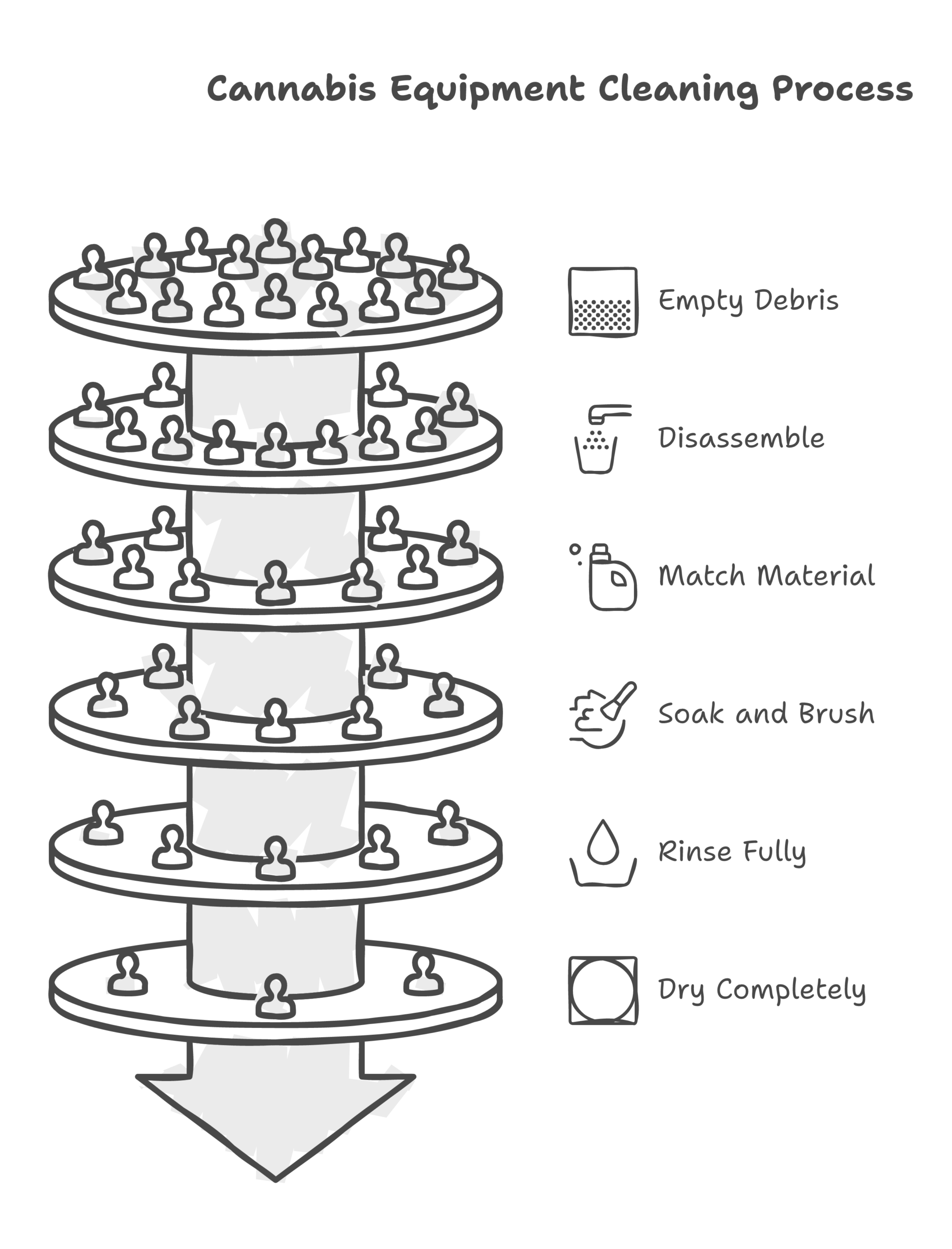
Step 1: Disassemble carefully. Remove bowls, stems, screens, mouthpieces, grinder chambers, or vaporizer cooling pieces. Take a quick photo before disassembly if the device has several small parts. This avoids the classic “where did this little ring come from?” moment later.
Step 2: Remove dry debris first. Tap out ash, loose flower, and crumbs before adding liquid. Dry removal reduces mess and helps alcohol or warm water reach the sticky residue directly. If you use premium CBD flower such as Amnesia Haze Superior CBD Flower, this also keeps older plant particles from mixing into future sessions.
Step 3: Choose the right method. Glass can usually be shaken with isopropyl alcohol and coarse salt. Metal grinder pieces can soak briefly, then be brushed. Silicone often prefers warm soapy water unless the manufacturer says otherwise. Electronics should never be submerged. The FDA consumer updates are a useful general reminder that products touching the mouth should be handled with basic hygiene and safety in mind.
Step 4: Rinse until neutral. After cleaning, rinse repeatedly with warm water until there is no alcohol smell, soap slickness, or visible residue. The FDA safe handling guidance is food-focused, but the principle transfers well: surfaces that contact the mouth should not carry leftover chemicals.
Step 5: Dry completely. Water trapped in a bong stem, vaporizer mouthpiece, or grinder chamber can make future use unpleasant and may encourage grime to return faster. Air-dry pieces on a clean towel, then inspect before reassembly.
Cleaning Glass, Pipes, Grinders, and Vaporizers
Glass bongs and pipes: Empty the water after each use, not “tomorrow.” For deeper cleaning, add isopropyl alcohol and coarse salt, cover openings securely, shake gently, then rinse many times. Do not use boiling water on delicate glass because thermal shock can crack it. If a piece has labels, paint, or decorative finishes, avoid soaking the exterior.
Hand pipes and one-hitters: Use cotton swabs, pipe cleaners, and short soaks. Ceramic pieces need extra caution. Do not scrape aggressively if the glaze is damaged. For small accessories, a purpose-built smokers kit keeps tools organized and reduces the temptation to use metal knives or improvised sharp objects.
Grinders: Brush dry herb dust first. Freeze a sticky grinder for 20 minutes if needed, then tap gently to loosen plant material. For metal grinders, a short alcohol soak can help, but plastic or painted grinders may need warm water instead. Dry every tooth and thread before reassembly so the grinder does not seize.
Vaporizers: Clean screens, mouthpieces, and removable cooling parts according to the manual. Keep alcohol away from batteries, heating elements, ports, and displays. Research summaries from NCBI Bookshelf explain that inhaled products and devices raise different exposure questions than oral products, which is another reason device hygiene matters.
📝 Important Note
Never mix cleaning chemicals. Avoid bleach, ammonia, acetone, gasoline, or mystery solvents. Simple cleaning is safer, cheaper, and easier to rinse fully.
How Often Should You Clean Your Setup?
Frequency depends on use. Daily users should rinse glass water pieces daily and deep clean weekly. Occasional users can deep clean after several sessions, but water should still be changed immediately. Grinders can be brushed weekly and deep cleaned monthly. Vaporizers usually perform best when screens and mouthpieces are cleaned before buildup blocks airflow.
A simple maintenance rhythm works better than emergency cleaning. After each session, empty ash, dump used water, and wipe mouthpieces. Once a week, inspect screens, seals, and stems. Once a month, deep clean grinders and storage accessories. This is the same mindset behind proper cannabis storage: small habits protect the experience.
If you share legal adult-use accessories with another adult, clean mouthpieces between users. The WHO hygiene resources and MedlinePlus infection control guidance both reinforce the basic idea: shared mouth-contact items deserve extra hygiene.
Mistakes to Avoid When You Clean Cannabis Equipment
The biggest mistake is rushing. Alcohol needs time to dissolve residue, brushes need gentle pressure, and rinsing needs patience. A piece that smells like solvent is not ready to use. The second mistake is using the same method for every material. Glass, silicone, wood, acrylic, painted metal, and electronics all respond differently.
Another common mistake is forgetting ventilation. Isopropyl alcohol vapors are not something to inhale for fun. The OSHA chemical hazards guidance explains why basic ventilation, gloves, and avoiding ignition sources matter when handling chemicals. Keep alcohol away from candles, lighters, hot coils, and stovetops.
Finally, do not clean gear while impaired. It sounds obvious, but slippery glass, flammable alcohol, and tiny vaporizer seals are a bad combination when attention is low. Clean before a session, not after one.
⚠️ Disclaimer
This article is for informational purposes only and does not constitute medical, legal, or chemical safety advice. The information provided about cannabis equipment cleaning and medical cannabis in Greece is current as of May 2026 but may change. Always follow manufacturer instructions, use legal products responsibly, and consult qualified professionals for medical advice. For our full disclaimer, visit cannastoreams.gr/disclaimer.
Clean Cannabis Equipment Checklist
Use this quick routine when you want a reliable reset: empty all old material, disassemble what can be removed, match the cleaning method to the material, soak only safe parts, brush gently, rinse until neutral, dry completely, inspect for damage, and store in a clean place. If you follow those steps, learning to clean cannabis equipment becomes a calm five-to-fifteen-minute habit instead of a sticky weekend project.
For adult consumers, clean gear supports the bigger wellness picture. Pair it with careful dosing, quality products, and legal awareness. If you are choosing between smoking, vaping, oils, edibles, or accessories, compare the practical maintenance needs too. The best setup is not only the one that looks good on the shelf. It is the one you can keep clean, safe, and consistent.
Frequently Asked Questions
What is the safest way to clean glass cannabis equipment?
For most plain glass pieces, use isopropyl alcohol with coarse salt, shake gently, rinse repeatedly with warm water, and dry fully. Avoid boiling water on delicate glass.
Can I clean a vaporizer with alcohol?
Only use alcohol on removable parts if the manufacturer allows it. Never pour alcohol into the electronic body, battery area, charging port, or heating chamber unless the manual specifically says it is safe.
How often should I clean a bong?
Empty and rinse water pieces after each use. Deep clean at least weekly for regular use, or sooner if the water smells stale, airflow drops, or residue becomes visible.
Can I use dish soap instead of isopropyl alcohol?
Dish soap works well for some silicone, plastic, and general hand-washable accessories. Sticky resin on glass or metal often needs isopropyl alcohol, but always check material compatibility first.
How do I know if equipment should be replaced instead of cleaned?
Replace gear if it is cracked, flaking, rusting, warped, permanently sticky, chemically scented after rinsing, or impossible to dry properly. Clean equipment should look and smell neutral.
