If you’ve ever smoked a joint and then spent three hours rearranging your entire living room because “the energy just felt off,” you already know sativa strains hit different. But picking the right one for creative work or focused productivity? That takes a bit more intention than grabbing whatever your buddy recommends. Sativa strains for creativity and focus have become a go-to for artists, writers, and professionals who want to tap into that heightened state of flow without the couch-lock that comes with heavy indicas.
This guide breaks down the best sativa strains that actually deliver on the creativity and focus promise, backed by what we know about their terpene profiles and cannabinoid content. No hype, just strains that work.
📺 Video Guide
Why sativa strains work for creativity and focus
The relationship between cannabis and creativity isn’t just anecdotal. A study published in Consciousness and Cognition found that cannabis users scored higher on measures of convergent thinking, a key component of creative problem-solving. The mechanism seems tied to how THC interacts with dopamine pathways in the prefrontal cortex, the brain region responsible for both creative thinking and executive function.
Sativa-dominant strains tend to produce more cerebral, uplifting effects compared to their indica counterparts. This comes down to their terpene profiles. Sativas are typically higher in pinene (alertness and memory retention), limonene (mood elevation), and terpinolene (creative stimulation). These terpenes work alongside THC through what researchers call the entourage effect, where multiple cannabis compounds amplify each other’s benefits.
That said, there’s a sweet spot. Too much THC can actually impair focus and send your thoughts spiraling. The Frontiers in Pharmacology journal documented this biphasic effect: low to moderate doses enhance divergent thinking, while high doses tend to do the opposite. So dosing matters as much as strain selection.
Top 8 sativa strains for creativity and focus
1. Durban Poison
THC: 17-26% | Genetics: Pure landrace sativa from South Africa
Durban Poison is one of the few pure sativa landrace strains still widely available, and it’s a favorite among creatives for good reason. The high is clean and energizing without the jittery edge you sometimes get from heavily hybridized sativas. Its terpene profile is dominated by terpinolene, which produces a clear-headed stimulation that pairs well with brainstorming sessions or deep work blocks.
What makes Durban Poison stand out is its consistency. Unlike some strains that hit differently batch to batch, this landrace delivers a reliable uplifting effect. According to Leafly’s strain database, users consistently report feeling energized, creative, and focused. It’s the strain you pick when you need to actually finish the project, not just think about it.
2. Jack Herer
THC: 18-24% | Genetics: Haze x Northern Lights #5 x Shiva Skunk
Named after the cannabis activist and author of “The Emperor Wears No Clothes,” Jack Herer has won nine Cannabis Cup awards. The high starts with a rush of cerebral energy that gradually settles into focused clarity. It’s rich in terpinolene and pinene, a combination that supports both alertness and memory, something you actually need when working on complex creative tasks.
I’ve seen this strain recommended specifically for writers and musicians who need to stay in the zone for extended periods. The Journal of Psychopharmacology has documented how pinene-rich cannabis varieties may counteract some of THC’s short-term memory effects, which explains why Jack Herer feels more functional than many high-THC alternatives.
3. Super Silver Haze
THC: 18-23% | Genetics: Skunk x Northern Lights x Haze
Three-time Cannabis Cup winner, and for good reason. Super Silver Haze produces a long-lasting cerebral high that builds gradually. You don’t get smacked by it; it eases you into a productive headspace. The dominant terpenes are limonene and caryophyllene, giving it a citrusy, slightly spicy aroma and a mood-boosting effect that pairs well with creative problem-solving.
This strain works particularly well for visual artists and designers. The slight perceptual enhancement it provides can make colors seem more vivid and spatial relationships more interesting. If you’ve ever wanted to look at a design layout with completely fresh eyes, Super Silver Haze gets you there without making you forget what you were working on.
4. Sour Diesel
THC: 17-26% | Genetics: Chemdawg 91 x Super Skunk
Sour Diesel hits fast and hard with an energizing cerebral rush. It’s the espresso shot of cannabis strains. The high limonene and myrcene content creates an interesting balance: you get the uplifting energy from limonene paired with just enough physical relaxation from myrcene to keep anxiety at bay. This makes it excellent for focus-heavy creative tasks where you need sustained attention.
According to the DEA’s cannabis fact sheet, sativa-dominant strains like Sour Diesel tend to produce more stimulating effects due to their cannabinoid-terpene ratios. Experienced users often prefer this strain for morning creative sessions, treating it as their “wake and create” option. Fair warning though: the pungent diesel aroma is not subtle. Your neighbors will know.
5. Green Crack
THC: 15-25% | Genetics: Skunk #1 x Isolated American Sativa
Don’t let the name fool you. Green Crack, sometimes marketed as “Green Cush” for obvious branding reasons, is one of the most reliable productivity strains available. It delivers a sharp, focused high that’s heavy on mental energy without much of the spacey wandering that some sativas produce. The dominant terpene is myrcene, but the sativa genetics push it firmly into energizing territory.
This is the strain people reach for when they have a deadline. It keeps your mind locked onto tasks and makes repetitive creative work (editing, mixing, coding) feel less tedious. Healthline’s sativa guide lists it as a top pick for daytime productivity, and user reviews consistently mention improved task completion.
6. Amnesia Haze
THC: 20-25% | Genetics: South Asian x Jamaican x Afghani Hawaiian
Another Cannabis Cup winner with a psychedelic edge that creative types love. Amnesia Haze produces a euphoric, uplifting high that can spark genuine “aha moments.” The terpene profile leans heavily on limonene and terpinolene, creating a citrusy, slightly earthy experience that stimulates creative thinking.
The name is misleading. While high doses might make you forget where you put your keys, moderate doses actually produce remarkable clarity and creative flow. It takes a bit longer to hit than some other sativas on this list (often 10-15 minutes), but once it arrives, you get a steady creative buzz that can last 2-3 hours. Perfect for long studio sessions.
7. Tangie
THC: 19-22% | Genetics: California Orange x Skunk
Tangie smells exactly like someone peeled a tangerine in the room, thanks to its sky-high limonene content. This terpene dominance isn’t just about flavor. Research published in the International Journal of Molecular Sciences suggests limonene has anxiolytic and mood-elevating properties that complement THC’s creative effects.
Tangie is particularly good for brainstorming and ideation phases of creative work. When you need quantity of ideas rather than refined execution, this strain opens up lateral thinking. The high is bright and social, making it a solid choice for collaborative creative work or jam sessions.
8. Strawberry Cough
THC: 15-20% | Genetics: Strawberry Fields x Haze
If anxiety kills your creative flow, Strawberry Cough might be your answer. It’s one of the gentler sativas on this list, with a moderate THC level that provides mental stimulation without the racing thoughts that high-THC strains can trigger. The strawberry flavor comes from a unique blend of pinene, myrcene, and linalool, and that linalool addition is key because it brings a calming element to the sativa energy.
This strain works well for people who are newer to using cannabis for creative work, or anyone who finds that stronger sativas make them anxious rather than productive. The FDA acknowledges the growing interest in cannabis-based wellness, and lower-THC options like Strawberry Cough represent the more measured approach that health professionals tend to recommend.
✓ Quick comparison: best sativa strains for creativity
- ✓ Best all-rounder: Jack Herer (focus + creativity + memory support)
- ✓ Best for brainstorming: Tangie (lateral thinking, social energy)
- ✓ Best for deep work: Durban Poison (clean, sustained focus)
- ✓ Best for deadlines: Green Crack (task completion, sharp focus)
- ✓ Best for beginners: Strawberry Cough (gentle, anxiety-free)
- ✓ Best for visual arts: Super Silver Haze (perceptual enhancement)
How terpenes influence creativity and focus
Choosing a sativa strain based on THC percentage alone is like picking a wine by alcohol content. The terpenes are where the real differences live. Here’s how the key terpenes found in cannabis affect your mental state:
Pinene is the most abundant terpene in nature and the one most associated with focus. It’s what gives pine trees their smell, and it appears in high concentrations in strains like Jack Herer and Strawberry Cough. Research from PubMed suggests pinene may act as an acetylcholinesterase inhibitor, which means it could help counteract THC’s tendency to impair short-term memory.
Limonene is the citrus terpene, dominant in Tangie and Super Silver Haze. Beyond its mood-lifting properties, limonene appears to increase serotonin and dopamine levels in brain regions associated with anxiety and depression. For creative work, this translates to a more relaxed, open mental state where ideas flow more freely.
Terpinolene is less common but shows up in several of the best creativity strains, including Durban Poison and Jack Herer. The National Library of Medicine has published research showing terpinolene’s potential as both an antioxidant and a mild sedative at high doses, but at the levels found in cannabis, it produces an uplifting, clear-headed effect.
💡 Pro tip
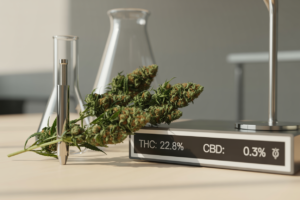
When buying sativa strains for creative work, ask your dispensary for the Certificate of Analysis (COA). Look for strains with pinene or limonene as the dominant terpene, and a THC content between 15-22%. This range tends to hit the creative sweet spot without overwhelming your working memory.
How to use sativa strains for maximum creative output
Strain selection is only half the equation. How you consume and when you consume matters just as much. Here’s what actually works based on both research and community experience:
Start low, go slow. This advice gets repeated so often it’s become a cliché, but there’s solid science behind it. The CDC’s cannabis health information recommends starting with small amounts, especially when using a new strain. For creative work specifically, a single hit from a quality vaporizer often works better than a full joint. You want a gentle lift, not a rocket launch.
Set up before you smoke. Get your workspace ready, your tools out, and your intentions clear before consuming. The first 15-20 minutes after consuming a sativa are when creative thinking peaks, and you don’t want to spend that window looking for a charger or deciding what to work on.
Match the strain to the task. Brainstorming and ideation pair better with social, euphoric strains like Tangie or Super Silver Haze. Editing, refining, and detail-oriented work calls for focused strains like Durban Poison or Green Crack. Using a brainstorming strain for precision work is like wearing running shoes to a formal dinner. It works, technically, but you’re not optimizing.
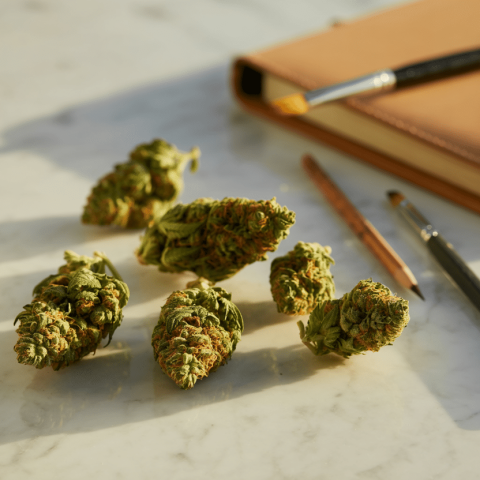
Keep a strain journal. Sounds nerdy. Is nerdy. But tracking which strains work for which types of creative work will save you a lot of trial and error over time. Note the strain, dose, task type, and how productive you felt. After a few weeks, you’ll have your own personalized creativity formula.
Sativa vs indica vs hybrid: what actually matters for creativity
Here’s the thing that most strain guides won’t tell you: the sativa/indica distinction is increasingly considered outdated by cannabis researchers. A 2020 study in PLOS ONE found that the genetic differences between “sativa” and “indica” labeled products don’t always align with their chemical profiles.
What does matter is the specific combination of cannabinoids and terpenes. A so-called indica strain that’s high in pinene and limonene might actually be more stimulating than a sativa that’s loaded with myrcene. This is why looking at lab results matters more than looking at whether the label says sativa or indica.
That said, the strains on this list are all labeled sativa or sativa-dominant for a reason: their genetic lineages have been bred specifically for uplifting, energizing effects. If you’re comparing these to indica strains designed for sleep, you’ll notice a clear difference in how they affect your mental state and energy levels. The labels aren’t perfect, but they’re still a useful starting point.
📝 Important note
Cannabis affects everyone differently. Factors like your tolerance, metabolism, current mood, and even what you ate that day can change how a strain hits. The strains listed here consistently produce creative and focusing effects for most users, but your experience may vary. If you’re new to cannabis, start with our beginner’s guide before diving into high-THC sativas.
The role of THCV in focus and productivity
THCV (tetrahydrocannabivarin) is a minor cannabinoid that’s getting serious attention in the productivity cannabis space. Unlike THC, which can increase appetite and sometimes cause drowsiness at high doses, THCV appears to have the opposite effect: it suppresses appetite and produces a clear, focused high that fades faster than regular THC.
African sativa landraces like Durban Poison tend to have higher THCV content than most other cannabis varieties. According to research compiled by the World Health Organization, cannabinoids like THCV are still being studied for their therapeutic potential, but early findings suggest it may work as a CB1 receptor antagonist at low doses, which could explain its focusing properties.
If focus is your primary goal over raw creative stimulation, look for strains or products with verified THCV content. Some dispensaries now lab-test for minor cannabinoids and will list THCV percentages alongside THC and CBD.
Common mistakes when using cannabis for creativity
After talking to dozens of creative professionals who use cannabis as part of their workflow, these are the patterns that trip people up:
Overdoing it. More THC does not mean more creativity. Once you cross your personal threshold (which varies, but for most people sits around 10-15mg THC), you start losing executive function. Your ideas might feel brilliant in the moment, but they often don’t hold up the next morning. The National Institute on Drug Abuse has documented how high doses impair working memory and attention.
Using the wrong strain for the task. A heavy, sedating indica when you need to brainstorm is going to put you to sleep, not spark ideas. And a high-energy sativa when you need to do careful editing might make you rush through details. Match the strain energy to the work energy.
Not capturing ideas. Cannabis-enhanced creativity has a frustrating quality: ideas come fast and dissolve just as quickly. Keep a notebook, voice recorder, or notes app within arm’s reach. The good ideas are worth nothing if you can’t remember them 20 minutes later.
Daily use without tolerance breaks. Regular cannabis use builds tolerance, which means you need more to achieve the same creative effects. This is a losing game. Taking a tolerance break every few weeks keeps the magic alive and prevents dependence.
⚠️ Warning
Cannabis is not legal everywhere, and laws vary significantly by region. Always check your local regulations before purchasing or consuming cannabis products. If you have a history of psychosis, schizophrenia, or severe anxiety disorders, consult a healthcare professional before using any cannabis product, including sativa strains. The SAMHSA provides resources for those concerned about cannabis use.
Frequently asked questions
What is the best sativa strain for creative writing?
Jack Herer and Durban Poison are consistently rated highest for writing. Jack Herer’s combination of pinene (memory retention) and terpinolene (creative stimulation) makes it particularly well-suited for sustained writing sessions. Start with a small dose and have your writing tools ready before consuming.
Can sativa strains help with ADHD focus?
Some people with ADHD report that certain sativa strains help them focus, but clinical evidence is limited. A 2020 systematic review found mixed results. Cannabis should not replace prescribed ADHD medication without consulting your doctor. If you do experiment, lower-THC strains like Strawberry Cough are generally safer starting points.
How much sativa should I use for focus without getting too high?
For most people, 2.5-5mg of THC is the sweet spot for enhanced focus without impairment. If smoking or vaping, take one small hit and wait 10-15 minutes before taking more. With edibles, start at 2.5mg and wait at least 90 minutes. You can always take more; you can’t take less.
Are sativa edibles good for creativity?
Edibles can work for creativity, but they’re harder to dose and take much longer to kick in (60-120 minutes). The high also lasts longer (4-8 hours) and feels more intense because the liver converts THC to 11-hydroxy-THC, a more potent compound. For predictable creative sessions, inhalation methods give you more control over timing and intensity.
Does CBD reduce sativa’s creative effects?
CBD doesn’t eliminate THC’s creative effects but it does moderate them. A sativa with some CBD content (1:1 or 2:1 THC:CBD ratio) can actually improve focus by reducing the anxiety and racing thoughts that pure THC sometimes causes. If you find that high-THC sativas make you feel scattered, try adding CBD oil to balance things out.
This article is for informational purposes only and does not constitute medical advice. The information provided about medical cannabis in Greece is current as of January 2026 but may change. Always consult with qualified healthcare professionals for medical advice and treatment options. Decisions about medical cannabis should be made in consultation with authorized healthcare providers who understand your specific medical history and conditions. For our full disclaimer, visit cannastoreams.gr/disclaimer.