
Cannabis Autoimmune Conditions: What to Know
Cannabis autoimmune conditions guide: CBD, THC, safety tips, interactions, and responsible symptom support for adults.

Cannabis autoimmune conditions is a topic that attracts a lot of hopeful claims, but the responsible answer is more careful: cannabinoids may influence immune signaling, pain perception, inflammation, sleep, and stress, yet they should be treated as supportive wellness tools rather than replacements for prescribed autoimmune care. Autoimmune conditions such as rheumatoid arthritis, multiple sclerosis, lupus, inflammatory bowel disease, psoriasis, and Hashimoto’s thyroiditis are complex disorders where the immune system reacts against the body’s own tissues. That means any cannabis product choice should begin with one principle: symptom support is not the same thing as disease control.
For adults exploring cannabis in Greece or abroad, the goal is usually practical: sleep better during flares, reduce everyday discomfort, calm stress loops, or use lower-risk CBD products as part of a broader routine. Scientific interest is real. The endocannabinoid system has documented roles in immune regulation, and agencies such as the National Institutes of Health continue to track cannabinoid research. Still, evidence quality varies by condition, dose, product type, and whether the product contains CBD, THC, minor cannabinoids, or a full-spectrum extract.
📺 Video Guide
Cannabis Autoimmune Conditions: The Core Science
The immune system works through signals: cytokines, inflammatory pathways, pain mediators, and feedback loops between the nervous, endocrine, and immune systems. The endocannabinoid system overlaps with several of those networks. CB1 receptors are concentrated in the nervous system, while CB2 receptors are more often discussed in immune cells and inflammatory signaling. This is why cannabis research often focuses on discomfort, stiffness, spasticity, sleep quality, and inflammatory symptoms rather than simple “cure” claims.
CBD is commonly chosen by wellness users because it is non-intoxicating and easier to integrate into daytime routines. THC may have stronger effects on pain and sleep for some adults, but it also brings impairment, tolerance, anxiety risk, driving concerns, and legal complexity. The FDA’s cannabis guidance is clear that CBD and cannabis products are not universally approved medicines for every condition, while the CDC summarizes cannabis health effects with an emphasis on cautious use and vulnerable groups.
For autoimmune disease, the most grounded way to think about cannabis is as a symptom-management conversation. If someone has joint pain, insomnia, muscle spasms, appetite issues, or stress linked to a chronic diagnosis, cannabis may be discussed with a clinician as one option among many. If someone wants to reduce disease activity, prevent organ damage, or replace immunosuppressive medication, that is a different and much higher-risk claim. Disease-modifying medicines remain the foundation for many autoimmune conditions.
✓ Key Takeaway
- ✓ Cannabis may support symptoms, not replace autoimmune treatment.
- ✓ CBD is usually the gentler starting point for wellness routines.
- ✓ THC requires more caution because of impairment, anxiety, and tolerance.
- ✓ Product quality, lab testing, and dose control matter more than hype.
What Research Suggests Across Autoimmune Symptoms
Research is strongest when cannabis is studied for specific symptoms rather than broad disease labels. Multiple sclerosis is one of the better-known areas because cannabinoid-based medicines have been studied for spasticity and neuropathic discomfort. Reviews indexed on PubMed for cannabinoids and multiple sclerosis spasticity show why clinicians sometimes discuss cannabinoids as adjuncts when standard approaches are not enough. That does not automatically translate to every autoimmune disease, but it explains the scientific interest.
Inflammatory bowel disease is another area where patients often report cannabis use for appetite, nausea, abdominal discomfort, and quality of life. The Crohn’s & Colitis Foundation notes that medical cannabis may help some symptoms, but it has not been proven to control intestinal inflammation in the way conventional therapies can. This distinction matters. Feeling better is valuable, but silent inflammation can still require medical monitoring.
Rheumatoid arthritis and lupus bring a similar pattern. Pain, sleep disruption, mood strain, and fatigue may be reasons adults explore cannabis. However, organizations such as the Arthritis Foundation frame CBD as a pain-management discussion that should involve a healthcare provider, especially when other medications are involved. For lupus, the Lupus Foundation of America takes a similarly cautious position: potential symptom relief is different from proven disease treatment.
CBD, THC, and Product Types for Sensitive Users
When adults with autoimmune conditions consider cannabis, product format is often as important as cannabinoid profile. Oils and capsules are easier to dose consistently than flower, vapes, or edibles. A measured CBD oil can be started low and adjusted slowly, while edible THC can be unpredictable because onset is delayed and effects may last much longer. If you are new to CBD, our CBD for beginners guide explains the basics of product selection and routine building.
CBD isolate contains only CBD, broad-spectrum products include additional hemp compounds without meaningful THC, and full-spectrum products may include trace THC where legally permitted. People who are medication-sensitive, drug-tested, or anxious about intoxication often prefer CBD isolate or broad-spectrum CBD. Those looking for stronger evening relaxation may discuss full-spectrum options with a professional. Our guide to full spectrum vs broad spectrum vs isolate CBD can help you compare the tradeoffs.
Product quality is non-negotiable. Look for clear labels, batch information, realistic cannabinoid claims, and ideally a certificate of analysis. A product that is poorly labeled, unusually cheap, or vague about cannabinoid content is not a smart choice for someone managing a chronic condition. Our lab results guide explains how to check potency, contaminants, and basic testing information before buying.
💡 Pro Tip
If you have an autoimmune diagnosis, keep a simple symptom log for two weeks before starting CBD, then track sleep, pain, fatigue, mood, dose, timing, and side effects. Patterns beat guesswork.
A Practical Safety Checklist Before Trying Cannabis
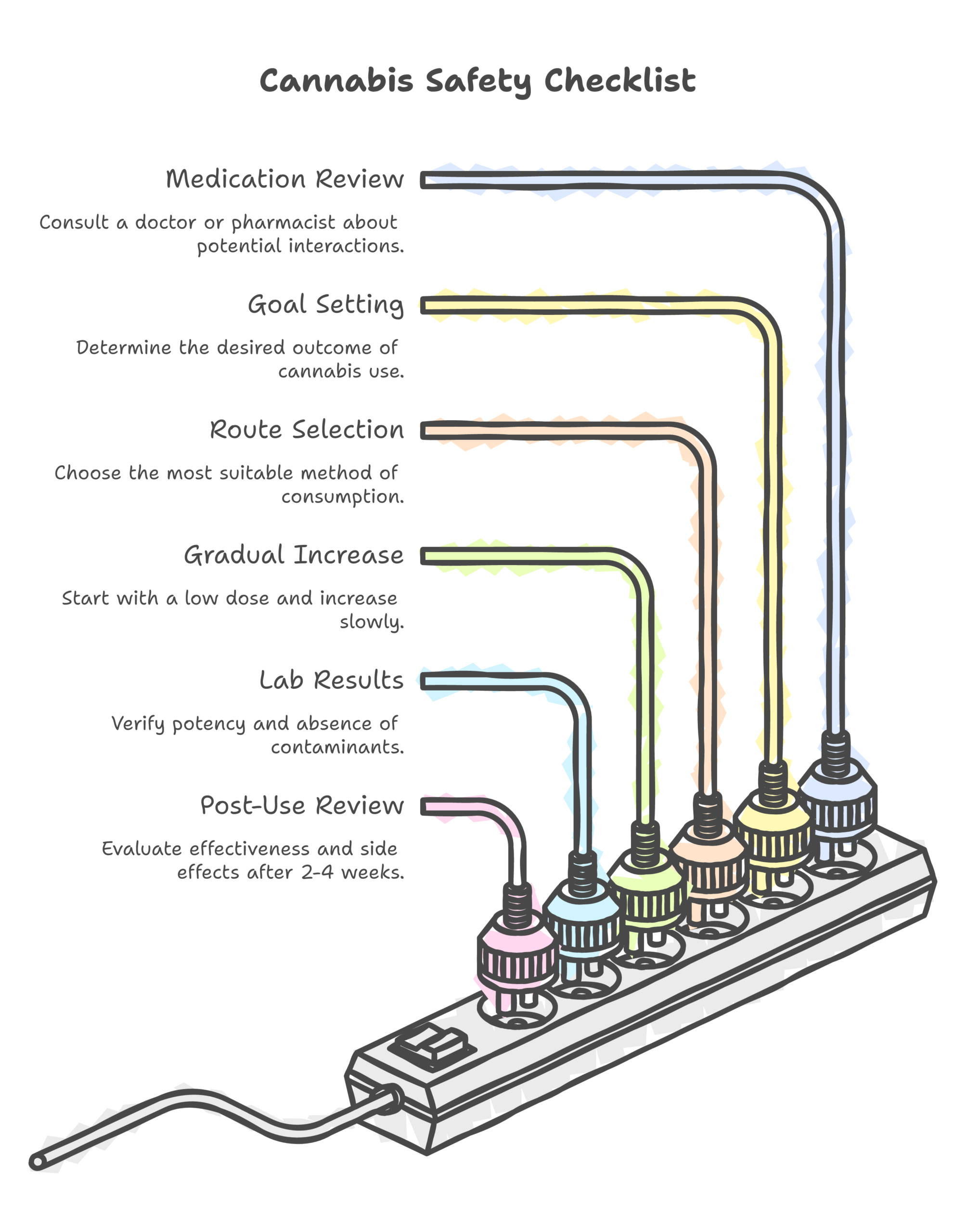
Start with your medication list. CBD can affect enzymes involved in drug metabolism, especially the CYP450 system, which is why medication interactions deserve attention. The FDA warns consumers about CBD interactions and liver considerations, and this is especially relevant for people taking immunosuppressants, steroids, biologics, anticoagulants, anti-seizure medication, sedatives, or psychiatric medication. Never treat “natural” as automatically safe.
Second, decide what you want to improve. “My autoimmune condition” is too broad. Better goals include falling asleep faster, waking less often, reducing evening soreness, improving appetite, or handling stress during flare periods. Specific goals make dosing more rational and make it easier to stop if cannabis is not helping. Our cannabis and sleep guide is useful if nighttime symptoms are your main concern.
Third, choose the lowest-risk route. Inhaled products act quickly but may irritate the respiratory system. The American Lung Association cautions about smoke exposure, so people with inflammatory or respiratory issues often prefer oils, capsules, or topicals. Edibles avoid inhalation but are easier to overdo because onset can take one to three hours. That “nothing is happening” window is where many unpleasant experiences begin.
Condition-by-Condition Considerations
For rheumatoid arthritis, the practical question is usually pain, stiffness, and sleep. Cannabis may help some people feel more comfortable, but it should not replace medications designed to prevent joint damage. For multiple sclerosis, cannabinoids have a longer research history around spasticity, but treatment decisions still depend on neurologist guidance. For inflammatory bowel disease, appetite and nausea are common reasons people explore cannabis, but monitoring inflammation remains essential.
For psoriasis and psoriatic arthritis, topical CBD products may be appealing because they are localized and usually non-intoxicating. Evidence is still developing, but some adults like topical routines for comfort and skin-focused self-care. For lupus, extra caution is wise because fatigue, kidney involvement, blood clot risk, and medication interactions can complicate the picture. For Hashimoto’s or Graves’ disease, cannabis should not be viewed as a thyroid treatment. It may be part of stress or sleep support, but thyroid hormone management is a medical process.
The World Health Organization has previously reviewed CBD’s safety profile, and the WHO cannabidiol Q&A reflects why CBD is often discussed differently from intoxication-producing THC. Even so, quality, dose, and interactions remain central. People with autoimmune conditions often take multiple medications, which makes professional input more important, not less.
📝 Important Note
Do not stop corticosteroids, biologics, thyroid medication, disease-modifying drugs, or prescribed immune therapies because a cannabis product seems helpful. Symptom relief and disease control are not the same thing.
How to Build a Responsible Wellness Routine
A responsible routine starts low, changes slowly, and measures results. Many adults begin with a low-dose CBD oil in the evening for several days, then adjust based on sleep quality, next-day clarity, digestion, mood, and comfort. If THC is involved, evening-only use is often safer because impairment can interfere with driving, work, parenting, and decision-making. The National Institute on Drug Abuse summarizes cannabis risks, including dependence and cognitive effects, which are relevant even when the goal is wellness.
Pair cannabis with the boring fundamentals that actually move the needle: sleep hygiene, anti-inflammatory nutrition if recommended by your clinician, gentle movement, stress reduction, hydration, and medication adherence. Cannabis may make those routines easier for some people, but it cannot replace them. If you are looking at oils, compare measured options such as CBD Oil 10 10ml or higher-strength options like CBD Oil 20 Full Spectrum 10ml only after you understand dose and tolerance.
Finally, set a review point. After two to four weeks, ask: What improved? What stayed the same? Any side effects? Any medication concerns? Did the product make daily life better enough to justify the cost and complexity? This is where many wellness routines either become useful habits or quietly turn into expensive clutter. A calm, evidence-aware approach protects both your health and your wallet.
⚠️ Disclaimer
This article is for informational purposes only and does not constitute medical advice. The information provided about medical cannabis in Greece is current as of May 2026 but may change. Always consult with qualified healthcare professionals for medical advice and treatment options. Decisions about medical cannabis should be made in consultation with authorized healthcare providers who understand your specific medical history and conditions. For our full disclaimer, visit cannastoreams.gr/disclaimer.
Frequently Asked Questions
Can cannabis treat autoimmune disease?
No cannabis product should be treated as a proven cure or replacement for autoimmune medication. Cannabis may support symptoms such as discomfort, sleep disruption, appetite issues, or stress for some adults.
Is CBD safer than THC for autoimmune conditions?
CBD is non-intoxicating and often easier to dose conservatively, but it can still interact with medications. THC may help some symptoms but carries impairment, anxiety, tolerance, and legal considerations.
Should I tell my doctor if I use cannabis?
Yes. This is especially important if you take immunosuppressants, biologics, anticoagulants, sedatives, psychiatric medication, or any medication with narrow dosing requirements.
Which product format is best for beginners?
Measured CBD oils or capsules are usually easier for beginners than smoking, vaping, or high-dose edibles. Start low, track effects, and avoid combining cannabis with alcohol or sedatives.
Can cannabis make autoimmune symptoms worse?
It can for some people. Possible issues include anxiety, dizziness, fatigue, digestive changes, medication interactions, or overuse. Stop and seek professional advice if symptoms worsen.
