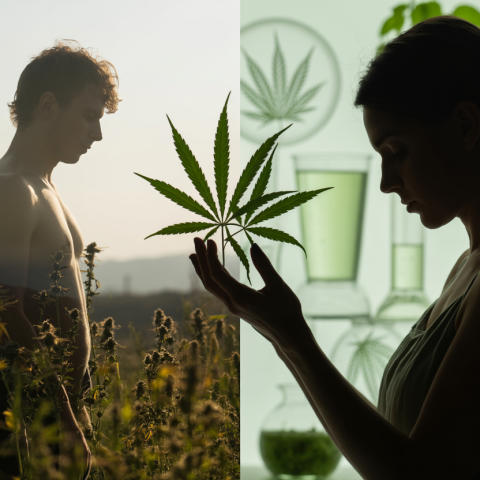
Men vs Women, cannabis doesn’t hit everyone the same way. If you’ve ever shared a joint with someone of the opposite sex and noticed they reacted quite differently, you’re not imagining it. A growing body of research shows that biological sex plays a real role in how our bodies process and respond to cannabinoids like THC and CBD. From pain relief to anxiety, appetite to tolerance, the cannabis effects men women experience can vary in surprising ways. Here’s what the science actually says about these differences and why they matter for your wellness routine.
📺 Video Guide
The endocannabinoid system and biological sex
Every human body has an endocannabinoid system (ECS), a network of receptors, enzymes, and endogenous compounds that regulate mood, pain, appetite, and immune function. The ECS interacts directly with sex hormones like estrogen and testosterone, which is why cannabis affects men and women differently at a fundamental biological level.
Research from Washington State University found that estrogen modulates the endocannabinoid system by increasing the availability of CB1 receptors in certain brain regions. Testosterone, on the other hand, appears to dampen some of these receptor responses. This hormonal interplay creates a baseline where women’s bodies are often more sensitive to THC’s effects than men’s, even before accounting for differences in body composition or consumption habits.
A 2020 review published in Frontiers in Behavioral Neuroscience confirmed that sex-dependent differences in the ECS are consistent across both animal models and human studies. The practical takeaway: a dose that works well for one person may be too much or too little for another based partly on their hormonal profile.
THC sensitivity: women feel it faster
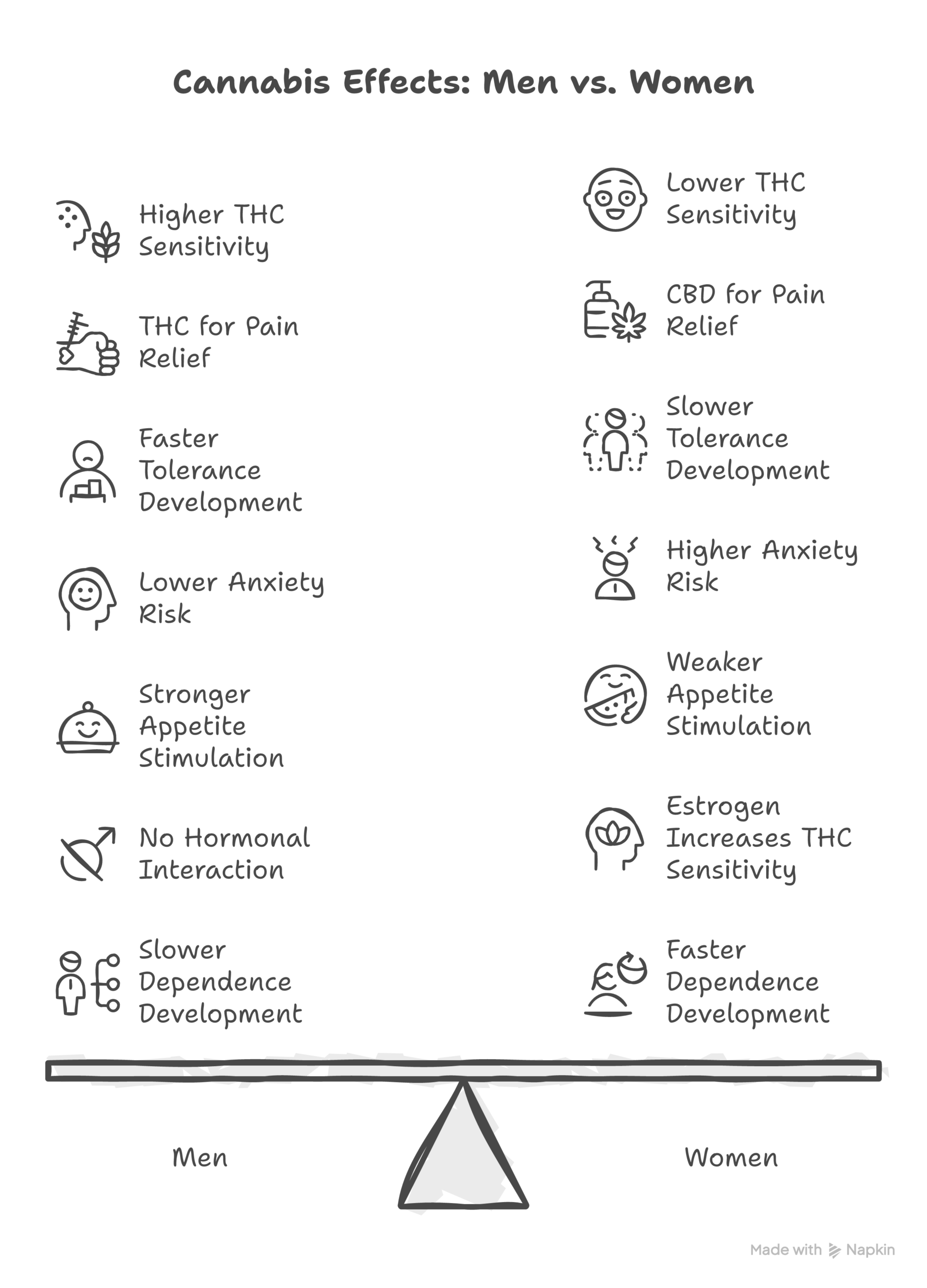
One of the most consistent findings in cannabis gender research is that women tend to be more sensitive to THC. Studies from the National Institute on Drug Abuse (NIDA) show that female subjects report stronger psychoactive effects at lower doses compared to male subjects.
This heightened sensitivity is partly tied to estrogen. During phases of the menstrual cycle when estrogen levels peak, women may experience more intense effects from the same amount of THC. A study in Drug and Alcohol Dependence found that female rats were 30% more sensitive to THC’s pain-blocking effects than males, and this sensitivity fluctuated with their estrogen levels.
For men, the picture looks different. Higher body mass and testosterone levels tend to create a buffer that requires larger doses to achieve similar effects. This doesn’t mean men are “immune” to THC, but rather that their threshold for feeling its effects typically sits higher.
💡 Pro Tip
If you’re a woman new to cannabis, start with half the dose recommended on product labels. Most dosing guidelines are based on studies with predominantly male participants. Check our CBD dosage guide for personalized recommendations.
Pain relief: different cannabinoids, different responses
Cannabis is one of the most common reasons people turn to cannabis for pain management, but the type of relief you get may depend on your sex. Research from Columbia University found that men reported more consistent pain relief from THC-dominant products, while women often responded better to CBD-based formulations or balanced THC:CBD ratios.
A 2022 study in the Journal of Cannabis Research surveyed over 2,000 medical cannabis patients and found that women were significantly more likely to report benefits from CBD for chronic pain conditions like fibromyalgia and migraines. Men, meanwhile, reported better results with higher-THC products for acute pain and inflammation.
The reason likely comes back to how sex hormones interact with cannabinoid receptors. Estrogen appears to amplify CBD’s anti-inflammatory pathways through TRPV1 receptor modulation, while testosterone may enhance THC’s direct pain-suppressing effects via CB1 activation.
Tolerance buildup: men adapt faster
Here’s where things get interesting. While women are more sensitive to THC initially, men tend to build tolerance faster. A study published in Neuropsychopharmacology showed that after consistent cannabis use, male subjects developed significant tolerance to THC’s psychoactive effects within about two weeks. Female subjects took roughly three to four weeks to develop comparable tolerance levels.
This faster tolerance development in men means they often end up consuming larger quantities over time to achieve the same effects. It also means that tolerance breaks may work differently depending on your sex. Men might need longer breaks to fully reset their ECS, while women may see benefits from shorter pauses.
The flip side of faster tolerance is that men also tend to recover baseline sensitivity more quickly after a break. According to researchers at the McGill University Health Centre, men’s CB1 receptors appear to “bounce back” faster after periods of abstinence compared to women’s receptors.
Anxiety and mood: a gender split
Cannabis and anxiety have a complicated relationship, and gender makes it more so. Data from the Substance Abuse and Mental Health Services Administration (SAMHSA) shows that women who use cannabis report anxiety as a side effect at nearly twice the rate that men do.
A 2021 study in Cannabis and Cannabinoid Research found that women were more likely to use cannabis specifically for anxiety relief but also more likely to report that high-THC products worsened their symptoms. Men, by contrast, reported fewer anxiety-related side effects overall, regardless of THC concentration.
The pattern suggests that women may benefit more from low-THC, high-CBD products when addressing mood-related concerns. Products like broad-spectrum CBD oils that contain no THC at all might be worth considering for women who find that THC triggers anxious feelings.
✓ Key takeaways by gender
- ✓ Women: Start with lower THC doses, consider CBD-dominant products for pain and anxiety
- ✓ Men: May need higher starting doses, respond well to THC for pain relief
- ✓ Women: More likely to benefit from balanced THC:CBD ratios
- ✓ Men: Build tolerance faster, may need periodic tolerance breaks
- ✓ Both: Individual factors like genetics, body weight, and experience also matter
Appetite and the munchies
The “munchies” are one of cannabis’s most well-known side effects, but they’re not equal across the sexes. Research from Yale University School of Medicine found that THC activates appetite-stimulating neurons in the hypothalamus, and this activation appears to be stronger in male brains.
A survey of over 5,000 cannabis users published by the Society for the Study of Ingestive Behavior found that men reported more intense food cravings after using cannabis than women. Women still experienced increased appetite, but it tended to be milder and more focused on specific cravings rather than general hunger.
For people using cannabis to stimulate appetite during medical treatment, this difference matters. Male patients may see better appetite results from standard THC dosing, while female patients might benefit from strains or products with specific terpene profiles, like limonene or myrcene, that can enhance appetite effects.
Sleep quality and cannabis
Both men and women use cannabis to improve sleep, but they seem to get different results. A 2023 study from the Journal of Clinical Sleep Medicine found that women who used cannabis for sleep reported improvements in falling asleep faster, while men were more likely to report improved sleep duration and fewer nighttime awakenings.
Women were also more likely to experience next-day grogginess from nighttime cannabis use, which researchers attributed to slower THC metabolism in the female body. THC is fat-soluble, and because women typically have a higher percentage of body fat than men, THC can linger longer in their systems. This extended presence means that while initial sleep effects may be comparable, the next-morning experience often differs.
For women dealing with sleep issues, indica-dominant strains with moderate THC and some CBD may provide the right balance of sleep initiation without excessive next-day effects. Men might tolerate higher-THC nighttime products without as much morning residual.
Dependence patterns and withdrawal
The data on cannabis dependence shows a notable gender difference. According to research from the National Institute on Drug Abuse, women tend to develop cannabis use disorder faster than men, a pattern called “telescoping.” Women who develop problematic use patterns typically progress from first use to dependence in a shorter timeframe, even though they generally consume less cannabis overall.
Withdrawal symptoms also differ by sex. A study in the American Journal of Psychiatry found that women experiencing cannabis withdrawal reported more severe mood disturbances, sleep disruption, and gastrointestinal symptoms compared to men. Men were more likely to report general irritability and restlessness as their primary withdrawal symptoms.
None of this means that women should avoid cannabis. It does suggest that mindful, measured use is especially important. Keeping a cannabis journal to track consumption patterns can help anyone, regardless of gender, stay on top of their usage habits.
📝 Important note
The research on sex-based differences in cannabis response is still developing. Most studies referenced here involved relatively small sample sizes. Individual variation is significant, so use these findings as a starting point rather than absolute rules for your personal cannabis use.
Hormonal cycles and cannabis timing
This section applies primarily to people with menstrual cycles. Estrogen levels fluctuate throughout the month, and those fluctuations directly affect how THC interacts with the brain. During the follicular phase (days 1-14), when estrogen rises, many women report heightened cannabis sensitivity. During the luteal phase (days 15-28), when progesterone dominates, the effects may feel more muted.
A 2019 study published in Neuropsychopharmacology confirmed this pattern in human participants. Women in the high-estrogen phase of their cycle reported stronger subjective effects from the same THC dose compared to the low-estrogen phase. The difference was measurable and consistent across the study group.
For women using cannabis for menstrual symptom relief, this means that timing and dosing may need to shift throughout the month. Lower doses during the first half of the cycle and slightly higher doses during the second half could help maintain consistent effects.
Men aren’t entirely exempt from hormonal influence either. Testosterone levels in men follow a daily cycle (highest in the morning, lowest at night) and decline gradually with age. Some researchers speculate that these fluctuations affect cannabis sensitivity, though the research is limited compared to studies on estrogen.
Choosing the right products based on your biology
Understanding how cannabis affects you differently based on sex isn’t just academic. It has practical implications for product selection. Here’s what the research suggests:
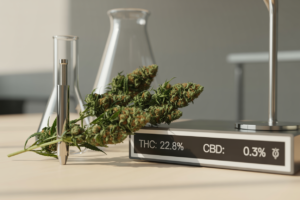
For women: Products with balanced or CBD-dominant cannabinoid profiles often deliver better results for pain, anxiety, and sleep. Full-spectrum CBD products that contain trace amounts of THC (under 0.3%) may provide the “entourage effect” without the anxiety risk that higher-THC products sometimes carry. When using THC, starting low (2.5-5mg) and going slow is even more applicable for women than the general population.
For men: THC-dominant products tend to deliver more reliable results for pain and relaxation. However, the faster tolerance buildup means that rotating strains, taking periodic breaks, and watching consumption frequency are all worth incorporating into your routine. Vaporizers that allow precise temperature control can help men dial in their preferred experience more accurately.
Regardless of sex, individual genetics, metabolism, and prior experience all play major roles. The sex-based differences described here are population-level trends, not universal rules. Reading lab results and tracking your personal responses will always beat generalizations.
⚠️ Disclaimer
This article is for informational purposes only and does not constitute medical advice. The information provided about cannabis research is current as of March 2026 but may change as new studies emerge. Always consult with qualified healthcare professionals before using cannabis for any medical condition. For our full disclaimer, visit cannastoreams.gr/disclaimer.
Frequently asked questions
Why do women feel the effects of cannabis more strongly?
Women typically have higher estrogen levels, which increases the density and sensitivity of CB1 receptors in the brain. This means THC binds more effectively in women, producing stronger psychoactive effects at lower doses compared to men.
Should men and women use different cannabis doses?
Generally, yes. Women may want to start with lower doses (2.5-5mg THC) compared to men (5-10mg THC) when trying a new product. However, individual tolerance, body weight, and experience level matter more than sex alone.
Does the menstrual cycle affect how cannabis works?
Yes. During the follicular phase when estrogen is rising, women typically experience stronger effects from the same dose. During the luteal phase when progesterone dominates, effects may feel reduced. Adjusting doses throughout your cycle can help maintain consistency.
Is CBD better for women than THC?
Not necessarily “better,” but research shows women tend to get more consistent pain relief and fewer side effects from CBD-dominant products. Women are also more prone to THC-induced anxiety, making CBD or balanced products a safer starting point.
Do men build cannabis tolerance faster than women?
Yes. Studies show men develop significant THC tolerance in about two weeks of regular use, while women typically take three to four weeks. This means men often end up consuming larger quantities over time. Regular tolerance breaks can help reset sensitivity for both sexes.