Cannabis minors Greece is now one of the clearest themes in the country’s 2026 cannabis framework: the law is not only about THC thresholds, retail licences, or product formats. It is also about reducing youth exposure, removing casual access points, and making sure cannabis wellness products stay in adult, compliant channels. For parents, teachers, retailers, and adult consumers, that matters because the rules affect what can be sold, where it can be sold, and how cannabis conversations should happen at home.
The most visible change is Greece’s strict approach to dried cannabis flower. The National Organization for Medicines announcement says retail sale, distribution, and consumer-facing supply of dried flower from Cannabis sativa L. is prohibited in Greece, regardless of cannabinoid profile or THC percentage. Legal commentators and industry coverage have connected this shift to Law 5302/2026 and the wider attempt to close gaps in a fast-moving CBD and hemp retail market, including reports from Greek Reporter and Business of Cannabis.
This guide explains the youth-protection logic behind the new rules without scare tactics. Cannabis is an adult topic. CBD, hemp, and medical cannabis need sober, accurate information, especially because teenagers are more vulnerable to cannabis-related harms than adults. The goal is simple: keep minors away from cannabis products while helping adults understand what remains legal, what has changed, and how responsible retailers can communicate clearly.
⚠️ Disclaimer
This article is for informational purposes only and does not constitute medical or legal advice. Information about cannabis rules in Greece is current as of July 2026 but may change. Always consult qualified healthcare professionals for medical advice and authorized legal professionals for compliance questions.
Why cannabis minors Greece rules became stricter
The youth-protection angle is easier to understand if you look at the retail environment Greece wanted to prevent. Before the 2026 crackdown, CBD flower and hemp-derived products could appear in places that did not always feel like specialist wellness outlets: kiosks, mini-markets, vending concepts, smoke shops, and online listings. Even when products were low-THC, the presentation could look similar to intoxicating cannabis. That similarity creates a problem for minors, parents, and enforcement officers.
Law 5302/2026, available through Forin’s legal database, sits inside a wider public-health package that also tightens controls around tobacco, nicotine, alcohol, and access by minors. Cannabis rules are part of that same logic. The state is drawing a sharper line between lawful adult wellness products and products that can normalize cannabis use around teenagers.
That does not mean every CBD oil, topical, or compliant hemp product is suddenly treated like illegal recreational cannabis. It means regulators are targeting product types and retail situations that make youth access more likely. Dried flower is the clearest example because it can be smoked, resembles high-THC cannabis, and is harder for consumers to evaluate without lab reports and specialist context.
✓ Key Benefits
- ✓ Clearer adult-only positioning for lawful CBD and hemp products
- ✓ Fewer casual access points near young people
- ✓ Stronger incentives for specialist, compliant retail education
- ✓ Easier parent conversations around non-medical cannabis use
What the 2026 framework changes in practice
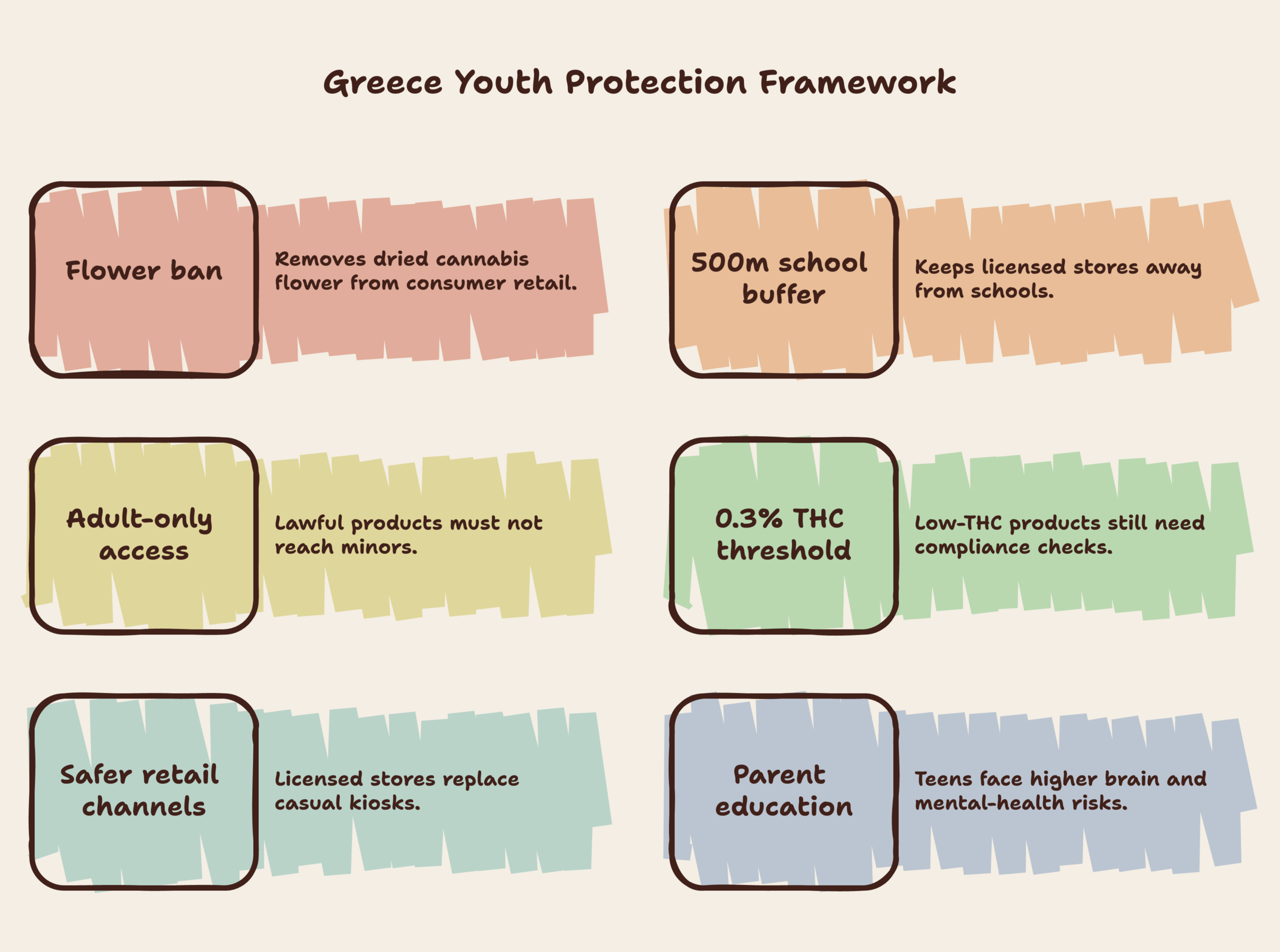
For adults, the headline is practical: dried cannabis or hemp flower is no longer a normal consumer retail product in Greece. The EOF notice describes a complete prohibition on retail sale and distribution to the consumer public. Coverage of the new framework also notes that the ban applies even when the flower is low-THC or marketed as CBD flower. That is why consumers who previously focused only on the 0.3% THC threshold now need to check product format as well as potency.
The 0.3% THC threshold still matters for industrial hemp and many non-flower products. Greece has aligned with the broader EU movement toward a 0.3% industrial hemp threshold, but the flower ban shows that compliance is not only a lab number. A product can be low-THC and still not be lawful for consumer flower retail. For a deeper consumer view, read our internal guide to CBD in Greece 2026.
Licensed cannabis product enterprises are another key change. Reports on Greece’s new rules, including Greek Reporter’s overview of the licensing framework, describe a more formal retail category for lawful cannabis-related products. These shops are expected to operate under licensing, product-composition rules, and location restrictions rather than casual general retail. That is good news for adults who want reliable guidance, but it also raises the compliance bar for businesses.
One youth-protection rule stands out: cannabis product retail locations must be kept away from schools. Industry and legal summaries describe a 500-meter buffer from schools serving children up to secondary level. For parents, the point is obvious. For retailers, it means site selection is now a compliance decision, not just a commercial one. If you want the retail context, see our cannabis retail licence Greece guide.
Why youth exposure is treated differently from adult use
Teenagers are not smaller adults. Their brains are still developing, especially the systems involved in attention, memory, planning, impulse control, motivation, and emotional regulation. The CDC’s cannabis and teens guidance says cannabis use before age 18 may affect how the brain builds connections for attention, memory, and learning. The CDC brain-health page also notes that cannabis can affect thinking, coordination, and reaction time.
The concern is strongest with early, frequent, or high-THC use. The U.S. Surgeon General advisory on marijuana and the developing brain warns that frequent cannabis use during adolescence is associated with changes in brain areas involved in attention, memory, decision-making, and motivation. The National Institute on Drug Abuse adolescent brain resources similarly emphasize that adolescence is a sensitive window for substance exposure.
Research reviews do not say every teenager who tries cannabis will experience the same harm. They do show population-level associations with poorer learning, memory, attention, and mental-health outcomes. A review in the National Library of Medicine archive summarizes evidence that adolescent cannabis exposure can affect neurocognitive development, while later reviews such as this PMC review on adolescent cannabis and brain development discuss risks linked to frequency, potency, and age of first use.
💡 Pro Tip
Parents do not need a dramatic lecture. A calm line works better: “Cannabis is an adult product, your brain is still developing, and our rule is no cannabis while you are a minor.”
The practical youth-protection checklist
For adult consumers, the safest checklist is simple. First, do not buy dried hemp or CBD flower for retail use in Greece. Second, choose lawful product formats such as oils, cosmetics, topicals, or other compliant non-flower products only from reputable adult-oriented sellers. Third, ask for lab testing and product composition information. Fourth, store products away from minors, ideally locked and in original packaging. Fifth, do not treat CBD products as harmless sweets or casual household items.
For families, storage deserves special attention. Gummies, oils, and edibles can be confusing for children if they look like normal snacks. Even non-intoxicating products should be handled like adult wellness items. Store them away from food, avoid using them in front of children in a casual way, and explain that supplements and cannabis-related products are not for kids. Public-health resources such as this California public-health fact sheet on cannabis and the developing brain are useful because they translate brain-development risks into plain language.
For retailers, the checklist is stricter. Do not market cannabis products to minors. Do not use youth-coded packaging. Do not blur compliant CBD wellness products with recreational cannabis messaging. Verify age where appropriate. Train staff to explain the flower ban, the 0.3% threshold, the difference between medical cannabis and CBD wellness products, and why minors are outside the target audience. Our guide to the CBD flower ban in Greece covers the consumer side of that shift.
How adults should talk about cannabis with teenagers
The worst conversation is the one that sounds fake. Teenagers know when adults exaggerate. A better approach is direct, factual, and boring in the best possible way. Explain that adult medical cannabis and adult CBD wellness products are not the same as teen use. Explain that legality for adults does not equal safety for minors. Explain that the brain continues developing into young adulthood and that delaying cannabis use is the lower-risk choice.
Parents can also separate law from trust. “This is illegal for minors” is true, but it should not be the only message. The stronger message is: “I care about your brain, your school life, your anxiety, your motivation, and your future options.” That frame is harder for a teenager to dismiss than a rule-only speech. It also leaves room for honest questions if they are seeing cannabis content online or hearing friends talk about it.
If a teenager is already using cannabis, shame is usually counterproductive. Look for practical signals: falling grades, anxiety, sleep disruption, secrecy, risky driving, changes in friends, or using cannabis to cope with stress. In that case, involve a healthcare professional or counselor. Cannabis can be part of adult medical care in specific settings, but a teen using it privately to self-manage anxiety or sleep is a different situation and deserves support, not denial.
📝 Important Note
Do not use adult CBD or cannabis products as informal treatment for a minor. If a child or teenager has pain, anxiety, sleep problems, epilepsy, or other symptoms, speak with a qualified doctor.
What remains legal for adults under a responsible model
The new youth-protection rules should not be read as a rejection of adult wellness. They are a push toward clearer boundaries. Adults may still look for compliant CBD oils, topicals, cosmetics, and other non-flower formats, provided the products meet Greek and EU requirements. The adult-use recreational market remains illegal, while medical cannabis is handled through prescription and pharmaceutical channels. That distinction matters because it prevents retailers from presenting cannabis as a casual lifestyle product for everyone.
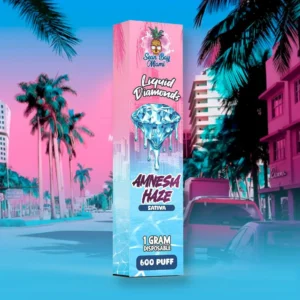
For adult consumers, the responsible path is evidence, quality, and moderation. Read labels. Ask questions. Avoid products with unclear cannabinoid profiles. Be careful with intoxicating or synthetic cannabinoids, especially products promoted online without reliable testing. If you use CBD for sleep, stress, recovery, or discomfort, keep expectations realistic and speak with a healthcare professional if you take medicines. Our internal guide to CBD and melatonin explains why interactions and sedation deserve attention.
The cannabis minors Greece conversation is ultimately about boundaries. Adults can have access to lawful, well-explained wellness products while minors are protected from exposure, advertising, casual retail access, and high-risk experimentation. That is not anti-cannabis. It is pro-responsibility. The businesses that understand this will earn more trust than those trying to keep the old gray-market vibe alive.
Frequently Asked Questions
Can minors buy CBD products in Greece?
No. Cannabis-related wellness products should be treated as adult products. The 2026 framework is explicitly designed to reduce minors’ access and exposure.
Is CBD flower legal if it contains less than 0.3% THC?
For consumer retail, dried cannabis or hemp flower is prohibited under the current Greek framework, even when marketed as low-THC or CBD flower.
Why are schools mentioned in cannabis retail rules?
Licensed cannabis product stores are expected to keep distance from schools because the framework aims to reduce youth exposure and casual access.
Does medical cannabis access apply to teenagers?
Medical cannabis is a doctor-supervised, prescription-based matter. Never give adult cannabis or CBD products to a minor without qualified medical direction.
What should parents say if their teen asks about cannabis?
Keep it factual: cannabis is for adults, teen brains are still developing, and delaying use lowers risk. Avoid exaggeration and keep the door open for honest questions.