
CBD Sleep Guide: Better Nighttime Wellness in 2026
A practical CBD sleep guide for adults: routines, timing, safety, product quality, and when to speak with a clinician.

A practical CBD sleep guide starts with an honest promise: CBD is not a magic off-switch for the brain. Better sleep usually comes from a repeatable routine, a calm nervous system, and products that are chosen carefully rather than randomly. For adults who already use cannabis wellness products, CBD may support relaxation, discomfort management, and pre-sleep consistency, especially when it is paired with the fundamentals of sleep hygiene instead of used as a substitute for them.
The wellness angle matters because many sleep problems are not just “being tired.” Stress, screen exposure, late caffeine, pain, anxiety, shift work, alcohol, and inconsistent bedtimes can all keep the body alert at the wrong time. Public health guidance from the CDC keeps returning to the same core advice: consistent schedules, a dark bedroom, a wind-down routine, and medical support when sleep problems are persistent. CBD fits best as one possible layer inside that wider routine.
📺 Video Guide
CBD Sleep Guide Basics: What CBD Can and Cannot Do
CBD, or cannabidiol, is a non-intoxicating cannabinoid found in cannabis and hemp. Unlike THC, CBD does not create a classic euphoric high. The National Center for Complementary and Integrative Health describes cannabis research as promising in some areas but still incomplete, which is the right lens for sleep too. Some adults report easier relaxation, less nighttime tension, or reduced discomfort. Others feel little change, or even more alertness at low doses.
That mixed response is not a failure of CBD. It is how cannabinoids work in real bodies. Sleep is influenced by hormones, light, stress chemistry, pain pathways, digestion, and habits. The endocannabinoid system is involved in several of these processes, and the National Academies review of cannabis evidence notes that cannabinoid research has different levels of support depending on the condition, product, and outcome being measured. A responsible CBD sleep routine therefore starts low, tracks results, and avoids big claims.
The cleanest expectation is this: CBD may help create better conditions for sleep, rather than force sleep by itself. If racing thoughts, stress, mild soreness, or poor evening rhythm are part of the problem, CBD may be worth exploring. If the issue is sleep apnea, severe insomnia, medication side effects, depression, or chronic pain, CBD should not delay proper medical care.
✓ Key Benefits
- ✓ May support relaxation without intoxication
- ✓ Can fit into a structured evening wellness routine
- ✓ Often preferred by adults avoiding THC-heavy products
- ✓ Best results come from careful product selection and tracking
Build the Routine Before You Adjust the Dose
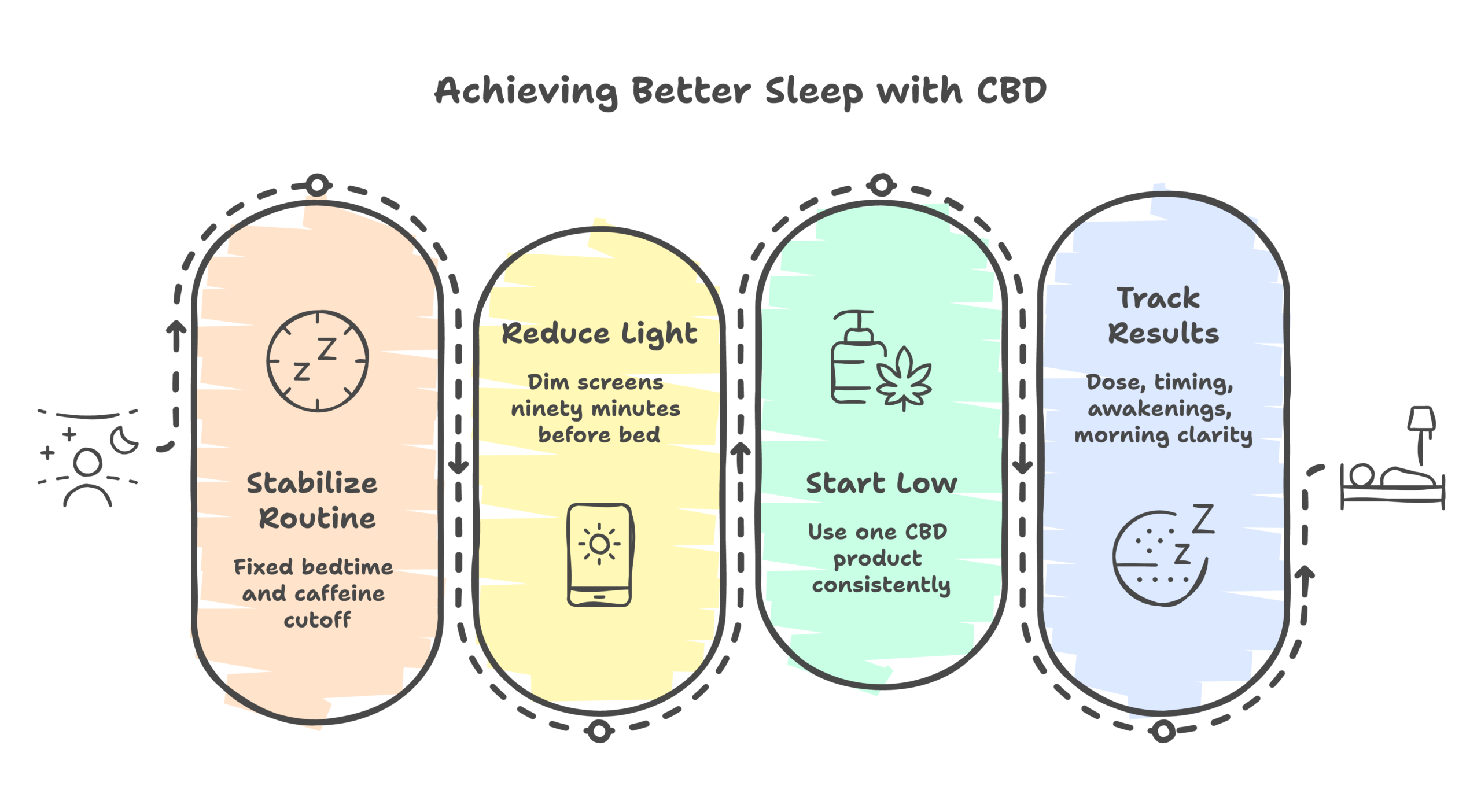
The biggest mistake in nighttime CBD use is changing the product every few days while leaving the routine chaotic. A good evening system is boring in the best possible way. Choose a consistent bedtime window. Dim lights ninety minutes before bed. Stop work messages earlier than feels natural. Keep the bedroom cool and dark. If screens are unavoidable, reduce brightness and remember that blue light exposure can shift circadian timing and make sleep feel farther away.
Once the routine is stable for a week, add CBD in a measured way. Tinctures and oils are popular because they are easy to dose and adjust. Edibles can last longer but may take more time to work. Vapes act faster but are not the right fit for everyone, especially people sensitive to inhaled products. If you want a gentle starting point, explore lab-tested oils such as CBD Oil 10 10ml or broad-spectrum options like Phyto Relax 10 Broad Spectrum CBD Oil, then track how you feel the next morning.
A sleep journal does not need to be complicated. Write down the product, dose, timing, bedtime, wake time, nighttime awakenings, caffeine, alcohol, and how refreshed you feel. After ten to fourteen nights, patterns become obvious. Without notes, people usually remember the one dramatic night and forget the boring data. For a wider perspective on safe selection, our cannabis tinctures guide explains dosing and label reading in more detail.
💡 Pro Tip
Change one variable at a time. If you switch dose, timing, product type, caffeine, and bedtime in the same week, you will never know what actually helped.
A Simple Nighttime CBD Plan
Here is a clean framework for adults who want to test CBD without turning bedtime into a chemistry experiment. First, set your caffeine cutoff. For many people, that means no coffee after lunch. Second, set a screen cutoff or at least a screen reduction window. Third, take CBD at the same time each night for one week. Fourth, evaluate morning clarity, not just how quickly you fell asleep. A sleep aid that leaves you foggy may not be a win.
Research on CBD and sleep remains developing. A frequently cited clinical report in The Permanente Journal found anxiety scores decreased in many patients using CBD, while sleep scores were more variable. A later review indexed in PubMed also highlights that cannabinoid effects depend heavily on formulation, dose, and study design. Translation: CBD can be useful, but it should be tested patiently and personally.
If physical discomfort is part of your sleep problem, CBD may be only one piece. Stretching, heat, hydration, magnesium-rich foods, and medical guidance may matter more than chasing stronger products. If stress is the driver, pairing CBD with breathwork, journaling, or meditation often makes more sense. Our cannabis and meditation guide is a useful companion for building a calmer pre-sleep ritual.
CBD, THC, CBN, and Terpenes: Know the Differences
People often say “cannabis for sleep” as if all products behave the same. They do not. CBD is usually non-intoxicating and may feel calming for some adults. THC can feel more sedating, but it can also affect dreams, next-day clarity, anxiety, tolerance, and impairment. CBN is often marketed for sleep, although strong human evidence is still limited. Terpenes such as myrcene, linalool, and beta-caryophyllene may shape aroma and perceived effect, but they should not be treated as guaranteed outcomes.
This is where quality matters. The FDA has repeatedly warned consumers about unapproved CBD claims and inconsistent product quality in some markets. Adults should look for transparent labels, batch information, and realistic descriptions. If a product promises to cure insomnia, anxiety, pain, and everything else by Friday, that is marketing doing push-ups, not science.
For daytime anxiety that spills into night, broad-spectrum CBD may be a sensible place to start. For adults who already tolerate cannabinoid products, a balanced product may feel different from pure CBD. If you use stronger cannabinoids, be conservative. You can also read our CBD entourage effect guide to understand why whole-plant formulation is often discussed in cannabis wellness.
📝 Important Note
Do not mix cannabinoid products with alcohol, sedatives, or prescription sleep medication unless a qualified clinician confirms it is appropriate for you.
Safety, Interactions, and When to Ask for Help
CBD can interact with medications because it may affect liver enzymes involved in drug metabolism. That does not mean CBD is automatically dangerous. It means people taking blood thinners, seizure medication, psychiatric medication, heart medication, or multiple prescriptions should ask a clinician before experimenting. Older adults should be especially careful, since sleep problems and medication interactions become more common with age, a point also emphasized in sleep resources from the National Institute on Aging.
Persistent insomnia deserves attention. If you regularly struggle to sleep for more than three months, wake up gasping, feel extreme daytime sleepiness, or rely on alcohol to fall asleep, do not solve that with stronger gummies. Evidence-based care such as cognitive behavioral therapy for insomnia is supported by professional guidance from the American Academy of Sleep Medicine. Cannabis wellness products are tools, not a replacement for diagnosis.
Legal context also matters. CBD and cannabis-derived products are regulated differently across countries, and European policy continues to evolve. The European drug policy overview is a reminder that adults should understand local rules before buying or travelling with products. For Greece-specific background, see our medical cannabis Greece guide.
⚠️ Disclaimer
This article is for informational purposes only and does not constitute medical advice. Information about cannabis and CBD in Greece is current as of May 2026 but may change. Always consult qualified healthcare professionals for medical advice, medication interactions, sleep disorders, and treatment decisions. For our full disclaimer, visit cannastoreams.gr/disclaimer.
How to Choose a CBD Product for Nighttime
A good nighttime product is not always the strongest one. It is the one you can dose consistently, understand clearly, and tolerate well. Look for the CBD amount per serving, the extract type, other cannabinoids, ingredients, and whether the format fits your routine. Oils are flexible. Capsules are simple. Gummies are convenient but slower. Flower and vapes are faster but may not suit every wellness profile.
For a calm evening routine, many adults begin with CBD oils such as CBD Oil 20 Full Spectrum 10ml or relaxation-focused broad-spectrum options like Anti Stress 20 Broad Spectrum CBD Oil. If you prefer aroma-rich hemp flower, products such as Lemon Haze Superior CBD Flower may fit a different ritual, though inhaled formats require extra caution and are not ideal for everyone.
If you are comparing methods, our cannabis consumption methods guide breaks down onset, duration, and practical tradeoffs. The best CBD sleep guide advice is simple: choose the mildest product that supports the routine, and keep your morning energy as the final scorecard.
Frequently Asked Questions
Does CBD make everyone sleepy?
No. Some adults feel calmer, some feel no difference, and some feel more alert at low doses. CBD is better understood as a relaxation support than a guaranteed sedative.
What time should I take CBD before bed?
Many adults test oils around 45 to 90 minutes before bed and edibles earlier because they take longer. Keep timing consistent for at least a week before judging results.
Is CBD better than THC for sleep?
It depends on the person. CBD is non-intoxicating and often preferred for gentle relaxation. THC may feel more sedating but can affect impairment, tolerance, dreams, and next-day clarity.
Can I use CBD with prescription sleep medication?
Ask a clinician first. CBD can interact with medications, and combining it with sedatives, alcohol, or sleep drugs may increase risk.
How do I know if CBD is helping my sleep?
Track bedtime, wake time, awakenings, dose, timing, caffeine, alcohol, and morning energy for ten to fourteen days. Morning function is the most useful measure.
