If you’ve ever picked up a cannabis product and noticed a QR code on the label, you’ve probably wondered what it leads to. That code links to a Certificate of Analysis (COA) — a document that tells you exactly what’s inside the product you’re about to consume. Reading cannabis lab results might look intimidating at first, but once you understand the basics, it becomes second nature. This guide breaks down every section of a typical COA so you can shop smarter and consume safer.
📺 Video Guide
What is a Certificate of Analysis (COA)?
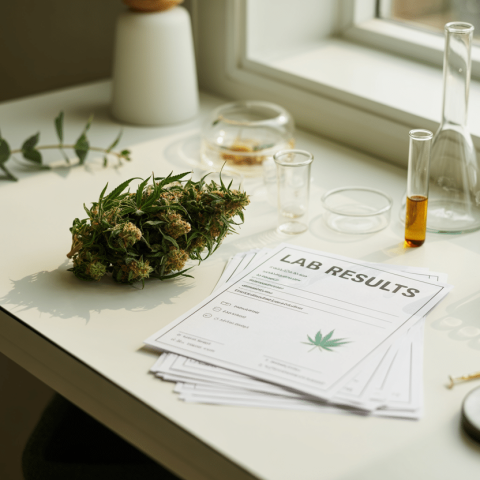
A COA is a lab report produced by an independent, accredited testing laboratory. It documents the chemical composition and safety profile of a specific cannabis batch. Every legal cannabis product sold in regulated markets should have one, and reputable brands make them freely available.
The testing lab analyzes a sample from the batch — not the entire production run — so the COA represents that specific lot. This is why matching the batch number on your product to the batch number on the COA matters. If those numbers don’t match, the report isn’t relevant to what you’re holding.
Accredited labs follow ISO 17025 standards, which means their methods are validated and their results are reproducible. When you see a lab’s ISO accreditation number on a COA, that’s a good sign — it means external auditors have verified their testing procedures.
💡 Quick check
If a brand can’t or won’t provide a COA, that’s a red flag. Walk away. Untested cannabis products can contain pesticides, heavy metals, or mold that you’d never detect by looking at the product.
The header section: identifying your batch
Every COA starts with administrative information at the top. This section includes the lab’s name, license number, and contact information. You’ll also find the client name (the brand that submitted the sample), the sample name, batch or lot number, and the date the sample was received and tested.
Pay attention to the testing date. Cannabis lab results have a shelf life — cannabinoid and terpene levels degrade over time, especially if the product hasn’t been stored properly. A COA from two years ago doesn’t tell you much about what’s in the jar today. Most state regulators require retesting if a product sits unsold beyond a certain window, typically 12 months.
The product type matters too. A COA for flower reads differently than one for a cannabis tincture or an edible. Potency is expressed differently depending on the matrix — percentage for flower, milligrams per milliliter for oils, and milligrams per serving for edibles.
Cannabinoid potency: the numbers everyone looks at first
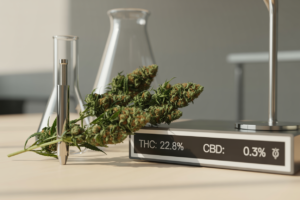
The cannabinoid profile is usually the first analytical section. It lists the concentrations of individual cannabinoids — THC, THCA, CBD, CBDA, CBG, CBN, and sometimes rarer ones like CBC or THCV. According to the FDA’s overview of cannabinoids, these compounds interact with the body’s endocannabinoid system in different ways, which is why knowing exactly what you’re getting matters.
Here’s where it gets slightly tricky. Raw cannabis flower contains mostly THCA, not THC. THCA converts to THC when heated (a process called decarboxylation). So if a COA shows 20% THCA and 0.5% THC, the actual THC you’d experience after smoking or vaping is roughly calculated as: Total THC = (THCA × 0.877) + THC. In this example, that’s about 18%. The 0.877 factor accounts for the molecular weight lost during decarboxylation.
The same conversion applies to CBD and CBDA. For CBD products, look at total CBD rather than just the CBD line. A product might show low CBD but high CBDA, which would convert upon heating.
Research published in the Journal of Cannabis Research has shown that cannabinoid concentrations can vary by up to 15% between different parts of the same plant. This means your specific nug might test slightly higher or lower than the batch average on the COA — and that’s normal.
✓ What good cannabinoid results look like
- ✓ Total THC and total CBD clearly calculated
- ✓ Multiple cannabinoids tested (not just THC and CBD)
- ✓ Results expressed in both percentage and mg/g
- ✓ LOD and LOQ values listed for each compound
Terpene profiles: beyond THC percentages
Terpene testing isn’t required everywhere, but when it’s included on a COA, it tells you a lot about how the product will smell, taste, and feel. Terpenes are aromatic compounds found in many plants — they’re what gives lavender its scent and lemons their tang. In cannabis, they work alongside cannabinoids in what researchers call the entourage effect.
Common terpenes you’ll see listed include myrcene (earthy, musky), limonene (citrus), pinene (pine), linalool (floral), and caryophyllene (peppery). If you’ve ever noticed that two strains with similar THC levels hit very differently, terpenes are likely the reason. A strain high in myrcene tends to feel more sedating, while one rich in limonene often feels uplifting.
Total terpene content above 2% is generally considered good for flower. Below 1%, the product may have been improperly dried or stored too long. Some terpene-focused consumers prioritize this section over cannabinoid potency when choosing products.
Safety testing: the part you shouldn’t skip
Potency gets the attention, but safety testing is arguably more important. This section tells you whether the cannabis is free from harmful contaminants. The CDC notes that contaminated cannabis products have caused outbreaks of serious illness, including the 2019 EVALI crisis linked to vitamin E acetate in vape cartridges.
Pesticide screening checks for dozens of chemicals that shouldn’t be present in the final product. Labs test for organophosphates, pyrethroids, and other pesticide classes. Results appear as “pass” or “fail,” though some reports also list specific compounds and their detected levels in parts per billion (ppb). The EPA has clarified that no pesticides are federally registered for use on cannabis, which makes this testing even more relevant.
Heavy metals testing screens for lead, arsenic, mercury, and cadmium. Cannabis is a bioaccumulator, meaning it absorbs metals from the soil efficiently. Even if levels are low in the soil, the plant can concentrate them. Labs compare detected levels against action limits set by state regulators or USP standards.
Microbial testing looks for bacteria (E. coli, Salmonella) and fungi (Aspergillus). Mold is a particular concern with cannabis because the dense flower structure creates conditions where spores thrive. Immunocompromised individuals are at higher risk from mold-contaminated cannabis, which is why this test exists.
Residual solvents apply mainly to concentrates and extracts. If a product was made using butane, propane, ethanol, or CO2 extraction, the COA should confirm that solvent levels fall below safe thresholds. You don’t want to inhale residual butane.
Mycotoxins are toxic compounds produced by certain molds. Even if the mold itself is killed during processing, mycotoxins can remain. Labs test for aflatoxins and ochratoxin A, both of which are regulated contaminants in food products.
📝 Watch for this
Some COAs only show “pass” or “fail” without listing the actual detected levels. While a “pass” is reassuring, detailed numerical results give you more confidence. Labs that show their work are generally more trustworthy than those that only provide binary results.
Understanding LOD, LOQ, and action limits
Three acronyms show up repeatedly on COAs, and understanding them helps you read the numbers with more confidence.
LOD (Limit of Detection) is the lowest amount of a substance the lab’s equipment can detect. If a compound is listed as “< LOD” or “ND” (not detected), it means the substance wasn’t found at levels the instrument could measure. That doesn’t necessarily mean it’s completely absent — it means it’s below the detection threshold.
LOQ (Limit of Quantitation) is the lowest level at which the lab can reliably measure a specific amount. It’s always higher than the LOD. A result might be detectable but not quantifiable, meaning the lab knows something is there but can’t tell you exactly how much.
Action limits are the maximum allowable concentrations set by regulators. If a detected level exceeds the action limit, the batch fails testing. These limits vary by state and country. California’s Bureau of Cannabis Control publishes its action limits for all contaminant categories, and most states follow similar frameworks.
Moisture content and water activity
Some COAs include moisture content and water activity (aw) measurements. These might seem minor, but they directly affect product quality and safety. Moisture content above 15% increases the risk of mold growth. Water activity above 0.65 aw creates conditions where bacteria and fungi can reproduce.
For flower, ideal moisture content sits between 8% and 13%. Too dry and the terpenes evaporate, the trichomes crumble, and the smoke becomes harsh. Too wet and you’re looking at potential mold problems. If you’re someone who pays attention to cannabis storage, knowing the starting moisture level helps you adjust your storage method.
How to spot a questionable COA
Not all COAs are created equal. The cannabis industry has seen cases of lab shopping (brands sending samples to whichever lab gives the highest potency numbers) and outright fraud. A few things to look for:
Unrealistically high THC numbers should raise an eyebrow. While some strains genuinely test above 30%, it’s uncommon. If every product from a brand consistently tests at 35%+, skepticism is warranted. A 2020 study by PLOS ONE found significant discrepancies between labeled and actual THC content across multiple dispensaries.
Missing or vague lab information is another warning sign. A legitimate COA includes the lab’s name, license number, address, and the name or signature of the analyst who performed the testing. If any of these are absent, the report may not be genuine.
Check that the lab is actually accredited. In the United States, cannabis testing labs must hold state licenses and often carry ISO 17025 accreditation. You can usually verify a lab’s license through your state’s cannabis regulatory website. The USDA’s lab testing services page provides information on laboratory accreditation standards.
✓ COA green flags
- ✓ Lab name, license, and analyst signature present
- ✓ Batch number matches your product
- ✓ Full safety panel included (pesticides, metals, microbials)
- ✓ Numerical results shown, not just pass/fail
- ✓ Testing date within the last 12 months
Reading COAs for different product types
Flower: Potency in percentage. Total THC and total CBD are your main figures. Terpene profiles are most informative for flower since the full spectrum of aromatic compounds is preserved. Look for moisture content between 8-13%.
Concentrates: Much higher potency (60-90%+ THC is common). Residual solvent testing is especially important here. If it’s a live resin or rosin, terpene content should be notably high since that’s the product’s selling point.
Edibles: Potency expressed in milligrams per serving and per package. Homogeneity testing (whether the THC is evenly distributed throughout the product) matters for edibles more than any other format. A gummy with 10mg per piece should actually contain close to 10mg in every piece, not 15mg in one and 5mg in another.
Vape cartridges: Potency in percentage or mg/mL. Residual solvents and heavy metals testing are especially critical. The CDC’s EVALI investigation highlighted how unregulated vape products can contain dangerous additives that wouldn’t appear on a legitimate COA — because they shouldn’t be there in the first place. Always buy from licensed sources with full safety panels.
CBD products: Check that the THC level falls below the legal threshold (0.3% in the US, 0.2% in the EU). For CBD oils, verify total CBD content matches what’s on the label. A 2017 study in JAMA found that nearly 70% of CBD products sold online were mislabeled — either containing more or less CBD than advertised.
Practical steps to check a COA yourself
You don’t need a chemistry degree to review a COA. Here’s a straightforward process:
First, scan the QR code on your product or visit the brand’s website. If there’s no QR code and no COA page on their site, ask your budtender or contact the brand directly. If they can’t provide one, consider shopping elsewhere.
Second, match the batch number. The number on the COA should correspond to the lot number on your product’s packaging. This confirms the report applies to what you bought.
Third, check the testing date. Anything older than 12 months is worth questioning.
Fourth, review the safety panel. Look for passing results across pesticides, heavy metals, microbials, and (for concentrates) residual solvents. A missing safety category is a concern.
Fifth, verify the lab. Google the lab’s name and check that it’s a real, licensed operation. Most state cannabis regulators maintain a public list of approved testing facilities.
💡 Save your COAs
Take screenshots of COAs for products you enjoy. Over time, you’ll start noticing patterns in which terpene profiles and cannabinoid ratios work best for you. It’s like building a personal playbook for your cannabis consumption.
Frequently Asked Questions
What does “ND” mean on a cannabis lab report?
ND stands for “Not Detected.” It means the substance was below the lab’s limit of detection (LOD). The compound may still be present in trace amounts, but the equipment couldn’t measure it. For safety tests, ND is the ideal result.
How often should cannabis products be retested?
Most state regulations require retesting after 12 months if a product remains unsold. Cannabinoid potency and terpene content degrade over time, especially in products exposed to heat, light, or air. If you’re buying a product near its expiration date, the original COA numbers may no longer be accurate.
Can I trust COAs from brands that do their own testing?
Third-party testing by an independent, accredited lab is the standard. In-house testing creates a conflict of interest. Always look for a lab name that’s different from the brand name. Legitimate brands use independent labs and aren’t shy about sharing which one they use.
Why do two products with the same THC percentage feel different?
THC percentage alone doesn’t determine the experience. Terpene profiles, minor cannabinoids (CBG, CBN, THCV), your individual biology, and even the consumption method all affect how a product feels. This is why looking at the full COA — not just the THC number — gives you a much better picture of what to expect.
Are cannabis lab results the same across all states?
No. Testing requirements vary significantly by state. Some states mandate full-panel testing (potency, pesticides, heavy metals, microbials, residual solvents, mycotoxins), while others only require potency and a few safety categories. California and Colorado tend to have the most comprehensive requirements. Check your state’s cannabis regulatory website for specific mandates.
⚠️ Disclaimer
This article is for informational purposes only and does not constitute medical advice. The information provided about cannabis lab testing is current as of February 2026 but regulations may change. Always consult with qualified healthcare professionals for medical advice. For our full disclaimer, visit cannastoreams.gr/disclaimer.