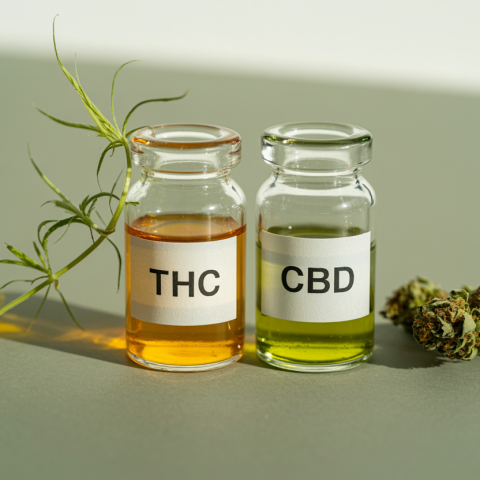
If you’ve spent any time browsing cannabis products, you’ve probably noticed two abbreviations everywhere: THC and CBD. They come from the same plant, share a nearly identical molecular formula, and yet they do very different things to your body. Understanding the difference between THC vs CBD isn’t just useful trivia. It determines what you feel, what’s legal where you live, and which product actually helps with what you’re dealing with.
This guide breaks down everything: how each compound works, their medical uses, side effects, and which one makes more sense for your situation. No hype, just the science and practical advice you can actually use.
📺 Video Guide
What are THC and CBD, exactly?
THC (tetrahydrocannabinol) and CBD (cannabidiol) are both cannabinoids, chemical compounds found naturally in the Cannabis sativa plant. The plant produces over 100 different cannabinoids, but these two account for the lion’s share of research and consumer interest.
Here’s what’s interesting about their chemistry: both THC and CBD have the exact same molecular formula, C₂₁H₃₀O₂. Twenty-one carbon atoms, thirty hydrogen atoms, two oxygen atoms. The difference is how those atoms are arranged. THC has a cyclic ring that’s closed, while CBD’s ring structure is open. That small structural difference changes everything about how they interact with your brain, according to research published in the Journal of Cannabis Research.
Both compounds were first isolated in the 1960s by Israeli chemist Raphael Mechoulam, often called the “father of cannabis research.” His team at the Weizmann Institute of Science identified THC as the primary psychoactive component, a discovery that essentially launched modern cannabinoid science.
How THC and CBD affect your body
Your body has a built-in system called the endocannabinoid system (ECS), which regulates mood, pain, appetite, sleep, and immune function. It works through two main receptors: CB1 (concentrated in the brain and central nervous system) and CB2 (found mostly in the immune system and peripheral tissues).
THC binds directly to CB1 receptors in your brain. That’s why it gets you high. It triggers dopamine release, alters perception, and can produce euphoria, relaxation, or in some people, anxiety. The National Institute on Drug Abuse describes THC’s mechanism as essentially mimicking anandamide, a naturally occurring neurotransmitter your body already makes.
CBD works differently. It doesn’t bind strongly to either CB1 or CB2 receptors. Instead, it modulates the endocannabinoid system indirectly. It can block certain enzymes that break down your natural endocannabinoids, essentially helping your body use its own cannabinoids more effectively. CBD also interacts with serotonin receptors, which explains its anti-anxiety effects.
✓ Key differences at a glance
- ✓ THC produces a psychoactive “high,” CBD does not
- ✓ THC binds directly to CB1 brain receptors, CBD modulates the system indirectly
- ✓ Both share the same molecular formula but have different atomic arrangements
- ✓ CBD can actually counteract some of THC’s psychoactive effects
Medical benefits of THC
THC has well-documented medical applications backed by clinical research. The FDA has approved synthetic THC medications (dronabinol and nabilone) for specific conditions, which tells you something about the compound’s legitimate medical value.
Chronic pain relief is probably THC’s best-known medical use. A 2022 meta-analysis in the JAMA Network Open found that cannabis-based treatments showed measurable pain reduction across multiple studies, particularly for neuropathic pain that doesn’t respond well to traditional painkillers.
Nausea and appetite stimulation are where THC really stands out. Cancer patients undergoing chemotherapy have used THC-based medications since the 1980s. It’s also prescribed for appetite loss in HIV/AIDS patients. This appetite-stimulating effect is why many recreational users report getting “the munchies.”
Sleep is another area where people turn to THC. Research from the Sleep Foundation suggests THC can reduce the time it takes to fall asleep, though it may affect sleep quality with long-term use. Indica strains tend to be preferred for sleep, partly because of their typically higher THC-to-CBD ratios and specific terpene profiles.
Medical benefits of CBD
CBD’s medical credibility got a major boost in 2018 when the FDA approved Epidiolex, a CBD-based medication for treating severe forms of epilepsy (Dravet syndrome and Lennox-Gastaut syndrome). It was the first plant-derived cannabinoid medicine to get FDA approval, according to the FDA’s press announcement.
Anxiety and stress reduction represent one of CBD’s most popular uses. A 2019 study published in The Permanente Journal found that 79.2% of patients reported decreased anxiety scores within the first month of CBD use. Unlike anti-anxiety medications like benzodiazepines, CBD doesn’t carry addiction risk or produce sedation at typical doses.
Inflammation and pain are areas where CBD shows promise without the psychoactive baggage. Athletes in particular have gravitated toward CBD for recovery. The World Health Organization reviewed CBD in 2018 and concluded it has a good safety profile with no potential for abuse or dependence.
Skin conditions are an emerging area. Early research suggests CBD’s anti-inflammatory properties may help with acne, eczema, and psoriasis when applied topically. CBD topicals for athletes have become increasingly popular for both skin care and localized pain management.
💡 Pro Tip
If you’re new to cannabinoids, CBD is generally the safer starting point. It won’t impair your cognitive function, it’s legal in most places, and side effects are minimal. You can always explore THC later once you understand how your body responds to cannabinoids. Check our CBD beginner’s guide for detailed dosing advice.
Side effects and risks
Both compounds have side effects, but they differ significantly in type and severity.
THC side effects include dry mouth, red eyes, impaired memory and coordination, increased heart rate, and in some users, anxiety or paranoia. These effects are dose-dependent, meaning higher doses increase the likelihood. The CDC notes that THC can also affect brain development in adolescents, which is why age restrictions exist. Long-term heavy use may contribute to mental health risks in young adults.
CBD side effects are generally milder. The most commonly reported ones include fatigue, changes in appetite, and diarrhea. The bigger concern with CBD is drug interactions. CBD is processed by the same liver enzymes (CYP450) that metabolize many prescription medications, which means it can increase or decrease the effectiveness of other drugs. If you take prescription medications, talk to your doctor before adding CBD.
One thing worth noting: CBD can actually reduce some of THC’s negative effects. Research published in Frontiers in Psychiatry found that CBD may counteract THC-induced anxiety and cognitive impairment. This is partly why products with balanced THC:CBD ratios are becoming more popular.
Legal status: where things get complicated
The legal landscape for THC and CBD varies widely depending on where you are.
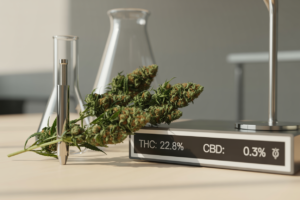
In the United States, the 2018 Farm Bill legalized hemp-derived CBD products containing less than 0.3% THC at the federal level. THC remains a Schedule I controlled substance federally, though individual states have their own medical and recreational cannabis laws. As of 2026, 24 states plus Washington D.C. have legalized recreational marijuana, according to the National Conference of State Legislatures.
In Europe, the situation varies by country. Hemp and marijuana occupy different legal categories across the EU. Generally, CBD products derived from hemp with less than 0.2% THC are legal in most EU countries. Greece, where our products are available, allows CBD products within these limits.
The bottom line: CBD is legally accessible in far more places than THC. If you’re concerned about legality, CBD products from hemp are your safest option. Always check your local laws before purchasing, since regulations change frequently.
📝 Important Note
Drug tests typically screen for THC metabolites, not CBD. However, some full-spectrum CBD products contain trace amounts of THC (up to 0.2-0.3%) that could potentially trigger a positive test result. If drug testing is a concern for you, look for broad-spectrum CBD or CBD isolate products, which should contain zero THC.
The entourage effect: why they work better together
Here’s something that often gets overlooked in the THC vs CBD conversation: they may work better together than either does alone. This concept is called the “entourage effect,” a theory first proposed by Mechoulam and his colleague Shimon Ben-Shabat in 1998.
The idea is that cannabinoids, terpenes, and other plant compounds interact synergistically, producing effects that none of them would achieve individually. A study in the British Journal of Pharmacology found evidence supporting this theory, particularly for pain and inflammation treatment.
This is why full-spectrum products (which contain both THC and CBD along with other cannabinoids) often get recommended over isolates. The different compounds seem to amplify each other’s benefits while smoothing out the rough edges, particularly CBD’s ability to temper THC’s anxiety-inducing potential.
How to choose between THC and CBD
Your choice between THC and CBD depends on what you’re trying to accomplish.
Choose CBD if: you want wellness benefits without impairment, you need to stay functional during the day, you have drug testing concerns, you’re managing anxiety or inflammation, or you’re new to cannabis altogether. CBD works for daily use without affecting your ability to drive, work, or handle responsibilities.
Choose THC if: you’re dealing with severe pain that doesn’t respond to other treatments, you have chemotherapy-related nausea, you struggle with insomnia, or you want the recreational “high” experience. THC is more appropriate for evening use when you don’t need to be alert or operating machinery.
Consider both if: you want maximum therapeutic benefit. Products with balanced ratios (1:1, 2:1, etc.) give you the medical benefits of both compounds while keeping the psychoactive effects manageable. Many medical cannabis programs now recommend starting with CBD-dominant products and gradually introducing THC as needed.
Whichever you choose, start low and go slow. This applies to both THC and CBD. With THC, proper dosing is especially important for beginners to avoid uncomfortable experiences. With CBD, using a dosage calculator can help you find the right starting point.
Available product types
Both THC and CBD come in a range of product formats. Here’s how they break down:
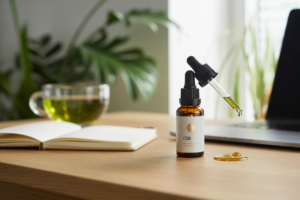
Oils and tinctures are the most versatile option. You take them sublingually (under the tongue), which allows faster absorption than edibles. CBD oils are widely available, and they’re a good way to control your dose precisely. THC tinctures are available in legal markets. Browse our CBD oil collection for various strength options.
Flower (smokable cannabis) provides the fastest onset of effects, typically within minutes. CBD flower is legal in many places, while THC-dominant flower is regulated. Strains like Amnesia Haze are popular CBD-rich options.
Edibles take longer to kick in (30 minutes to 2 hours) but produce longer-lasting effects. This makes dosing trickier, especially with THC. Many beginners make the mistake of taking more before the first dose kicks in.
Topicals are applied directly to the skin. They work locally for pain and inflammation without entering your bloodstream in significant amounts, which means minimal psychoactive effects even from THC topicals.
Frequently asked questions
Can you take THC and CBD at the same time?
Yes, and many people do. Combining THC with CBD can actually improve the experience. CBD helps reduce THC-related anxiety and paranoia while allowing the therapeutic benefits of both compounds. Products with specific THC:CBD ratios (like 1:1 or 1:2) are designed for this purpose.
Will CBD show up on a drug test?
Pure CBD isolate should not trigger a drug test. However, full-spectrum CBD products contain trace amounts of THC (up to 0.2-0.3%), which could potentially cause a positive result with heavy use. If drug testing matters for your job, use broad-spectrum or isolate CBD products.
Which is better for pain, THC or CBD?
It depends on the type of pain. For severe or neuropathic pain, THC tends to be more effective. For inflammatory pain (like joint inflammation or muscle soreness), CBD often provides sufficient relief without cognitive impairment. Many chronic pain patients find that a combination of both works best.
Is CBD actually legal everywhere?
Not quite everywhere, but CBD derived from hemp (containing less than 0.2-0.3% THC) is legal in most Western countries, including the US, most EU nations, and the UK. Some countries still restrict all cannabis derivatives. Always verify your local regulations before purchasing.
Can CBD get you high?
No. CBD is non-psychoactive and does not produce the “high” associated with cannabis use. Some people report feeling more relaxed or calm after taking CBD, but this is not the same as THC’s intoxicating effect. You can take CBD and go about your normal day without impairment.
⚠️ Disclaimer
This article is for informational purposes only and does not constitute medical advice. The information provided is current as of February 2026 but may change. Always consult with qualified healthcare professionals before using cannabis products, especially if you take prescription medications. For our full disclaimer, visit cannastoreams.gr/disclaimer.