Cannabis for PTSD: What Research Actually Shows
Explore the latest research on cannabis for PTSD treatment, including clinical evidence on THC and CBD, practical guidance for patients, and what science reveals about cannabinoids and trauma recovery.

Post-traumatic stress disorder affects roughly 6% of the U.S. population at some point in their lives, according to the U.S. Department of Veterans Affairs. Standard treatments, including SSRIs and cognitive behavioral therapy, work for many people. But a significant number of patients don’t respond well to these options, which has driven researchers to look at cannabis PTSD treatment as a potential alternative. Over the past decade, clinical interest in cannabinoids for trauma-related symptoms has grown rapidly, with studies exploring how compounds like THC and CBD interact with the brain’s stress response systems.
This guide breaks down what the research actually shows, where the gaps remain, and what anyone considering cannabis for PTSD should know before making a decision.
What is PTSD and why do current treatments fall short?
PTSD develops after exposure to a traumatic event and involves four main symptom clusters: intrusive memories (flashbacks, nightmares), avoidance of trauma reminders, negative changes in mood and cognition, and hyperarousal (being constantly on edge, difficulty sleeping, exaggerated startle response). The National Institute of Mental Health estimates that about 3.6% of American adults experienced PTSD in the past year alone.
The FDA has approved only two medications for PTSD: sertraline (Zoloft) and paroxetine (Paxil), both SSRIs. According to a meta-analysis published in JAMA Psychiatry, roughly 40-60% of patients treated with SSRIs show meaningful improvement. That leaves a sizable group still struggling with symptoms that disrupt daily life, relationships, and work. Veterans are particularly affected, with the VA reporting that between 11-20% of veterans from Operations Iraqi Freedom and Enduring Freedom develop PTSD.
This treatment gap is exactly why researchers started looking at the endocannabinoid system as a potential target.
The endocannabinoid system and trauma response
Your body produces its own cannabinoids, called endocannabinoids, primarily anandamide (AEA) and 2-arachidonoylglycerol (2-AG). These molecules bind to CB1 and CB2 receptors throughout the brain and body. The National Center for Biotechnology Information hosts multiple studies showing that the endocannabinoid system plays a direct role in how the brain processes fear, stores traumatic memories, and recovers from stress.
Here’s why this matters for PTSD specifically: research from NYU Langone Health found that people with PTSD tend to have lower circulating levels of anandamide compared to healthy controls. Anandamide is sometimes called the “bliss molecule” because it helps regulate mood, but it also plays a direct role in fear extinction, the process by which your brain learns that a previously threatening stimulus is no longer dangerous.
When this system is running low on anandamide, fear extinction doesn’t work properly. Traumatic memories stay vivid. The startle response stays cranked up. Sleep becomes fragmented by nightmares. Cannabis compounds interact with this same system, which is why they’ve attracted research attention for PTSD.
✓ Key endocannabinoid system functions relevant to PTSD
- ✓ Fear extinction: learning that threats have passed
- ✓ Stress hormone regulation: modulating cortisol release
- ✓ Sleep architecture: influencing REM sleep and dream content
- ✓ Emotional memory processing: determining which memories stay vivid
- ✓ Hyperarousal management: calming the fight-or-flight response
What the clinical research shows
The research on cannabis for PTSD is promising but still limited by small sample sizes and varying study designs. Here’s what we know from the strongest available evidence.
Nabilone for nightmares: Nabilone is a synthetic THC analog that has been studied specifically for PTSD-related nightmares. A randomized controlled trial published in the Journal of Clinical Psychopharmacology found that nabilone reduced nightmare frequency and intensity in military personnel with treatment-resistant PTSD. Health Canada approved nabilone for this specific use, making it one of the few cannabinoid-based treatments with regulatory backing for a PTSD symptom.
Whole-plant cannabis observational data: A 2020 study in the Journal of Psychoactive Drugs followed PTSD patients using medical cannabis over one year. Participants reported significant reductions in symptom severity, with PTSD Checklist scores dropping by more than 50% for many users. However, this was an observational study without a control group, which limits the strength of the conclusions.
CBD specifically: A case series published in the Journal of Alternative and Complementary Medicine reported that CBD reduced anxiety and improved sleep in patients with PTSD when added to routine psychiatric care. Separate research from the European Neuropsychopharmacology journal found that CBD may help with fear memory reconsolidation, potentially weakening traumatic memories when administered during therapeutic sessions.
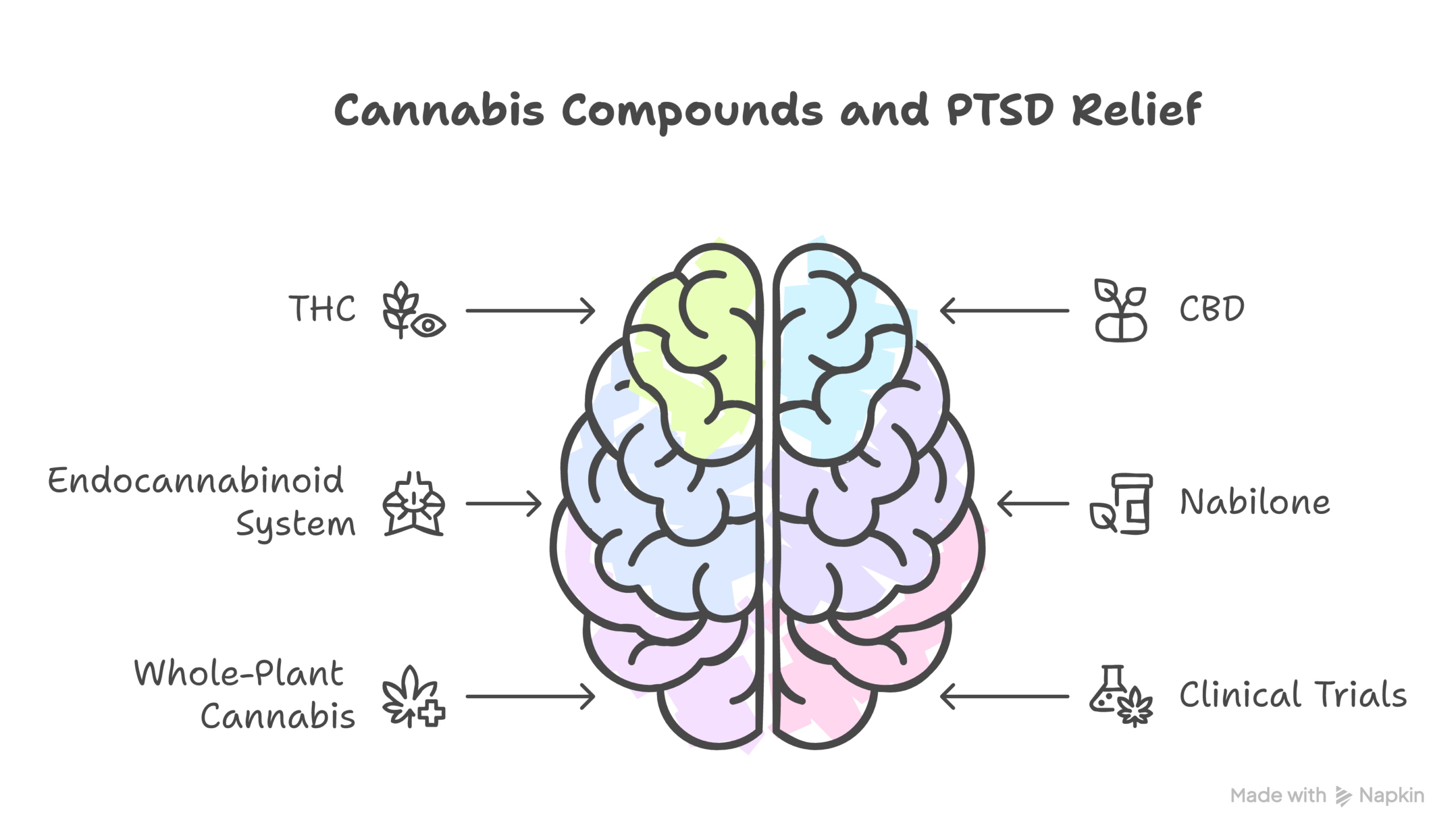
THC vs CBD for PTSD symptoms
THC and CBD affect PTSD symptoms through different mechanisms, and understanding the distinction matters for anyone considering cannabis as part of their treatment plan.
THC binds directly to CB1 receptors in the brain, which can suppress REM sleep (reducing nightmares), decrease hyperarousal, and provide short-term anxiety relief. Research from the Permanente Journal shows that low-dose THC can reduce anxiety, but higher doses often increase it. For PTSD patients, this dose-dependent effect is especially important because trauma makes the anxiety threshold lower.
CBD works differently. It doesn’t bind strongly to CB1 receptors. Instead, it modulates serotonin signaling through the 5-HT1A receptor and inhibits the enzyme that breaks down anandamide, effectively boosting your body’s own calming cannabinoids. A 2019 study in Frontiers in Psychology found that CBD reduced anxiety in a simulated public speaking test, with effects comparable to standard anxiolytics.
Some researchers believe a combination approach works best. The World Health Organization reviewed CBD safety in 2018 and found no significant adverse effects, while noting potential therapeutic value for several conditions including anxiety disorders.
💡 Pro Tip
If you’re considering cannabis for PTSD symptoms, start with CBD-dominant products. They carry less risk of worsening anxiety compared to high-THC options. Work with a healthcare provider who understands both PTSD and cannabinoid pharmacology to find the right approach for your situation.
How cannabis may help specific PTSD symptoms
Nightmares and sleep disruption: This is where the evidence is strongest. THC suppresses REM sleep, which is when most vivid dreaming occurs. For PTSD patients who experience nightly trauma-related nightmares, this REM suppression can mean the difference between sleeping through the night and waking up in a panic at 3 AM. The nabilone trials mentioned earlier specifically targeted this symptom with positive results. Some patients report that even low-dose cannabis use before bed significantly reduces nightmare frequency.
Hyperarousal: That constant feeling of being “on” – scanning for threats, jumping at loud noises, inability to relax. Cannabis, particularly indica-dominant strains, may help dial down this heightened state. A survey published by PubMed of medical cannabis users with PTSD found that hyperarousal symptoms showed the largest reduction compared to other symptom clusters.
Intrusive memories: The relationship here is more complex. Some research suggests that cannabinoids may help with memory reconsolidation, the process by which recalled memories become malleable and can be stored with less emotional charge. However, other studies warn that cannabis could actually impair the emotional processing that happens during therapy. Context and timing seem to matter a lot.
Avoidance behaviors: Less direct evidence exists here, but patients in observational studies report being more willing to engage in social situations and less driven to isolate when using medical cannabis. Whether this is a direct pharmacological effect or a secondary benefit of better sleep and lower anxiety isn’t clear yet.
Risks and considerations you should know about
Cannabis is not a risk-free option for PTSD, and being honest about the downsides matters just as much as covering the potential benefits.
Dependence potential: The CDC notes that about 10% of cannabis users develop cannabis use disorder. For people with PTSD, who are already at higher risk for substance use disorders in general, this deserves careful consideration. Using cannabis to cope with symptoms can become a pattern that’s hard to break, especially if it replaces rather than complements therapy.
Anxiety worsening: High-THC cannabis can trigger panic attacks and worsen anxiety in some people with PTSD. This response is dose-dependent and individual, which makes self-medicating particularly risky. What helps one person at one dose might trigger a crisis in another.
REM sleep rebound: When you stop using THC after regular use, REM sleep rebounds, often producing more vivid and disturbing dreams than before. For PTSD patients who started using cannabis specifically for nightmare relief, this rebound can feel like a setback. Gradual tapering under medical supervision helps minimize this effect.
Interaction with therapy: Some therapists worry that cannabis use might interfere with exposure-based therapies like Cognitive Processing Therapy or Prolonged Exposure. These therapies require patients to engage emotionally with traumatic memories, and cannabis might blunt that engagement. Research on this interaction is still limited.
📝 Important Note
Cannabis should not replace evidence-based PTSD treatments like trauma-focused therapy and FDA-approved medications. The strongest outcomes in research come from patients who use cannabis as a supplement to, not a substitute for, professional mental health care.
Current legal landscape for medical cannabis and PTSD
PTSD is a qualifying condition for medical cannabis in many jurisdictions. In the United States, most states with medical cannabis programs include PTSD on their list of approved conditions. The DEA still classifies cannabis as Schedule I federally, but state-level programs continue to expand access for PTSD patients.
In Canada, nabilone can be prescribed for PTSD-related nightmares, and whole-plant cannabis is accessible through the Health Canada medical cannabis program. Several European countries, including Germany and the Netherlands, allow medical cannabis for PTSD under physician supervision.
In Greece, the regulatory framework for medical cannabis has been evolving. While recreational use remains restricted, medical cannabis became legal in 2017 for specific conditions. Patients interested in cannabinoid-based options should consult with authorized healthcare providers familiar with Greek cannabis regulations.
The legal situation creates a practical challenge for research. Because cannabis remains federally restricted in many countries, large-scale randomized controlled trials are difficult to fund and conduct. Most of what we know comes from smaller studies, observational data, and patient surveys.
Practical guidance for PTSD patients considering cannabis
If you’re living with PTSD and thinking about trying cannabis, these practical steps can help you approach it more safely.
Talk to your treatment team first. Your therapist and psychiatrist need to know if you’re using cannabis, because it can interact with medications and affect the therapeutic process. Hiding it doesn’t help anyone.
Start low and go slow. This isn’t just a cliche. For PTSD patients, who often have heightened sensitivity to substances that alter perception, starting with microdoses (2.5mg THC or less) is genuinely important. You can always increase, but you can’t un-take a dose that triggers a panic attack.
Consider your consumption method. Inhalation (vaping or smoking) provides fast onset, which gives you more control over dosing. Tinctures offer a middle ground with onset in 15-30 minutes. Edibles take 1-2 hours to kick in and are harder to dose accurately, which makes them riskier for beginners. Topicals won’t help with PTSD symptoms directly since they don’t reach the brain in meaningful quantities.
Track your results. Keep a simple log of what you used, how much, when, and what happened to your symptoms. This data helps both you and your healthcare provider figure out what’s working and what isn’t. The lab results on cannabis products can help you understand exactly what you’re consuming.
Don’t abandon other treatments. Cannabis works best as part of a broader treatment plan. Trauma-focused therapy remains the gold standard for PTSD recovery. Cannabis may make the process more manageable, but it’s not a standalone cure.
What’s coming next in cannabis PTSD research
Several research directions look promising. The Multidisciplinary Association for Psychedelic Studies (MAPS) has been running trials examining whole-plant cannabis for PTSD in veterans. The ClinicalTrials.gov database lists multiple active studies on cannabinoids and PTSD, ranging from CBD-only interventions to combination approaches.
One area gaining attention is the potential combination of cannabis with psychotherapy. Some researchers are exploring whether low-dose THC administered before exposure therapy sessions might actually enhance fear extinction, the same process the endocannabinoid system supports naturally. Early results are intriguing, but larger trials are needed before this could become standard practice.
Genetic research is also opening new doors. Scientists are looking at variations in the genes that encode CB1 receptors and the enzymes that break down endocannabinoids. Understanding why some people respond well to cannabis for PTSD and others don’t could eventually lead to personalized treatment protocols based on individual genetics.
The shift in federal attitudes toward cannabis research funding, while slow, is creating opportunities for the kind of large-scale, well-controlled studies that have been missing. Within the next few years, we should have much clearer answers about exactly which PTSD populations benefit most from specific cannabinoid treatments.
Frequently Asked Questions
Is cannabis FDA-approved for treating PTSD?
No. Cannabis is not FDA-approved for PTSD treatment. The FDA has approved only sertraline and paroxetine for PTSD. However, nabilone (a synthetic THC analog) is approved in Canada for PTSD-related nightmares, and many U.S. states include PTSD as a qualifying condition for medical cannabis programs.
Can CBD alone help with PTSD symptoms?
Early research suggests CBD may help reduce anxiety and improve sleep in people with PTSD. CBD doesn’t produce a “high” and has a better safety profile than THC. However, the evidence is still limited to small studies and case reports. CBD appears most helpful for anxiety-related symptoms rather than nightmares, where THC-based treatments show stronger results.
Will using cannabis for PTSD make me dependent?
There is a real risk. About 10% of cannabis users develop cannabis use disorder, and PTSD patients may be at higher risk due to pre-existing vulnerability to substance use issues. Working with a healthcare provider, using the lowest effective dose, and maintaining other treatment modalities can help reduce this risk.
What cannabis strains are best for PTSD?
There’s no single “best strain” for PTSD, and individual responses vary widely. Generally, CBD-dominant or balanced THC:CBD strains carry less risk of anxiety worsening. For nighttime use targeting sleep and nightmares, indica-dominant strains with moderate THC content are commonly reported as helpful. Always start with low doses regardless of strain choice.
Can I use cannabis while taking PTSD medication?
Cannabis can interact with several medications commonly prescribed for PTSD, including SSRIs, benzodiazepines, and sleep aids. Both THC and CBD are metabolized by liver enzymes (CYP450 system) that also process many pharmaceuticals, potentially altering drug levels in your blood. Never combine cannabis with existing medications without consulting your prescribing physician.
⚠️ Disclaimer
This article is for informational purposes only and does not constitute medical advice. The information provided about cannabis and PTSD is current as of March 2026 but may change as new research emerges. Always consult with qualified healthcare professionals for medical advice and treatment options. Decisions about cannabis use for PTSD should be made in consultation with authorized healthcare providers who understand your specific medical history and conditions. For our full disclaimer, visit cannastoreams.gr/disclaimer.
