
Best CBD Products for Pets: Complete Buying Guide
Discover the best CBD products for pets in 2026. Compare oils, treats, and topicals for dogs and cats with dosing tips and safety advice.

📺 Video Guide
If you’ve spent any time in a pet store lately, you’ve probably noticed CBD products taking over entire shelves. CBD oils, chews, balms, capsules, even CBD-infused shampoos for your four-legged family members. The pet CBD market has exploded, and it’s not slowing down. But which products actually deliver results, and which ones are just riding the hype wave? That’s what we’re digging into here.
The best CBD products for pets share a few things in common: they use high-quality hemp extract, come with third-party lab results you can actually verify, and they’re formulated specifically for animals rather than repurposed from human products. Whether your dog gets nervous during thunderstorms or your aging cat struggles with stiff joints, the right CBD product can make a real difference in their quality of life.
What Is CBD and How Does It Work for Pets?
CBD, or cannabidiol, is one of over 100 cannabinoids found in the cannabis plant. Unlike THC, it doesn’t produce a “high.” Dogs, cats, and most mammals have an endocannabinoid system (ECS) that regulates mood, pain response, appetite, and immune function. CBD interacts with the CB1 and CB2 receptors in this system, which is why it can influence so many different aspects of your pet’s health.
Research from Frontiers in Veterinary Science has shown that CBD can reduce inflammation, modulate pain signaling, and ease anxiety responses in companion animals. A 2018 study published in Frontiers in Veterinary Science at Colorado State University found that CBD oil increased comfort and activity levels in dogs with osteoarthritis. The science is catching up to what many pet owners have observed anecdotally for years.
It’s worth noting that the FDA hasn’t approved CBD for use in animals yet. That doesn’t mean it’s unsafe, but it does mean the market isn’t regulated the way pharmaceutical drugs are. This makes product quality extremely variable, and it puts the responsibility on you to choose carefully.
Types of CBD Products Available for Pets
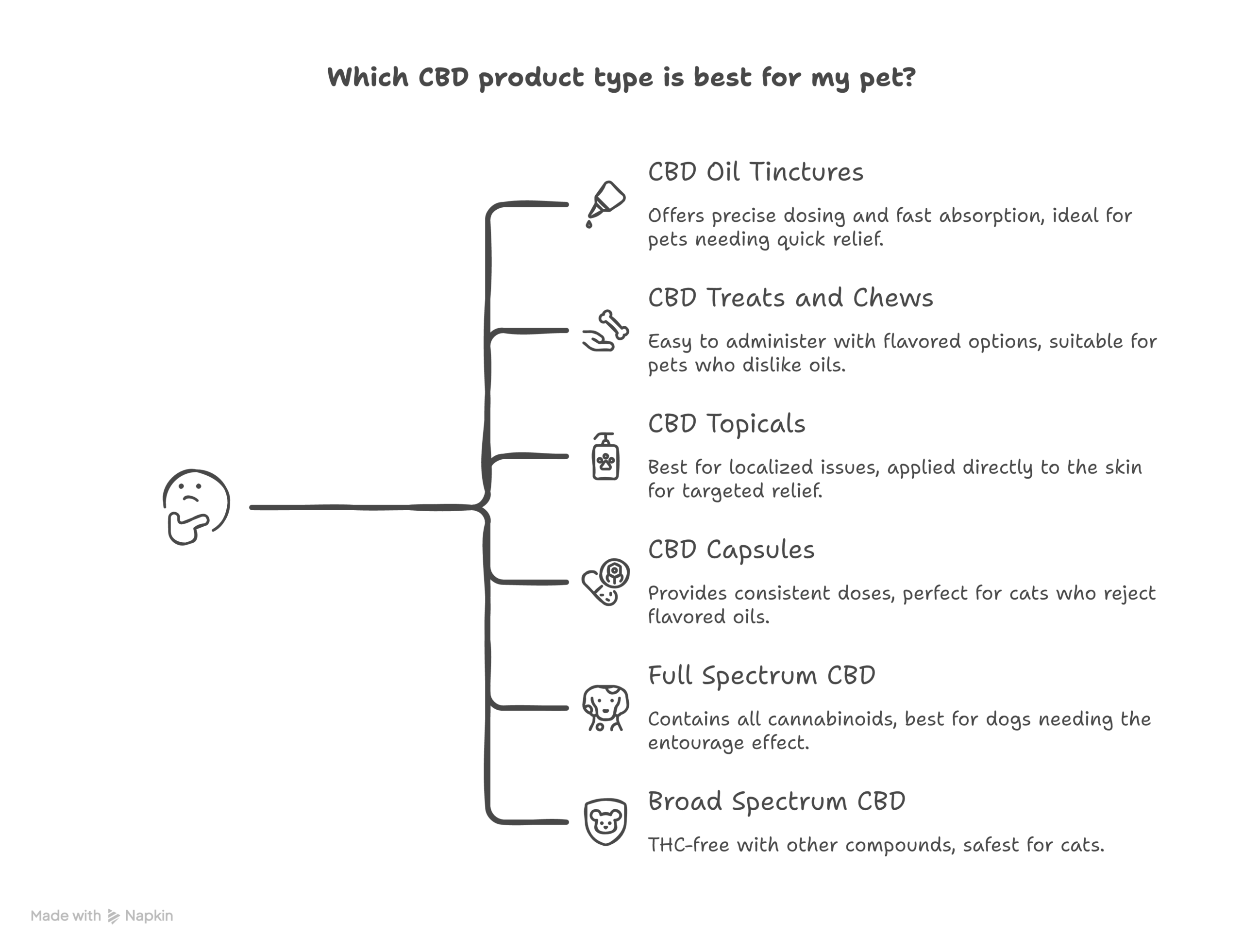
Not all CBD products are created equal, and different formats work better for different situations. Here’s a breakdown of what’s on the market and when each type makes sense.
CBD Oil Tinctures
These are the gold standard for pet CBD. You get a dropper bottle, usually with coconut oil (MCT) or hemp seed oil as the carrier. The advantage is precise dosing. You can adjust down to the drop, which matters when you’re dealing with a 5-pound chihuahua versus a 90-pound Labrador. Most tinctures absorb sublingually (under the tongue) within 15 to 30 minutes, though many pet owners just mix the oil into food. The American Veterinary Medical Association notes that oral absorption through food may take longer but is still effective.
CBD Treats and Chews
For pets who hate the taste of oil (or owners who don’t want to wrestle with a dropper), CBD-infused treats are the easiest option. They come in flavors like peanut butter, chicken, or salmon, and most dogs will eat them happily. The downside? Dosing isn’t as precise. Each treat contains a fixed amount of CBD, and if your pet needs half a treat’s worth, things get tricky. Also, because the CBD has to pass through the digestive system, onset is slower, usually 30 to 60 minutes.
CBD Topicals
Balms, salves, and creams infused with CBD work well for localized issues like hot spots, skin irritation, or joint pain in specific areas. You apply them directly to the affected spot. They don’t enter the bloodstream in significant amounts, so they’re not great for systemic issues like anxiety. But for a dog with a sore elbow or a cat with dry, irritated skin, topicals can be surprisingly effective. A study in the Journal of the American Holistic Veterinary Medical Association found topical CBD helped reduce itching and skin inflammation in dogs with atopic dermatitis.
CBD Capsules and Soft Gels
These offer consistent dosing without the mess of oil. You can hide them in a treat or a piece of cheese. They’re popular with cat owners because cats tend to reject flavored oils. The tradeoff is slower absorption and less flexibility in dose adjustment.
✓ What to Look for in Quality Pet CBD
- ✓ Third-party Certificate of Analysis (COA) available online
- ✓ THC content below 0.3% (or THC-free for cats)
- ✓ Organic, US-grown hemp as the source material
- ✓ CO2 extraction method for clean, solvent-free product
- ✓ Clear dosing instructions based on pet weight
- ✓ No artificial colors, flavors, or preservatives
Full Spectrum, Broad Spectrum, or Isolate: Which Is Best for Pets?
This is where things get important, and where a lot of pet owners make mistakes. Full spectrum, broad spectrum, and isolate CBD all behave differently in your pet’s body.
Full spectrum CBD contains all the cannabinoids, terpenes, and flavonoids found in the hemp plant, including trace amounts of THC (under 0.3%). The “entourage effect,” a concept supported by research published in the British Journal of Pharmacology, suggests these compounds work better together than in isolation. For most dogs, full spectrum is the preferred choice. However, cats metabolize THC differently and may be more sensitive, so extra caution is needed.
Broad spectrum CBD removes the THC but keeps the other beneficial compounds. This is generally the safest bet for cats and for pet owners who want zero THC risk. You still get most of the entourage effect without the THC concern.
CBD isolate is pure CBD with nothing else. It’s the most predictable option, but you lose the synergistic benefits of the full plant profile. Some veterinarians prefer isolate for clinical studies because it removes variables, but for everyday wellness, broad or full spectrum tends to deliver better results.
CBD Dosing Guidelines for Dogs and Cats
Getting the dose right is one of the trickiest parts of giving your pet CBD. There’s no universal standard, and what works for your neighbor’s Golden Retriever might be wrong for your Shih Tzu. That said, veterinary research gives us solid starting points.
For dogs, the American Kennel Club references studies using 2mg of CBD per kilogram of body weight, twice daily, as a common starting dose. So a 20kg (44-pound) dog would start at roughly 40mg per day, split into two doses. For anxiety, some dogs respond to lower amounts, around 1mg/kg. For chronic pain or severe inflammation, vets sometimes recommend going higher, up to 4mg/kg, but you should always work with your vet on this.
Cats typically need less. A starting dose of 1mg/kg once or twice daily is standard. Cats are smaller, but they also metabolize cannabinoids differently. Start low and observe for at least a week before adjusting. Watch for changes in appetite, energy levels, and the specific issue you’re trying to address.
💡 Pro Tip
Keep a simple log of your pet’s CBD doses, timing, and behavior for the first two weeks. Note things like appetite changes, activity levels, sleep quality, and response to triggers (thunderstorms, car rides, etc.). This data helps you dial in the right dose much faster than guessing.
Common Conditions CBD May Help With in Pets
Anxiety and Stress
Separation anxiety, noise phobias, travel stress. These are the most common reasons pet owners turn to CBD. A Cornell University study published in Frontiers in Veterinary Science found that a single dose of CBD reduced stress-related behaviors in dogs. The effect was dose-dependent, meaning more isn’t automatically better, but there’s a sweet spot for each animal. CBD’s role in anxiety management has been studied across both humans and animals with promising results.
Joint Pain and Arthritis
Older dogs especially benefit here. The Colorado State study mentioned earlier showed measurable improvements in pain scores and mobility in arthritic dogs taking CBD. If your senior dog has slowed down on walks or struggles to get up from lying down, CBD oil is worth discussing with your vet. Many owners combine it with cannabis-based recovery products for a comprehensive approach to joint health.
Seizures and Epilepsy
This is where some of the most compelling evidence exists. A 2019 study from Colorado State University, published in the Journal of the American Veterinary Medical Association, found that 89% of dogs receiving CBD had a reduction in seizure frequency. CBD won’t replace prescription anti-epileptic drugs, but it may complement them. If your pet has epilepsy, talk to your vet before adding CBD to their regimen.
Appetite and Nausea
Pets undergoing chemotherapy or recovering from surgery sometimes lose their appetite. CBD’s interaction with serotonin receptors may help reduce nausea and stimulate eating. It’s not a guarantee, but it’s one of those low-risk interventions that’s worth trying.
Skin and Coat Health
CBD’s anti-inflammatory properties extend to the skin. Dogs with allergic dermatitis, hot spots, or excessive itching may benefit from both topical and oral CBD. The National Institutes of Health has noted the endocannabinoid system’s role in skin homeostasis. For external skin issues, CBD skincare products applied topically can offer targeted relief.
Safety Considerations and Side Effects
CBD is generally well-tolerated by dogs and cats, but “generally” isn’t “always.” Here’s what you need to watch for.
The most common side effects, according to the World Health Organization’s CBD report, include mild drowsiness (especially at higher doses), dry mouth (you might notice your pet drinking more water), and temporary digestive upset. These tend to resolve on their own as the pet adjusts, or when the dose is lowered.
More serious concerns involve drug interactions. CBD inhibits certain liver enzymes (specifically cytochrome P450), which can affect how your pet metabolizes other medications. If your dog or cat is on any prescription drugs, particularly anti-seizure medications, NSAIDs, or heart medications, you need to consult your veterinarian before introducing CBD. This isn’t optional.
THC toxicity is the real danger, and it’s why product quality matters so much. Some poorly manufactured products contain higher THC levels than their labels claim. Dogs are significantly more sensitive to THC than humans. Symptoms of THC poisoning in dogs include lethargy, vomiting, loss of coordination, and in severe cases, seizures. The safety guide for cannabis and pets we published previously covers this topic in depth.
📝 Important Note
Never give your pet a CBD product designed for humans. Human CBD products may contain xylitol (toxic to dogs), higher THC concentrations, or ingredients that are safe for people but harmful to animals. Always choose products formulated specifically for pets.
How to Choose the Right CBD Product for Your Pet
With hundreds of brands competing for your money, filtering the noise takes some effort. Here’s a practical framework for evaluating pet CBD products.
Check the COA. This is non-negotiable. A Certificate of Analysis from an independent lab confirms the product contains what it claims, and nothing it shouldn’t. The COA should show cannabinoid content (CBD, THC, CBG, etc.), heavy metal testing, pesticide screening, and microbial testing. If a brand doesn’t publish their COAs, move on. The USDA’s hemp program sets baseline standards, but individual product testing goes deeper.
Look at the carrier oil. MCT (coconut-derived) oil is the most common and generally the best absorbed. Hemp seed oil is also good and adds omega fatty acids. Avoid products with unusual carrier oils you can’t identify.
Consider your pet’s size and species. A product meant for large dogs will have concentrations that could overwhelm a cat. Many brands offer size-specific formulations. If they don’t, at minimum check the mg-per-ml concentration and calculate whether you can dose accurately for your pet’s weight.
Read the ingredient list. Shorter is usually better. CBD, carrier oil, and maybe a natural flavoring. If the ingredient list reads like a chemistry textbook, that’s a red flag. Some products add glucosamine or turmeric for joint support, which is fine, but the base should be clean and simple.
Understand the extraction method. CO2 extraction is the industry gold standard. It produces a clean product without residual solvents. Ethanol extraction is also acceptable. Butane or propane extraction is cheaper but can leave traces of solvents in the final product. Understanding lab results will help you verify extraction quality.
CBD for Dogs vs. CBD for Cats: Key Differences
Dogs and cats are not the same when it comes to cannabinoid processing. This is something a lot of pet CBD marketing glosses over.
Dogs have more cannabinoid receptors in their brains than cats, which makes them potentially more responsive to CBD but also more susceptible to THC side effects. Most studies on pet CBD have been conducted on dogs, so the evidence base for canines is stronger.
Cats, on the other hand, lack certain liver enzymes (glucuronosyltransferase) that help metabolize terpenes and other plant compounds. This means full spectrum products with lots of terpenes might cause gastrointestinal issues in cats. Broad spectrum or isolate products are generally safer for felines. Also, cats tend to be more resistant to taking supplements, which is why cat-specific formulations often come as treats, capsules, or unflavored oils that can be mixed into wet food.
One more thing: never use essential oil-based CBD products for cats. Cats are notoriously sensitive to essential oils, and even “natural” flavorings can contain compounds that are harmful to them.
What Veterinarians Say About CBD for Pets
The veterinary community’s position on CBD has shifted over the past few years. In 2024, California became one of the first states where veterinarians can legally discuss and recommend CBD for pets, following Assembly Bill 2215. Other states have followed with similar legislation.
Dr. Stephanie McGrath at Colorado State University has led some of the most cited research on CBD in veterinary medicine. Her team’s work on epileptic dogs showed not just reduced seizure frequency but also improvements in quality of life scores. The AVMA now acknowledges the growing evidence base while still calling for more research and regulatory clarity.
The practical takeaway: find a vet who’s open to discussing CBD. Many veterinarians are privately supportive even if they can’t officially prescribe it. They can help you navigate dosing, monitor for interactions with existing medications, and adjust based on your pet’s response. This is especially important for senior pets who may be on multiple medications.
💡 Pro Tip
Ask the brand if they have any veterinary advisors or if their products have been used in clinical studies. Companies that invest in research tend to produce more reliable products. Brands working with veterinary schools or conducting their own efficacy trials signal a higher level of commitment to quality.
Storing CBD Products for Maximum Shelf Life
CBD degrades with exposure to light, heat, and air. Proper storage extends the product’s potency and safety for your pet.
Store CBD oils in a cool, dark place, a pantry or cabinet works fine. Don’t leave the bottle on a windowsill or near a heat source. Most quality CBD oils come in amber or dark glass bottles specifically to block UV light, which breaks down cannabinoids over time.
CBD treats should be sealed in their original packaging and kept at room temperature. If you buy in bulk, consider transferring to an airtight container. Check expiration dates. CBD doesn’t “go bad” the way food does, but it loses potency. A product past its expiration date may not deliver the dose printed on the label.
Frequently Asked Questions
Can I give my dog human CBD oil?
It’s not recommended. Human CBD products may contain ingredients that are toxic to pets, such as xylitol (a common sweetener that’s poisonous to dogs), higher THC levels, or essential oils that cats can’t metabolize. Always use products specifically formulated for animals.
How long does it take for CBD to work in pets?
CBD oil given sublingually typically takes 15 to 30 minutes. When mixed with food or given as treats, expect 30 to 60 minutes. Topicals work within minutes on the applied area. For chronic conditions like arthritis, you may need 2 to 4 weeks of consistent use before seeing significant improvements.
Is CBD safe for puppies and kittens?
There’s limited research on CBD in very young animals. Most veterinarians recommend waiting until a pet is at least 6 months old before introducing CBD. Young animals are still developing their endocannabinoid systems and liver enzymes, which makes dosing unpredictable. Consult your vet first.
Can CBD make my pet high?
No. CBD is non-psychoactive and does not produce a “high.” However, if a product contains more THC than labeled (due to poor quality control), your pet could experience THC-related side effects. This is why third-party lab testing is so critical. Always verify THC levels on the COA before purchasing.
How do I know if CBD is working for my pet?
Look for behavioral changes: a calmer demeanor during storms, more willingness to play or walk, less limping, improved appetite, or better sleep. Keep a simple daily log for the first two weeks. If you don’t see improvement after 4 weeks of consistent dosing, talk to your vet about adjusting the dose or trying a different product format.
Can I use CBD alongside my pet’s existing medications?
CBD can interact with certain medications because it affects liver enzymes responsible for drug metabolism. This is especially relevant for anti-seizure drugs, NSAIDs, and some heart medications. Never start CBD alongside other medications without consulting your veterinarian first. They may need to adjust existing drug dosages.
⚠️ Disclaimer
This article is for informational purposes only and does not constitute veterinary or medical advice. The information provided about CBD products for pets is current as of March 2026 but may change as new research emerges. Always consult with a qualified veterinarian before giving your pet any CBD product, especially if they are on existing medications. CBD products for pets are not FDA-approved, and individual results may vary. For our full disclaimer, visit cannastoreams.gr/disclaimer.
