CBD for Allergies: Can It Really Help?
Curious about CBD for allergies? See what research says, where it may help with symptoms, and the safety issues to check before you buy.

People searching for CBD for allergies usually want a simple answer: can it stop sneezing, calm itchy eyes, or make spring pollen easier to handle? The honest answer is more limited than most marketing claims suggest. CBD is not a proven allergy treatment, and it does not work like an antihistamine. What it may do, for some adults, is support comfort around secondary issues like poor sleep, stress, irritated skin, or general inflammation. That distinction matters.
If you are dealing with seasonal allergies, pet dander, or skin irritation, this guide walks through what the evidence actually says, where CBD may fit, and where the risks start to outweigh the hype. We’ll also cover something many shoppers miss: cannabis itself can trigger allergic reactions in certain people.
📺 Video Guide
What allergies are, and where CBD might fit
Allergies happen when the immune system overreacts to something that is usually harmless, like pollen, dust mites, mold, pet dander, or certain foods. Organizations like the American College of Allergy, Asthma & Immunology and the National Institute of Allergy and Infectious Diseases describe the same basic pattern: the body releases chemicals such as histamine, which then drive symptoms like sneezing, congestion, itching, hives, or watery eyes.
That is why standard allergy treatments focus on blocking histamine or reducing airway and nasal inflammation. Antihistamines, nasal steroids, saline rinses, and trigger avoidance remain the evidence-based first line. CBD sits outside that lane. It interacts with the endocannabinoid system rather than directly blocking histamine receptors, so it should not be pitched as a replacement for proven allergy care.
Where CBD gets attention is its anti-inflammatory profile. Researchers continue to study cannabinoids in pain, anxiety, sleep, skin conditions, and immune signaling, including reviews indexed through PubMed Central and broad safety discussions from the FDA. The science is interesting. It is just not the same thing as strong clinical proof for allergies in humans.
💡 Pro Tip
If a product page says CBD “cures allergies” or “works better than antihistamines,” that’s a red flag. The evidence does not support that claim.
What the research actually says about CBD for allergies
This is the part where most articles get sloppy. There are preclinical findings suggesting CBD may reduce inflammatory signaling in certain models, including animal work around airway inflammation. But there are not large, high-quality human trials showing that CBD reliably improves hay fever, allergic rhinitis, or other common allergy complaints. The gap between “promising mechanism” and “works in real people” is still wide.
A good way to frame it is this: CBD may help some adults manage the rough edges of allergy season rather than the allergy process itself. If itchy skin keeps you awake, if chronic congestion worsens stress, or if dry irritated patches flare alongside allergies, CBD may be explored as a comfort tool. But when the goal is histamine control, standard allergy medications still have the stronger record.
Safety also matters. The FDA has repeatedly warned that the CBD market is inconsistent, with product quality varying by brand, format, and dose. Its public guidance and regulatory updates point to concerns around liver effects, contamination, inaccurate labeling, and drug interactions. That does not mean every CBD product is dangerous. It means buyers need to act like adults and check what they are actually putting in their body.
✓ Key benefits people usually hope for
- ✓ Better sleep when congestion or itching keeps you up
- ✓ Support for skin discomfort when allergies aggravate irritation
- ✓ Less stress around persistent seasonal symptoms
- ✓ A non-intoxicating option when using THC is not the goal
Where CBD may help, and where it probably will not
For skin issues, topical CBD is the most reasonable place to start. If allergy season leaves your skin reactive, some adults prefer creams or balms because they are localized and easier to dose conservatively. That lines up with the logic behind our guide to CBD skincare, which focuses on barrier support and irritation management rather than miracle claims.
For stress and sleep, oral CBD oils are the format most people consider. A measured product like Phyto Relax 10 Broad Spectrum CBD Oil or Anti Stress 20 Broad Spectrum CBD Oil may be easier to use consistently than random gummies with unclear labeling. Again, the goal here is not “treat the allergy.” The goal is improving comfort when allergies have already made your day worse.
Where CBD probably will not shine is fast relief for sneezing fits, acute congestion, or severe watery eyes. If that is your main problem, standard allergy treatments are more predictable. And if breathing feels tight, wheezing appears, or swelling starts, that is no longer a wellness experiment. That is a medical issue.
Adults already using CBD for stress may notice an indirect benefit during allergy season. Our articles on CBD for anxiety and CBD for arthritis make the same point from different angles: cannabinoids can be useful for symptom load, even when they are not addressing the root condition.
📝 Important Note
If you already know you react badly to cannabis smoke, hemp pollen, or certain terpenes, CBD products are not an automatic workaround. The plant source still matters.
Yes, cannabis itself can trigger allergies
This is the twist most “CBD for allergies” articles bury. Cannabis can act as an allergen. Reviews in medical literature and case reports describe reactions ranging from contact dermatitis and rhinitis to asthma flare-ups and, in rare cases, anaphylaxis. Some people react to plant proteins, while others react to mold, contaminants, flavorings, or terpene-heavy formulations.
The issue is bigger for inhaled products. Smoke and vapor can irritate already inflamed airways, especially during pollen season. The American Lung Association has been blunt about the respiratory downside of smoking marijuana, and that caution matters even more if you already deal with asthma or allergy-related airway sensitivity.
Cross-reactivity can complicate things too. Allergy specialists have reported overlap between cannabis sensitization and certain fruits, vegetables, and plant allergens. If you have a history of broad pollen-food reactions, a cautious first use makes far more sense than a heroic dose because a blog post promised “natural relief.”
If your symptoms get worse after using cannabis, stop and pay attention. That is not your body being “out of balance.” That is your body telling you something useful.
How to think about CBD during allergy season
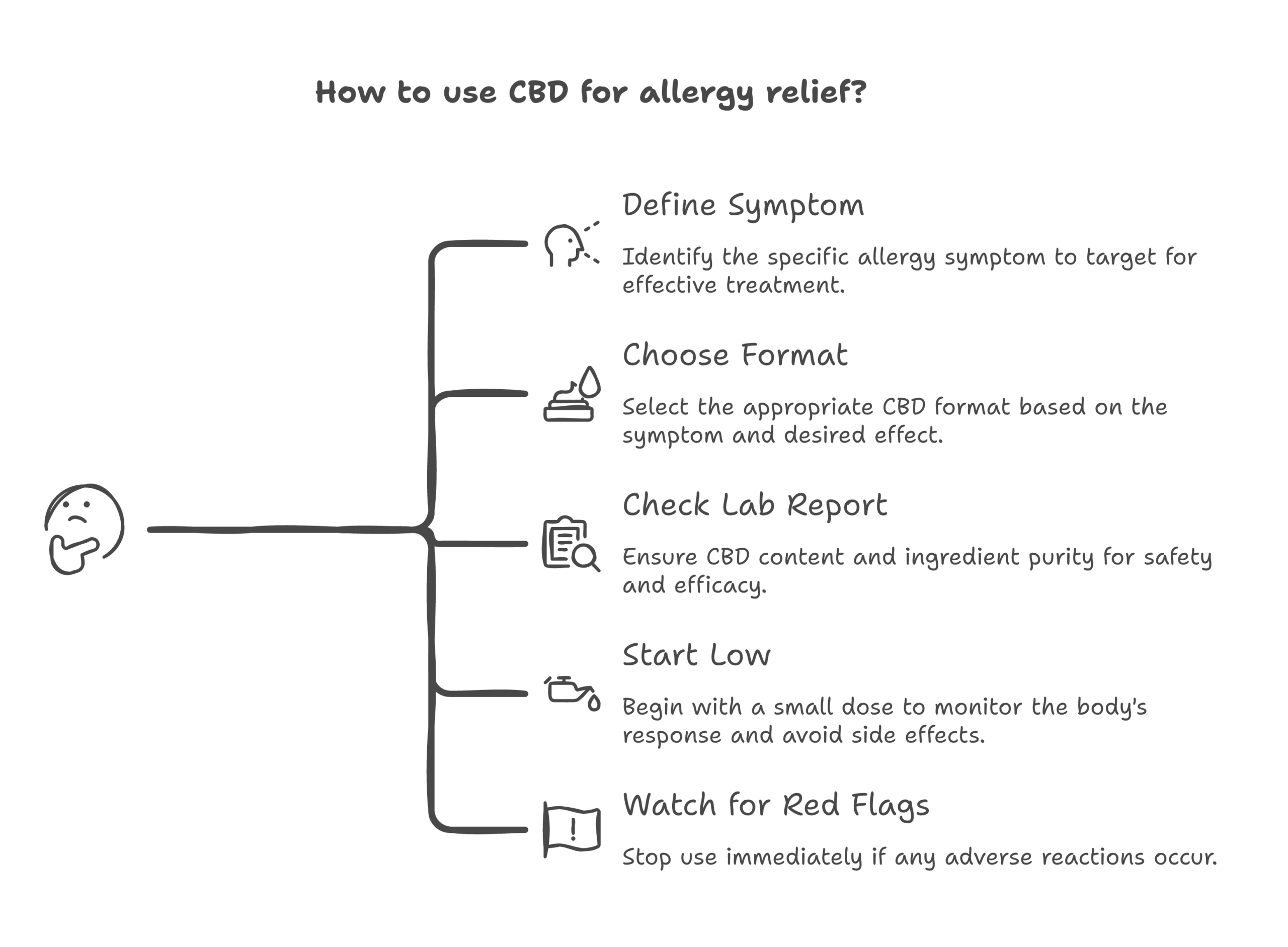
A sensible approach is boring, which is usually a good sign. First, decide what you are actually trying to improve. If it is nasal symptoms, look at allergy-focused treatments. If it is sleep disruption, skin irritation, or stress from feeling miserable for weeks, CBD may be part of the conversation.
Second, pick a format that matches the symptom. Topicals for local skin discomfort. Oils for slow, steady use. Avoid inhalation if your lungs are already irritated. This is also where our full spectrum vs broad spectrum vs isolate CBD guide becomes useful. Broad spectrum formulas are often the better fit for adults who want cannabinoids and terpenes without THC exposure, while isolate may appeal to those who want the simplest ingredient profile possible.
Third, check the label like you mean it. Look for third-party lab testing, clear cannabinoid content, sensible serving sizes, and a short ingredient list. That matters even more if you have a history of sensitive skin, food allergies, or reactions to fragrances and botanical extracts.
Finally, start low and keep notes. If something helps, you want to know why. If it makes symptoms worse, you want to catch that quickly instead of guessing. Adults managing multiple wellness variables do better when they treat supplements like experiments, not like personality traits.
✓ A practical decision checklist
- ✓ Identify the exact symptom you want to improve
- ✓ Choose oral or topical CBD before inhaled formats
- ✓ Review lab tests and inactive ingredients
- ✓ Start with a low dose and track the response
- ✓ Stop immediately if breathing, rash, or swelling worsens
If you want to read beyond product marketing, start with primary or institutional sources. The CDC’s asthma resources are useful when allergies spill into airway symptoms. MedlinePlus gives a plain-English overview of allergy basics, and the NHS antihistamine guide is a good reminder that conventional tools still have a very clear role. For skin-related issues, the National Eczema Association explains why trigger control and barrier care matter more than trend-chasing.
For cannabinoid-specific reading, the NCCIH overview on cannabis and cannabinoids is balanced, and broader safety reviews like this clinical review on CBD adverse effects help separate useful caution from internet panic. That’s a better place to start than a random sales page promising life-changing results by Friday.
Drug interactions, quality issues, and other safety checks
CBD is not risk-free just because it is sold as a wellness product. The FDA’s CBD safety updates and associated review documents have flagged liver concerns, sedation, and interaction potential with other medicines. That deserves real attention if you take antihistamines, sleep aids, antidepressants, blood thinners, or seizure medications.
Product quality is its own problem. Independent testing and regulatory alerts continue to show that some CBD products contain less CBD than advertised, more THC than expected, or contaminants that should not be there. Reputable brands should offer a certificate of analysis and keep ingredients plain. If you cannot tell what is in it, skip it.
For adults with eczema, asthma, mast cell disorders, or a history of severe allergic reactions, it is worth talking to a clinician before adding CBD. That is especially true if you are using several symptom-management products already. Layering antihistamines, decongestants, sedating supplements, and CBD without thinking it through is how people end up feeling awful for reasons they cannot untangle.
If mental health symptoms rise alongside chronic allergies, that also deserves a wider look. Persistent fatigue, poor sleep, and daily irritation can affect mood, and our piece on cannabis and mental health digs deeper into why context matters before leaning on cannabinoids as an all-purpose fix.
⚠️ Disclaimer
This article is for informational purposes only and does not constitute medical advice. Information about cannabis, CBD products, and allergy management is current as of April 2026, but regulations, product quality, and clinical evidence can change. Always speak with a qualified healthcare professional if you have severe allergy symptoms, asthma, a history of anaphylaxis, or questions about medication interactions. For our full disclaimer, visit cannastoreams.gr/disclaimer.
Bottom line: can CBD help with allergies?
Sometimes, but not in the way most headlines promise. CBD may help some adults feel more comfortable during allergy season by supporting sleep, easing skin irritation, or reducing the stress that comes with ongoing symptoms. That is a modest claim, and it is the honest one.
What CBD has not proven is that it can replace antihistamines, reverse allergic reactions, or act as a reliable first-line treatment for hay fever or allergic rhinitis. If your symptoms are mainly histamine-driven, the old-school tools still do the heavy lifting.
So if you are exploring CBD for allergies, keep your expectations sharp, your dosing conservative, and your product standards high. The hype around this category is loud. Your body deserves quieter, better judgment.
Frequently Asked Questions
Can CBD work like an antihistamine?
No. CBD does not directly block histamine the way standard antihistamines do. It may help with secondary issues like stress, sleep, or irritation, but it is not a direct substitute.
Is CBD good for seasonal allergies?
It may help some adults manage discomfort around seasonal allergies, but there is no strong human evidence that CBD treats the allergy itself.
Can cannabis make allergies worse?
Yes. Some people react to cannabis plant proteins, smoke, vapor, terpenes, or contaminated products. If symptoms get worse after use, stop and reassess.
What type of CBD is best if I want to try it carefully?
A well-labeled topical or a low-dose broad spectrum oil is usually the safest starting point for symptom support. Avoid inhaled products if your lungs are already irritated.
Should I ask a doctor before using CBD for allergies?
Yes, especially if you have asthma, severe allergies, eczema, liver issues, or take prescription medications that may interact with CBD.
