
Cannabis for Fibromyalgia: Patient Experiences
Explore cannabis for fibromyalgia patient experiences, research, safety tips, CBD options, and responsible wellness guidance for adults in 2026.

Cannabis for fibromyalgia sits in a complicated space: many adults with fibromyalgia describe real-world relief, while clinical evidence is still developing and medical guidance remains cautious. That tension matters. Fibromyalgia is not just “aches and tiredness.” It is a chronic pain syndrome linked with widespread pain, sleep disruption, fatigue, cognitive fog, mood strain, and sensory sensitivity. The CDC overview of fibromyalgia notes that symptoms can interfere with daily life, work, and mental wellbeing, which is exactly why patients often explore several complementary options alongside physician-led care.
This guide looks at patient experiences, what research can and cannot say in May 2026, and how adults can approach cannabis wellness products more responsibly. It is written for education, not as a promise that cannabis will treat fibromyalgia. If you live with fibromyalgia, the safest path is still a thoughtful plan with your doctor, especially if you take antidepressants, sleep medication, pain medication, blood pressure medication, or other prescriptions.
📺 Video Guide
Why Cannabis for Fibromyalgia Gets So Much Attention
Fibromyalgia can feel frustrating because the pain is real, but the usual medical tests may not show a simple injury or inflammation marker. Researchers often describe it as a condition involving altered pain processing, sleep disruption, stress biology, and nervous-system sensitivity. The National Institute of Arthritis and Musculoskeletal and Skin Diseases explains that treatment often combines movement, sleep support, stress management, and medication when appropriate. For many patients, that combination helps, but it does not always help enough.
That is where cannabis enters the conversation. The body’s endocannabinoid system helps regulate pain signaling, mood, appetite, memory, and sleep. The National Academies report on cannabis and cannabinoids found substantial evidence for cannabis or cannabinoids in chronic pain generally, although fibromyalgia-specific evidence is narrower. Patients are often not waiting for perfect evidence. They are looking for sleep, calmer evenings, fewer pain flares, and a way to reduce the sense that their body is constantly on alert.
On the Puff ‘n Pass blog, we have covered related wellness topics such as cannabis for inflammation, medical cannabis and pain relief, and cannabis and sleep. Fibromyalgia overlaps with all three, but it deserves its own discussion because patient experience is often more nuanced than “pain relief” alone.
✓ What Patients Commonly Look For
- ✓ Less intense pain flares after stressful days
- ✓ Better sleep quality and fewer restless nights
- ✓ Calmer mood during symptom cycles
- ✓ Reduced reliance on alcohol as a nighttime coping tool
- ✓ More predictable routines around rest and recovery
What Patient Experiences Suggest
Patient stories tend to cluster around four themes: pain, sleep, mood, and function. Some adults say cannabis helps them fall asleep faster. Others say it does not erase pain, but turns the volume down enough to stretch, cook, walk, or spend time with family. A fibromyalgia cannabis survey indexed in PubMed reported that many patients used cannabis for symptom relief, especially pain and sleep, but survey evidence also has limits because people who had a positive experience may be more likely to respond.
Other research points in the same direction without giving a clean universal answer. A systematic review on cannabis for fibromyalgia found encouraging signals but emphasized that larger, better-controlled trials are needed. That is the honest takeaway: patient experiences are meaningful, but they are not the same thing as proof that every person with fibromyalgia should use cannabis.
One reason experiences vary is that “cannabis” is not one product. CBD oils, full-spectrum extracts, vapor products, flower, tinctures, and topicals can feel very different. Product chemistry, dose, tolerance, sleep timing, mental state, and other medications all matter. If you are comparing formats, our cannabis consumption methods guide is a useful next read, and our cannabis tinctures guide explains why many wellness users prefer slower, easier-to-measure formats.
Pain, Sleep, and the Nervous System
Fibromyalgia pain is often described as amplified pain processing rather than a single damaged joint or muscle. That may help explain why some patients respond better to routines that calm the nervous system. Gentle movement, pacing, heat, sleep hygiene, therapy, medication, and relaxation practices may all play a role. Cannabis may fit into that larger routine for some adults, particularly when evening pain and poor sleep reinforce each other.
Sleep is especially important. The Sleep Foundation describes the strong relationship between fibromyalgia and poor sleep, including non-restorative sleep and next-day symptom intensity. Some patients report that cannabis helps them disconnect from pain enough to rest. Others find THC can disturb sleep quality, increase next-day fog, or cause anxiety at higher doses. CBD-dominant products may feel gentler for some users, while THC-dominant products can be too strong for others.
Clinical guidance remains cautious because dose and product quality vary widely. The FDA’s cannabis and CBD information page warns that CBD products can interact with medications and that unapproved products may have inconsistent labeling. This is why lab testing, reliable sourcing, and conservative dosing matter more than hype.
💡 Pro Tip
If you are sensitive to medicines, alcohol, caffeine, or strong aromas, assume you may also be sensitive to cannabinoids. Start with the lowest practical amount, avoid mixing with alcohol, and track sleep, mood, pain, and next-day fog.
CBD, THC, and Full-Spectrum Products
CBD and THC are the cannabinoids most people ask about first. CBD is non-intoxicating and often discussed for relaxation, stress support, and inflammation-related wellness. THC is intoxicating and may affect pain perception, sleep onset, appetite, mood, and anxiety in dose-dependent ways. The DEA marijuana fact sheet highlights THC’s psychoactive nature, while medical researchers continue to examine how different cannabinoid ratios may affect chronic symptoms.
For fibromyalgia patients, the practical question is not “CBD or THC?” It is “what profile is tolerable, legal, tested, and useful for my specific routine?” Some adults prefer CBD oils such as CBD Oil 10% 10ml or broader-spectrum wellness oils such as Anti-Stress 20% Broad Spectrum CBD Oil. Others prefer flower, tinctures, or topical-style products depending on the symptom target. Our CBD dosage calculator guide is a helpful starting point for thinking about gradual, measured use.
Full-spectrum products may include multiple cannabinoids and terpenes. Some researchers and consumers refer to this as the entourage effect, although the concept is still debated. A review in Frontiers in Neurology via PubMed Central discusses cannabinoids in pain and neurological contexts, but it does not mean every product label is equally reliable. The product should be tested, the dose should be clear, and the user should understand local law before buying.
A Responsible Experiment Framework
The smartest way to approach cannabis for fibromyalgia is not to chase the strongest product. It is to run a careful, boring experiment. Boring is good here. It means fewer surprises. The Mayo Clinic’s fibromyalgia treatment guidance emphasizes individualized care, exercise, stress reduction, sleep, and appropriate medication. Cannabis, if considered, should sit inside that broader care plan rather than replace it.
Start by choosing one goal: fewer wake-ups, less evening discomfort, easier stretching, or lower stress before bed. Then choose one product type, one time window, and one measurement period. Avoid changing five things at once. If you start CBD oil, do not also start a new supplement, increase caffeine, change sleep medication, and begin intense exercise in the same week. You will not know what helped or what caused side effects.
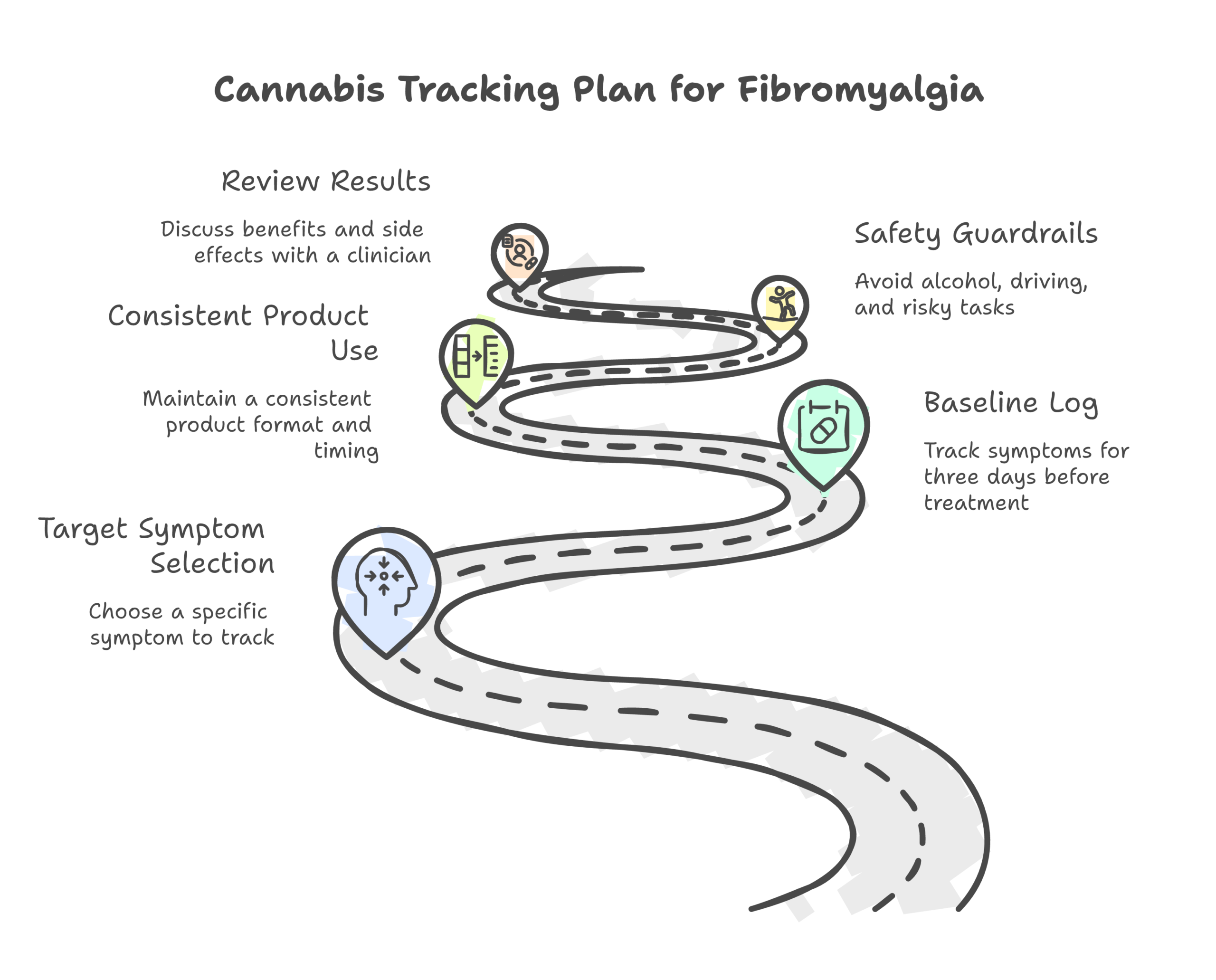
✓ Five-Step Tracking Plan
- ✓ Define one target symptom before starting
- ✓ Record baseline pain, sleep, mood, and fatigue for three days
- ✓ Use one product consistently at a conservative amount
- ✓ Avoid alcohol, driving, or risky tasks after intoxicating products
- ✓ Review results with a healthcare professional if symptoms change
Safety, Side Effects, and Medication Interactions
Safety is where responsible cannabis education earns its keep. Fibromyalgia patients may already be using medications for sleep, pain, depression, anxiety, migraine, or autoimmune symptoms. Cannabinoids can add sedation, dizziness, dry mouth, appetite changes, anxiety, or cognitive fog. The National Center for Complementary and Integrative Health notes that cannabis and cannabinoids can have side effects and interactions, and evidence varies by condition.
THC deserves extra caution. For some users it relaxes the body. For others it increases heart rate, anxiety, paranoia, or disorientation, especially when the dose is too high or the setting feels unsafe. The CDC’s cannabis health effects guidance warns about impairment, mental health effects, and risks with heavy or frequent use. If fibromyalgia already gives you brain fog, a product that worsens concentration the next day is not a win.
📝 Important Note
Do not use intoxicating cannabis before driving, operating equipment, caring for children without backup support, or making important financial or medical decisions. If you feel unusually anxious, dizzy, confused, or unwell, stop use and seek professional advice.
Legal and Quality Considerations in Greece
Cannabis law is not the same everywhere, and product legality can change. In Greece, consumers should be especially careful with intoxicating cannabinoids, imported products, and labels that make medical promises. The European Union Drugs Agency cannabis policy overview shows how cannabis rules differ across Europe. For medical access and local context, our medical cannabis Greece guide explains the broader legal landscape.
Quality is equally important. Look for transparent labeling, batch consistency, and realistic claims. Avoid products that promise to cure fibromyalgia, replace prescribed medication, or deliver extreme effects with no risk. If a seller cannot explain ingredients, cannabinoid content, or usage guidance, that is a red flag. Adults using cannabis for fibromyalgia should prioritize predictability over novelty.
⚠️ Disclaimer
This article is for informational purposes only and does not constitute medical advice. The information provided about cannabis wellness and medical cannabis in Greece is current as of May 2026 but may change. Always consult qualified healthcare professionals for medical advice and treatment options. Decisions about medical cannabis should be made in consultation with authorized healthcare providers who understand your specific medical history and conditions. For our full disclaimer, visit cannastoreams.gr/disclaimer.
Bottom Line
Cannabis for fibromyalgia is promising enough to discuss seriously, but not proven enough to treat casually. Patient experiences suggest possible benefits for pain intensity, sleep, mood, and quality of life, especially when products are chosen carefully and used as part of a wider wellness routine. The strongest approach is measured: understand your symptoms, talk to your doctor, choose tested products, start low, track honestly, and stop if side effects outweigh benefits.
For adults exploring cannabis wellness in Athens, Puff ‘n Pass focuses on education, responsible use, and product transparency. The goal is not to sell a miracle. The goal is to help you ask better questions before you buy, use, or recommend anything to someone dealing with chronic pain.
Frequently Asked Questions
Can cannabis cure fibromyalgia?
No. Cannabis should not be described as a cure for fibromyalgia. Some patients report symptom relief, especially around pain or sleep, but evidence is still developing and care should be guided by a qualified healthcare professional.
Is CBD better than THC for fibromyalgia?
Neither is automatically better. CBD is non-intoxicating and may be easier for sensitive users, while THC can affect pain perception and sleep but may also cause anxiety, impairment, or next-day fog. Product choice should depend on legality, tolerance, goals, and medical history.
What is the safest way to try cannabis for fibromyalgia symptoms?
Speak with your doctor first, especially if you use prescription medication. Choose a tested product, start with a conservative amount, avoid alcohol, and track pain, sleep, mood, and side effects for at least several days.
Can cannabis make fibromyalgia brain fog worse?
Yes, it can. THC and some sedating products may worsen concentration, memory, or next-day clarity in certain users. If brain fog is already a major symptom, avoid high doses and monitor next-day effects carefully.
Should I use cannabis instead of prescribed fibromyalgia medication?
No. Do not stop or replace prescribed medication without medical supervision. Cannabis may interact with medicines or add side effects, so any changes should be discussed with your healthcare provider.
