CBD for Menstrual Pain Relief: 2026 Guide
CBD menstrual pain relief may support period wellness. Learn formats, timing, safety checks, and responsible use tips for 2026.

CBD menstrual pain relief is one of the most searched wellness topics among adults who want gentler support during their cycle, but it deserves a careful, evidence-aware conversation. Period cramps are common, sometimes intense, and often dismissed as something to simply endure. CBD is not a guaranteed treatment and it should not replace medical care, yet some adults explore it as part of a broader routine that includes heat, hydration, rest, movement, and appropriate pain-relief guidance from a clinician.
The goal of this guide is practical: explain what CBD may and may not do, how different product formats fit into menstrual wellness routines, what safety checks matter, and when period pain needs professional attention. Medical groups such as ACOG describe dysmenorrhea as painful periods that can involve cramping, nausea, headaches, and back pain, while the NHS period pain guidance notes that severe or changing symptoms should be assessed rather than ignored.
📺 Video Guide
CBD Menstrual Pain Relief: What It Means
CBD, short for cannabidiol, is a non-intoxicating cannabinoid found in hemp and cannabis plants. It does not create the classic THC high, but it can interact with biological systems involved in stress response, inflammation signaling, sleep, and pain perception. The FDA explains CBD regulation carefully because product quality, labeling, and claims still vary widely across markets.
Menstrual pain is not one single sensation. For many people, cramps come from prostaglandins, hormone-like compounds that make the uterus contract. Others experience pelvic pain linked to endometriosis, fibroids, ovarian cysts, inflammation, bowel issues, or nerve sensitivity. That distinction matters. A CBD oil or balm may be reasonable to discuss for general comfort support, but it is not a diagnostic shortcut and should not mask worsening symptoms.
The best way to think about CBD for periods is as a possible wellness tool, not a miracle cure. Some adults use it to feel calmer, sleep better, or reduce the stress layer that makes cramps feel harder to manage. Others notice little difference. Research is still developing, and the NCCIH overview of cannabis and cannabinoids is clear that stronger human studies are needed for many uses.
✓ Key Benefits Adults Look For
- ✓ Calmer body response during uncomfortable cramp days
- ✓ Better evening wind-down when pain disrupts sleep
- ✓ Local comfort support from topical formats
- ✓ A non-intoxicating option for adults avoiding THC
What Research Suggests About Pain, Inflammation, and CBD
The science behind CBD and menstrual discomfort is indirect but interesting. Researchers have studied the endocannabinoid system in pain processing, immune signaling, and reproductive tissues. A review available through NCBI Bookshelf on cannabis therapeutics discusses evidence for cannabinoids in chronic pain contexts, while a PubMed-indexed review on cannabidiol highlights complex anti-inflammatory and analgesic mechanisms still being investigated.
That does not mean CBD has been proven to stop menstrual cramps. Period pain research has stronger evidence for nonsteroidal anti-inflammatory drugs, heat therapy, hormonal approaches when appropriate, and treatment of underlying causes. Still, people often combine lifestyle support with cannabinoid products because cramps are not purely mechanical. Pain can affect mood, sleep, appetite, and stress tolerance, so a whole-routine approach makes sense.
One reason CBD attracts attention is the body’s endocannabinoid system. Endocannabinoids help regulate balance across multiple systems, and peer-reviewed research in PMC on endocannabinoid signaling shows how broad that network can be. For menstrual pain, the practical takeaway is modest: CBD may support comfort for some adults, but expectations should stay realistic and tracked.
Product Formats: Oils, Topicals, Capsules, and Edibles
CBD oil is the most flexible format for adults who want precise serving control. A tincture can be measured in small amounts and adjusted gradually over time. If you are new to tinctures, our cannabis tinctures guide explains how oils differ from other formats and why patience matters. For anyone unsure about strength, the CBD dosage calculator can help frame questions before speaking with a professional.
Topicals are another common choice for period-related discomfort. A CBD balm, cream, or roll-on is applied to the abdomen, lower back, hips, or thighs, depending on where tension is felt. Topicals are popular because they fit naturally with massage and heat therapy. Our article on cannabis topicals for recovery covers similar local-use logic, even though menstrual cramps and athletic soreness are different situations.
Capsules and edibles are convenient but less adjustable. They take longer to feel because they pass through digestion, and the timing can be unpredictable around meals. The CDC guidance on cannabis edibles focuses heavily on delayed effects and accidental overconsumption, which is a useful reminder even when products are CBD-forward and non-intoxicating.
For product quality, look for clear labeling, batch testing, cannabinoid content, ingredient lists, and responsible claims. If a product promises to cure endometriosis, stop severe bleeding, or replace prescription medicine, that is a red flag. Quality CBD brands talk about support and transparency, not magic.
💡 Pro Tip
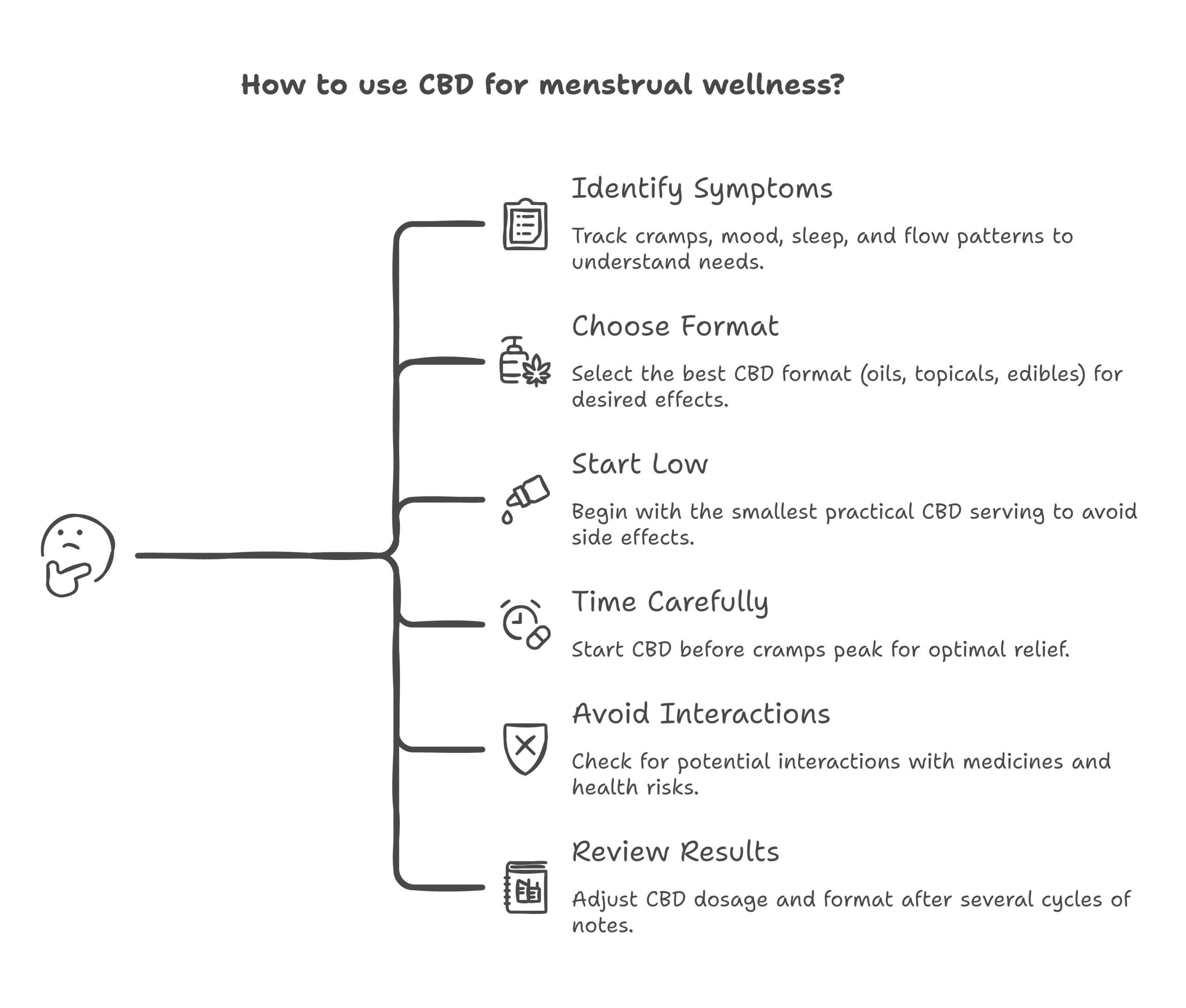
Track CBD use for at least two cycles before judging results. Note product type, amount, timing, cramps, mood, sleep, flow, and any side effects.
A Responsible Period Wellness Routine
A smart routine starts before cramps peak. Many adults wait until pain is already intense, then expect one product to rescue the day. A more realistic approach is to track patterns. If cramps usually begin the evening before bleeding starts, that is when rest, hydration, heat, gentle stretching, magnesium-rich meals, and CBD timing can be considered. For general reproductive health context, resources like the Office on Women’s Health period problems guide can help identify what is normal and what is not.
Heat therapy remains one of the simplest tools. A warm pad on the lower abdomen or back can relax muscles and improve comfort. Light walking or gentle yoga may help some people, while others need stillness. CBD can fit beside those basics, especially for evening wind-down. For example, someone might use a topical balm with heat in the afternoon, then a low serving of CBD oil before bed if sleep is the main challenge.
Food and hydration also matter. Caffeine, alcohol, and very salty foods can make some people feel worse around their period, while balanced meals and steady fluids can reduce the feeling of being depleted. The point is not to build a perfect wellness ritual. It is to reduce friction on hard days. CBD menstrual pain relief works best as one possible layer in a low-drama routine, not as the only tool.
Safety Checks Before Using CBD During Your Period
CBD is widely available, but availability is not the same as risk-free. It may interact with medicines, especially drugs affected by liver enzymes, blood thinners, some anti-seizure medicines, sedatives, and certain antidepressants. The FDA consumer update on CBD warns about potential liver effects, drug interactions, and misleading health claims.
Pregnancy, trying to conceive, breastfeeding, liver disease, complex medical histories, and severe pelvic pain all call for extra caution. People with heavy bleeding, fainting, fever, new pain after years of normal periods, pain during sex, or cramps that suddenly become disabling should seek medical advice. The Cleveland Clinic dysmenorrhea guide gives a helpful overview of symptoms and possible causes that deserve attention.
Also consider THC content. Full-spectrum CBD products may contain trace THC depending on the market and lab result. That can matter for drug testing, sensitivity, anxiety, driving, and local laws. If avoiding THC is important, broad-spectrum or isolate products may be a better fit, but lab reports still matter. Our COA lab report guide explains how to read cannabinoid panels and contaminant testing before buying.
📝 Important Note
If period pain is severe enough to make work, school, sleep, or normal movement impossible, treat that as a health signal. CBD should not delay medical evaluation.
How to Choose a CBD Product for Period Comfort
Start with the format that matches your main problem. If the discomfort is local cramping or lower-back tension, a topical can be the easiest first step. If the problem is sleep disruption, an oil used in the evening may be easier to evaluate. If the goal is all-day convenience, capsules are simple but less flexible. For adults comparing strengths, our guide on choosing the right CBD oil strength is a practical next read.
Choose products with clear milligrams of CBD per bottle and per serving, not vague terms like “extra strong” alone. Look for batch numbers, lab results, production dates, and ingredient transparency. Avoid products with aggressive medical promises. Reputable sources such as Harvard Health on CBD repeatedly stress that consumers should stay alert to evidence gaps and quality issues.
If you already use cannabis or hemp products, think about stacking. Combining CBD oil, edibles, vapes, alcohol, sleep aids, or THC products can make effects harder to predict. The safest method is to change one variable at a time. Try one product, one timing window, and one small serving pattern. Then review your notes after your cycle ends.
When CBD Is Not Enough
Some period pain needs more than wellness support. Endometriosis, adenomyosis, fibroids, pelvic inflammatory disease, ovarian cysts, and gastrointestinal conditions can all contribute to pelvic pain. If pain is increasing, one-sided, associated with fever, accompanied by unusual bleeding, or not responding to usual care, professional assessment matters. The Mayo Clinic overview of menstrual cramps lists causes and warning signs worth knowing.
This is especially important because people often normalize severe symptoms for years. If CBD helps you relax but the underlying pain keeps escalating, that is not success. It is a temporary comfort layer over a problem that deserves attention. The same applies if cramps come with digestive distress, bladder symptoms, pain outside menstruation, or fertility concerns.
A balanced view is empowering: use safe wellness tools, but do not romanticize suffering. CBD menstrual pain relief may be part of a thoughtful plan for some adults. It should sit beside medical literacy, product quality, symptom tracking, and timely care.
⚠️ Disclaimer
This article is for informational purposes only and does not constitute medical advice. The information provided about medical cannabis and CBD wellness is current as of May 2026 but may change. Always consult with qualified healthcare professionals for medical advice and treatment options. Decisions about medical cannabis should be made in consultation with authorized healthcare providers who understand your specific medical history and conditions. For our full disclaimer, visit cannastoreams.gr/disclaimer.
Frequently Asked Questions
Can CBD stop menstrual cramps?
CBD is not proven to stop menstrual cramps. Some adults use it for comfort, stress, sleep, or local support, but severe or changing pain should be discussed with a healthcare professional.
Is CBD oil or CBD cream better for period pain?
It depends on the goal. Oils are easier to measure for whole-body routines, while creams and balms suit local massage around the abdomen, hips, or lower back.
When should I use CBD during my cycle?
Many adults track symptoms and use CBD before cramps peak, especially in the evening. Start with conservative timing and keep notes for at least two cycles.
Can CBD interact with medication?
Yes. CBD may interact with some medicines, including drugs processed by the liver. Ask a healthcare professional if you take regular medication or have liver concerns.
Should I see a doctor for period pain?
Yes if pain is severe, new, worsening, one-sided, linked with heavy bleeding, fever, fainting, or disrupting daily life. CBD should not delay proper medical evaluation.
