
Best Cannabis Growing Starter Kits in 2026
Compare cannabis growing starter kits for beginners in 2026, from tents and LEDs to airflow, safety, and legal setup tips.

Cannabis growing starter kits can make a first home grow feel much less intimidating, but the best kit is not simply the biggest tent or the brightest light. A smart setup balances space, legal limits, ventilation, odor control, power use, plant health, and the amount of daily attention you can realistically give. In May 2026, more beginners are choosing complete grow tent kits because they remove guesswork: the light fits the tent, the fan fits the filter, and the controller helps keep temperature and humidity in range.
Before buying anything, confirm your local rules. Cannabis laws vary sharply by country and region, and official sources such as the DEA cannabis fact sheet, the European cannabis policy overview, and national health authorities show how different legal frameworks can be. This guide is educational, not legal advice, and it is written for adults who want to understand what a responsible, controlled indoor starter setup includes.
📺 Video Guide
Cannabis Growing Starter Kits: What Should Be Included?
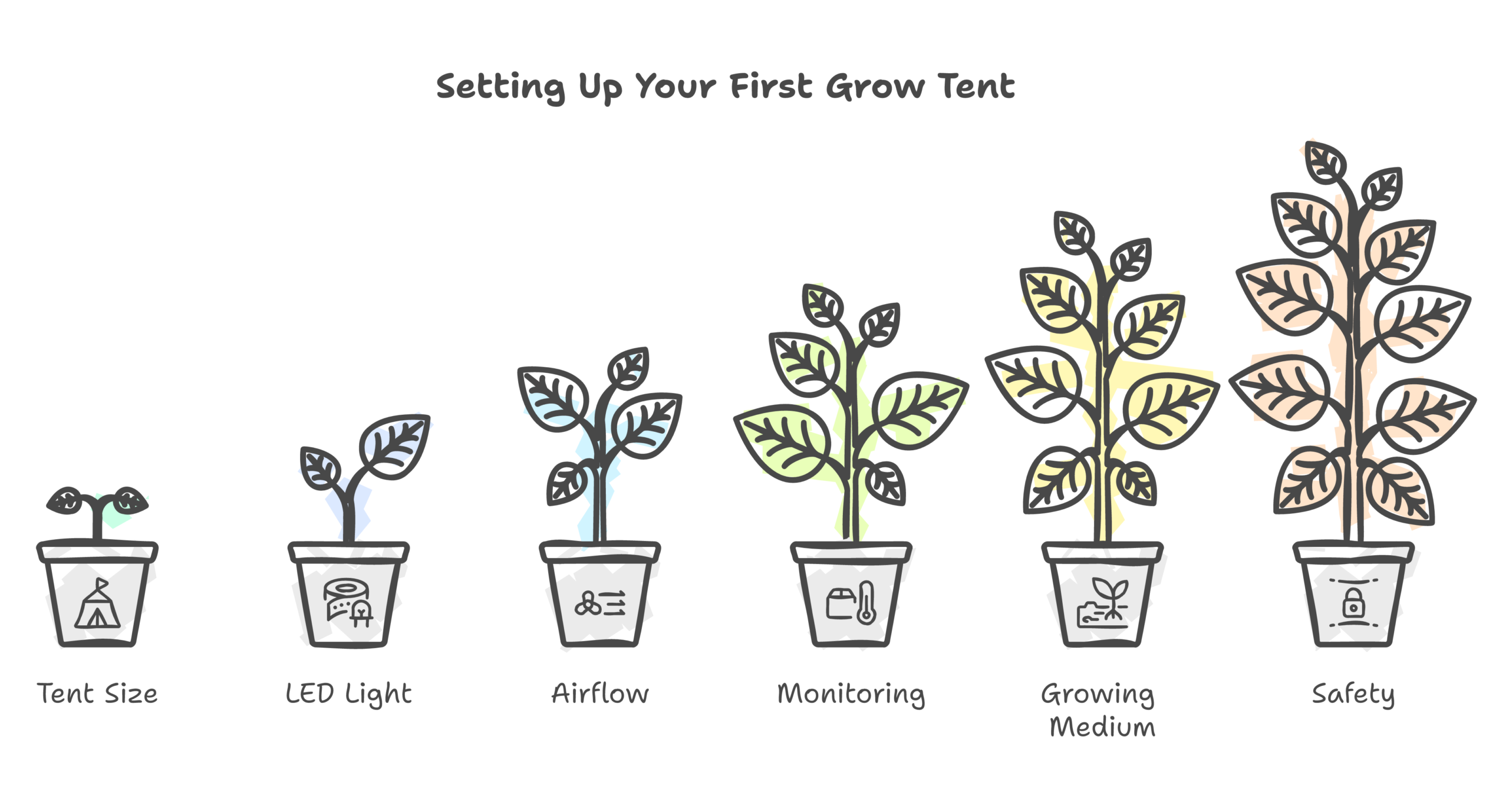
A complete beginner kit usually starts with a grow tent. The tent gives you a controlled environment, keeps light contained, protects the plant from household dust, and makes airflow easier to manage. Most first-time growers do best with a 2×2, 2×4, or 3×3 tent rather than jumping into a 4×4. Smaller tents are easier to stabilize, cheaper to light, and less demanding when you are learning. If you want to understand plant development from seedling to harvest, our indoor cannabis growing guide is a useful next read.
The second core component is the grow light. Modern full-spectrum LEDs are the beginner standard because they run cooler and use less power than older HID systems. The U.S. Department of Energy explains why LEDs are more efficient generally, and that efficiency matters inside a tent where heat management can become the hidden cost. A kit should clearly state the light wattage, coverage area, dimming options, and recommended hanging height.
Ventilation is just as important as light. A proper kit includes an inline fan, ducting, and a carbon filter. The fan exchanges stale air for fresh air, while the filter helps manage odor. Air movement also strengthens stems and reduces humid pockets around leaves. For basic indoor air principles, the EPA indoor air quality guide is a helpful background resource, even though it is not cannabis-specific.
Finally, look for fabric pots, saucers, a timer or controller, a thermometer-hygrometer, pruning scissors, pH testing tools, and clear instructions. Seeds or genetics may be sold separately depending on local law. If you are shopping locally, options such as USA Premium Cannabis Seeds, Easy Bud, and Amnesia Haze Auto can help you compare beginner-friendly genetics and formats, where legally permitted.
✓ Starter Kit Essentials
- ✓ Grow tent sized for your space and legal limit
- ✓ Full-spectrum LED matched to the tent footprint
- ✓ Inline fan, carbon filter, and ducting
- ✓ Thermometer-hygrometer or smart controller
- ✓ Fabric pots, trays, pH tools, and beginner instructions
Choosing the Right Kit Size
A 2×2 kit is ideal for one small plant, limited apartments, and people who want a quiet, low-power setup. It teaches the fundamentals without taking over a room. A 2×4 kit is the sweet spot for many beginners because it can support two to three plants while keeping heat and humidity manageable. A 3×3 kit gives more canopy flexibility, but it also requires stronger airflow and a better light. A 4×4 kit can be excellent, but beginners often underestimate the ongoing work and cost.
The key is not maximum yield. The key is consistency. Cannabis is a responsive plant, and environmental swings can create stress. Research into cannabis cultivation and plant chemistry, including reviews available through NCBI Bookshelf, shows how cannabinoids and plant compounds are influenced by genetics, cultivation, and post-harvest handling. A stable small tent is better than an oversized tent you cannot control.
Think in terms of your daily routine. Can you check plants once or twice per day? Is the tent near a safe electrical outlet? Can you exhaust air without creating humidity problems? Are there children or pets in the home? The CDC cannabis health effects page is a reminder that responsible cannabis use and storage matter beyond cultivation. Any home setup should stay secure, discreet, and inaccessible to minors.
💡 Pro Tip
If this is your first grow, choose the smallest tent that meets your goal. You will learn faster, spend less, and make fewer expensive mistakes.
Light, Airflow, and Climate Control
The best cannabis growing starter kits make climate control simple. Look for an LED with a dimmer, not just an on-off switch. Seedlings need less intensity than mature flowering plants, and dimming helps you avoid light stress. For ventilation, a variable-speed inline fan is better than a fixed-speed fan because it lets you respond to seasonal temperature changes. A basic oscillating clip fan inside the tent keeps air moving across the canopy.
Temperature and humidity are where many beginners stumble. Too much humidity can invite mold, especially late in flower. Too little humidity can slow seedlings and cause stress. Cannabis-specific sites such as Leafly’s growing education explain the basic stages, while broader plant science resources from university extension programs help explain why light intensity and distance matter for indoor plants.
Smart controllers are increasingly common in 2026 kits. They can automate fan speed, track humidity, and alert you when the environment drifts. That does not mean you can ignore the grow. Automation is support, not autopilot. Keep a written log of watering, feeding, light changes, and observations. Our harvest and curing guide shows why attention to detail at the end of the cycle matters just as much as setup quality at the start.
Soil, Nutrients, and Beginner-Friendly Genetics
For a first grow, soil is usually easier than hydroponics. A quality light soil mix buffers mistakes and gives roots a forgiving environment. Hydroponic systems can grow quickly, but they demand tighter control of pH, nutrients, water temperature, and oxygen. Beginners should master watering habits before chasing advanced yields. The FDA cannabis product overview also underscores why quality and product claims deserve scrutiny throughout the cannabis market.
Autoflowering strains can be beginner-friendly because they flower based on age rather than light schedule, but they also leave less time to recover from early mistakes. Photoperiod plants give more flexibility but require a light schedule change to flower. Our autoflowering cannabis guide breaks down the practical tradeoffs. If you are comparing starter kits, ask whether the kit assumes autos, photoperiods, soil, coco, or hydro. A vague kit description is a warning sign.
Nutrients should be simple. A two- or three-part beginner nutrient line is enough. More bottles do not automatically mean better plants. Overfeeding is one of the easiest ways to damage a grow. Start light, observe the plant, and avoid stacking supplements before you understand the basics. For general cannabis research context, the National Institute on Drug Abuse provides balanced information about cannabis effects, research, and risks.
Cost: Budget Kit vs Premium Kit
Budget starter kits can be perfectly usable if the core components are honest: a solid tent, safe LED, adequate exhaust fan, real carbon filter, and basic tools. The risk is that cheap kits often cut corners on zippers, poles, fan noise, filter quality, or light coverage. Those flaws show up later as light leaks, smell issues, heat spikes, and uneven plant growth.
Premium kits cost more because they usually include better controllers, quieter fans, thicker tent fabric, stronger frames, branded LEDs, and integrated climate monitoring. They are worth it if you value convenience and plan to grow more than once. They are not worth it if you are still unsure whether cultivation fits your home, schedule, or local legal environment. When comparing products, check independent reviews, warranty details, replacement filter availability, and whether the company publishes real light coverage data.
Also budget for items not always included: soil, nutrients, pH calibration fluid, gloves, storage jars, drying racks, and cleaning supplies. The post-harvest stage is where many promising grows lose quality. Our cannabis storage guide explains how light, oxygen, humidity, and temperature affect finished flower. Starter kits get you growing; proper storage protects the result.
📝 Important Note
Do not build a grow setup around maximum plant count. Build it around legal compliance, safety, odor control, and your ability to maintain stable conditions.
How to Compare Cannabis Growing Starter Kits
Use a simple scorecard. First, does the tent match your space? Second, does the LED truly cover the canopy? Third, is the exhaust fan strong enough for the tent volume? Fourth, is the carbon filter replaceable? Fifth, does the kit include monitoring tools? Sixth, are instructions written for beginners? Seventh, is the electrical load safe for your outlet? If a kit cannot answer those questions clearly, keep looking.
Quality verification matters in cannabis more broadly. Finished cannabis products should be lab tested where regulated, and home growers should understand the idea of contaminant risk, moisture control, and transparency. Our COA lab report guide explains what testing can reveal. For public health context, the Health Canada cannabis hub and WHO cannabis Q&A offer useful perspectives on safety, effects, and policy.
For most adults, the best first kit in 2026 is a 2×4 LED tent kit with a dimmable light, smart or variable fan control, carbon filtration, two fabric pots, and simple soil-based instructions. It is large enough to learn canopy management but not so large that every mistake becomes expensive. If smell control is critical, prioritize fan and filter quality over flashy extras.
Safety, Legality, and Responsible Use
Responsible cultivation starts before the first seed. Check whether cultivation is allowed where you live, whether plant limits apply, whether medical authorization is required, and whether landlords or building rules restrict it. Keep equipment away from water hazards, avoid overloaded extension cords, and use grounded outlets. If you are unsure about electrical safety, ask a qualified electrician before running lights and fans for long cycles.
Responsible use also matters after harvest. Cannabis can affect coordination, judgment, anxiety, sleep, and medication interactions. The CDC heart health guidance and research indexed in PubMed cannabis studies show why adult consumers should treat cannabis as an active substance, not a harmless herb. Store all cannabis products securely and never drive under the influence.
⚠️ Disclaimer
This article is for informational purposes only and does not constitute legal, medical, or cultivation advice. Cannabis laws and regulations vary by location and may change. Information is current as of May 2026. Always consult qualified professionals and official local authorities before making decisions about cannabis cultivation, purchase, or use.
Frequently Asked Questions
What size cannabis growing starter kit is best for beginners?
A 2×4 tent kit is often the best beginner balance. It is manageable, not too expensive to run, and large enough to learn with two or three plants where legally allowed.
Are complete grow kits better than buying parts separately?
For first-time growers, complete kits reduce compatibility mistakes. Buying separately can save money or improve quality, but only if you understand light coverage, airflow, tent size, and controllers.
Do I need a carbon filter?
Yes, most indoor growers should use one. A carbon filter helps control odor, supports discretion, and keeps the grow environment more manageable.
Can I grow cannabis with a cheap LED?
Sometimes, but cheap lights often underperform. Choose a full-spectrum LED with clear coverage data, dimming, warranty support, and enough power for your tent footprint.
Are cannabis growing starter kits legal?
The equipment may be legal in many places, but using it to grow cannabis depends on local law. Always check official regulations before cultivating.
