
Cannabis and Music: Enhancing Your Experience
Cannabis and music can feel deeply connected. Learn the science, safety tips, dosing approach, and playlist ideas for adults in 2026.

Cannabis and music have been paired for generations because both can shift attention, emotion, rhythm, and the feeling of time. For adults who already use legal cannabis wellness products, music can make a session feel more intentional instead of random: a calming playlist before sleep, a focused album during a creative project, or a low-volume sound bath after a stressful day.
The science is more interesting than the stereotype. A controlled fMRI study indexed on PubMed found that THC changed brain responses to music in auditory and reward regions, while CBD appeared to soften some of THC’s effects. A newer open-access study in PMC reported that many cannabis users describe stronger hearing sensitivity, deeper absorption, and more emotional openness when listening to music while high.
That does not mean cannabis automatically improves every listening session. Dose, product type, setting, tolerance, mood, and the music itself all matter. This guide gives you a responsible, evidence-aware way to build a better listening ritual without overdoing it.
📺 Video Guide
Why Cannabis and Music Feel Connected
Music already activates attention, memory, movement, and reward networks. Cannabis interacts with the body’s endocannabinoid system, which helps regulate mood, stress response, sleep, appetite, pain signaling, and perception. The National Center for Complementary and Integrative Health explains that cannabinoids can affect multiple systems at once, which is why a small change in dose can change the entire experience.
When people say music sounds “deeper” or “wider,” they may be describing a combination of sensory focus, altered time perception, emotional salience, and reduced distraction. The full-text fMRI paper on cannabis and music found a paradox: participants reported more desire to listen, but THC-dominant cannabis dampened activity in some reward and emotion regions compared with placebo. Translation: the subjective experience can feel richer even when the brain’s measured response is not simply “more reward.”
That nuance matters. Cannabis is not a magic audio enhancer. It is a state changer. If your environment is calm, your product is appropriate, and your playlist matches your intention, cannabis and meditation-style listening can become a grounded wellness ritual. If the room is chaotic, the dose is too high, or the music is too intense, it can become overstimulating fast.
✓ Key Benefits
- ✓ More focused listening with fewer background distractions
- ✓ Stronger emotional connection to lyrics, rhythm, and memory
- ✓ Better relaxation when paired with low-dose, calming products
- ✓ A structured alternative to passive scrolling or late-night drinking
What Research Actually Says
The strongest direct evidence is still limited, but it is growing. A 2025 study listed by PubMed explored cannabis-music interactions through surveys and interviews with recreational users. Participants often described music as more immersive, more emotionally open, and easier to inhabit physically. Many also reported altered hearing sensitivity and a stronger sense of absorption.
Broader cannabis education from the National Institute on Drug Abuse supports the basic mechanism: THC activates cannabinoid receptors in brain areas involved in pleasure, memory, thinking, concentration, movement, and sensory perception. Music uses many of those same systems, so the overlap is plausible even when individual outcomes differ.
Safety guidance is equally important. The CDC notes that cannabis can affect attention, memory, coordination, and decision-making. The FDA also warns that CBD and cannabis-derived products can interact with medications and may have side effects. In practical terms, a listening session should be low-risk by design: no driving, no important decisions, no mixing with alcohol, and no pressure to consume more.
For Greek adults, legality and product quality are part of the wellness conversation. The European Monitoring Centre for Drugs and Drug Addiction tracks cannabis policy differences across Europe, while the DEA shows how different the U.S. federal position remains. Always follow local law, buy from transparent sources, and prioritize tested products over mystery potency.
Choose the Right Product for the Mood
The best cannabis and music pairing starts with the effect you want. For calm evening listening, many adults prefer CBD-rich oils, broad-spectrum products, or gentle flower. For creative immersion, some prefer balanced cannabinoid profiles with terpene-forward aromas. If you are still learning the basics, revisit our guides to THC vs CBD and minor cannabinoids before experimenting.
Terpenes deserve attention because aroma shapes expectation and experience. Limonene can feel bright and citrusy, linalool is associated with lavender-like calm, pinene feels crisp, and myrcene often appears in relaxing profiles. Scientific reviews in NCBI discuss how terpenes may contribute to cannabis effects, although the “entourage effect” is still debated and should not be treated as guaranteed.
For a gentle session, consider products such as CBD Oil 10 10ml, Anti Stress 20 Broad Spectrum CBD Oil, or a CBD flower like Amnesia Haze Superior CBD Flower. Product availability can change, so check the live product page before planning a session.
If you use THC products, be especially conservative. The Lower-Risk Cannabis Use Guidelines recommend avoiding high-potency products and reducing frequency to lower risk. That advice fits music sessions perfectly: you want presence, not a dose that turns the album into a blur.
💡 Pro Tip
Pick the playlist before you consume. Searching, skipping, and debating tracks while impaired breaks the flow and often leads to higher consumption than planned.
Build a Responsible Listening Ritual
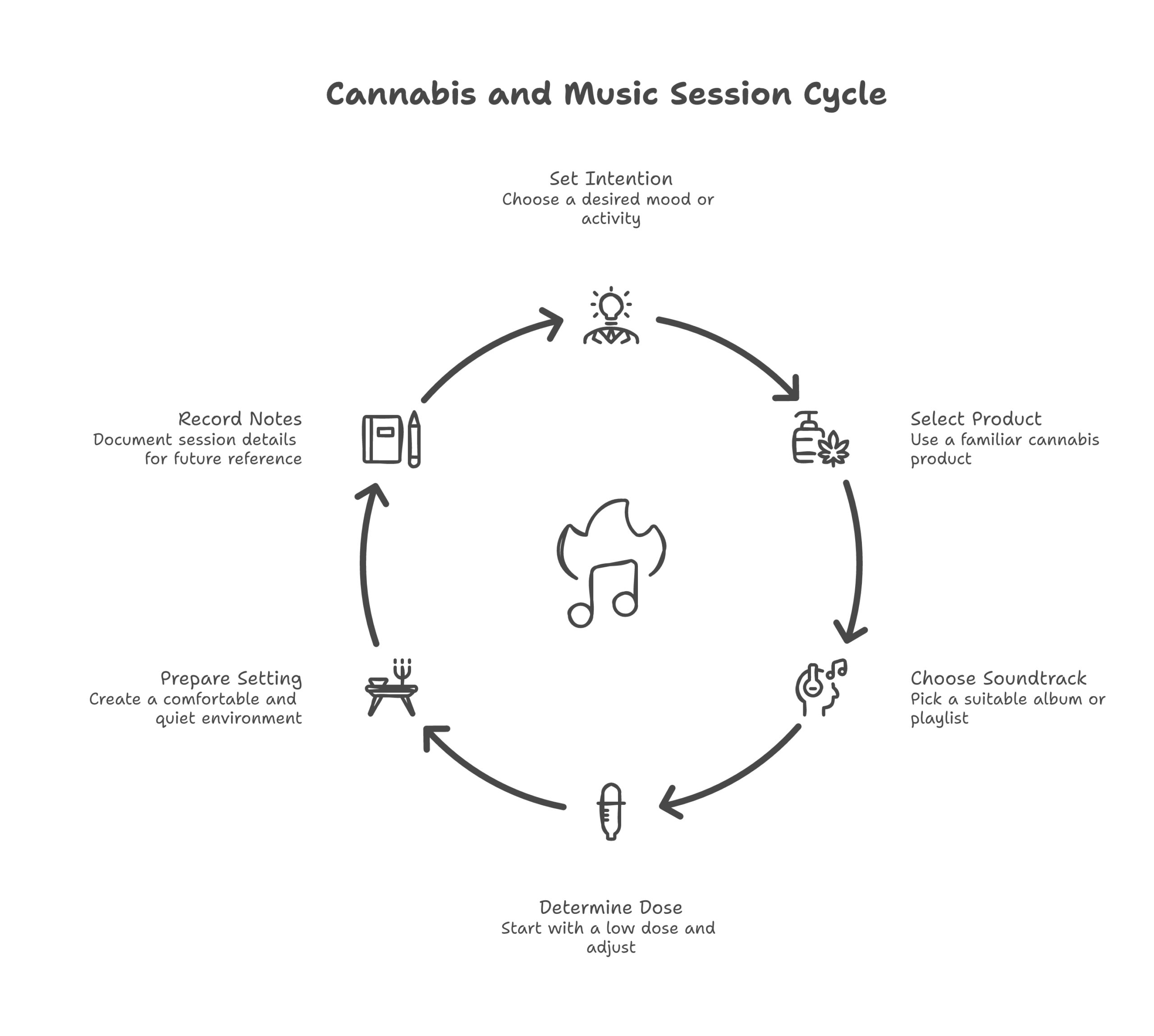
A good ritual is simple enough to repeat. Start with one intention: relax, focus, process emotion, stretch, journal, or sleep. Then choose the product and music around that intention. If you are working with stress or sleep, our cannabis and sleep guide is a useful companion because late-night listening can easily slide into overstimulation.
Keep the dose modest and wait. Inhaled products act faster, while oils and edibles can take much longer. The Healthline overview of edible onset is not a substitute for medical guidance, but it captures the practical issue: delayed onset is one of the main reasons people take too much. If you are using oils, write down the amount and timing so the session teaches you something.
Your room matters. Use comfortable lighting, water nearby, lower volume than a party setting, and avoid headphones if you are prone to anxiety or sensory overload. For some adults, a single album is better than a playlist because it removes decision fatigue. For others, a 45-minute “arc” works best: soft opening, emotional middle, gentle landing.
Finally, track tolerance. If music only feels meaningful when the dose keeps rising, the ritual is drifting. Our cannabis tolerance break guide explains how planned pauses can restore sensitivity and keep cannabis from becoming automatic.
📝 Important Note
Do not mix cannabis with alcohol for a “stronger” music experience. The CDC warns that cannabis can impair coordination and judgment, and alcohol can amplify poor decisions.
Playlist Pairing Ideas by Intention
Think of music like set and setting. The same product can feel different with ambient, jazz, reggae, psybient, lo-fi, deep house, Greek instrumental, or acoustic soul. What matters is not the genre’s reputation; it is whether the sound supports your goal.
For relaxation: choose slower tempos, warm bass, and minimal lyrics. Ambient, dub, downtempo, or soft instrumental playlists work well. Pair with CBD-rich products, keep the lights low, and stop adding tracks once the session starts.
For creativity: use rhythm without too much lyrical density. Funk, instrumental hip-hop, afrobeat, jazz fusion, and melodic electronic can provide movement without stealing language from your own ideas. If you want more context, our guide to cannabis and creativity covers how to stay productive instead of just feeling inspired.
For emotional processing: choose one album that already means something to you. Cannabis can intensify memory and mood, so avoid using it to force catharsis. If a song becomes too heavy, pause, breathe, drink water, and switch to neutral sound.
For sleep: avoid high-energy tracks and keep volume low. The goal is a landing strip, not a concert. If you are using cannabis for sleep repeatedly, talk to a healthcare professional and consider non-cannabis sleep hygiene first. The Sleep Foundation summarizes why cannabis and sleep are complicated rather than universally helpful.
Simple Session Framework
Use this structure when you want the experience to feel intentional rather than accidental. It works for CBD-forward evenings, terpene exploration, or low-dose THC sessions where legal and appropriate.
- Set the intention: relax, create, reflect, stretch, or sleep.
- Pick one product: avoid stacking oils, flower, vapes, and edibles.
- Choose the soundtrack: one album or a 45-minute playlist.
- Start low: use the smallest effective amount and wait.
- Remove friction: water, snacks, lighting, phone on silent.
- Close the session: journal one sentence about dose, music, and mood.
This is also how you discover your personal patterns. Some adults enjoy vocals after CBD but prefer instrumentals after THC. Some find headphones immersive; others find them too intense. Your notes are more useful than internet rules.
⚠️ Disclaimer
This article is for informational purposes only and does not constitute medical advice. Information about cannabis wellness and medical cannabis in Greece is current as of May 2026 but may change. Always consult qualified healthcare professionals for medical advice, especially if you use medication, have a health condition, are pregnant, or have a history of anxiety, psychosis, or substance-use concerns. For our full disclaimer, visit cannastoreams.gr/disclaimer.
Frequently Asked Questions
Does cannabis really make music sound better?
Many adults report that it does, mainly through stronger focus, emotional openness, and altered time perception. Research suggests the effect is real for some users but not simple or guaranteed.
Is CBD enough for a music listening session?
Yes, for many people. CBD-rich products can support relaxation without the stronger intoxication associated with THC, making them a better fit for gentle evening listening.
What music works best with cannabis?
There is no universal genre. Ambient, reggae, jazz, lo-fi, instrumental hip-hop, deep house, and acoustic music are common choices because they give the mind space to settle.
Can cannabis and music trigger anxiety?
They can, especially with high-THC products, loud headphones, crowded rooms, or emotionally heavy songs. Start low, keep the environment calm, and switch to silence if needed.
Should I use cannabis before concerts?
Be careful. Crowds, travel, volume, alcohol, and unfamiliar venues increase risk. If you choose to consume where legal, avoid driving, keep the dose low, and plan transport in advance.
