
Cannabis Intimacy: A Couples Guide for 2026
Explore cannabis intimacy for couples in 2026: consent, dosing, CBD, THC, communication, and safer wellness routines.

Cannabis intimacy is not about chasing a guaranteed aphrodisiac. It is about using cannabis, CBD, or hemp-derived wellness products with intention, consent, and realistic expectations. For some adults, the right product and dose may soften stress, reduce self-consciousness, support body awareness, or make touch feel more present. For others, too much THC can create anxiety, sleepiness, dryness, distraction, or emotional distance. The difference usually comes down to communication, dose, product type, and timing.
This guide is written for adult couples who want a grounded, respectful approach. It combines wellness principles with harm-reduction thinking from sources like the CDC cannabis health effects overview, the FDA guidance on cannabis-derived products, and current research indexed by PubMed on cannabis and sexual function. The goal is simple: help couples make safer, more informed choices without turning intimacy into a chemistry experiment.
📺 Video Guide
Cannabis Intimacy Starts With Consent
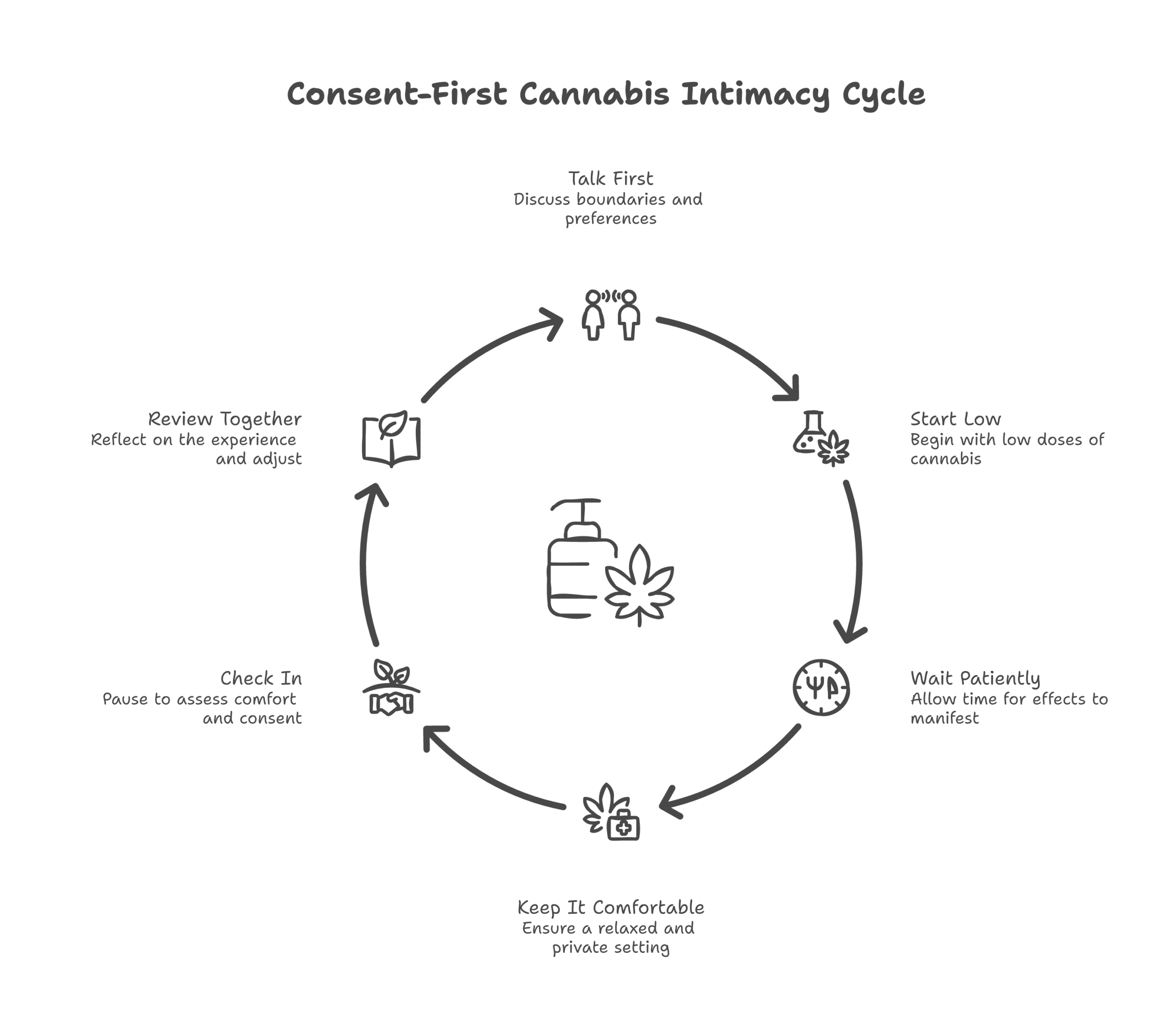
The most important rule is also the least glamorous: talk before you consume. Cannabis can change perception, confidence, sensitivity, and decision-making. That means couples should agree on boundaries, product type, dose, timing, and a clear stop signal before either person is intoxicated. The World Health Organization frames sexual health around wellbeing, respect, and safety, not performance. That is the right lens here.
A practical pre-use conversation can be short. Ask: What are we trying to feel? What product are we using? How much? What are we not doing tonight? What happens if one of us feels anxious, too high, tired, or simply not in the mood anymore? If those questions feel awkward, that is useful information. Cannabis will not magically create the trust that a conversation is avoiding.
This matters even more when THC is involved. The National Institute on Drug Abuse notes that cannabis can affect attention, coordination, and judgment. In a relationship context, that means the safest intimacy plan is one both people clearly choose while sober, then keep checking in on as the evening unfolds.
✓ Consent-First Checklist
- ✓ Agree on the product and dose before consuming
- ✓ Choose a clear pause word or stop signal
- ✓ Keep water, snacks, and a calm environment nearby
- ✓ Avoid mixing cannabis with alcohol or unfamiliar substances
- ✓ Check in verbally, not through assumptions
How Cannabis May Affect Desire, Touch, and Connection
Cannabis interacts with the body’s endocannabinoid system, a signaling network involved in mood, stress response, pain perception, appetite, and other functions. A useful scientific overview from NCBI Bookshelf explains why cannabinoids can feel broad in their effects: they do not act on one isolated switch. In intimacy, that can translate into several different experiences.
Some adults report greater body awareness, slower pacing, and reduced mental noise. Others report the opposite: racing thoughts, awkward self-monitoring, or a sense of being disconnected from the moment. A review on cannabis and sexual functioning highlights that findings are mixed and often depend on dose, frequency, sex, and individual physiology. In plain English: more is not automatically better.
For couples already using mindfulness or relaxation rituals, cannabis may fit best as a small supporting element rather than the main event. If you are exploring mindful routines, our guide to cannabis and meditation is a useful companion because the same principles apply: intention, dosage, environment, and reflection.
CBD, THC, and Intimacy Products: What to Choose
Product choice shapes the experience. CBD is non-intoxicating and is often chosen by couples who want relaxation without feeling high. THC is intoxicating and may alter sensation, mood, and time perception, but it can also create impairment or discomfort at higher doses. The NCCIH cannabis and cannabinoids guide is a solid starting point for understanding the differences.
If you are new to CBD, oils and tinctures allow flexible dosing. Puff n Pass carries options such as CBD Oil 10 10ml and CBD Oil 20 Full Spectrum 10ml, which can fit a slower, more deliberate evening routine. For couples comparing formats, our cannabis tinctures guide explains timing, benefits, and practical use cases.
Topical and intimate products are a separate category. They are used externally and may be chosen for comfort, glide, or localized relaxation. A product like Cannaline Intimate CBD Gel Lubricant belongs in this conversation because it supports intimacy without requiring intoxication. Always check ingredients, avoid products that irritate skin, and confirm compatibility with condoms or toys where relevant.
💡 Pro Tip
For a first couples session, pick one variable: either a low-dose CBD oil, a topical product, or a familiar THC product. Do not combine multiple new products and then try to guess what worked.
Dosing and Timing for a Better Couples Experience
Dose is where many couples get cannabis intimacy wrong. Too little may do nothing. Too much may turn a romantic evening into a sleepy, anxious, or confusing one. If THC is legal and appropriate for your situation, the safer principle is “start low and wait.” Edibles can take much longer to peak than inhaled products, and the CDC’s guidance on cannabis edibles specifically warns that delayed effects can lead people to take too much.
CBD dosing is also individual. Body size, product strength, sensitivity, medication use, and desired effect all matter. Our CBD dosage calculator can help adults think through a starting range, but it is not a substitute for medical advice. If you take prescription medication, especially sedatives, antidepressants, blood thinners, or seizure medication, discuss CBD or THC with a qualified professional first.
Timing should match the format. Sublingual oils may fit a planned evening because they are easier to dose gradually. Vapes act faster but may feel more intense. Edibles require patience. Topicals and intimate gels are usually more localized. If you want something simple after dinner, Cannabis Mint Drops may suit a light ritual better than an unfamiliar high-potency product.
📝 Important Note
Avoid alcohol-heavy “date night” mixing. Alcohol and cannabis can amplify impairment, nausea, dizziness, and poor communication. A calm, hydrated, low-pressure setting is a better foundation.
When Cannabis Can Help and When It Can Backfire
Cannabis may help some couples when stress, tension, discomfort, or mental distraction is getting in the way. CBD may be especially interesting for people whose intimacy challenges are linked to anxiety or body tension. Our article on CBD for anxiety gives more context on why stress reduction is often part of the conversation.
But cannabis can backfire when it becomes a requirement rather than an option. If someone feels they cannot be affectionate, sexual, or emotionally open without being high, that is worth taking seriously. Planned Parenthood’s educational material on sexual consent is clear that communication must remain active and voluntary. Intoxication should never be used to pressure, persuade, or bypass discomfort.
High-THC products can also be tricky for people with panic, psychosis risk, bipolar disorder, heart concerns, or a history of substance misuse. The SAMHSA marijuana resource page and Mayo Clinic’s cannabis overview both emphasize that cannabis is not risk-free. Couples should treat that honestly rather than hiding behind wellness language.
A Simple Cannabis Intimacy Routine for Couples
The best routine is intentionally boring at first. Choose a relaxed evening with no driving, work pressure, childcare responsibilities, or social obligations. Eat a normal meal. Hydrate. Put phones away. Agree that the goal is connection, not performance. Then choose a familiar low-dose product, ideally one person at a time if you are still learning how cannabis affects you.
A good first structure looks like this: conversation first, product second, waiting period third, intimacy only if both people still want it. During the waiting period, do something low-stakes like music, stretching, massage, or a warm shower. If either person becomes quiet, anxious, dizzy, or uncertain, slow down. No explanation has to be dramatic. “Let’s pause” is enough.
Afterward, take two minutes to review. What felt better? What felt worse? Was the dose right? Did the timing work? This is where a simple note can help. Our cannabis tolerance break guide also explains why regular users sometimes need resets if effects become dull, inconsistent, or too routine.
✓ Best Use Cases
- ✓ Adults who already communicate well and want a mindful ritual
- ✓ Couples exploring CBD for comfort, calm, or body awareness
- ✓ Experienced cannabis users reducing dose for a more present experience
- ✓ Partners willing to pause, laugh, adjust, and not force the outcome
Safety, Legality, and Responsible Use in May 2026
Responsible use means knowing your local rules, product source, and personal health limits. The European Union Drugs Agency cannabis policy overview shows how cannabis rules vary widely across Europe. Do not assume that what is legal, tolerated, or available in one country applies somewhere else.
Quality matters too. Look for clear labeling, ingredient transparency, and realistic claims. Be careful with products promising instant desire, guaranteed orgasm, or medical cures. The FDA consumer update on CBD and cannabis products is blunt about unsupported claims and safety gaps. In intimacy, hype is not harmless because it can lead people to overuse products or ignore discomfort.
⚠️ Disclaimer
This article is for informational purposes only and does not constitute medical advice. Cannabis laws, product availability, and health guidance are current as of May 2026 but may change. Always consult with qualified healthcare professionals for medical advice and treatment options. Decisions about cannabis, CBD, THC, intimacy, sexual health, medications, pregnancy, fertility, or chronic conditions should be made with authorized healthcare providers who understand your specific medical history and circumstances. For our full disclaimer, visit cannastoreams.gr/disclaimer.
Frequently Asked Questions
Can cannabis improve intimacy for couples?
It can for some adults, especially when stress, tension, or overthinking is the issue. It can also backfire if the dose is too high or communication is poor. Start with consent, low doses, and realistic expectations.
Is CBD better than THC for intimacy?
CBD may be better for couples who want relaxation without intoxication. THC may alter sensation more strongly but also increases the risk of anxiety, sleepiness, impairment, or miscommunication.
Should couples talk before using cannabis together?
Yes. Agree on boundaries, product, dose, timing, and a stop signal before consuming. Consent should be clear before and during the experience.
Can I mix cannabis with alcohol on a date night?
It is safer not to mix them, especially if intimacy is planned. Alcohol and cannabis can increase impairment, nausea, dizziness, and poor judgment.
Are CBD intimate gels safe?
Many adults use them for comfort or glide, but ingredients matter. Patch test first, avoid irritated skin, stop if discomfort occurs, and check compatibility with condoms or toys.
