
Cannabis Gut Health Guide: What Research Shows
Cannabis gut health guide for adults: research, risks, microbiome basics, and safe product choices for 2026.

Cannabis gut health is becoming one of the most interesting wellness conversations of 2026 because digestion, stress, appetite, sleep, inflammation, and mood are more connected than most people realise. The gut is not just a place where food is broken down. It contains immune cells, nerve signalling, microbial communities, and cannabinoid receptors that help regulate how the body responds to discomfort, appetite, and stress.
That does not mean cannabis is a cure for digestive problems. It means adults who use CBD, THC, or hemp-derived products should understand the evidence, the limits, and the safety questions before making cannabis part of a gut wellness routine. A responsible approach starts with the endocannabinoid system overview from NCBI, which explains why cannabinoid signalling appears throughout the nervous system, immune system, and digestive tract.
Cannabis Gut Health Starts With the Endocannabinoid System
The endocannabinoid system, often shortened to ECS, is a signalling network made of receptors, enzymes, and naturally produced molecules called endocannabinoids. The body uses this network to help maintain balance. In the digestive system, cannabinoid receptors are involved in gut movement, appetite, nausea signalling, discomfort perception, and immune response. A clear scientific introduction from the NCBI physiology library describes how chemical messengers help coordinate nerve and hormone communication across body systems.
For wellness consumers, the practical point is simple: cannabis compounds interact with systems that already exist in the body. THC binds strongly to CB1 receptors and may influence appetite, nausea, and perception. CBD works more indirectly and may affect enzymes, inflammatory pathways, and receptor activity without producing the same intoxicating effect. This is why two people can use the same product and report very different digestive experiences.
The ECS also overlaps with the gut-brain axis, the two-way communication system between the digestive tract and the brain. Harvard Health describes the gut-brain connection as a real biological relationship rather than a vague wellness metaphor. Stress can affect the gut. Digestive discomfort can affect mood. Sleep can affect appetite. Cannabis sits inside that larger picture, which is why context matters so much.
✓ Key Takeaways
- ✓ The gut has cannabinoid receptors and immune signalling pathways.
- ✓ THC and CBD work differently, so product choice matters.
- ✓ Cannabis may affect appetite, nausea, discomfort, and stress response.
- ✓ Gut wellness still depends on diet, sleep, hydration, and medical guidance.
The Microbiome Connection
The microbiome is the community of bacteria, fungi, viruses, and other organisms that live in and on the body. The gut microbiome is especially important because it helps digest fibre, produces metabolites, trains parts of the immune system, and interacts with inflammation. The National Human Genome Research Institute microbiome fact sheet gives a useful baseline for why scientists take this ecosystem seriously.
Early research suggests the ECS and microbiome may influence each other. A review in PMC on cannabinoids and gut inflammation highlights how cannabinoid signalling may interact with immune activity in the gastrointestinal tract. Another indexed study on PubMed discussing cannabis and microbiome-related pathways reflects the growing scientific interest in this area, although the field is still young.
This is where a lot of internet content gets ahead of the science. There is not enough evidence to say that CBD oil “fixes” the microbiome or that THC “heals” the gut. What can be said responsibly is that cannabinoid signalling, inflammation, gut movement, appetite, and microbial balance appear to overlap. That makes cannabis for IBS and digestive relief a topic worth understanding carefully, especially for adults already exploring plant-based wellness options.
Where Cannabis May Support Digestive Wellness
People usually become interested in cannabis gut health for one of four reasons: nausea, appetite, stress-related stomach discomfort, or inflammatory digestive conditions. These are different problems. A product that feels useful for appetite may not be the right fit for daily bloating. A CBD oil that supports relaxation may not address a diagnosed gastrointestinal disease. The first responsible step is naming the specific goal.
For nausea and appetite, THC has the strongest historical association, but it also carries intoxication, impairment, and anxiety risks. For daily wellness routines, many adults prefer non-intoxicating options such as CBD Oil 20 Full Spectrum 10ml or lower-strength oils because they are easier to dose conservatively. For those comparing formats, our CBD gummies vs oil guide explains onset time, duration, and consistency in plain English.
For inflammation, the evidence is promising but not settled. A PubMed-indexed review on CBD and inflammatory pathways supports why researchers continue studying cannabinoids, but consumers should not treat this as proof for any specific digestive condition. If you have Crohn’s disease, ulcerative colitis, chronic vomiting, unexplained weight loss, bleeding, or persistent pain, the right move is medical evaluation, not self-experimentation.
💡 Pro Tip
If digestion is your main goal, track meals, sleep, stress, product type, dose, and symptoms for two weeks. Patterns are more useful than vague impressions.
CBD, THC, and Product Format: What Changes in the Gut
Product format matters because the digestive tract processes oils, edibles, capsules, and inhaled products differently. Edibles and capsules pass through digestion first, which means slower onset and longer duration. Inhaled products act faster but are less targeted for gut routines and carry their own respiratory considerations. Oils placed under the tongue may sit somewhere between these experiences, depending on how they are used and swallowed.
CBD oils are often chosen for steady wellness support. Products such as Anti Stress 20 Broad Spectrum CBD Oil may appeal to adults whose digestive discomfort seems tied to tension or poor sleep. THC products, by contrast, require more caution because dose, tolerance, setting, and timing can dramatically change the experience. The CDC cannabis health effects guidance is a useful reminder that stronger products are not automatically better products.
Terpenes may also influence the experience. Aromatic compounds like myrcene, limonene, and beta-caryophyllene are often discussed in relation to relaxation, mood, and inflammation, although human evidence varies. Leafly’s plain-language guide to cannabis terpenes is helpful for understanding why two CBD flowers or oils can feel different even at similar cannabinoid percentages.
A Responsible Cannabis Gut Health Routine
A sensible routine starts low, changes slowly, and keeps cannabis in its proper place: one possible support tool, not the whole strategy. Gut health basics still matter most. Eat enough fibre if tolerated, drink water, limit heavy alcohol, sleep consistently, move daily, and speak with a clinician if symptoms are new, severe, or persistent. Mayo Clinic’s overview of irritable bowel syndrome symptoms and causes shows how complex digestive patterns can be.
Adults using CBD should also check medication interactions. CBD can affect liver enzymes involved in processing some medicines, including blood thinners, seizure medications, and other prescriptions. Our CBD and drug interactions guide covers the practical safety questions in more detail. The FDA’s page on cannabis research and drug approval is also a good reminder that supplement-style products are not the same as approved medicines.
If you are trying an edible or capsule, use the same caution explained in our cannabis edibles dosing guide: take a small amount, wait long enough, and avoid stacking doses just because you do not feel immediate effects. For non-intoxicating experiments, some adults prefer simple products like CBD Drops Olive Oil 3 10ml because they make conservative starting doses easier.
📝 Important Note
Avoid cannabis before driving, combining THC with alcohol, or using new products when you need to be responsible for work, children, or safety-sensitive tasks.
When Cannabis May Make Gut Symptoms Worse
Cannabis is not always gut-friendly. THC can trigger anxiety in some people, and anxiety can worsen stomach discomfort. Edibles can be unpredictable, especially if taken with fatty meals or combined with alcohol. Some people experience dry mouth, dizziness, changes in bowel habits, or increased appetite that disrupts their usual routine. Heavy long-term THC use can also be associated with cannabinoid hyperemesis syndrome, a serious pattern of repeated nausea and vomiting that needs medical care.
This is why the National Center for Complementary and Integrative Health summary on cannabis, marijuana, and cannabinoids is worth reading before making strong claims. The best cannabis gut health plan is honest about both potential benefits and possible downsides. More is not better. Stronger is not smarter. Consistency, documentation, and safety matter more than chasing dramatic effects.
You should stop experimenting and speak with a professional if cannabis seems to worsen nausea, panic, reflux, sleep, bowel changes, or pain. You should also get medical guidance if you are pregnant, trying to conceive, under medical treatment, managing a psychiatric condition, or using prescription medication. Cannabis can be part of adult wellness, but it should not replace diagnosis or proper treatment.
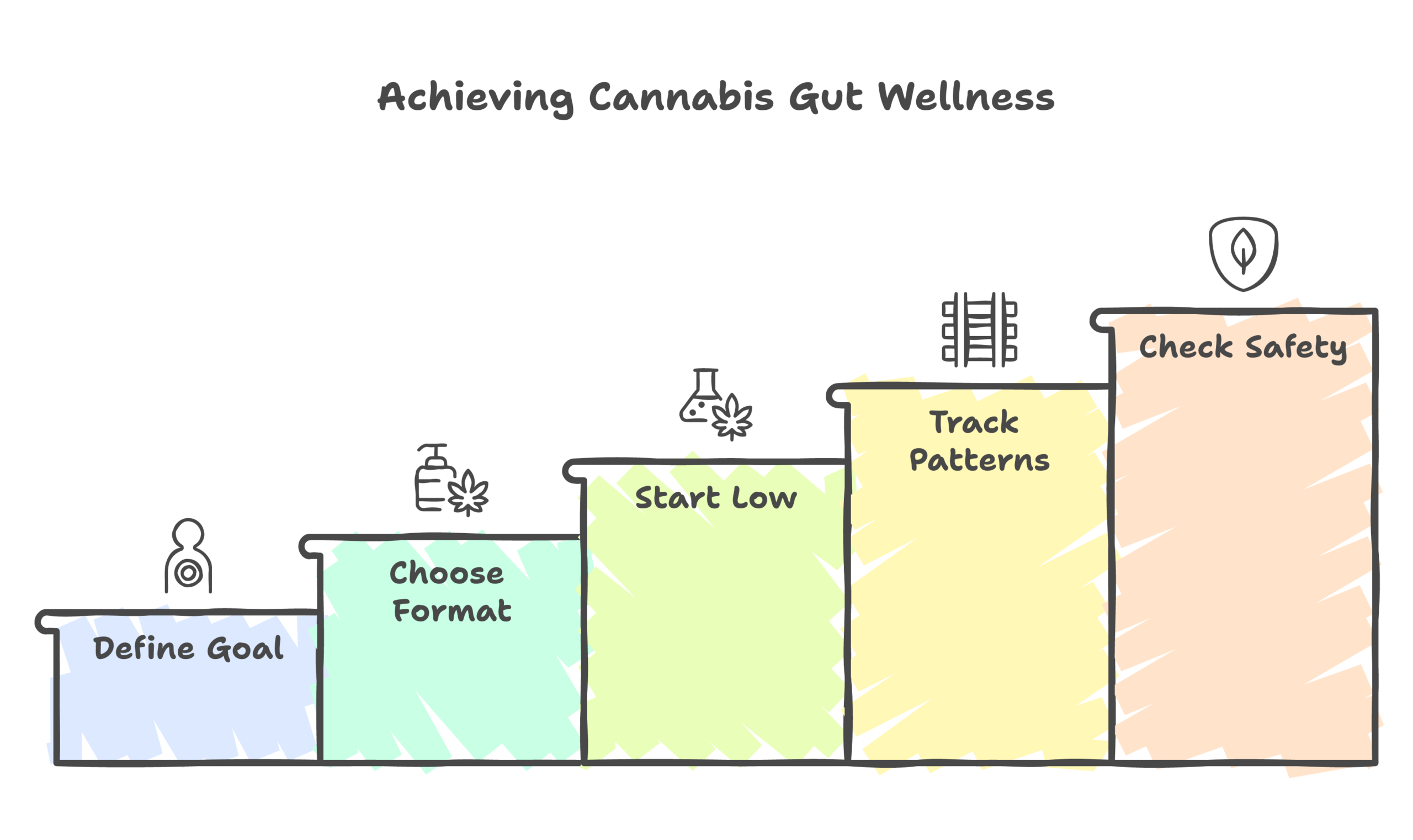
✓ Simple 5-Step Gut Wellness Checklist
- ✓ Define the goal: appetite, nausea, stress, discomfort, or sleep.
- ✓ Choose one product format and keep it consistent.
- ✓ Start with a low dose and avoid dose stacking.
- ✓ Track meals, symptoms, dose, timing, and sleep.
- ✓ Review medication interactions and speak with a clinician when needed.
Choosing Products With Gut Wellness in Mind
Product choice should follow your goal. If you want a non-intoxicating daytime routine, CBD oils and broad-spectrum products are often easier to manage. If you want appetite support or stronger body effects, THC-containing products require legal awareness, tolerance awareness, and more conservative dosing. If your gut symptoms are stress-linked, start with sleep, relaxation, and regular meal timing before assuming you need a stronger cannabinoid.
Look for products with clear lab information, realistic dosing guidance, and transparent ingredients. Avoid products that promise to cure IBS, heal the microbiome, or treat inflammatory bowel disease. That language is a red flag. A trustworthy product page should help you understand strength, serving size, cannabinoid profile, and intended use without pretending cannabis is magic.
The big picture is balanced: cannabis may influence digestive wellness through the ECS, appetite, stress response, nausea pathways, and inflammation signalling. But cannabis gut health is not a shortcut around lifestyle or medical care. Used carefully, it may be a useful support for some adults. Used carelessly, it can create confusion, overuse, or avoidable side effects.
⚠️ Disclaimer
This article is for informational purposes only and does not constitute medical advice. The information provided about medical cannabis in Greece is current as of June 2026 but may change. Always consult with qualified healthcare professionals for medical advice and treatment options. Decisions about medical cannabis should be made in consultation with authorized healthcare providers who understand your specific medical history and conditions. For our full disclaimer, visit cannastoreams.gr/disclaimer.
Frequently Asked Questions
Can cannabis improve gut health?
Cannabis may influence appetite, nausea, stress response, discomfort, and inflammation signalling, but it is not proven to improve the microbiome or cure digestive conditions.
Is CBD better than THC for digestion?
CBD is non-intoxicating and often easier for daily routines. THC may affect appetite and nausea more noticeably, but it also carries impairment and anxiety risks.
Can cannabis help IBS?
Some adults report symptom support, but IBS has many triggers. Work with a clinician, track patterns, and avoid treating cannabis as a standalone solution.
Do edibles affect the gut differently than oils?
Yes. Edibles pass through digestion, usually take longer to work, and last longer. Oils may offer more flexible dosing, especially when used conservatively.
When should I avoid cannabis for gut symptoms?
Avoid self-experimenting if symptoms are severe, new, persistent, involve bleeding or weight loss, or if cannabis worsens nausea, anxiety, or vomiting.
