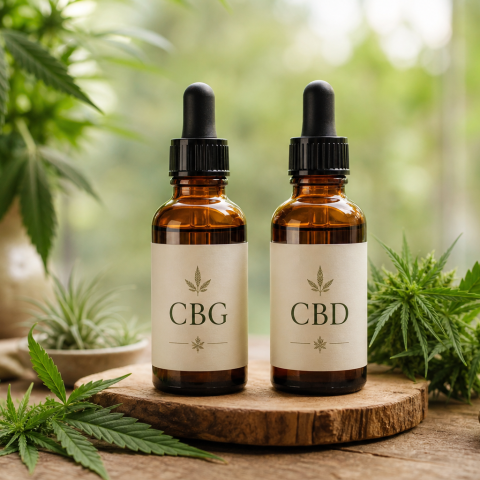
CBG vs CBD is one of the most useful comparisons for adults exploring non-intoxicating cannabis wellness products. CBD is the familiar cannabinoid with the larger research base; CBG is the newer “minor cannabinoid” attracting attention for focus, inflammation, gut comfort, and daytime balance. Both come from the cannabis plant, both can be used without the high associated with THC, and both deserve a calm, evidence-based look before anyone treats them like magic drops.
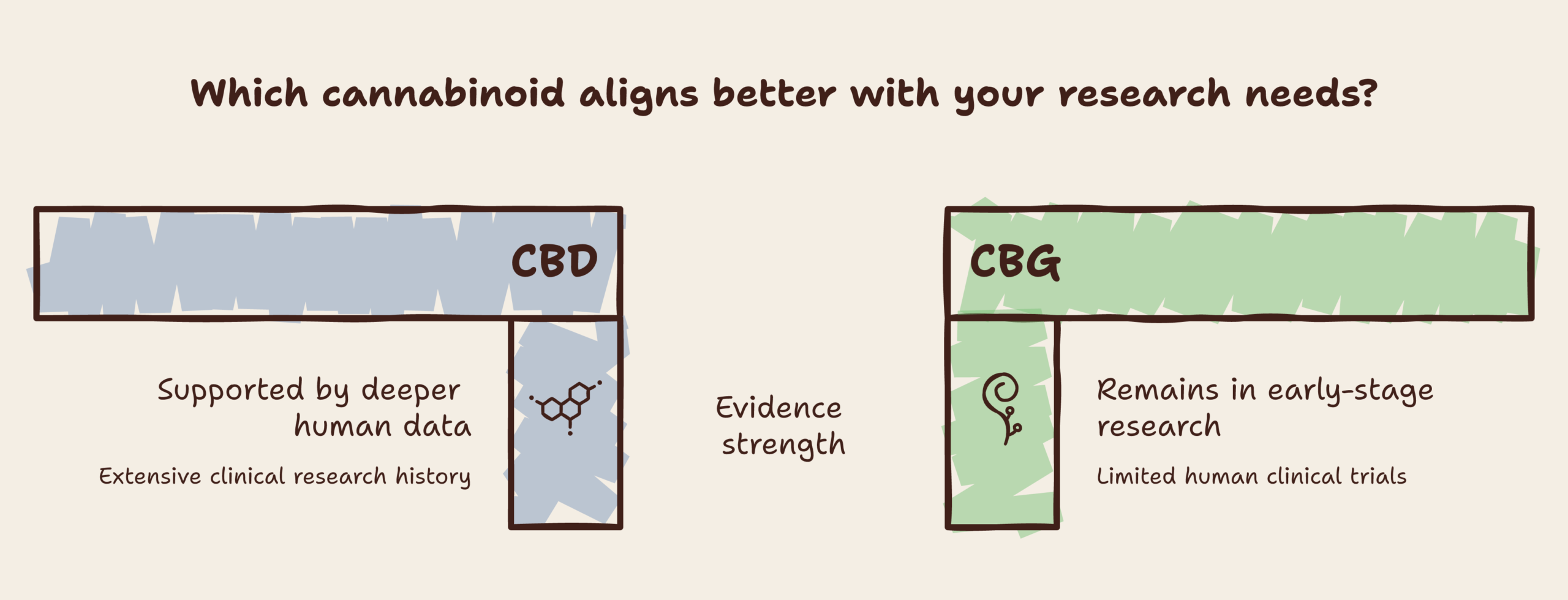
The short version is simple: CBD is better studied, easier to find, and usually the first choice for general wellness routines. CBG is promising, especially when people want a clearer daytime profile, but the human evidence is still young. That does not make CBG useless. It means you should buy carefully, avoid exaggerated claims, and pay attention to your body and medications.
📺 Video Guide
CBG vs CBD: The Core Difference
CBD stands for cannabidiol. CBG stands for cannabigerol. CBG is often nicknamed the “mother cannabinoid” because the plant compound CBGA is a precursor that can convert into cannabinoids such as CBD, THC, and CBC as the plant matures. A useful overview from the National Library of Medicine describes CBG as a non-intoxicating cannabinoid with a developing research profile, not a proven cure for any condition.
CBD is abundant in many hemp varieties and has been studied in more human trials. The clearest medical example is prescription cannabidiol for rare seizure disorders; the FDA approval of Epidiolex does not mean every CBD oil is a medicine, but it does show that CBD has been tested seriously in specific settings.
CBG is usually present in smaller amounts in mature cannabis plants. That can make CBG products more expensive and less standardized than CBD products. If you already read our CBD edibles vs oil guide, think of CBG as a neighboring cannabinoid category rather than a replacement for every CBD product.
✓ Quick Comparison
- ✓ CBD: stronger human evidence and wider product availability.
- ✓ CBG: promising but earlier research, often positioned for daytime clarity.
- ✓ Both: non-intoxicating when properly formulated without meaningful THC.
- ✓ Neither: a shortcut around medical advice, product testing, or legal limits.
How They Work in the Body
Both cannabinoids interact with the endocannabinoid system, a signaling network involved in mood, pain perception, appetite, sleep, immune balance, and stress response. The National Academies report on cannabis and cannabinoids explains that cannabinoid effects depend on receptors, dose, route, product composition, and individual biology.
CBD is usually described as indirect. It does not strongly activate CB1 receptors the way THC does, which is one reason it does not create a classic cannabis high. Researchers also study CBD’s activity at serotonin receptors, TRP channels, inflammatory pathways, and liver enzymes. If you want the practical side of CBD timing, our CBD oil for daytime stress guide explains why slower and smaller is often smarter than taking too much at once.
CBG appears to interact with several receptor systems too, including cannabinoid receptors, alpha-2 adrenergic receptors, and serotonin-related pathways. A 2025 review in Frontiers in Pharmacology summarized CBG as pharmacologically interesting but still under-tested in humans. That is the key tension: the science is intriguing, but the consumer market is running faster than the clinical data.
What the Research Says About Benefits
For CBD, the best-established medical evidence is narrow but real: prescription cannabidiol has approval for specific seizure disorders. Outside that setting, CBD research for sleep, stress, pain, inflammation, and recovery is mixed. Many adults still find CBD useful as part of a wellness routine, but responsible retailers should not pretend that every bottle has the same evidence level as a prescription medicine.
For CBG, the most interesting human evidence is early. A small double-blind crossover trial published in PubMed tested a single 20 mg dose of hemp-derived CBG in 34 healthy adults and reported lower subjective anxiety and stress without intoxication or measurable impairment. The full paper in Scientific Reports is promising, but it is not the same as long-term evidence in people with diagnosed anxiety disorders.
Preclinical studies also explore CBG for inflammation, gut comfort, appetite, and antibacterial activity. Preclinical means cell or animal work, not proof that a product will treat a human condition. That distinction matters. If your main interest is inflammation or recovery, compare CBG with familiar formats such as CBD topicals for muscle recovery, because route of use can matter as much as the cannabinoid itself.
💡 Pro Tip
If a CBG product claims to cure anxiety, cancer, arthritis, or neurological disease, treat that as a red flag. Good cannabinoid education uses careful language and points you toward evidence, not hype.
Safety, Side Effects, and Interactions
Safety is where the CBG vs CBD comparison becomes practical. CBD has more documented interaction concerns because it has been studied more deeply. The FDA’s consumer update on cannabis-derived products warns that CBD can affect liver enzymes, interact with medications, and cause side effects such as sleepiness or digestive upset. The point is not to scare people away from CBD. The point is that “natural” does not automatically mean interaction-free.
A recent FDA-linked safety study reported liver enzyme elevations in some healthy adults taking CBD at consumer-relevant doses, and the agency summarized the issue in its CBD randomized trial safety update. If you take blood thinners, anti-seizure medicines, sedatives, antidepressants, heart medicines, or regular prescription medication, speak with a clinician before using CBD or CBG consistently.
CBG has less mapped-out safety data. The small human trial mentioned above did not show intoxication or major impairment from a single 20 mg dose, but that does not answer questions about daily use, high doses, older adults, pregnancy, liver disease, or polypharmacy. A sensible rule is to treat CBG with at least the same caution as CBD until better long-term data exists.
A Responsible Buying Checklist
The best cannabinoid product is not the one with the loudest label. It is the one with transparent testing, clear ingredients, sensible potency, and realistic guidance. Look for a certificate of analysis that confirms cannabinoid content, THC level, pesticides, heavy metals, residual solvents, and microbial safety. The CDC’s cannabis health information is focused mostly on THC-related risks, but its broader message still applies: know what you are using and avoid risky combinations.
For everyday wellness, choose a product format that matches your routine. Oils and tinctures make dose adjustment easier. Capsules are convenient but less flexible. Edibles are discreet but slower. Topicals are better for localized application than whole-body effects. If you are comparing product types, our CBD capsules vs softgels comparison can help you think through consistency, onset, and convenience.
Also check whether a product is broad-spectrum, full-spectrum, or isolate. Full-spectrum products may include trace THC depending on local rules and formulation, while broad-spectrum products aim to include multiple cannabinoids without detectable THC. If you must avoid THC for work, driving, travel, or personal reasons, do not rely on marketing language alone. Read the lab report.
📝 Important Note
In Greece and the wider EU, cannabinoid products sit inside a changing legal and regulatory landscape. Do not travel with THC products, do not assume foreign medical cannabis prescriptions apply locally, and always check current rules before buying or carrying cannabis products.
Legal and Wellness Context in Greece
Greek cannabis rules distinguish between medical cannabis, industrial hemp, and consumer CBD-style products. Medical cannabis access is prescription-based and regulated, while recreational THC remains illegal. A sector overview from Business of Cannabis notes that Greece’s medical cannabis framework has developed gradually, with pharmacy availability emerging only after years of regulatory delay.
For consumers, the main message is conservative: buy from reputable retailers, keep products away from children, avoid driving if you feel impaired or sedated, and do not treat CBD or CBG as a substitute for medical care. If you need a broader legal background, our hemp flower ban Greece consumer guide covers why product form and THC content matter.
Internationally, regulators are still catching up with cannabinoid wellness. The Harvard Health discussion of minor cannabinoids makes the same practical point: interest in CBG, CBN, and other compounds is growing, but evidence and quality control are not equal across the market.
How to Choose Between CBG and CBD
Choose CBD first if you want the more established option, better product availability, and a larger body of human research. CBD may fit evening routines, general stress support, sleep preparation, or recovery habits, depending on dose and formulation. If sleep is the main goal, start with our CBD for sleep evidence and timing guide before stacking products randomly.
Consider CBG if you are curious about a non-intoxicating daytime cannabinoid and you understand that the evidence is earlier. Some people prefer CBG-forward formulas for focus or a less sleepy feel, while others prefer CBD’s calmer profile. There is no universal winner because cannabinoid response is personal. Your metabolism, dose, product quality, sleep, stress level, food intake, and medication list all change the experience.
For many adults, a balanced broad-spectrum formula may be more sensible than chasing a single “best” cannabinoid. The idea is not to overload your routine. It is to use the smallest useful amount, track the effect, and stop if side effects appear. If a product makes you unusually tired, dizzy, anxious, nauseous, or mentally foggy, reduce the dose or discontinue and get professional advice.
⚠️ Disclaimer
This article is for informational purposes only and does not constitute medical advice. The information provided about cannabis wellness and medical cannabis in Greece is current as of June 2026 but may change. Always consult qualified healthcare professionals for medical advice and treatment options. Decisions about cannabinoids should be made in consultation with authorized healthcare providers who understand your specific medical history and conditions. For our full disclaimer, visit cannastoreams.gr/disclaimer.
Frequently Asked Questions
Is CBG stronger than CBD?
Not necessarily. CBG and CBD feel different for some people, but “stronger” depends on dose, product quality, body chemistry, and the goal. CBD has stronger human evidence overall, while CBG has promising early research.
Will CBG or CBD make me high?
Properly formulated CBD and CBG products are non-intoxicating. The risk comes from mislabeled products, full-spectrum formulas with THC, or products contaminated with more THC than expected.
Can I take CBG and CBD together?
Many broad-spectrum products combine cannabinoids, but start low and avoid stacking multiple products at once. If you take medication or have a health condition, ask a clinician before using cannabinoids regularly.
Which is better for daytime use?
Some adults prefer CBG-forward formulas during the day because they report less sleepiness. Others do well with low-dose CBD. The safest approach is to test on a quiet day before using either product around work or driving.
What should I check before buying?
Check the certificate of analysis, cannabinoid strength, THC level, batch number, ingredients, and seller reputation. Avoid products with disease-cure promises or no lab report.