
Cannabis Terpenes and Flavor: Aroma Guide
Learn how cannabis terpenes shape flavor, aroma, and product choice with practical, safety-first tips for wellness buyers.

Cannabis terpenes are the aromatic compounds that make one product smell like lemon peel, another like pine forest, and another like herbs, spice, or ripe fruit. They are not just a marketing detail. For adult wellness buyers, aroma is often the first practical clue about freshness, formulation, and the kind of experience a product is designed to support. A citrus-forward CBD vape, an earthy flower, and a peppery topical can all sit inside the same cannabis category, but they speak to very different preferences.
This guide explains how to read aroma profiles without overclaiming what terpenes can do. Research bodies such as the NCCIH describe terpenes as substances that contribute to cannabis strain-specific properties such as aroma and taste, while scientific reviews on cannabis terpenes show promising but still developing evidence around their biological activity. Translation: use terpene information as a smart product-selection tool, not as a medical promise.
📺 Video Guide
Why Cannabis Terpenes Matter for Flavor
Terpenes are found across the plant world. Limonene appears in citrus peel, pinene in pine needles and rosemary-like aromas, linalool in lavender-style floral notes, and beta-caryophyllene in peppery, woody profiles. Cannabis contains many of these same aromatic compounds, which is why a product can smell tropical, herbal, diesel-like, floral, spicy, or earthy before you ever read the label.
The flavor side matters because many adults choose cannabis wellness products the same way they choose coffee, tea, wine, or essential oils: by sensory preference first. If you dislike heavy earthy notes, a myrcene-dominant flower may feel less appealing even if the cannabinoid percentage looks attractive. If you enjoy bright, clean flavors, a limonene-forward product may be more pleasant. Product fit is not only chemistry; it is routine, smell, taste, timing, and comfort.
On cannastoreams.gr, that practical lens helps when comparing categories such as CBG vs CBD products, CBD edibles versus oils, and product formats like the Amnesia Haze Superior CBD Flower. The right question is not “which terpene is strongest?” It is “which aroma profile fits the experience I actually want?”
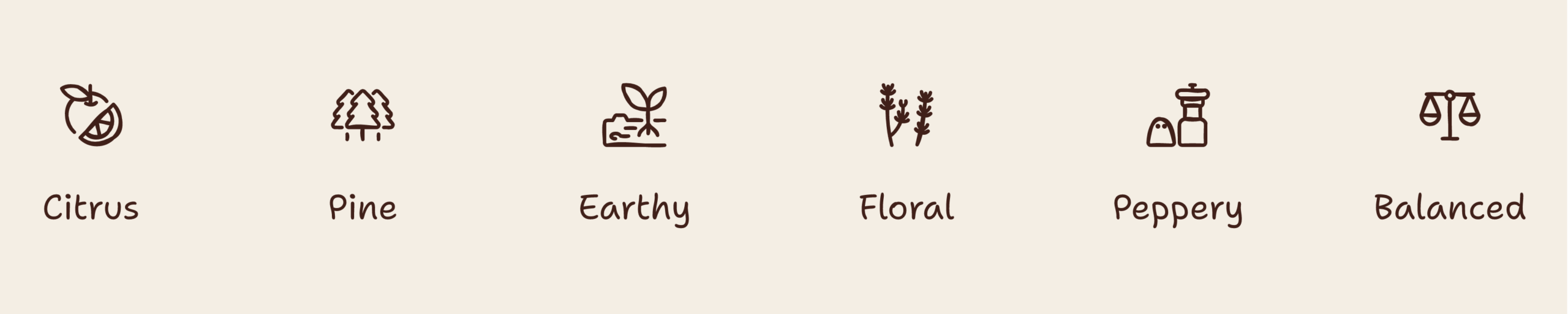
✓ Quick Aroma Map
- ✓ Citrus: bright, clean, lemon or orange peel notes
- ✓ Pine: fresh, resinous, outdoorsy notes
- ✓ Earthy: herbal, musky, clove-like depth
- ✓ Floral: soft lavender-style aromas
- ✓ Peppery: spicy, woody warmth
The Five Aroma Families to Know
Citrus profiles are usually associated with limonene. They smell like lemon zest, orange peel, grapefruit, or sherbet. In consumer language, citrus profiles are often described as bright and daytime-friendly. A Johns Hopkins Medicine report on limonene and THC-related anxiety suggests limonene may influence how THC feels in controlled settings, but the smart retail takeaway is simpler: citrus aromas are popular with people who want freshness rather than heavy herbal flavor.
Pine profiles point toward alpha-pinene or beta-pinene. They can feel crisp, resinous, and outdoorsy. A Scientific Reports study explored alpha-pinene in zebrafish models, which is useful for science context but not a reason to make direct health claims. For shoppers, pine is mostly a sensory marker: clean, forest-like, and less sweet.
Earthy profiles often involve myrcene, one of the best-known cannabis terpenes. Earthy does not mean low quality; it can mean rich, herbal, musky, clove-like, or tea-like. Many classic cannabis aromas live here. If you like deeper notes, compare flower options such as California Haze Superior CBD Flower with fresher citrus products and notice which profile feels more natural to you.
Floral profiles often reference linalool, the compound famous in lavender. These profiles are softer, aromatic, and less sharp. Peppery profiles usually point toward beta-caryophyllene, which has a spicy warmth and is discussed in research because it interacts with CB2 receptors, as summarized in reviews on Cannabis sativa constituents. Again, flavor first, claims second.
How to Choose an Aroma Profile
Start with your use case. Are you looking for a product that fits a quiet evening, a post-work routine, a daytime wellness ritual, or a social moment? The answer should guide the aroma profile more than the trendiest strain name. Citrus and pine notes tend to feel brighter to many users. Earthy and floral notes tend to feel more grounding. Peppery notes often appeal to people who dislike sweet flavors and want something more mature.
Next, match the aroma to the format. Flower gives the most direct scent experience, while oils and capsules may mute aroma. Gummies and drinks add food flavors that can cover terpenes almost completely. Topicals are different again because the scent has to sit comfortably on skin. If you are deciding between formats, our guides on CBD capsules versus softgels and CBD topicals for recovery can help you think beyond flavor alone.
Then check the product details. A serious product page should make it clear what type of cannabinoid profile you are buying, whether it is CBD-focused, broad-spectrum, or another formulation. In the United States, the FDA cannabis overview reminds consumers that cannabis-derived products are regulated differently depending on use and claims. In Europe and Greece, local rules also matter, so avoid importing random products or relying on social media advice.
💡 Pro Tip
If you are new to cannabis terpenes, buy by aroma family, not by strain hype. Pick one citrus, one earthy, and one floral or pine profile, then compare how each fits your routine.
Safety, Freshness, and Label Reading
Aroma should be pleasant, not suspicious. Fresh cannabis or CBD flower may smell strong, but it should not smell like mold, ammonia, damp basement, burnt plastic, or chemical solvent. Those are red flags. Terpenes are volatile, meaning they can evaporate or degrade with heat, light, and oxygen. This is one reason storage matters. Keep products sealed, cool, dry, and away from direct sun. If a flower has gone flat, dusty, or hay-like, the terpene profile has probably faded.
For inhaled products, be extra selective. The CDC cannabis health effects guidance highlights impairment risks and the need for caution, especially with driving and safety-sensitive tasks. The FDA delta-8 THC warning also notes variability in cannabinoid and terpene content in some products. That variability is exactly why trustworthy sourcing matters.
If you use edibles, aroma will not tell you much about onset or duration. Public-health sources such as Health Canada explain that cannabis effects can vary by product type and person. Edibles can take longer to feel and last longer than inhaled products. Start with a low amount, wait patiently, and do not stack servings because the flavor seems mild.
📝 Important Note
Terpene descriptions are useful, but they do not replace lab information, legal compliance, or personal caution. Aroma can guide preference; it cannot guarantee a medical result.
Matching Terpenes to Wellness Routines
For daytime routines, many people prefer lighter citrus, mint, or pine notes because they feel clean and less heavy. That can pair well with CBD oils, discreet gummies, or vapes designed around fresh flavors. Products such as Anti Stress Broad Spectrum CBD Oil are not chosen by aroma alone, but a clean sensory profile can make daily use easier to maintain.
For evening routines, earthy, floral, herbal, or dessert-like notes may feel more suitable. If your goal is relaxation, also think about timing, environment, and dose. Our CBD for sleep guide explains why routine and safety matter as much as product choice. A terpene profile may support the mood of the ritual, but it is only one piece of the puzzle.
For recovery routines, scent should be comfortable and non-irritating. A strong topical fragrance can be pleasant in the shop and annoying after 30 minutes on skin. Choose lighter aromas if you plan to apply a product before work, after training, or before bed. For social use, choose products that are easy to explain and easy to pace. Strong flavor can encourage overuse if the product is edible, so keep serving size separate from taste.
Common Mistakes When Buying by Aroma
The first mistake is assuming stronger smell means stronger effect. It does not. A product can smell intense because it is terpene-rich, freshly packaged, or flavored, while cannabinoid potency may be modest. The second mistake is assuming “natural” means risk-free. The SAMHSA marijuana risk overview is a useful reminder that cannabis can impair judgment, reaction time, and coordination. Respect the product, even when it smells friendly.
The third mistake is chasing strain names without looking at the actual profile. Strain names are not regulated like pharmaceutical labels. Two products with similar names can differ by grower, harvest, storage, and formulation. Trust product freshness, seller transparency, and your own experience more than a famous name. The fourth mistake is ignoring legal context. Our CBD in Greece legal buying guide is the better starting point before making assumptions about what can be bought, carried, or consumed.
⚠️ Disclaimer
This article is for informational purposes only and does not constitute medical advice. Information about cannabis and CBD products in Greece is current as of June 2026 but may change. Always consult qualified healthcare professionals for medical advice and treatment options. For our full disclaimer, visit cannastoreams.gr/disclaimer.
Frequently Asked Questions
What are cannabis terpenes?
Cannabis terpenes are aromatic compounds that shape the smell and flavor of cannabis products. They can smell citrusy, piney, earthy, floral, spicy, fruity, or herbal.
Do terpenes determine the effect of a product?
They may contribute to the overall experience, but they do not determine it alone. Cannabinoids, dose, format, tolerance, setting, and personal biology all matter.
Which terpene smells like citrus?
Limonene is the terpene most associated with citrus aromas such as lemon, orange, and grapefruit.
Why does cannabis lose smell over time?
Terpenes are volatile and can fade with heat, oxygen, and light. Store products sealed, cool, dry, and away from direct sun.
Is buying by aroma enough?
No. Aroma is useful for preference, but you should also check product type, cannabinoid profile, seller reliability, legality, and safe-use guidance.
