
CBD and Antihistamines: Allergy Safety Guide
CBD and antihistamines may increase drowsiness. Learn safe timing, red flags, and pharmacist questions for allergy season.

CBD and antihistamines can sit in the same wellness routine, but they should not be treated like harmless accessories. Allergy season already brings congestion, itchy eyes, restless sleep, and fatigue. Add a CBD oil, gummy, vape, or evening capsule, then add a drowsy antihistamine, and the main risk is not drama. It is ordinary impairment: heavier sleepiness, slower reaction time, lightheadedness, poor coordination, and a higher chance of making a bad decision before you realize you are affected.
This guide is written for adults who use CBD products responsibly and want a practical safety framework before combining them with allergy medicines. It does not replace advice from a clinician or pharmacist. It gives you the questions to ask, the warning signs to respect, and the product habits that reduce avoidable risk. If you already read our CBD vape safety guide or our CBD products Greece buying guide, think of this as the medication-check layer that belongs on top.
✓ Quick Safety Takeaways
- ✓ First-generation antihistamines are the highest sedation concern.
- ✓ CBD may add drowsiness, fatigue, stomach upset, or dizziness.
- ✓ Avoid alcohol, driving, and machinery until you know your response.
- ✓ Ask a pharmacist if you take daily medication or multiple sedating products.
CBD and Antihistamines: Why the Combination Needs Care
Antihistamines are common medicines used for allergy symptoms such as sneezing, itching, watery eyes, and runny nose. CBD is a cannabinoid used by many adults for wellness routines, relaxation rituals, and product exploration. The concern is not that every combination automatically becomes dangerous. The concern is that both categories can influence alertness, and CBD can interact with the way some medicines are handled by the body.
The Mayo Clinic cannabidiol monograph lists drowsiness and diarrhea among possible CBD effects and warns about additive effects with alcohol or central nervous system depressants, including antihistamines. The Harvard Health overview on CBD and medications makes the same practical point: CBD should be discussed with a clinician when regular medicines are involved.
For shoppers, the useful mindset is simple. CBD is not just a flavor, a lifestyle accessory, or a relaxing plant extract. It is an active compound. Allergy medication is also active. When active products overlap, especially at night, with alcohol, or with other sedating medicines, the smartest move is to plan instead of guessing.
💡 Pro Tip
If an allergy medicine label warns about drowsiness, alcohol, driving, or machinery, treat CBD as another reason to slow down and ask before combining.
First-Generation vs Second-Generation Allergy Medicines
The first question is what type of antihistamine you mean. First-generation antihistamines such as diphenhydramine and doxylamine are older products that cross into the brain more easily and are well known for sedation. Some people use them for allergies. Some use them as sleep aids. Either way, combining that type of drowsiness with CBD deserves real caution.
Second-generation antihistamines such as loratadine, fexofenadine, and cetirizine are usually less sedating, but less sedating does not mean zero sedation. Cetirizine, in particular, can still make some people sleepy. The FDA consumer guidance on medicines and driving reminds people that some over-the-counter medicines can slow reaction time, impair focus, or cause drowsiness. That applies directly to allergy products that carry driving or machinery warnings.
CBD users should read the Drug Facts label on every antihistamine. If the label mentions marked drowsiness, alcohol, sedatives, tranquilizers, driving, or operating machinery, that is not fine print. It is the part that tells you whether your CBD routine should pause, move to a different time, or be reviewed by a pharmacist.
The Main Risk Is Additive Drowsiness
The most realistic issue with CBD and antihistamines is additive drowsiness. CBD may make some adults feel calm, heavy, tired, or slower. Sedating antihistamines may do the same. Together, the combined effect can be stronger than expected, particularly if you also drink alcohol, use sleep supplements, take anxiety medication, take opioid pain medicine, or are already exhausted from poor sleep.
This matters because impairment is often subtle. People do not always feel “intoxicated.” They may simply react slower, lose focus while driving, misjudge stairs, or feel foggy the next morning. The peer-reviewed review on medications and impaired driving notes that antihistamines can affect psychomotor performance, especially older sedating agents. CBD can add another layer of tiredness for sensitive users.
If you are planning a quiet evening at home, the risk profile is different from taking products before driving across Athens, working with tools, caring for children, or making important decisions. Context matters. A responsible CBD routine is not only about the product. It is about timing, dose, setting, and what else is in your system.
Could CBD Affect Medicine Levels?
CBD is connected with liver enzyme pathways, especially the cytochrome P450 system. That does not mean every CBD product dramatically changes every medicine. It means CBD has enough interaction potential that regular medication users should not rely on internet guessing. A pharmacist can check whether your specific antihistamine, dose, and other medicines create a meaningful concern.
A detailed review of cannabinoid drug interactions discusses how cannabinoids can interact through metabolic pathways and overlapping side effects. The U.S. Pharmacist guide to CBD oil also emphasizes medication review because CBD may interact with common drug classes.
This is especially important if you take blood thinners, seizure medicines, antidepressants, benzodiazepines, sleep medicines, opioids, heart medicines, transplant medicines, or multiple daily prescriptions. A PubMed-indexed cannabinoid enzyme study also reinforces why metabolism questions belong with professionals, not guesses. If that sounds like you, do not reduce the issue to “Can I take CBD with allergy medicine?” The better question is “Can I take this exact CBD product with my full medication list?”
📝 Important Note
Do not use CBD to replace prescribed allergy, asthma, anxiety, sleep, seizure, or pain medication. Medication changes belong with your prescriber.
A Practical CBD and Antihistamines Checklist
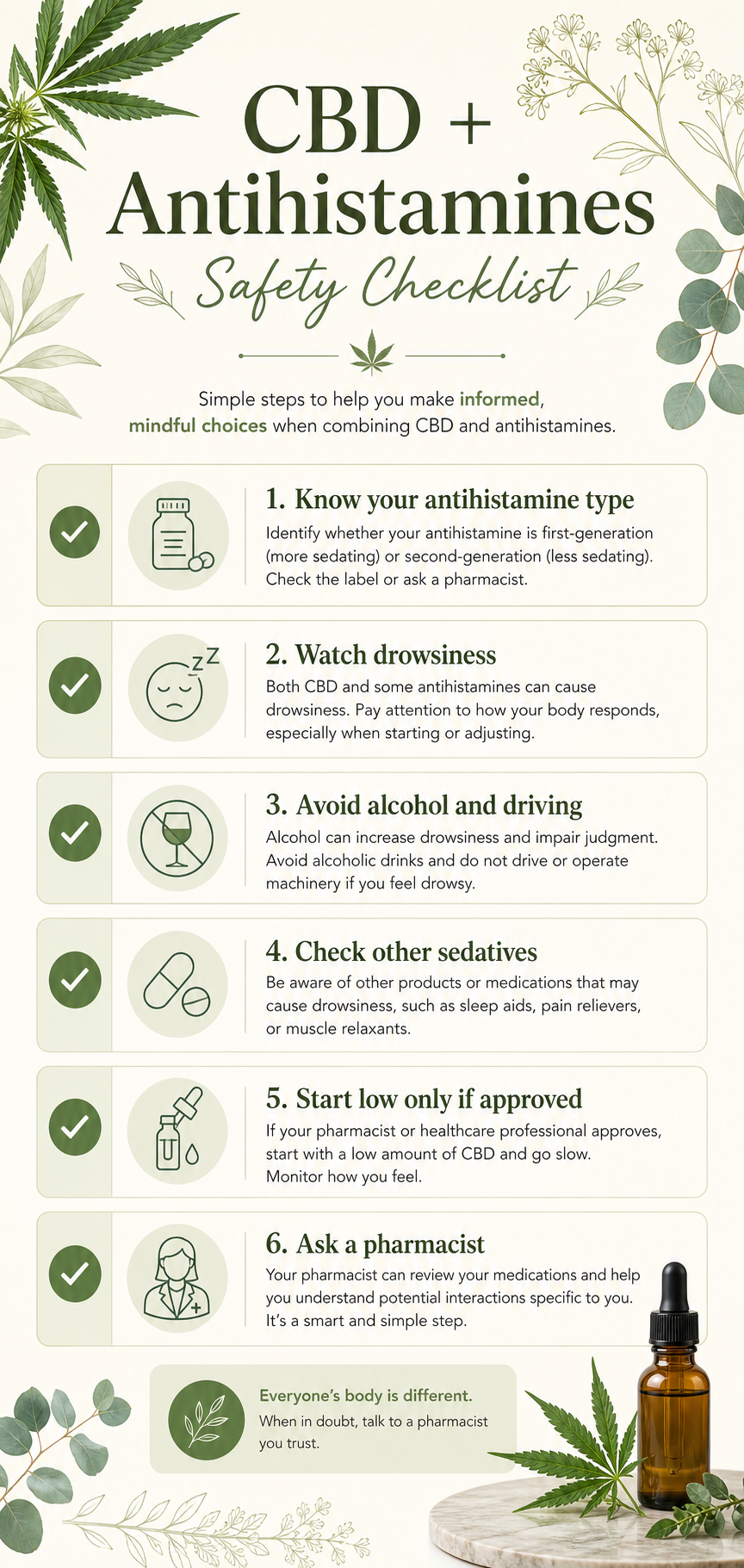
Before combining CBD and antihistamines, use a short checklist. First, identify the antihistamine type and read the label. Second, check whether you have used both products separately without excessive drowsiness. Third, remove avoidable risk factors: no alcohol, no driving, no machinery, and no late-night dose stacking with sleeping pills. Fourth, ask a pharmacist if you use either product regularly.
The “start low” idea only applies after a healthcare professional says the combination is reasonable for you. It does not mean pushing through side effects. If you feel unusually sleepy, dizzy, confused, unsteady, nauseated, or foggy, stop and reassess. If symptoms are severe, persistent, or involve breathing difficulty, chest symptoms, fainting, or allergic reaction signs, seek medical care.
For product choice, many adults prefer measured CBD oils because they allow smaller adjustments than strong edibles. If you are comparing formats, our guide on CBD edibles vs oil explains why onset and duration matter. If you are already sensitive to drowsiness, a long-lasting edible plus a sedating antihistamine is usually a poor experiment.
Timing: Morning, Evening, and Allergy Season Reality
Timing is where many people get into trouble. They take an antihistamine in the morning because allergies are miserable, then use CBD later for relaxation, then add a drink, then wonder why they feel heavier than usual. A safer approach is to avoid stacking new products on the same day. Test only one change at a time, and do it when you do not need to drive or perform demanding tasks.
Morning use deserves extra care because even modest drowsiness can affect commuting and work. Evening use also deserves care because the next morning can still feel cloudy if a sedating antihistamine or long-lasting CBD edible was taken late. The CDC sleep guidance highlights how insufficient or disrupted sleep can impair daytime function, and medication-related grogginess can compound that problem.
If allergies are seasonal, consider speaking with a pharmacist about less-sedating allergy options or nasal products that may fit your situation better. This is not because CBD is “bad.” It is because good routines remove friction. You want symptom support without creating avoidable sedation or confusing side effects.
Who Should Be Extra Careful?
Some people need a stricter safety bar. Older adults, people with liver disease, people with kidney disease, people with a history of falls, people who drive for work, and anyone taking multiple medications should get professional advice first. The same goes for anyone taking antidepressants, anti-anxiety medicines, antipsychotics, opioids, seizure medicines, muscle relaxants, or sleep medicines.
People using prescription cannabidiol products should be even more cautious. The FDA label for prescription cannabidiol discusses liver enzyme monitoring and somnolence in a medical context. Over-the-counter CBD products are different from prescription cannabidiol, but the label is still a useful reminder that cannabidiol can have real pharmacology.
Pregnancy, breastfeeding, complex medical conditions, and pediatric situations are outside the scope of casual CBD experimentation. The FDA cannabis and CBD information page continues to warn consumers that CBD products need careful evaluation, especially around vulnerable groups and medication use.
Product Quality Still Matters
Interaction risk is not only about CBD itself. It is also about product quality, labeling, serving size, and whether a product contains other cannabinoids or sedating botanicals. A poorly labeled product makes safe timing almost impossible. A strong edible that looks casual can create a much longer effect than expected. A vape may feel shorter, but fast onset can encourage repeated use before the user realizes how the combination feels.
Look for clear labeling, batch information, and realistic serving guidance. If you are choosing oils, compare concentration carefully instead of assuming every dropper is similar. If you are choosing flowers or vapes, remember that product effects can vary by cannabinoid and terpene profile. Our cannabis terpenes and flavor guide explains why aroma compounds can shape experience, even though they are not a substitute for medication safety checks.
For Greek consumers, legality and product category also matter. Review our CBD in Greece legal buying guide before assuming every CBD product online is appropriate. Responsible buying starts before the product reaches your shelf.
What to Ask Your Pharmacist
Bring a complete list: prescription medicines, over-the-counter products, vitamins, herbal supplements, alcohol use, and cannabis products. Ask whether your antihistamine is sedating, whether your CBD product could worsen drowsiness, whether your other medicines use interaction-sensitive pathways, and what warning signs should make you stop.
Useful questions include: “Is my antihistamine first-generation or second-generation?” “Does this label warn about driving or alcohol?” “Do I take any other central nervous system depressants?” “Could CBD affect blood levels of anything I use daily?” “Should I separate timing, choose a different allergy medicine, or avoid CBD during allergy treatment?”
This conversation is usually quick, but it can prevent the exact problems people later blame on “bad CBD.” Sometimes the CBD product is not the problem by itself. The stack is the problem: allergy medicine, poor sleep, alcohol, high-dose edible, and a morning drive. Fix the stack and the routine gets much safer.
Bottom Line
CBD and antihistamines are not automatically incompatible, but the combination deserves respect. The highest concern is drowsiness, especially with first-generation antihistamines like diphenhydramine or with any allergy medicine that warns about driving, alcohol, sedatives, or machinery. Less-sedating antihistamines may be easier for many adults, but they are not a free pass when CBD, alcohol, or other sedatives are involved.
The practical rule is simple: read the label, avoid stacking sedatives, do not drive until you know your response, and ask a pharmacist when regular medication is part of your life. A good CBD routine should make wellness simpler, not riskier. If you want help choosing a measured, responsible product, start with CBD Oil 10 10ml, compare stronger options like CBD Oil 20 Full Spectrum 10ml, and keep the safety conversation front and center.
⚠️ Disclaimer
This article is for informational purposes only and does not constitute medical advice. Information about CBD, antihistamines, and product safety is current as of July 2026 but may change. Always consult qualified healthcare professionals for personal guidance. For our full disclaimer, visit cannastoreams.gr/disclaimer.
Frequently Asked Questions
Can I take CBD and antihistamines on the same day?
Some adults may, but you should check the antihistamine label and ask a pharmacist if you use either product regularly, take other medicines, or notice drowsiness.
Which antihistamines are most concerning with CBD?
Older first-generation antihistamines such as diphenhydramine or doxylamine are the biggest sedation concern. Any label warning about drowsiness, alcohol, driving, or machinery should be taken seriously.
Does CBD make allergy medicine stronger?
CBD may add to drowsiness and may interact with some medicine metabolism pathways. Whether that matters depends on the exact product, dose, and your full medication list.
Can I drive after using CBD with an antihistamine?
Do not drive until you know how the combination affects you. If either product causes drowsiness or the label warns about driving, avoid driving and choose a safer time.
Should I ask a doctor or pharmacist first?
Yes if you take daily medication, use sedatives, have liver disease, are older, drive for work, or plan regular CBD use during allergy season.
