Cannabis and Hormones: Research Guide 2026
Cannabis and hormones explained: research on stress, sleep, reproductive health, CBD, THC, and responsible use in 2026.

Cannabis and hormones is a serious wellness topic, not a slogan. The endocannabinoid system helps the body regulate balance across stress, sleep, appetite, mood, inflammation, and reproductive function, which means cannabis products can sit close to several hormone pathways. That does not make cannabis a hormone treatment. It means adults should understand the evidence, the uncertainties, and the difference between occasional wellness use and heavy, chronic exposure.
This guide takes a calm look at what research reveals in 2026: how THC and CBD may interact with stress hormones, sex hormones, fertility signals, sleep rhythms, thyroid discussions, and medication safety. For broader safety context, the CDC cannabis health effects guidance and the National Center for Complementary and Integrative Health overview are useful starting points.
📺 Video Guide
Cannabis and Hormones: The Big Picture
Hormones are chemical messengers. They help coordinate stress response, blood sugar, appetite, reproduction, sleep, metabolism, and immune activity. Cannabis compounds interact mainly with the endocannabinoid system, especially CB1 and CB2 receptor networks. Research summarized by the National Academies cannabis evidence review shows that cannabis has measurable effects across multiple body systems, but the strength of evidence varies a lot by outcome.
The key distinction is dose, frequency, product type, and personal biology. A low-dose CBD oil used occasionally is not the same exposure as daily high-THC inhalation. Someone with sleep issues, anxiety, fertility goals, thyroid medication, or hormonal therapy should treat cannabis as a biologically active substance and discuss it with a clinician. If you are new to the subject, our endocannabinoid system guide is a helpful primer before comparing specific products.
✓ Key Takeaways
- ✓ The endocannabinoid system communicates with stress, sleep, appetite, and reproductive pathways.
- ✓ Heavy THC exposure is more concerning for hormone disruption than cautious, occasional adult use.
- ✓ CBD may affect medication metabolism, so drug interactions matter.
- ✓ Hormone-sensitive conditions require professional medical guidance.
Stress Hormones, Cortisol, and the HPA Axis
The hypothalamic-pituitary-adrenal axis, often shortened to HPA axis, is the body’s central stress-response network. It influences cortisol, alertness, energy, sleep timing, and recovery after pressure. Cannabinoid signaling appears to participate in this system, which is why some adults report that cannabis changes how they experience stress. PubMed-indexed research on the endocannabinoid system and the HPA axis points to a complicated relationship rather than a simple “relaxation equals healthier hormones” story.
THC may feel calming for some people in certain settings, but it can also increase anxiety, heart rate, or panic in others, especially at higher doses. CBD products are often positioned around calm and balance, yet the research is still dose-specific and condition-specific. Adults looking at stress support should compare product format, cannabinoid profile, and timing, then start conservatively. Our guide to CBD oil for daytime stress covers practical safety questions in more detail.
Reproductive Hormones and Fertility Signals
Reproductive hormone research is one of the most sensitive areas in the cannabis and hormones conversation. Scientists have studied possible links between cannabis exposure and testosterone, luteinizing hormone, follicle-stimulating hormone, sperm parameters, menstrual cycles, ovulation, and pregnancy outcomes. PubMed searches on cannabis, testosterone, sperm, and fertility and cannabis, menstrual cycles, and ovulation show that results can differ by study design, dose, population, and whether use is occasional or frequent.
The responsible interpretation is simple: if you are actively trying to conceive, undergoing fertility treatment, pregnant, or breastfeeding, avoid casual experimentation and speak with a healthcare professional. This is not about fear. It is about reducing unnecessary variables when reproductive timing matters. The FDA cannabis and CBD consumer information is especially cautious around pregnancy and breastfeeding, and that caution is appropriate.
💡 Pro Tip
If hormones, fertility, or cycle tracking are part of your current health plan, keep a written cannabis journal with product type, dose, timing, sleep, mood, cycle notes, and any side effects.
Sleep, Melatonin Rhythm, and Recovery
Sleep is deeply hormonal. Cortisol, melatonin, insulin sensitivity, appetite hormones, and reproductive signals all respond to sleep quality and timing. Cannabis can change sleep architecture, perceived sleep onset, dreams, and next-day alertness. Some adults find certain products useful in a nighttime routine, while others notice grogginess, vivid rebound dreams after stopping, or tolerance over time. The PubMed literature on cannabis and sleep shows why the answer depends on cannabinoid profile and usage pattern.
For wellness users, the safest frame is “sleep support,” not “sleep cure.” Keep caffeine, alcohol, screens, and bedtime consistency in the picture. If you choose a cannabis product, use the lowest effective amount, avoid combining it with alcohol or sedatives unless a clinician approves, and monitor next-day performance. Our CBD for sleep guide and complete cannabis and sleep overview explain timing and safety in more depth.
Thyroid, Metabolism, and Appetite Signals
The thyroid question comes up often because cannabis can influence appetite, weight patterns, energy, and mood, which overlap with thyroid symptoms. Current human evidence does not justify using cannabis to treat thyroid disease. It does justify caution if someone already has endocrine symptoms and is trying to interpret lab results. Research searches on cannabis, thyroid, and TSH remain mixed and should be discussed with a physician, not used for self-diagnosis.
Appetite is better established. THC can increase hunger in many users, which may help some medical contexts but can be inconvenient for people managing weight, blood sugar, or evening snacking. CBD-dominant products usually have a different profile, but product quality and labeling matter. If appetite changes are your main concern, read our guide to cannabis and appetite before choosing a format.
THC, CBD, and Product Choice
THC and CBD should not be treated as interchangeable. THC is intoxicating and more likely to affect perception, anxiety, appetite, heart rate, and impairment. CBD is non-intoxicating, but it can still interact with enzymes involved in drug metabolism. The World Health Organization cannabidiol Q&A and Mayo Clinic medical marijuana overview both reinforce the need for medical caution around health conditions and medications.
For adults browsing wellness products, the practical checklist is: choose reputable brands, check lab information where available, avoid exaggerated hormone claims, and match the product to the goal. A broad-spectrum oil such as Anti Stress 20 Broad Spectrum CBD Oil may appeal to adults seeking a non-intoxicating daytime option, while products like CBD Oil 20 Full Spectrum should be reviewed carefully for cannabinoid profile and personal tolerance. For intimacy-related wellness, Cannaline Intimate CBD Gel Lubricant belongs in a different category than ingestible oils, so compare route of use before assuming similar effects.
📝 Important Note
Avoid any product or brand that promises to “balance hormones,” “boost testosterone,” “fix fertility,” or “reset cortisol.” Those are medical-style claims and deserve skepticism.
A Responsible Decision Checklist
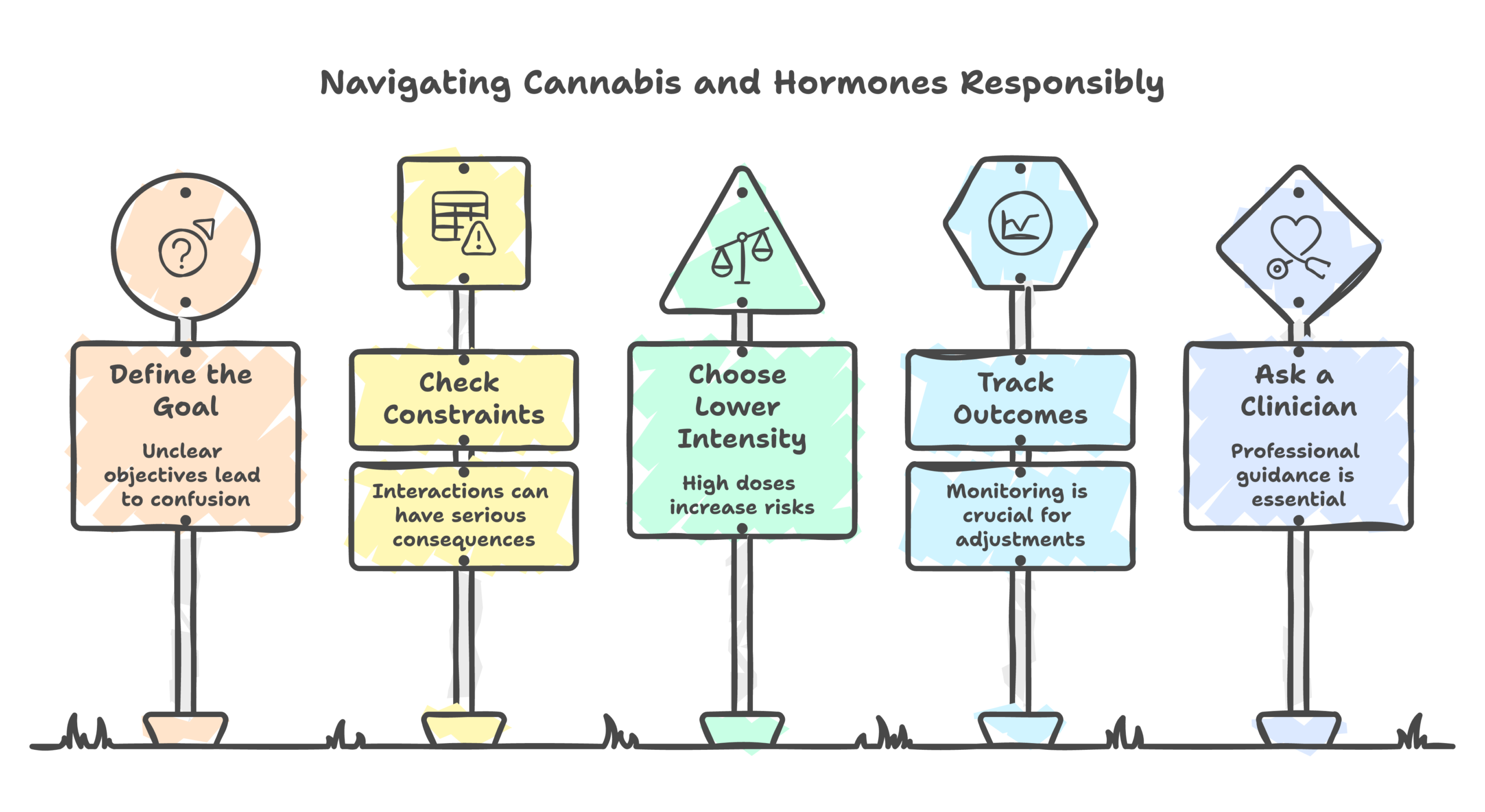
The best way to approach cannabis and hormones is to remove drama and use a checklist. First, define the goal: stress, sleep, discomfort, mood, intimacy, appetite, or general wellness. Second, list your constraints: medications, pregnancy plans, hormone therapy, thyroid issues, anxiety history, work demands, and driving. Third, choose the least intense product format that could reasonably fit the goal. Fourth, track outcomes for two weeks instead of changing several variables at once.
Drug interactions deserve special attention. CBD can interact with medication metabolism, and THC can compound impairment with alcohol, sedatives, or sleep medications. The PubMed literature on CBD drug interactions supports the need for caution, and our CBD and drug interactions guide turns that into practical questions to ask a clinician or pharmacist.
When to Avoid Experimenting
Some situations call for a pause. Avoid experimenting without medical advice if you are pregnant, breastfeeding, trying to conceive, managing a hormone-sensitive cancer, taking endocrine medication, using psychiatric medication, or dealing with unstable anxiety, psychosis risk, or substance-use concerns. The DEA marijuana fact sheet explains the controlled-substance context in the United States, while local laws and product categories vary by country. In Greece, adults should stay current with local rules and buy only from reputable sources.
This is also where mental health matters. Hormonal symptoms and mood symptoms can overlap, and THC may worsen anxiety or paranoia in vulnerable users. If your main concern is emotional balance, read our cannabis and mental health guide before deciding whether cannabis belongs in your routine.
⚠️ Disclaimer
This article is for informational purposes only and does not constitute medical advice. The information provided about medical cannabis in Greece is current as of May 2026 but may change. Always consult qualified healthcare professionals for medical advice and treatment options. Decisions about medical cannabis should be made with authorized healthcare providers who understand your medical history and conditions. For our full disclaimer, visit cannastoreams.gr/disclaimer.
Frequently Asked Questions
Can cannabis balance hormones naturally?
No product should be described as a proven hormone-balancing treatment. Cannabis interacts with systems that influence stress, sleep, appetite, and reproduction, but hormone conditions require medical evaluation.
Does THC affect testosterone?
Research is mixed, but frequent high-THC use is more concerning than occasional adult use. Men with fertility goals, low testosterone symptoms, or endocrine treatment should speak with a clinician.
Is CBD safer for hormone health than THC?
CBD is non-intoxicating and generally has a different risk profile from THC, but it can interact with medications and should not be used to self-treat endocrine problems.
Should I stop cannabis before fertility treatment?
Ask your fertility specialist. Because reproductive hormones and sperm or ovulation timing are sensitive, many clinicians recommend avoiding unnecessary cannabis exposure while trying to conceive.
What is the safest way to start?
Start with a clear goal, avoid mixing with alcohol or sedatives, choose reputable products, use the lowest effective amount, and track effects for sleep, mood, appetite, and side effects.
