
Cannabis for Glaucoma: Medical Perspective
Cannabis for glaucoma may lower eye pressure briefly, but it is not a recommended treatment. Learn the evidence, risks, and safer next steps.

Cannabis for glaucoma is one of the oldest and most debated medical cannabis topics. The short version is clear: THC can temporarily lower intraocular pressure, the pressure inside the eye, but the effect is short-lived and cannabis is not recommended as a primary glaucoma treatment by major eye-care organizations. For adults exploring cannabis wellness, that distinction matters. A product may have real biological activity and still be a poor medical strategy for a progressive eye disease that can permanently damage vision.
This guide explains what the evidence actually says, why ophthalmologists remain cautious, how CBD differs from THC, and what responsible adults should discuss with an eye specialist before making decisions. It is educational, not a treatment plan, and it should never replace prescribed glaucoma medication or regular eye-pressure monitoring.
📺 Video Guide
Cannabis for Glaucoma: What the Claim Really Means
Glaucoma is a group of eye diseases that damage the optic nerve, often related to elevated intraocular pressure. The National Eye Institute describes it as a leading cause of irreversible blindness, partly because people may lose vision slowly before noticing symptoms. Standard care focuses on lowering eye pressure consistently through prescription eye drops, laser procedures, or surgery.
The cannabis connection began because early research found that THC, the intoxicating cannabinoid in cannabis, could reduce intraocular pressure for a few hours. That finding was scientifically interesting. It did not mean cannabis became a practical glaucoma medicine. The American Academy of Ophthalmology states that marijuana is not recommended for glaucoma because the pressure-lowering effect does not last long enough and the side-effect burden is significant.
For Puff ‘n Pass readers in Greece, the responsible takeaway is simple: cannabis for glaucoma should be understood as a medical discussion topic, not a DIY treatment path. If you already use cannabis or CBD products, tell your ophthalmologist. If you have glaucoma, suspected glaucoma, high eye pressure, optic nerve changes, diabetes, cardiovascular disease, or a family history of eye disease, get professional guidance before changing anything.
✓ Key Takeaways
- ✓ THC may lower eye pressure briefly, usually for only a few hours.
- ✓ Glaucoma needs steady 24-hour pressure control, not short spikes of relief.
- ✓ CBD is not a proven glaucoma treatment and may raise eye pressure in some research contexts.
- ✓ Do not stop prescribed glaucoma drops unless your ophthalmologist tells you to.
What Research Says About THC and Eye Pressure
The best-known finding is that THC can reduce intraocular pressure temporarily. A classic review indexed by PubMed discusses cannabinoids and glaucoma, noting pressure-lowering effects but also major limitations. The issue is duration. A glaucoma treatment must protect the optic nerve around the clock. A short pressure drop that fades after two to four hours does not provide stable disease control.
This is why cannabis for glaucoma remains medically controversial. If someone tried to maintain the pressure-lowering effect of smoked or ingested THC throughout the day, they would need repeated dosing. That creates obvious problems: impairment, sedation, anxiety in some users, coordination changes, driving risk, cardiovascular concerns, and dependence potential. The National Institute on Drug Abuse notes that cannabis can affect attention, memory, coordination, and mental health, which matters when repeated daily medical dosing is being considered.
Modern glaucoma medicines are designed differently. Prescription drops, laser trabeculoplasty, and surgical options aim for predictable pressure reduction with a clearer safety profile and professional monitoring. The Mayo Clinic describes treatment as an ongoing process based on eye exams, pressure checks, and disease stage. Cannabis cannot replace that clinical structure.
💡 Pro Tip
If you use cannabis regularly and have an eye exam booked, mention it before pressure testing. Your doctor needs the full picture, especially if products contain THC, CBD, or synthetic cannabinoids.
Why Ophthalmologists Do Not Recommend Cannabis as Treatment
The core problem is not that cannabis has no effect. The problem is that the effect is not clinically practical for most patients. The Glaucoma Research Foundation explains that marijuana’s short duration makes it unsuitable for sustained glaucoma management. Glaucoma is not like a headache where someone seeks temporary relief. It is a chronic optic nerve disease where untreated pressure fluctuations can cause permanent vision loss.
There is also a blood-flow concern. Some cannabis products can lower blood pressure. For a glaucoma patient, reduced blood pressure could theoretically reduce blood flow to the optic nerve, especially at night or in people with vascular risk factors. That does not mean every cannabis user with glaucoma will experience harm, but it does explain why eye specialists avoid casual recommendations.
The CDC also highlights broader cannabis health effects, including impaired coordination and potential mental health effects in vulnerable users. In glaucoma care, a treatment is judged by whether it preserves vision safely over years. A product that briefly changes pressure while adding systemic risk is not enough.
This is the same responsible-use lens we apply across our educational guides, including our overview of medical cannabis in Greece. Cannabis can be relevant to wellness conversations without being the right answer for every diagnosis.
CBD, THC, and the Glaucoma Difference
Many people hear “cannabis helps glaucoma” and assume CBD oil may be useful. That is not supported by current evidence. THC and CBD act differently in the body. THC is the compound historically linked with temporary eye-pressure reduction. CBD does not reliably show the same effect, and some research suggests it may increase eye pressure under certain conditions. A cannabinoid review available through NCBI discusses these complexities and why translating cannabinoid biology into glaucoma medicine has been difficult.
CBD may still be used by adults for other wellness reasons, such as stress routines or sleep routines, but glaucoma changes the risk conversation. If you use CBD oil, capsules, gummies, or vapes, it is worth checking how they fit with your eye-care plan. This is especially important if you already use prescription drops, blood pressure medication, sedatives, antidepressants, or anticoagulants. For broader safety context, see our CBD oil daytime stress safety guide and our guide to CBD for sleep timing and safety.
The FDA notes that CBD products vary widely and can carry safety concerns, including drug interactions and liver-related warnings for approved CBD medicine. Product quality also matters. If a label is inaccurate, a supposedly THC-free product may contain THC, or a high-CBD product may not match its stated concentration. Our cannabis lab reports guide explains why certificates of analysis matter.
📝 Important Note
CBD should not be treated as an eye-pressure supplement. If glaucoma or high eye pressure is part of your medical history, ask your ophthalmologist before using cannabinoid products.
A Safer Decision Framework for Adults
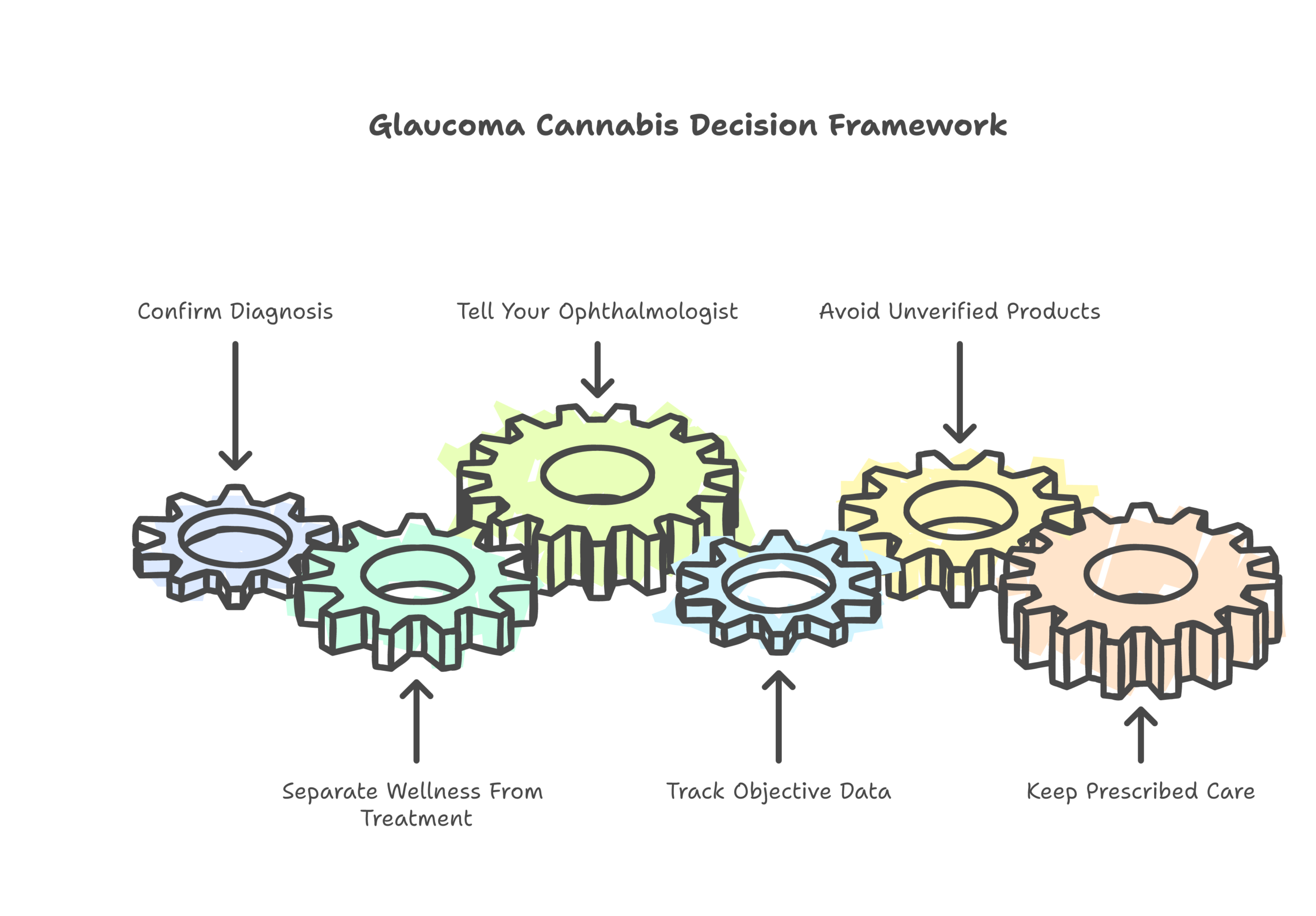
If you are thinking about cannabis for glaucoma, use a medical decision framework instead of online hype. First, confirm the diagnosis. The NHS explains that glaucoma diagnosis can include eye pressure measurement, optic nerve assessment, visual field testing, and imaging. A casual symptom check is not enough.
Second, separate wellness use from disease treatment. You may choose legal, quality-tested cannabis products for relaxation, appetite, or adult lifestyle reasons, but that does not make them glaucoma medicine. Third, keep your eye-care team informed. Your ophthalmologist should know what cannabinoids you use, how often, and by which route. Fourth, track objective data: eye pressure, visual fields, optic nerve scans, medication adherence, and side effects.
Finally, protect yourself from synthetic or unverified products. Synthetic cannabinoids can carry very different risks from traditional cannabis. Our warnings on synthetic cannabinoid dangers explain why “stronger” does not mean safer. For any medical condition involving vision, quality control is not optional.
✓ Practical Checklist
- ✓ Keep using prescribed glaucoma medicine unless your doctor changes it.
- ✓ Bring cannabis and CBD product labels to your eye appointment.
- ✓ Avoid driving or machinery after THC use.
- ✓ Choose products with clear lab testing and legal compliance.
- ✓ Report changes in vision urgently.
What Future Cannabis Eye Research May Change
Researchers remain interested in cannabinoid pathways because the eye contains cannabinoid receptors and because early THC findings were real. The future might involve targeted molecules, non-intoxicating pathways, longer-acting delivery systems, or topical formulations that avoid systemic impairment. But those possibilities are not the same as today’s consumer cannabis products.
The World Health Organization emphasizes the global impact of preventable vision impairment, which is why glaucoma claims deserve extra caution. Any future cannabinoid-based glaucoma medicine would need controlled dosing, stable pressure reduction, long-term safety data, and regulatory approval. Until then, cannabis for glaucoma belongs in the “discuss with your doctor” category, not the “replace your drops” category.
For adults using cannabis responsibly, the best approach is balanced: respect the science, avoid exaggerated claims, use legal quality-tested products, and keep medical conditions under professional care. That is how cannabis wellness stays useful without becoming reckless.
⚠️ Disclaimer
This article is for informational purposes only and does not constitute medical advice. The information provided about medical cannabis in Greece is current as of May 2026 but may change. Always consult with qualified healthcare professionals for medical advice and treatment options. Decisions about medical cannabis should be made in consultation with authorized healthcare providers who understand your specific medical history and conditions. For our full disclaimer, visit cannastoreams.gr/disclaimer.
Frequently Asked Questions
Can cannabis cure glaucoma?
No. Cannabis does not cure glaucoma. THC may temporarily lower eye pressure, but glaucoma requires long-term monitoring and proven pressure-control strategies.
Is CBD good for glaucoma?
CBD is not a proven glaucoma treatment. Some evidence suggests CBD may raise eye pressure in certain contexts, so people with glaucoma should discuss CBD use with an ophthalmologist.
Why is THC not recommended if it lowers eye pressure?
The pressure-lowering effect is short-lived, often only a few hours. Maintaining that effect would require repeated dosing, which creates impairment and safety concerns compared with standard glaucoma treatments.
Should I tell my eye doctor I use cannabis?
Yes. Your ophthalmologist should know whether you use THC, CBD, or synthetic cannabinoid products because they may affect eye pressure readings, medications, blood pressure, or side effects.
Can I stop my glaucoma drops if cannabis helps me feel better?
No. Do not stop prescribed glaucoma medication unless your ophthalmologist specifically changes your treatment plan. Feeling better is not the same as protecting the optic nerve.
