CBD for Anxiety: Evidence, Safety & Greece Guide
CBD for anxiety in Greece: what evidence says, safety checks, legal notes, product quality tips, and responsible use guidance.

CBD for anxiety is one of the most searched wellness topics in 2026, but it is also one of the easiest to misunderstand. Some people talk about CBD as if it is a guaranteed calm button. Others dismiss it because the evidence is not yet as strong as it is for established anxiety treatments. The honest middle is more useful: cannabidiol has promising human data, especially in controlled public-speaking studies, but it is not approved as an anxiety medicine and should be approached with careful dosing, product-quality checks, and medical awareness.
For adults in Greece, the question is not only whether CBD may feel calming. It is also whether a product is compliant, clearly labelled, third-party tested, and appropriate for your health situation. This guide explains what the research actually says, where the safety concerns sit, how Greek consumers should think about legality, and what to check before buying oils, gummies, capsules, vapes, or topical products from a wellness shop.
📺 Video Guide
CBD for anxiety evidence in 2026
The best evidence for CBD and anxiety is encouraging, but narrower than many product pages imply. A widely cited review in Neurotherapeutics concluded that preclinical evidence strongly supports anxiolytic potential, while human evidence is still limited mostly to acute dosing and smaller clinical populations. In plain English: CBD has a plausible mechanism and some positive trials, but the field still needs larger, longer, placebo-controlled studies.
One of the clearest areas is simulated public speaking. PubMed-indexed trials have reported that single oral doses around 300 mg can reduce anxiety during public-speaking tests in healthy volunteers, while a 600 mg dose reduced anxiety in people with social anxiety disorder in an older randomized trial. That does not mean every person needs hundreds of milligrams, or that retail products with small serving sizes will reproduce those results. It means the strongest controlled signal is acute, context-specific, and dose-sensitive.
A more recent clinical trial in Communications Medicine found that a high-CBD, full-spectrum sublingual product was associated with rapid reductions in anxiety symptoms and good tolerability over four weeks. The study is useful, but it was an early-phase design, so it should not be treated as the final word. For comparison, the Anxiety and Depression Association of America still cautions that evidence is insufficient to recommend CBD as a proven treatment for anxiety or depression.
✓ What the evidence supports
- ✓ CBD may reduce experimentally induced anxiety in some settings.
- ✓ It is non-intoxicating, unlike THC-dominant cannabis.
- ✓ It may fit as a wellness adjunct for some adults, not a replacement for care.
- ✓ Product quality and dose matter as much as the ingredient name.
How CBD differs from THC for calm and clarity
CBD and THC are both cannabinoids, but they behave very differently. THC is intoxicating and can worsen anxiety in sensitive people, especially at higher doses or in unfamiliar environments. CBD is generally described as non-intoxicating, which is why people looking for daytime calm often compare broad-spectrum CBD oils with THC-dominant cannabis products. If you need a refresher on cannabinoid differences, our CBG vs CBD guide explains how related cannabinoids can have distinct effects.
The World Health Organization has described pure CBD as generally well tolerated with a good safety profile, while also noting that medical claims require evidence. The National Center for Complementary and Integrative Health takes a similarly careful view: cannabinoids are being studied for several conditions, but consumers should separate research findings from marketing promises.
This distinction matters in a shop setting. A person asking for something calm for the evening may be better served by a compliant CBD oil, capsule, or topical than by a THC-like product that feels stronger but carries more impairment risk. Puff ‘n Pass customers comparing formats can start with our CBD edibles vs oil guide, because onset time and duration often matter more than people expect.
Safety first: interactions, liver signals, and side effects
CBD is not automatically risk-free because it is plant-derived. The U.S. Food and Drug Administration warns that CBD can cause side effects, interact with medicines, and raise liver enzymes, especially at higher oral doses. A newer FDA-funded randomized trial reported liver enzyme elevations in a measurable minority of healthy adults taking daily oral CBD for 28 days.
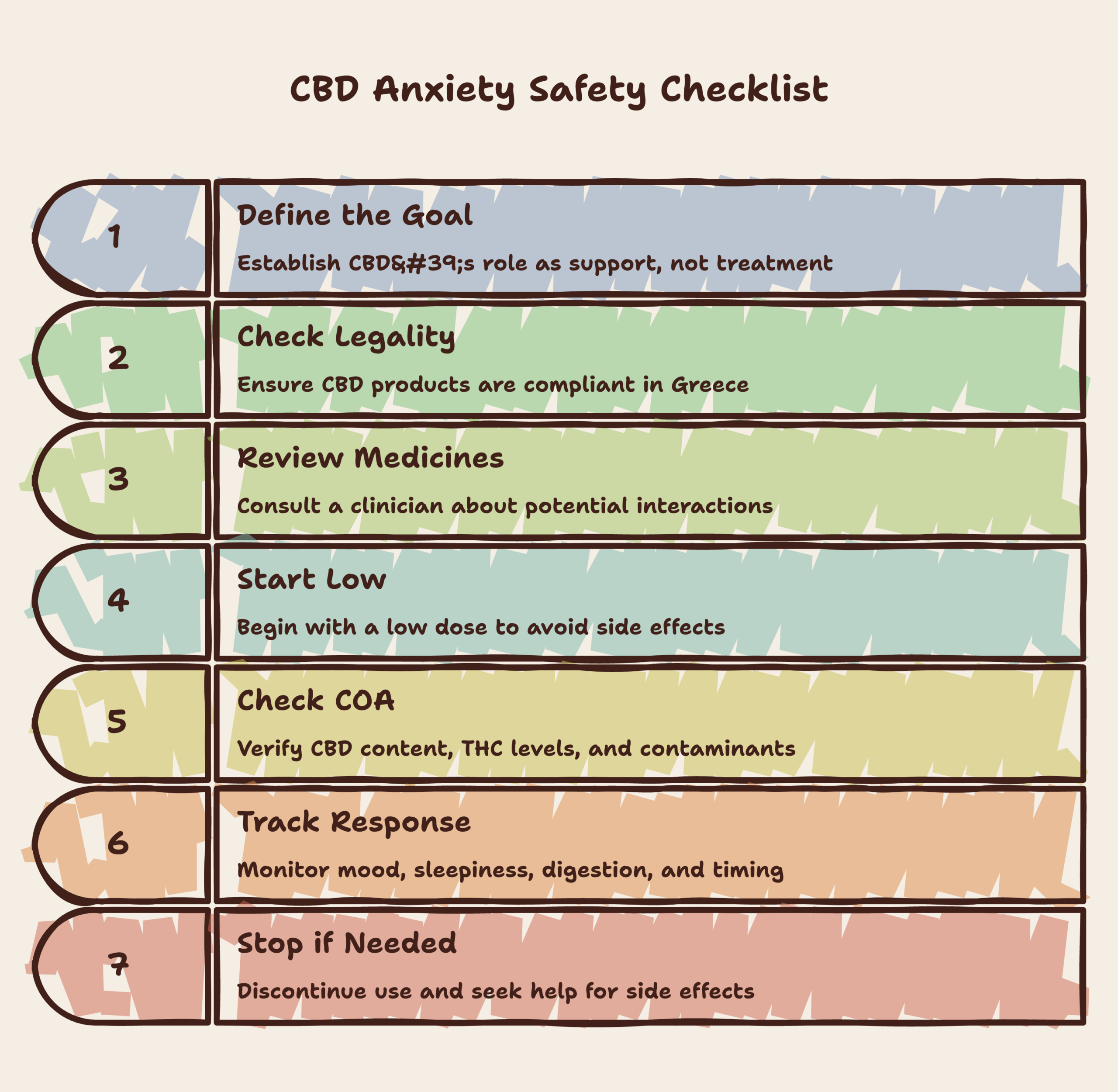
The practical point is simple: if you use prescription medicines, have liver disease, drink heavily, use high daily doses, or plan to take CBD every day, speak with a qualified healthcare professional. CBD can affect CYP450 liver enzymes involved in metabolizing many drugs, including some anti-seizure medicines, blood thinners, sedatives, antidepressants, and heart medicines. The risk is not the same for a tiny occasional topical and a high-dose daily oil, but it should not be ignored.
Common side effects reported across studies and clinical summaries include sleepiness, fatigue, digestive upset, appetite changes, and dry mouth. Harvard Health gives a balanced consumer summary of what is known and unknown about CBD, including the reality that many retail products are not regulated like prescription medicines. That is why responsible use starts with conservative dosing, not with copying doses from research papers.
💡 Pro Tip
If you are using CBD for anxiety support, track timing, dose, sleepiness, digestion, and mood for one week. Patterns are more useful than one dramatic first impression.
Legal notes for CBD in Greece
For Greek consumers, legality depends on product type, THC content, and how the product is sold. Industrial hemp and CBD products have generally been treated differently from recreational THC cannabis, while medical cannabis follows a separate prescription framework. In practical retail terms, consumers should look for compliant products with clear lab reports and avoid assuming that every hemp flower, vape, edible, or imported item sits in the same legal category.
As of June 2026, the cautious consumer baseline is to choose products that are marketed responsibly, contain legally compliant THC levels, and avoid medical claims unless they are authorized medicines. Our CBD in Greece legal buying guide goes deeper into the local shopping checklist, while our article on hemp flower rules in Greece explains why flower products deserve extra care.
The CDC reminds consumers that cannabis products can affect people differently depending on potency, route, frequency, and individual sensitivity. That applies locally too. Do not drive or operate equipment after trying a new cannabinoid product, and do not mix products casually with alcohol, sedatives, or unfamiliar supplements.
📝 Important Note
CBD laws and enforcement details can change. Before travelling with CBD or ordering from abroad, check current Greek and EU rules and keep product lab documentation available.
How to choose a CBD product for anxiety support
Start with the certificate of analysis, usually called a COA. It should show cannabinoid content, THC level, batch number, and ideally screening for pesticides, heavy metals, solvents, and microbes. Label accuracy matters because a JAMA study of online CBD products found that many products were mislabeled, and a later Johns Hopkins summary reported widespread mislabeling among over-the-counter topical CBD products. A calm-looking bottle is not proof of accurate dosing.
Next, choose a format that matches your routine. Oils are flexible because serving size can be adjusted drop by drop. Capsules and softgels are simpler but less adjustable. Gummies are convenient, yet they may have slower onset and added sugar. Vapes act faster but are not the best first choice for everyone, especially people with respiratory concerns. Topicals are mainly local-use products and should not be expected to manage whole-body anxiety.
For customers who want a non-intoxicating daytime option, broad-spectrum oils such as Anti Stress 20 Broad Spectrum CBD Oil or Anti Stress 25 Broad Spectrum CBD Oil may be easier to fit into a measured routine than products with more complex cannabinoid blends. If you are comparing aromas and plant profiles, our cannabis terpenes and flavor guide can help explain why two products can feel different even when the CBD number looks similar.
✓ Buyer checklist
- ✓ Batch-specific COA from an independent laboratory.
- ✓ Clear CBD amount per bottle and per serving.
- ✓ THC level shown and compliant for the product category.
- ✓ No promise to diagnose, treat, cure, or prevent anxiety disorders.
- ✓ Sensible serving guidance and responsible-use warnings.
A responsible routine for first-time users
If you decide to try CBD for anxiety support, treat the first week as observation, not optimization. Use one product at a time, avoid alcohol or new sedating supplements, and choose a calm evening or low-pressure day for the first serving. Write down the product, serving size, time taken, food status, perceived calm, sleepiness, digestion, and any unwanted effects. This gives you a real personal record instead of a vague memory.
Do not chase stronger effects quickly. Many CBD products are subtle, and taking more too soon can make side effects more likely without improving calm. If anxiety is frequent, severe, or interfering with work, sleep, relationships, or safety, CBD should not be your only plan. Evidence-based options such as cognitive behavioral therapy, medical evaluation, and appropriate prescribed treatments have stronger clinical support for anxiety disorders.
Finally, separate anxiety support from emergency care. Panic symptoms, chest pain, suicidal thoughts, severe insomnia, or major medication changes deserve professional help. CBD may belong in a broader wellness routine for some adults, but it is not a substitute for urgent medical or mental health support.
⚠️ Disclaimer
This article is for informational purposes only and does not constitute medical advice. Information about CBD, cannabis wellness, and legal considerations in Greece is current as of June 2026 but may change. Always consult qualified healthcare professionals for medical advice, especially if you have anxiety symptoms, use prescription medication, are pregnant or breastfeeding, have liver disease, or have a history of psychiatric conditions. For our full disclaimer, visit cannastoreams.gr/disclaimer.
Frequently Asked Questions
Is CBD proven to treat anxiety?
No. CBD has promising anxiety-related research, especially in public-speaking studies, but it is not approved as a treatment for anxiety disorders. Use it as a possible wellness adjunct, not as a replacement for clinical care.
Will CBD make me high?
CBD itself is non-intoxicating. However, full-spectrum or poorly labelled products may contain THC or other cannabinoids, so always check the COA and product category.
Can I take CBD with anxiety medication?
Ask your doctor or pharmacist first. CBD may interact with medicines metabolized by liver enzymes, including some psychiatric, seizure, blood-thinning, and heart medications.
Which CBD format is best for anxiety support?
Oils are usually the most flexible because serving size can be adjusted. Capsules and gummies are convenient, while vapes act faster but are not ideal for every user.
Is CBD legal in Greece?
CBD products may be sold when they comply with Greek and EU rules, especially around THC content and product type. Choose reputable sellers and keep lab reports available.
