
CBD for Anxiety: Evidence, Timing & Safety
CBD for anxiety explained with evidence, timing, safety, interactions, and responsible use tips for adults in 2026.

CBD for anxiety is one of the most searched wellness topics in cannabis, but the honest answer is more careful than most marketing makes it sound. Some adults report feeling calmer with CBD, and early studies suggest possible anxiety-related benefits in specific situations, yet CBD is not a proven treatment for anxiety disorders. The right way to think about it is as a wellness product that may support a broader routine, not as a replacement for therapy, prescribed medication, sleep, exercise, or clinical care.
For customers in Greece and across Europe, the practical question is not just whether CBD can feel relaxing. It is how to choose a product responsibly, how timing changes the experience, what safety checks matter, and when anxiety symptoms deserve professional support. This guide keeps the tone realistic: evidence first, no miracle claims, and clear safety boundaries for adults who want to make informed choices.
📺 Video Guide
CBD for Anxiety: What the Evidence Actually Says
The strongest responsible position is that CBD research is promising but still limited. The National Center for Complementary and Integrative Health notes only a small amount of human evidence for cannabinoids and anxiety, including a small public-speaking study in people with social anxiety disorder. That matters because it separates early signals from established medical treatment.
A frequently cited randomized study published on PubMed Central tested a single 600 mg dose of CBD before a simulated public speaking task in 24 people with social anxiety disorder and found reduced anxiety compared with placebo. Another dose-response study reported that 300 mg helped anxiety during a public speaking task in healthy volunteers, while 150 mg and 600 mg did not show the same effect, suggesting that CBD effects may not be linear.
That does not mean a standard shop product will reproduce those results. Many CBD oils, capsules, and gummies contain much lower serving sizes than the doses used in laboratory studies. A 2024 systematic review on CBD treatment and anxiety disorders found mixed results across randomized trials and called for larger, longer, better-designed studies. In plain English: there is enough evidence to discuss CBD thoughtfully, but not enough to sell it as a guaranteed anxiety solution.
✓ Evidence Snapshot
- ✓ Early CBD anxiety studies are promising but small.
- ✓ Anxiety disorder treatment still belongs with qualified clinicians.
- ✓ Product quality and dose consistency matter more than hype.
- ✓ CBD can interact with medicines and is not risk-free.
How CBD May Feel Different From THC
CBD and THC are both cannabinoids, but they are not the same experience. THC is the primary intoxicating compound in cannabis and can produce euphoria, altered perception, and in some people anxiety or panic. CBD is non-intoxicating in the usual sense and does not create the classic cannabis high; the World Health Organization has reported that pure CBD does not appear to have abuse potential. The National Institute on Drug Abuse explains that cannabis effects vary by compound, potency, route, frequency, and individual vulnerability.
This difference is important for adults shopping for calm-focused products. Someone looking for CBD for anxiety usually wants clarity, steadiness, and less tension, not intoxication. That is why many people prefer broad-spectrum CBD oils, CBD capsules, or low-THC hemp formulations when the goal is a quiet wellness routine. If a product contains meaningful THC or newer intoxicating hemp-derived cannabinoids, the anxiety profile can change completely.
The CDC warns that cannabis use, especially frequent or early use, is associated with mental health risks including anxiety, depression, psychosis, and dependence in vulnerable groups. For adult wellness shoppers, the takeaway is not fear. It is precision: know whether you are choosing CBD, THC, or a blended product, and match the product to your actual goal.
Timing: When CBD Fits a Calm Routine
Timing depends on format. Oils and tinctures are often chosen because they are flexible and easy to adjust gradually. Capsules and softgels are discreet and consistent, but the onset may feel slower because they pass through digestion. Edibles can also take longer and may feel more variable based on meals, metabolism, and product formulation. If you are comparing formats, our CBD edibles vs oil guide explains the onset and duration differences in more detail.
For a daytime routine, many adults prefer lower servings and a consistent schedule, then observe how they feel over several days rather than chasing an immediate effect. For evening stress, some people combine CBD with a screen-free wind-down, herbal tea, light stretching, or breathing exercises. If sleep is part of the concern, read our CBD for sleep evidence guide before assuming stronger is better.
The safest practical approach is “start low, go slow,” especially if you are new to CBD, sensitive to supplements, or already using other wellness products. Avoid stacking CBD with alcohol, sedatives, or sleep aids unless a clinician says it is appropriate. If anxiety is severe, recurrent, or connected to panic attacks, trauma, depression, or intrusive thoughts, CBD should not be your first-line plan. Professional support matters, and resources from SAMHSA underline why self-medicating persistent anxiety with cannabis products can be risky.
💡 Pro Tip
Track one variable at a time: product, serving size, time of day, sleep, caffeine, alcohol, and anxiety level. Without notes, it is easy to confuse CBD effects with lifestyle changes.
Safety Checks Before Trying CBD for Anxiety
CBD is often described as gentle, but gentle does not mean risk-free. The U.S. Food and Drug Administration warns that CBD can cause liver injury, interact with medications, increase drowsiness when combined with alcohol or sedatives, and create reproductive safety concerns. These warnings are especially relevant for people who use CBD daily, use high servings, or take prescription medication.
Medication interactions deserve special attention. CBD may affect liver enzymes involved in processing many medicines, including some antidepressants, anti-anxiety medicines, seizure medicines, blood thinners, and sleep medications. The Mayo Clinic also notes side effects such as dry mouth, diarrhea, reduced appetite, drowsiness, and fatigue. If you take medication, talk with a pharmacist or doctor before using CBD regularly.
Pregnancy, breastfeeding, liver disease, heavy alcohol use, and a history of severe mental health symptoms are strong reasons to avoid self-experimentation. If you are already using CBD and notice worsening anxiety, unusual sedation, irritability, stomach symptoms, or changes in mood, stop and reassess. Responsible cannabis wellness includes knowing when not to use a product.
📝 Important Note
Do not use CBD to delay care for panic attacks, severe anxiety, depression, suicidal thoughts, or symptoms that interfere with work, sleep, relationships, or daily functioning.
Product Quality: What to Check on the Label
Quality is where wellness intentions either become practical or fall apart. A CBD product should clearly state the amount of CBD per bottle and per serving, the cannabinoid profile, ingredients, batch information, and ideally third-party testing. Independent testing is important because research and regulator reviews, including consumer safety summaries from Harvard Health, have repeatedly warned that some CBD products contain inaccurate cannabinoid levels or unexpected THC.
For anxiety-focused use, many adults prefer products that are simple and predictable: CBD oil with a measured dropper, capsules with a clear serving size, or broad-spectrum formulas that avoid meaningful THC exposure. Our CBD dosage calculator guide can help you think through serving size without pretending there is one perfect number for everyone.
If you want a product direction, CBD oils are often the easiest place to start because they allow gradual adjustment. Puff n Pass carries options such as Anti Stress 20 Broad Spectrum CBD Oil, CBD Oil 10 10ml, and CBD Oil 20 Full Spectrum 10ml. Product availability can change, so always check the current label and cannabinoid profile before buying.
CBD, Lifestyle, and Anxiety: Build the Foundation First
CBD works best, if it helps at all, inside a broader anxiety-supportive routine. The basics are boring because they work: consistent sleep, morning light, reduced late caffeine, regular movement, protein-rich meals, hydration, and social support; Health Canada also emphasizes that frequent cannabis use can worsen mental health for some people. If your baseline is five hours of sleep, constant caffeine, no exercise, and high work stress, CBD is being asked to do too much.
For daytime stress, create a repeatable routine before adding supplements: decide when you stop coffee, when you take breaks, and how you decompress after work. Our CBD oil for daytime stress guide goes deeper into calm use without sedation. For body tension, topical products may be more appropriate than ingestible CBD; see our CBD topicals for muscle recovery guide for a separate route-of-use discussion.
It is also worth distinguishing anxiety from normal stress. Stress usually has a clear trigger and improves when the pressure passes. Anxiety can persist without a clear trigger, become disproportionate, or cause avoidance. If that pattern sounds familiar, therapy, medical assessment, and evidence-based treatment options should be part of the conversation. CBD can be a small optional tool, not the whole toolbox.
A Responsible First-Week Plan
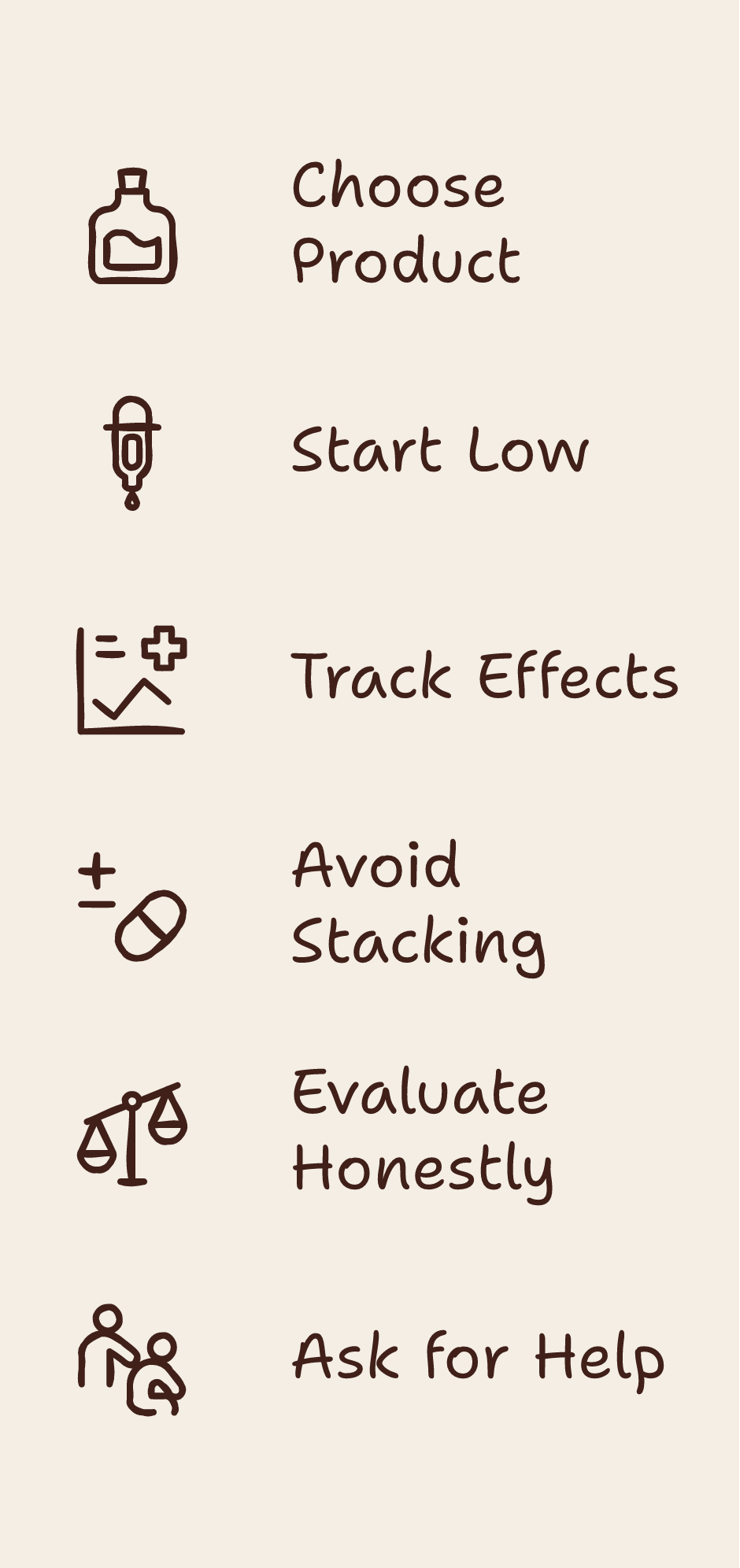
A cautious first week is about observation, not intensity. Day one should be a low-pressure day when you do not need to drive long distances, make major decisions, drink alcohol, or combine CBD with sedating products. Choose one CBD product, read the label, use a modest serving, and record how you feel over the next several hours.
Days two to four are for consistency. Use the same product, same timing, and similar serving size if the first day was well tolerated. Track anxiety level, sleep quality, digestion, appetite, focus, and any drowsiness. If you change dose, caffeine, alcohol, exercise, and bedtime all at once, you will not know what caused the change. The goal is clean feedback.
Days five to seven are for evaluation. Did you notice a meaningful benefit? Was it worth the cost? Were there side effects? Did CBD help you maintain healthier habits, or did it become a way to avoid dealing with the source of anxiety? This is where honest self-assessment beats marketing. If the benefit is unclear, more is not automatically better.
⚠️ Disclaimer
This article is for informational purposes only and does not constitute medical advice. The information provided about medical cannabis and CBD wellness in Greece is current as of June 2026 but may change. Always consult qualified healthcare professionals for medical advice and treatment options. For our full disclaimer, visit cannastoreams.gr/disclaimer.
Frequently Asked Questions
Does CBD cure anxiety?
No. CBD is not proven to cure anxiety disorders. Early studies are interesting, but established anxiety care includes therapy, medical assessment, lifestyle support, and sometimes prescribed medication.
Can CBD make anxiety worse?
Some people feel no benefit or feel more tired, foggy, irritable, or uncomfortable. THC-containing products can trigger anxiety in sensitive users, so check labels carefully.
What is the best time to take CBD for anxiety?
It depends on your goal and format. Daytime users often prefer low, consistent servings. Evening users may pair CBD with a wind-down routine. Avoid combining it with alcohol or sedatives unless a clinician approves.
Should I talk to a doctor before using CBD?
Yes if you take medication, have liver disease, are pregnant or breastfeeding, drink heavily, or have significant mental health symptoms. CBD can interact with medicines and is not risk-free.
Is broad-spectrum CBD better for anxiety?
Broad-spectrum CBD may appeal to adults who want multiple hemp compounds while avoiding meaningful THC. The best choice depends on label clarity, testing, tolerance, and personal goals.
