
CBD Oil for Daytime Stress: Safety Guide
CBD oil stress guide for daytime calm, realistic dosing, safety checks, product quality, and when to speak with a clinician.

CBD oil stress routines are becoming popular with adults who want daytime calm without feeling foggy, but the smartest approach is still evidence-led, cautious, and personal. CBD is not a magic switch for a difficult week. It is a cannabis-derived wellness ingredient that may support relaxation for some people, especially when the product is accurately labeled, the serving size is sensible, and the user understands possible medication interactions.
This guide explains what current research says, how to think about timing and serving size, what safety checks matter before buying, and how to choose products responsibly from a wellness-focused shop like Puff ‘n Pass. It is written for adults who want a practical, balanced view rather than hype.
CBD Oil Stress Support: What the Evidence Says
Cannabidiol, better known as CBD, is one of the main non-intoxicating cannabinoids found in cannabis and hemp. Unlike THC, CBD does not usually create a classic euphoric high. The U.S. Food and Drug Administration notes that CBD is widely used in consumer products, while also warning that quality, labeling, and safety vary across the market.
The strongest medical evidence for CBD is not general stress relief. It is prescription cannabidiol for specific seizure disorders, which is why the FDA-approved medicine Epidiolex matters in any serious discussion. For anxiety and stress, the picture is more promising than proven. A review hosted by PubMed Central found encouraging signals in anxiety-related studies, but also highlighted that study designs, doses, and populations differ a lot.
That means a responsible CBD oil stress routine should be framed as self-care support, not treatment for an anxiety disorder. If stress is persistent, intense, or connected with panic, depression, trauma, or sleep loss, professional support should come first. CBD may sit beside better sleep habits, exercise, therapy, nutrition, and reduced alcohol intake, but it should not replace them.
✓ Key Benefits Adults Look For
- ✓ A calmer transition between work, family, and evening routines
- ✓ Non-intoxicating support when THC is not desired
- ✓ Flexible serving sizes with oils and tinctures
- ✓ Easy pairing with sleep hygiene, breathing, and low-stimulation routines
How CBD May Influence Stress Response
CBD interacts with several biological systems rather than one simple on-off receptor. Researchers often discuss the endocannabinoid system, serotonin signaling, inflammation pathways, and sleep regulation. The National Academies review on cannabis and cannabinoids shows why careful wording matters: cannabinoid science is real, but evidence strength changes by condition and product type.
For daytime stress, the practical question is not just whether CBD can feel calming. It is whether a specific oil, at a specific amount, helps you feel steadier while remaining alert. Some people report subtle body relaxation. Others notice very little. A few feel sleepy, lightheaded, or digestive discomfort. The Mayo Clinic lists common side effects such as dry mouth, diarrhea, reduced appetite, drowsiness, and fatigue.
This is why journaling helps. Track serving size, time of day, food intake, stress level, sleep quality, and any unwanted effects. After a week, you have better data than memory can provide. If the pattern is not positive, stop or adjust. Wellness should make life easier, not add another complicated ritual.
Choosing a Daytime CBD Oil Without the Hype
A good daytime CBD oil should make its strength clear. Look for milligrams of CBD per bottle and, ideally, per serving. A 10 ml bottle with 1,000 mg CBD is very different from a 10 ml bottle with 300 mg CBD. If the label hides the numbers behind vague words like “strong” or “premium,” treat that as a red flag.
Quality documentation matters too. A certificate of analysis, often called a COA, should confirm cannabinoid levels and screen for contaminants where available. If you are new to lab documents, our guide on how to read cannabis lab reports explains the basics. Independent testing is especially important because the FDA has published CBD product test results and warning letters showing that some products do not match their marketing claims.
For adults looking specifically at CBD oil stress support, broad-spectrum and full-spectrum oils are common choices. Broad-spectrum products include CBD with other cannabis compounds but are designed to avoid THC. Full-spectrum oils may include trace THC depending on legal limits and product origin. Isolate products contain CBD only. None is automatically “best.” The right choice depends on sensitivity, workplace testing concerns, personal preference, and legal context.
💡 Pro Tip
If you want daytime calm, avoid testing a new CBD oil for the first time before driving, working, or handling family responsibilities. Try it on a low-pressure day first.
A Practical Daytime Serving Routine
There is no universal CBD oil serving size for stress. Clinical studies often use amounts that are much higher than typical retail servings, while everyday wellness users usually start lower. Harvard Health explains that researchers still cannot pinpoint reliable CBD doses for many common uses.
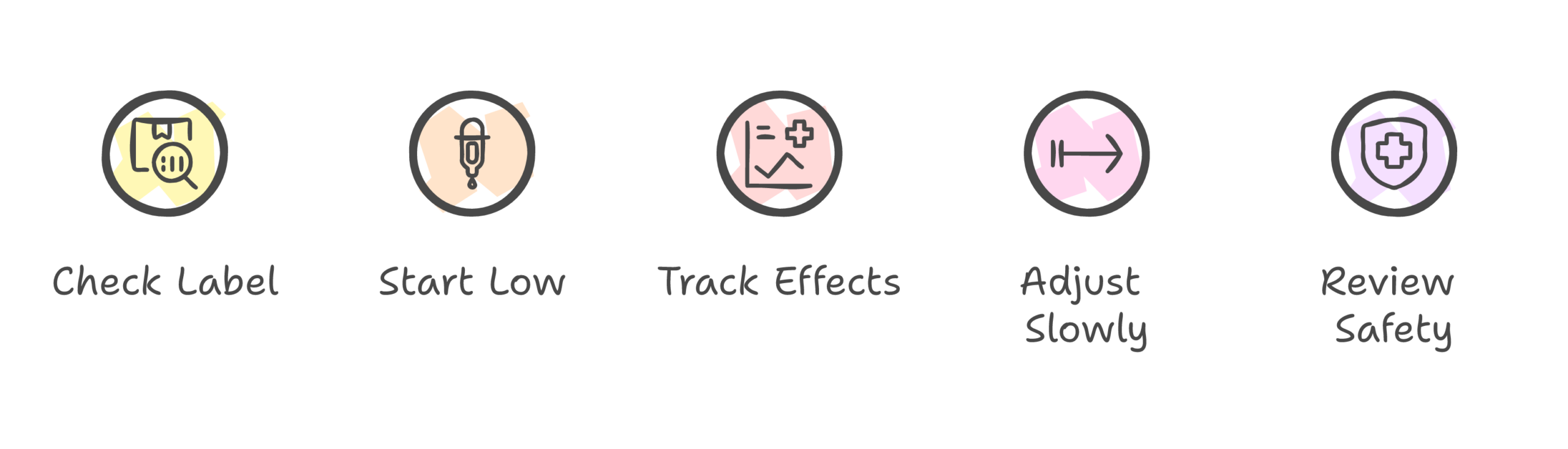
A cautious routine starts with the product label. Confirm how much CBD is in one dropper or serving. Begin with the lowest practical amount, stay there for several days, and monitor effects. If needed, increase gradually rather than jumping quickly. This is especially important for people who are smaller-bodied, medication-sensitive, older, or prone to daytime sleepiness.
Timing also matters. Many adults prefer CBD oil after breakfast or early afternoon so they can observe its effect without interfering with sleep. Others reserve it for the evening because they find it relaxing. If sleep is your main concern, our CBD for sleep guide goes deeper into evening timing, while our CBD dosage calculator can help you think through product strength more clearly.
📝 Important Note
More is not automatically better. If a CBD serving makes you sleepy, irritable, nauseous, or mentally dull, reduce the amount or stop using it.
Safety Checks Before Using CBD Oil
The biggest safety issue with CBD is not intoxication. It is interaction risk. CBD can affect liver enzymes involved in how the body processes medicines. The Health Canada advisory review discusses drug interaction concerns, and the Australian Therapeutic Goods Administration has also reviewed low-dose CBD safety.
Speak with a clinician before using CBD if you take blood thinners, anti-seizure medicines, sedatives, antidepressants, immunosuppressants, heart medication, or multiple prescriptions. Also avoid CBD during pregnancy or breastfeeding unless a qualified professional specifically advises otherwise. The CDC warns against cannabis use during pregnancy, and that caution should be taken seriously.
If you are considering THC products instead of CBD, be more cautious. THC can impair coordination, attention, and judgment. The National Institute on Drug Abuse provides a useful overview of cannabis effects and risks. For vaping products, read our cannabis vape safety guide before choosing any device or cartridge.
⚠️ Disclaimer
This article is for informational purposes only and does not constitute medical advice. Information about cannabis wellness and CBD safety is current as of May 2026 but may change. Always consult qualified healthcare professionals for medical advice and treatment decisions.
Product Pairing Ideas for Adults
For a daytime CBD oil stress routine, many adults prefer oils because they are flexible. At Puff ‘n Pass, products such as Anti Stress 20 Broad Spectrum CBD Oil, Anti Stress 25 Broad Spectrum CBD Oil, and CBD Oil 20 Full Spectrum 10ml are examples of the type of format shoppers compare when they want measurable serving control.
If you dislike the taste of oil, capsules or softgels may feel simpler, though they can be less flexible for fine-tuning. Our CBD capsules vs softgels comparison explains why format changes the experience. Tinctures are another useful format when you want careful serving control, and our cannabis tinctures guide covers that route in more detail.
The best product is the one you can understand. Read the label, check the strength, ask questions, and avoid stacking multiple cannabinoids at once if you are new. A clean, boring routine beats a flashy one that leaves you unsure what caused the effect.
Simple Buying Checklist
Before buying CBD oil, run through five checks. First, confirm the total CBD content and serving size. Second, look for lab testing or clear sourcing information. Third, decide whether you want isolate, broad-spectrum, or full-spectrum. Fourth, review your medications and health conditions. Fifth, choose a time to test the product when you do not need peak alertness.
Also check the legal and travel context. Rules vary between countries, and product legality can depend on THC content, labeling, and local enforcement. The European Union Drugs Agency cannabis policy overview is a useful starting point for understanding how fragmented cannabis rules can be across Europe.
Finally, keep expectations grounded. CBD oil may help some adults build a calmer routine, but stress usually has more than one cause. Better boundaries, movement, hydration, sleep, sunlight, therapy, and less alcohol may do more than any supplement. CBD works best when it is one part of a broader wellness system.
Frequently Asked Questions
Can CBD oil help with stress during the day?
It may help some adults feel calmer, but results vary. Evidence for anxiety is promising but not definitive, and CBD should not replace medical care for serious or persistent symptoms.
Will CBD oil make me high?
CBD itself is non-intoxicating. Full-spectrum products may contain trace THC depending on formulation and legal limits, so check the label if THC sensitivity or workplace testing is a concern.
What is the best CBD oil serving size for stress?
There is no universal serving size. Start with the product label, use the lowest practical amount, track how you feel, and speak with a clinician if you take medication or have health concerns.
Can I take CBD oil with prescription medicine?
Do not assume it is safe. CBD can interact with medicines through liver enzyme pathways. Ask a qualified healthcare professional before combining CBD with prescriptions.
Is CBD better for stress than THC?
For daytime use, many adults prefer CBD because it is non-intoxicating. THC can impair attention and coordination, so it requires more caution and should never be used before driving.
