CBD Workout Recovery: Soreness, Sleep & Safety
CBD workout recovery guide: evidence on soreness, sleep, safety, anti-doping rules, product quality, and responsible use for active adults.

CBD workout recovery sits in a useful but often overhyped corner of wellness. Active adults want less soreness, better sleep, calmer evenings, and fewer shortcuts that backfire. Cannabidiol may support some of those goals, especially through relaxation, perceived discomfort, and sleep routines, but it is not a magic repair button for muscles. The smart approach is evidence-led, low-risk, and built around the basics: sleep, protein, hydration, mobility, and training load.
This guide explains what CBD can reasonably do after training, what the research still cannot prove, how to choose safer products, and when to pause or speak with a clinician. It is written for adults who train recreationally, people returning to exercise after a busy week, and athletes who need to think carefully about product quality and anti-doping rules.
📺 Video Guide
CBD workout recovery: what the evidence really says
CBD is one of the best-known non-intoxicating cannabinoids from cannabis and hemp. Unlike THC, CBD does not produce the classic cannabis high, which is why it is often used in oils, capsules, topicals, and edibles aimed at stress, sleep, and recovery. A sports-focused review in Sports Medicine Open concluded that CBD has theoretical recovery benefits through inflammation, pain, sleep, and anxiety pathways, but also stressed that athlete-specific human evidence remains limited.
A later review in Frontiers in Pharmacology described CBD as promising for exercise-induced muscle damage and recovery, while calling for better trials on dose, timing, long-term safety, and real performance outcomes. That is the key balance: promising does not mean proven, and “natural” does not mean risk-free.
The most responsible way to view CBD is as a possible recovery support, not the foundation of recovery. If your sleep is four hours, your water intake is poor, and your training plan is chaos, CBD will not rescue the system. If the foundation is already solid, a carefully chosen CBD product may help some people wind down, manage post-workout discomfort, or keep an evening routine consistent.
✓ Key Benefits
- ✓ May support relaxation after intense training
- ✓ May help some adults with perceived soreness
- ✓ May fit evening sleep hygiene routines
- ✓ Non-intoxicating when genuinely THC-free
Soreness, inflammation, and pain: where CBD might fit
Delayed-onset muscle soreness is part of training adaptation, especially after new exercises, higher volume, downhill running, eccentric lifting, or returning after time off. The aim is not to erase every signal from the body. The aim is to reduce unnecessary discomfort while still respecting recovery. CBD may influence inflammatory and pain-signaling pathways, but human research is still young and product formats vary widely.
A randomized pilot study published in Nutrients tested a recovery beverage containing CBD with other ingredients in exercise-trained adults and reported good short-term tolerability. Because the formula also included CBG, beta-caryophyllene, amino acids, and magnesium, it does not prove CBD alone caused the results. It does, however, show why recovery research is complicated: products rarely contain one clean variable.
For practical use, CBD topicals may appeal to people who want targeted comfort without taking an oral product. Oils and capsules are more systemic, which can be helpful for relaxation but also increases the relevance of dose, timing, interactions, and side effects. If soreness is sharp, one-sided, worsening, or linked to swelling and loss of function, treat it as a possible injury rather than something to cover with cannabinoids.
Sleep is the recovery lever most people underestimate
Muscle repair, hormone regulation, coordination, appetite, and pain tolerance all suffer when sleep is poor. This is where CBD may be most relevant for some adults, not because it is a guaranteed sleeping pill, but because it can become part of a wind-down ritual that reduces evening friction. The research is mixed. A 2024 randomized trial indexed on PubMed found that 150 mg nightly CBD was similar to placebo for most insomnia outcomes, although objective sleep efficiency and well-being improved modestly.
The full open-access paper in Journal of Clinical Sleep Medicine is useful because it keeps expectations realistic. CBD may help some people feel calmer or more settled, but it should not replace proven sleep habits: consistent wake time, lower late caffeine, a dark room, less alcohol, and no brutal workouts right before bed unless your body handles them well.
For CBD workout recovery, the sleep angle is simple. If CBD helps you go to bed on time without grogginess, it may indirectly support recovery. If it makes you sleepy before training, leaves you foggy the next morning, or encourages you to ignore pain signals, it is working against the goal.
💡 Pro Tip
Try new CBD products on a rest evening first. Do not test a new dose before a hard session, a long drive, or an important work morning.
Safety first: medicines, liver health, and side effects
CBD is widely marketed as gentle, but it can still matter biologically. The U.S. Food and Drug Administration has repeatedly warned that CBD can cause liver-related safety concerns and interact with medications. The NIH LiverTox database also notes that high daily doses of CBD have been associated with liver enzyme elevations, especially in prescription settings and with certain co-medications.
A 2025 randomized trial in healthy adults, published in JAMA Internal Medicine, reported liver enzyme elevations in a minority of participants using 5 mg/kg/day CBD for 28 days. That dose is higher than many casual users take, but the message matters: sustained oral CBD is not automatically trivial, particularly for people with liver conditions, heavy alcohol intake, or medication routines.
CBD can also affect drug metabolism. Harvard Health explains that CBD may compete for liver enzymes involved in breaking down many prescription and over-the-counter medicines. Blood thinners, seizure medicines, sedatives, antidepressants, some heart medicines, and certain statins deserve extra caution. If you take regular medication, especially anything with a narrow safety window, ask a qualified healthcare professional before adding oral CBD.
📝 Important Note
Stop and reassess if CBD causes unusual fatigue, stomach upset, dizziness, mood changes, jaundice, dark urine, or right upper abdominal pain. These are not “detox” signs.
Athletes and testing: CBD is allowed, but products can still be risky
For tested athletes, the CBD conversation is stricter. The World Anti-Doping Agency permits cannabidiol itself, but THC and other cannabinoids remain prohibited in competition. WADA also warns that CBD products may contain THC or other cannabinoids not shown clearly on the label. That means “CBD allowed” does not equal “any CBD product is safe.”
The U.S. Anti-Doping Agency gives similar guidance: CBD is the exception, not the whole category. Full-spectrum products, poorly tested oils, imported edibles, and trendy cannabinoid blends can be a problem for athletes subject to testing. If your career, scholarship, or federation status depends on clean tests, only consider products with rigorous batch-specific certificates of analysis, and understand that risk cannot be reduced to zero.
Recreational exercisers should care about this too, just for different reasons. A mislabeled product can feel stronger than expected, cause sedation, or include cannabinoids you did not intend to use. Quality control is not a luxury in this category; it is the difference between a calm recovery routine and an unpleasant surprise.
How to choose a CBD product for recovery
Start with the certificate of analysis. A credible CBD product should have recent third-party lab testing that matches the batch number on the product. The report should list CBD amount, THC amount, other cannabinoids, and ideally screening for heavy metals, pesticides, residual solvents, and microbial contaminants. If the brand cannot show this clearly, skip it.
Second, choose the format based on the goal. Topicals are sensible for localized post-training comfort. Oils allow flexible dosing but require more discipline. Capsules are convenient but slower to adjust. Gummies are easy to overuse because they feel casual. Vapes are not a recovery-first choice; the CDC highlights health concerns around cannabis use, and inhaled products introduce respiratory considerations that do not fit a wellness recovery routine.
Third, decide whether you want isolate, broad-spectrum, or full-spectrum. Isolate should contain CBD only, broad-spectrum may contain other non-THC cannabinoids, and full-spectrum may include trace THC depending on jurisdiction and product. For tested athletes or anyone avoiding THC, isolate or carefully verified broad-spectrum is the cleaner route. For adults browsing related education, our guide to CBG vs CBD explains how minor cannabinoids can change the discussion.
A simple timing framework for active adults
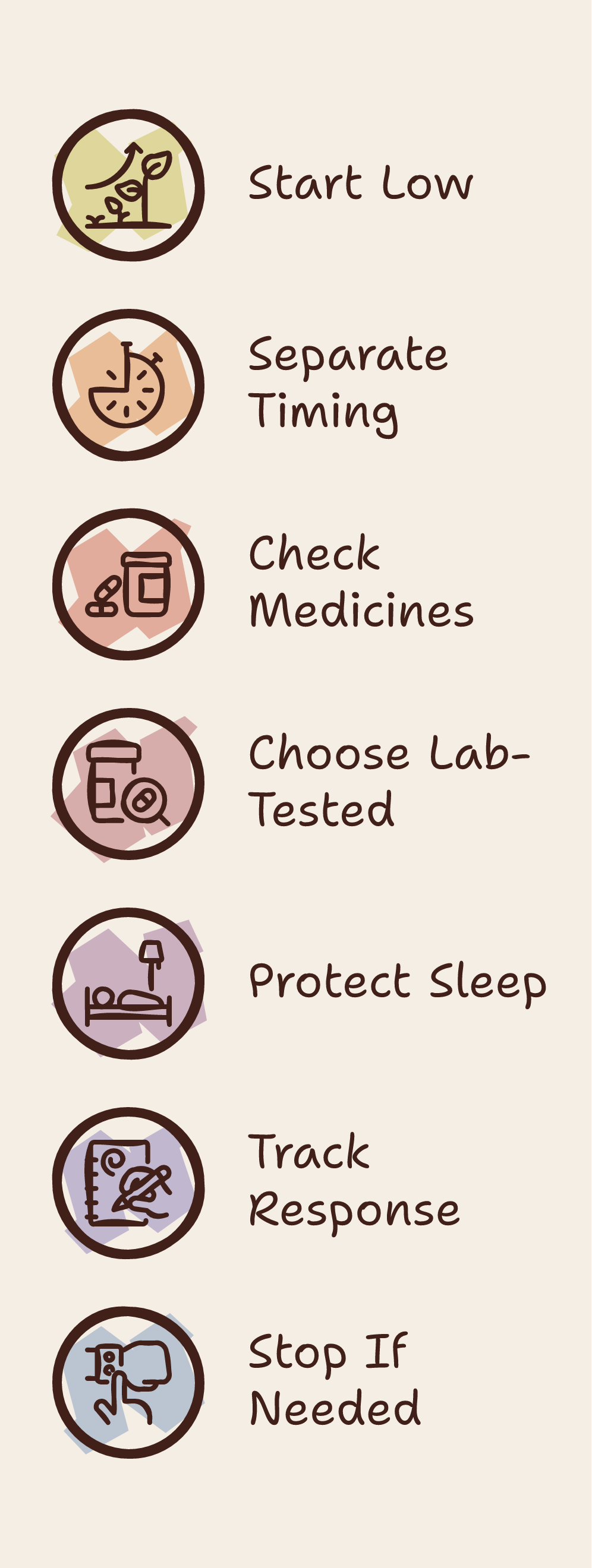
There is no universal CBD dose for recovery. Body size, product type, sensitivity, food intake, training load, medications, and sleep schedule all matter. For most adults, the safer principle is to start low, go slow, and change one variable at a time. Do not start with a large serving because a label, influencer, or friend said it worked for them.
For evening recovery, many people experiment after dinner or 60 to 90 minutes before bed. That gives enough time to notice whether the product causes calm, sleepiness, stomach discomfort, or nothing at all. For daytime soreness, a topical can be easier to test because it is less likely to affect alertness. If you are comparing CBD with other formats, our CBD edibles vs oil guide explains onset and duration differences in more detail.
Keep a basic recovery log for two weeks: training type, soreness from 1 to 10, sleep time, sleep quality, CBD amount, product format, and side effects. This removes guesswork. If the log shows no clear benefit, stop spending money on it. If it helps sleep but not soreness, use it for sleep rather than pretending it repairs muscle tissue directly.
What CBD should not replace
CBD should not replace progressive programming. If every session is maximal, soreness is not the enemy; the plan is. Use deloads, easier days, warm-ups, and gradual increases in volume. CBD should not replace protein either. Muscle repair needs amino acids, calories, and consistency. It should not replace hydration, especially in Athens summer heat, when sweat loss can make fatigue and cramps worse.
It also should not replace medical care. Persistent joint pain, numbness, chest symptoms, sudden swelling, or pain that changes your movement deserves proper assessment. Pain is information. The goal is not to silence it blindly. For a broader wellness view, our article on cannabis for athletes covers performance, recovery, and benefit claims with a wider lens.
Finally, CBD should not become a nightly excuse for poor sleep hygiene. Alcohol, late screens, stress, and irregular schedules can overpower any supplement. If sleep is the main recovery bottleneck, read our focused CBD for sleep guide and build the boring basics first. Boring works. That is annoying, but useful.
Quality signals that make a product more trustworthy
A trustworthy CBD recovery product gives you boring details clearly. It names the CBD amount per serving, not only per bottle. It shows batch testing. It states whether it is isolate, broad-spectrum, or full-spectrum. It has a realistic serving suggestion. It avoids medical promises like “heals injuries” or “cures inflammation.” It does not hide behind vague hemp language when the cannabinoid content is what you need to know.
Look for brands that explain extraction method, carrier oil, ingredients, and storage. The World Health Organization has described pure CBD as generally well tolerated, but consumer products are not always pure CBD. That distinction is everything. Product quality determines whether the research discussion even applies to the bottle in your hand.
If you already use oils for daytime stress, compare goals rather than stacking products. Our CBD oil for daytime stress article can help separate daytime calm from evening recovery. For muscle-specific routines, our CBD topicals for muscle recovery guide is the more targeted next read.
⚠️ Disclaimer
This article is for informational purposes only and does not constitute medical advice. Information about CBD, cannabis wellness, and product safety is current as of July 2026 but may change. Always consult qualified healthcare professionals for medical advice, especially if you take medication, have liver disease, are pregnant, or compete under anti-doping rules. For our full disclaimer, visit cannastoreams.gr/disclaimer.
Frequently Asked Questions
Does CBD workout recovery actually work?
It may help some adults with relaxation, perceived soreness, and sleep routines, but evidence is not strong enough to call it a guaranteed recovery treatment. Use it as a support, not the foundation.
Should I take CBD before or after training?
Most beginners should test CBD after training or on a rest evening first. Pre-workout use can cause drowsiness in some people, especially at higher oral doses.
Is CBD allowed for athletes?
CBD itself is permitted by WADA, but THC and other cannabinoids are prohibited in competition. Product contamination or mislabeling can still create testing risk.
Can CBD interact with medication?
Yes. CBD can affect liver enzymes involved in drug metabolism. Ask a healthcare professional first if you use blood thinners, seizure medicines, sedatives, antidepressants, heart medicines, or regular prescriptions.
What is the safest product type to start with?
For localized soreness, a topical is often the simplest starting point. For sleep routines, a low-dose oil may be easier to adjust than gummies or capsules. Always check batch-specific lab testing.
