
Synthetic Cannabinoids in Greece: Safety Guide
Synthetic cannabinoids Greece guide: HHC, THCP, legal risks, safety red flags, and safer CBD choices for adults in 2026.

Synthetic cannabinoids Greece is no longer a fringe legal question. For adult consumers, shop owners, tourists and wellness buyers, the practical issue is simple: products marketed as HHC, THCP, HHCP, THC-O or “legal high” hemp can move from novelty to legal and health risk very quickly. Greece already classified HHC as a narcotic in 2024, and the 2026 policy direction is clearly aimed at closing the loopholes that allowed intoxicating hemp products to appear in ordinary retail channels.
This guide explains what changed, why synthetic and semi-synthetic cannabinoids are treated differently from non-intoxicating CBD, and how to make safer decisions if you buy cannabis wellness products in Greece. It is written for adults who want clarity, not hype. If you only remember one thing, make it this: “hemp-derived” does not automatically mean legal, clean, mild or safe.
Synthetic Cannabinoids Greece: What the Term Means
Synthetic cannabinoids are lab-made compounds designed to act on the same cannabinoid receptors as THC. Semi-synthetic cannabinoids are usually created by chemically modifying hemp-derived CBD or THC-like molecules. HHC, THCP, HHCP and THC-O are commonly discussed in this group, even though each compound has a different structure, potency and legal treatment.
The public health concern is not only the molecule. It is the whole product chain: unclear synthesis, leftover solvents, inaccurate labels, inconsistent doses, and flower or vape products sprayed with compounds the buyer cannot see. The European Union Drugs Agency describes synthetic cannabinoids as a major new psychoactive substance category because they can be far more potent and less predictable than plant cannabis.
That distinction matters for Greece. Traditional medical cannabis, low-THC industrial hemp, CBD oil and synthetic cannabinoid vapes do not sit in the same risk bucket. A compliant CBD oil with batch testing is one thing. A disposable vape promoted as “legal THCP” is another. If you need a refresher on safer non-intoxicating formats, our CBD in Greece legal buying guide is the better starting point.
✓ Quick Consumer Filter
- ✓ CBD, CBG and topicals are usually the lower-risk wellness category when properly tested.
- ✓ HHC is no longer a Greek gray-area product after the 2024 narcotics classification.
- ✓ THCP and similar analogues should be treated as high-risk until proven otherwise.
- ✓ Sprayed flower and mystery vapes deserve extra caution.
Why Greece Targeted HHC First
HHC became visible in Greece because it appeared in gummies, vapes and hemp flower products that looked casual and accessible. In January 2024, Greek authorities moved against HHC products, with local reporting noting that HHC and derivatives were added to the narcotics framework and products were ordered off shelves. A useful public summary is available from Keep Talking Greece, while our own background piece on the market cycle is here: HHC in Greece: boom to ban lessons.
The policy logic was predictable. Once psychoactive hemp-derived products show up in kiosks, vending machines or ordinary convenience retail, regulators worry about age control, product testing, intoxication, impaired driving and accidental exposure. This is exactly the pattern that pushed many European countries to restrict HHC and related compounds. Industry trackers such as Business of Cannabis have also reported Greece’s broader 2026 attempt to restrict retail hemp flower because of synthetic-enriched products.
For consumers, the lesson is not “every cannabinoid is the same.” It is that regulators are increasingly sorting products by intoxication risk, supply-chain control and youth exposure. That is why industrial hemp THC limits can move toward 0.3% while psychoactive analogues face tighter treatment.
THCP, HHCP and THC-O: Why Potency Changes the Risk
THCP is often marketed with dramatic potency claims. Some of those claims are oversimplified, but the core concern is real: high receptor affinity can make dose control harder, especially in edibles and vape cartridges. A review available through PubMed Central discusses semi-synthetic cannabinoids and the emerging pharmacology that has regulators paying attention.
THC-O creates another kind of concern. Acetylated or chemically modified cannabinoids can behave differently when heated, and vape products may introduce additional thermal byproducts. The Cayman Chemical pharmacology review is a useful technical overview of HHC and related semi-synthetic compounds, while the UK ACMD report on semi-synthetic cannabinoids shows how regulators assess this category beyond simple THC percentages.
This is also why a “small” gummy or a sleek disposable can be more risky than it looks. The label may not reflect the real dose, the compound may be stronger than expected, and the effect may last longer than a buyer planned for. If you are comparing legal wellness products, a measured CBD oil with transparent strength is easier to evaluate than a psychoactive analogue blend.
💡 Pro Tip
If a product’s main selling point is “stronger than THC” or “legal high,” treat that as a risk signal, not a benefit. Look for batch-specific lab reports, clear ingredients and realistic dosing guidance.
Health Risks: What Public Agencies Warn About
Public agencies are blunt about synthetic cannabinoid risk. The CDC synthetic cannabinoids guidance states that these products can cause severe illness and death, including agitation, hallucinations, seizures, heart attack, high blood pressure, kidney failure and breathing problems. The issue is not moral panic. It is unpredictability.
The FDA’s delta-8 THC consumer update makes a related point for hemp-derived intoxicants: many products have not been evaluated or approved for safe use, may be marketed in ways that put public health at risk, and can expose children or pets accidentally. The FDA cannabis-derived products page also distinguishes approved medicines from the much larger world of unapproved consumer products.
For older synthetic cannabinoids such as K2 and Spice, a clinical review in Current Addiction Reports documents poison-center calls, severe adverse effects and deaths. Newer semi-synthetic cannabinoids are not identical to K2, but the consumer-protection problem rhymes: unknown strength, unknown contaminants, and aggressive marketing ahead of safety data.
Legal Buying After the Crackdown
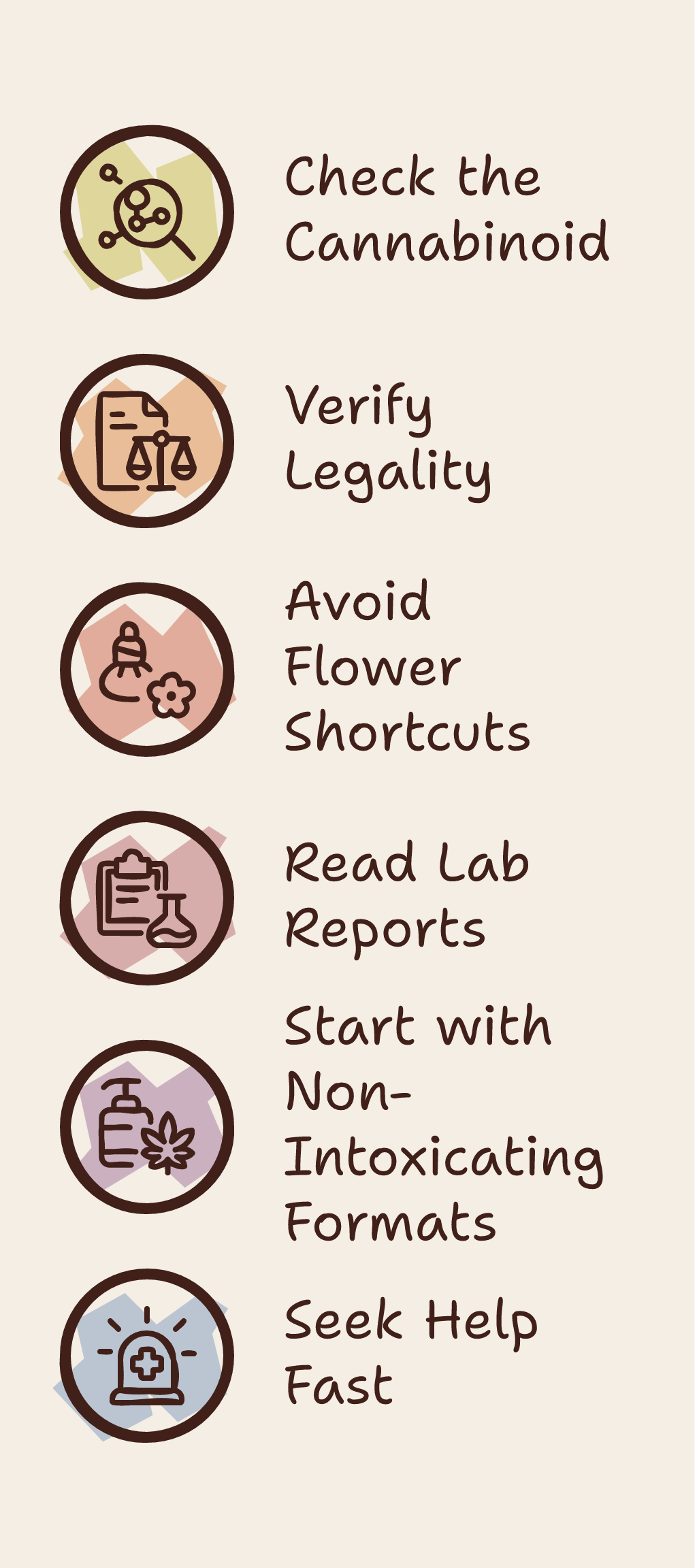
In practical terms, synthetic cannabinoids Greece decisions should start with legality. HHC is not a casual retail cannabinoid in Greece after the 2024 ban. THCP and similar analogues should be treated as legally dangerous if sold for intoxication, especially when sprayed on flower or included in vapes and edibles without transparent authorization. If the 2026 retail flower restrictions are fully implemented and upheld, even low-THC flower sold directly to consumers becomes a much tighter category than CBD oils, cosmetics and industrial hemp inputs.
The safer consumer move is boring but effective: choose non-intoxicating CBD products with clear labeling, avoid exaggerated psychoactive claims, and keep receipts and packaging. If you want daytime calming support, compare measured oils such as Anti Stress 20 broad spectrum CBD oil or Phyto Relax 10 broad spectrum CBD oil rather than chasing a “new legal THC” trend.
Retailers should be even stricter. Supplier claims are not enough. Ask for certificates of analysis, ingredient lists, manufacturing details, import documentation and legal opinions when a product includes a psychoactive analogue. Our guide to reading cannabis lab results explains the basics of COA review.
📝 Important Note
Do not assume a product is legal because it is sold online, shipped from another EU country, or labelled “not for human consumption.” Greek enforcement and product classification can still apply.
How to Spot a Risky Product
Risky products usually reveal themselves before you even open the package. Watch for vague cannabinoid blends, cartoon packaging, no batch number, no manufacturer address, no lab report, huge potency claims, unclear serving size, and language that promises intoxication while pretending to be wellness. If the product looks designed to dodge rules rather than help a buyer understand it, walk away.
Be especially careful with sprayed flower. Low-THC hemp flower can be used as a carrier for semi-synthetic cannabinoids, which means the appearance of the flower tells you almost nothing about dose. Vapes deserve similar caution because heating chemistry, cutting agents and cartridge hardware can all add risk. If you prefer inhaled formats, read our CBD vape safety guide before buying anything unfamiliar.
A cleaner label does not guarantee safety, but it gives you something to verify. Look for cannabinoid content, contaminant testing, heavy metals, pesticides, residual solvents and microbial screening. For oils and topicals, check the carrier ingredients too. For accessories such as the Herb Vaporizer, remember that the device is only part of the safety equation. The substance inside matters more.
What to Do If Someone Feels Unwell
If someone develops chest pain, severe anxiety, hallucinations, confusion, fainting, seizure activity, repeated vomiting, trouble breathing or loss of consciousness after using a synthetic cannabinoid product, treat it as urgent. Do not wait for the effect to “wear off.” Seek emergency medical help, keep the packaging if available, and tell clinicians exactly what was taken.
There is no magic home antidote for synthetic cannabinoid intoxication. Care is supportive: monitoring, fluids, oxygen, agitation control, seizure management and cardiac assessment where needed. This is why prevention matters so much. A cautious purchase decision is easier than managing a severe reaction after a mislabeled edible or vape.
⚠️ Disclaimer
This article is for informational purposes only and does not constitute medical or legal advice. Information about synthetic cannabinoids Greece rules is current as of July 2026 but may change. Always consult qualified healthcare professionals for medical advice and qualified legal counsel for compliance questions. For our full disclaimer, visit cannastoreams.gr/disclaimer.
Frequently Asked Questions
Is HHC legal in Greece in 2026?
No. HHC was classified as a narcotic in Greece in 2024, so products sold for human use should not be treated as legal retail wellness products.
Is THCP safer because it comes from hemp?
No. Hemp-derived does not mean safe. Commercial THCP is usually semi-synthetic, potent and poorly researched compared with ordinary CBD products.
Are CBD oils still different from synthetic cannabinoids?
Yes. Properly labelled CBD oils are non-intoxicating wellness products. Synthetic or semi-synthetic intoxicants such as HHC and THCP carry different legal and health risks.
What should I check before buying a cannabinoid product?
Check the cannabinoid, dose, batch number, lab report, ingredients, seller reputation and whether the product makes intoxication claims that may create legal risk.
What is the safest approach for adults in Greece?
Avoid “legal high” products, choose non-intoxicating tested CBD formats, and get professional advice if you use medication, have a health condition or need legal certainty.
