
Cannabis Wellness Culture: What Is Changing
Cannabis wellness culture is becoming more intentional in 2026. Learn the safer, evidence-aware habits adults should know.

Cannabis Wellness Culture is no longer just a slogan on a product label. In 2026, adults are treating cannabis more like a structured wellness tool: something chosen for sleep, stress, recovery, social moderation, or mindful routines, rather than something used without a plan. That shift is exciting, but it also needs a clear head because public agencies such as the FDA cannabis guidance and CDC cannabis and public health resources still warn that product quality, dose, age, pregnancy status, mental health history, and drug interactions matter.
For Puff ‘n Pass readers in Greece, the practical question is not whether the trend looks stylish on Instagram. The better question is how to use cannabis wellness culture responsibly, with realistic expectations and respect for local law. Research hubs like PubMed cannabinoid research and education resources from the National Institute on Drug Abuse show a field that is growing fast, but still uneven. Some uses are well supported, some are promising, and some are mostly marketing. This guide separates the useful signals from the noise.
📺 Video Guide
Cannabis Wellness Culture Means Intentional Use
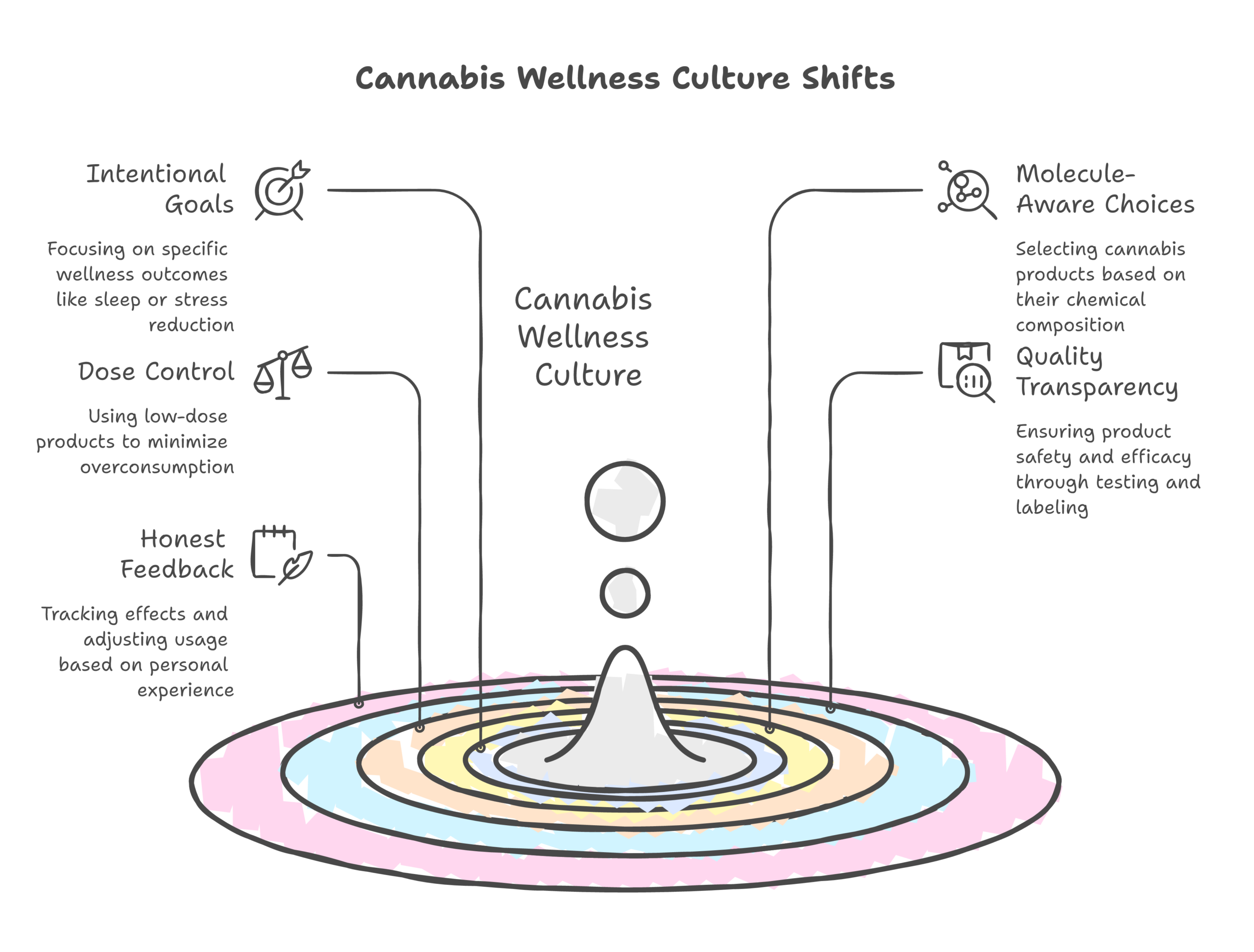
The biggest change is intention. Older cannabis culture often revolved around strain names, high THC percentages, and recreational identity. The newer wellness version starts with a goal: better sleep, lower evening stress, less alcohol, post-workout recovery, or a calmer meditation session. That is why guides like our cannabis and meditation article now sit next to product education and dosing content, not just strain roundups.
This does not mean cannabis is automatically healthy. The National Academies evidence review found evidence for some therapeutic areas, but also highlighted gaps and risks. Wellness culture becomes useful when it encourages adults to define the desired effect, choose a suitable format, verify quality, start low, and review the outcome. It becomes risky when it turns every discomfort into a reason to consume more.
✓ Key Benefits
- ✓ More adults are asking about dose, timing, and ingredients.
- ✓ CBD, CBG, CBN, and balanced products encourage more specific choices.
- ✓ Low-dose routines can reduce accidental overconsumption.
- ✓ Lab testing and clear labeling are becoming part of consumer expectations.
Five Shifts Driving the New Cannabis Routine
First, cannabis is moving from an occasional event into small rituals. A dropper before bed, a topical after training, a low-dose edible on a quiet evening, or a CBD-forward product during a stressful week all reflect a more structured approach. The NCCIH cannabinoid overview notes that cannabinoids interact with the body in complex ways, which is why format and timing matter. Oils and tinctures can feel very different from inhaled products or edibles, even when the headline cannabinoid looks similar.
Second, consumers are becoming more molecule-aware. THC is still central, but CBD, CBG, CBN, CBC, and terpene profiles now shape purchase decisions. Someone seeking daytime calm may read about broad-spectrum CBD, while someone exploring evening support may compare CBD for sleep options with products that include CBN. This is a healthier conversation than simply chasing the strongest product on the shelf.
Third, the wellness audience cares about evidence and safety. The European Union Drugs Agency tracks how European cannabis policy, potency, and product markets are changing, while the World Health Organization keeps substance-use harm reduction on the broader public health agenda. That matters because normalization can reduce stigma, but it can also make risks feel smaller than they are.
💡 Pro Tip
Write down the product, dose, timing, and effect for one week. A simple note gives you better feedback than memory, especially with sleep, stress, and recovery routines.
Cannabis Wellness Culture and Product Quality
Quality is where cannabis wellness culture either earns trust or becomes empty branding. A product meant for calm, recovery, or sleep should not be a mystery bottle. Responsible buyers look for clear cannabinoid content, batch information, ingredient lists, and ideally lab testing. Public guidance from the CDC cannabis and public health resources repeatedly emphasizes that cannabis effects vary by product type, potency, and person, so predictable labeling is not a luxury. It is the foundation of safer use.
For example, an adult considering Anti Stress 20 Broad Spectrum CBD Oil may care about broad-spectrum formulation, THC content, serving size, and how it fits into an evening routine. Someone comparing CBD Oil 20 Full Spectrum 10ml with capsules, flowers, or vapes should think about onset time and duration, not just price. If you need a more detailed starting framework, our Cannabis tinctures guide covers dosing, timing, and format selection in more depth.
This is also where internal habits matter. Keep products away from children and pets, avoid mixing cannabis with alcohol or sedatives unless a qualified professional says it is appropriate, and remember that edibles can take much longer to peak. Poison Control guidance on edibles explains why delayed effects are a common reason people accidentally take too much.
Low Dose, Clear Goal, Honest Feedback
The most responsible version of the trend is simple: choose one goal, use the lowest sensible dose, wait long enough, and judge the result honestly. If your goal is sleep, track sleep quality and morning grogginess. If your goal is stress, track whether you actually handle life better or simply avoid it. If your goal is exercise recovery, remember that the World Anti-Doping Agency prohibited list has separate rules for athletes, and CBD products can still carry contamination risk if quality controls are weak.
A useful routine starts before consumption. Ask: What am I trying to improve? What product format fits that goal? How long should I wait before redosing? What would make me stop? This is especially important with THC-rich products, where too much can produce anxiety, dizziness, impaired coordination, or a next-day fog. For structured CBD decisions, the CBD dosage calculator can help adults think through serving size without guessing.
Cannabis wellness culture also benefits from periodic breaks. If the same dose stops working, increasing indefinitely is not a strategy. It may be a sign to review sleep hygiene, stress triggers, physical activity, caffeine, alcohol, medication interactions, or tolerance. Cannabis can support a routine, but it should not become the entire routine.
📝 Important Note
If cannabis makes anxiety, sleep, motivation, mood, or relationships worse, the wellness label does not matter. Reduce use, pause, and speak with a qualified professional.
Where Cannabis Fits in a Balanced Wellness Plan
A balanced plan starts with basics that are boring because they work: consistent sleep time, hydration, movement, sunlight, social connection, and realistic workload management. Cannabis may support one of those areas, but it should not replace them. The Sleep Foundation notes that sleep quality depends on habits, environment, timing, and medical factors, which is why a cannabinoid product should be one part of a larger plan, not the whole answer.
For pain and inflammation, the same principle applies. Adults interested in cannabis for inflammation should look at the broader pattern: physical therapy, nutrition, stress, medical diagnosis, and safe product selection. A topical or CBD oil may be useful for some adults, but persistent pain deserves a real assessment rather than endless self-experimentation.
The healthiest cannabis wellness culture is not louder marketing. It is better questions. Is the dose clear? Is the product tested? Is the goal specific? Is the person legally allowed and medically appropriate to use it? Is use improving daily life in a measurable way? If the answer is no, pause and reassess.
What Puff ‘n Pass Readers Should Watch in 2026
Expect three trends to keep growing. The first is functional formulation: CBD with CBG for daytime balance, CBD with CBN for nighttime routines, or terpene-forward products designed around mood and aroma. The second is low-dose social use, especially among adults looking to drink less alcohol. The third is quality transparency, where brands that explain sourcing, ingredients, and testing will earn more trust than brands relying on vague wellness language.
At the same time, be cautious with exaggerated claims. Cannabis products should not promise to cure disease, replace prescribed medication, or solve every wellness problem. The FDA cannabis guidance has repeatedly challenged unapproved medical claims around CBD and cannabis-derived products, and that warning remains relevant in May 2026. Good brands educate. Weak brands overpromise.
The practical takeaway is straightforward: use cannabis like an adult wellness tool, not a magic shortcut. Start with education, select products carefully, keep doses moderate, and review whether your routine is actually helping. That is how cannabis wellness culture becomes genuinely useful instead of just another trend.
⚠️ Disclaimer
This article is for informational purposes only and does not constitute medical advice. The information provided about medical cannabis in Greece is current as of May 2026 but may change. Always consult with qualified healthcare professionals for medical advice and treatment options. Decisions about medical cannabis should be made in consultation with authorized healthcare providers who understand your specific medical history and conditions. For our full disclaimer, visit cannastoreams.gr/disclaimer.
Frequently Asked Questions
What does cannabis wellness culture mean?
It means adults are using cannabis more intentionally for goals such as sleep, stress, recovery, or mindful routines, with more attention to dose, format, and product quality.
Is cannabis automatically healthy if it is marketed as wellness?
No. Wellness language is not proof of safety or effectiveness. Check ingredients, cannabinoid content, testing, legal status, and whether the product fits your personal health situation.
Which cannabis products fit wellness routines best?
Many adults prefer oils, tinctures, topicals, capsules, or low-dose edibles because they are easier to measure than unstructured use. The best format depends on your goal and tolerance.
How should beginners approach cannabis wellness products?
Start with a clear goal, choose a reputable product, begin with a low dose, wait long enough before redosing, and track effects for several days before changing anything.
Can cannabis replace medical treatment?
No. Cannabis should not replace prescribed treatment without guidance from a qualified healthcare professional, especially if you take medication or have a medical condition.
