
CBD and Caffeine: Focus, Jitters & Safety Guide
CBD and caffeine can feel smooth or overstimulating. Learn timing, dose, safety, interactions, and smart daily use tips.

CBD and caffeine is one of the most popular wellness combinations for adults who want focus without feeling wired. The idea is simple: caffeine brings alertness, while CBD may support a calmer mood. The reality is more personal. Some people feel smooth, steady concentration. Others feel sleepy, overstimulated, or simply notice nothing. This guide explains how to think about the pairing responsibly, especially if your daily routine includes coffee, work stress, exercise, or other supplements.
Before you add drops to your morning cup, remember that CBD is not just a lifestyle ingredient. The FDA warns that CBD can affect the liver and interact with medicines, especially at higher doses. Caffeine is also active. EFSA’s caffeine review says single doses up to 200 mg and daily intakes up to 400 mg do not raise safety concerns for most healthy adults, but sensitivity varies. That is why the smart approach is not “more is better.” It is start low, observe carefully, and avoid stacking too many stimulating or sedating products at once.
CBD and Caffeine: What Each One Does
Caffeine works mainly by blocking adenosine receptors, which helps you feel less sleepy and more alert. It can improve vigilance, but it can also increase restlessness, heart rate, stomach irritation, and anxiety in sensitive people. The CDC/NIOSH caffeine training material notes that caffeine can remain active for hours, which matters if you drink coffee late in the day.
CBD, or cannabidiol, is a non-intoxicating cannabinoid. It does not create the classic THC high, but it can affect mood, sleepiness, medication metabolism, and how some people perceive stress. Research is still developing, so it is better to describe CBD as a wellness compound with possible calming effects, not as a guaranteed anxiety fix. If you are new to CBD products, our CBD in Greece legal buying guide is a useful starting point for responsible shopping.
✓ Key Takeaway
- ✓ Caffeine may sharpen alertness, but too much can create jitters.
- ✓ CBD may feel calming for some adults, but it can also feel sedating.
- ✓ The combination is personal, so tracking your response matters more than copying someone else’s dose.
Why People Combine CBD With Coffee
The promise of CBD coffee is “calm energy.” Someone who gets shaky after a strong espresso may hope CBD softens the edge. Someone who feels mentally scattered may want focus without the nervous buzz. That expectation makes sense in theory, but direct human research on CBD plus caffeine is limited. Most claims come from broader CBD studies, caffeine research, product experience, and user reports.
A practical way to view the combination is balance. Caffeine pushes wakefulness upward. CBD may smooth stress perception for some users. If the caffeine dose is reasonable, the pairing may feel steady. If the caffeine dose is already too high, CBD may not rescue the experience. For people who already experience strong anxiety from cannabis or stimulants, it may even make the routine harder to interpret. For more on anxiety-specific use, read our CBD for anxiety evidence guide.
There is also a ritual element. Taking CBD with breakfast, then drinking coffee slowly, may create a calmer morning because the whole routine is slower and more intentional. That is useful, but it is not the same as proving a pharmacological synergy. Good wellness habits often work because several small things line up: hydration, food, light exposure, sensible caffeine, and realistic expectations.
Timing: Onset, Duration, and Sleep
Timing is where many people get this wrong. Coffee can feel fast, especially on an empty stomach. CBD oil taken under the tongue may feel different from gummies, capsules, or edibles. Oral products often take longer because digestion and first-pass metabolism are involved. If you take CBD, drink coffee, feel nothing after twenty minutes, and then add more of both, you can overshoot before the first dose fully declares itself.
Caffeine’s half-life is commonly described around four to six hours in healthy adults, though real-world variation is wide. Sleep researchers often advise avoiding caffeine later in the day because even a normal afternoon coffee can still be active at bedtime. If your goal is focused work, the cleanest experiment is morning use only. If your goal is better evening relaxation, CBD and caffeine together is probably the wrong pairing.
For sleep-sensitive users, the first rule is boring but effective: protect the night. Try CBD and caffeine on a low-stakes morning, not before an important meeting, workout, or long drive. If you are exploring CBD for nighttime routines, our CBD for sleep guide is a better match than combining it with coffee.
💡 Pro Tip
Do your first CBD and coffee test before 10:00, after food, and with less caffeine than usual. You want a readable signal, not a chaotic experiment.
Safety: Jitters, Heart Rate, and Anxiety
The biggest short-term issue with caffeine is overstimulation: shaky hands, racing thoughts, fast heartbeat, sweating, stomach discomfort, or irritability. Cannabis products can also affect heart rate and mood. The CDC notes that cannabis can make the heart beat faster and raise blood pressure immediately after use. That warning is especially relevant for people with cardiovascular disease, panic attacks, uncontrolled blood pressure, or sensitivity to stimulants.
CBD is not THC, but many full-spectrum products can contain other cannabinoids. Athletes should be especially careful. WADA lists cannabidiol as an exception while other cannabinoids remain prohibited in competition. UK Anti-Doping also warns that CBD products may contain THC or other banned cannabinoids. If testing matters for your work or sport, choose products with current lab reports or avoid them entirely.
If you notice palpitations, chest pain, faintness, severe panic, confusion, or unusual sedation, stop using the combination and seek medical advice. Do not drive or operate equipment while testing a new CBD product. Even a non-intoxicating product can make you feel different enough to affect reaction time or judgment.
Medication and Liver Interaction Checks
The most important safety topic is medication interaction. CBD can affect drug-metabolizing enzymes, especially parts of the cytochrome P450 system. A review indexed by PubMed describes cannabinoid interactions with CYP enzymes, and another review in PubMed discusses clinically relevant CBD drug interaction risks. This matters if you take antidepressants, antiepileptics, anticoagulants, sedatives, heart medicines, immune suppressants, or any medicine with narrow dosing margins.
The prescription CBD medicine Epidiolex has formal monitoring guidance because liver enzyme elevations can occur. The Epidiolex prescribing information hub is not the same as a wellness CBD oil, but it shows why CBD should not be treated casually at high doses. Alcohol and sedatives deserve extra caution because sedation can stack. If you take regular medicines, ask a pharmacist or doctor before making CBD part of your daily coffee routine.
📝 Important Note
If you use prescription medication, the safest CBD dose is the one your clinician has reviewed. This is especially true for liver conditions, epilepsy medicines, blood thinners, sedatives, and psychiatric medication.
A Simple CBD and Caffeine Testing Plan
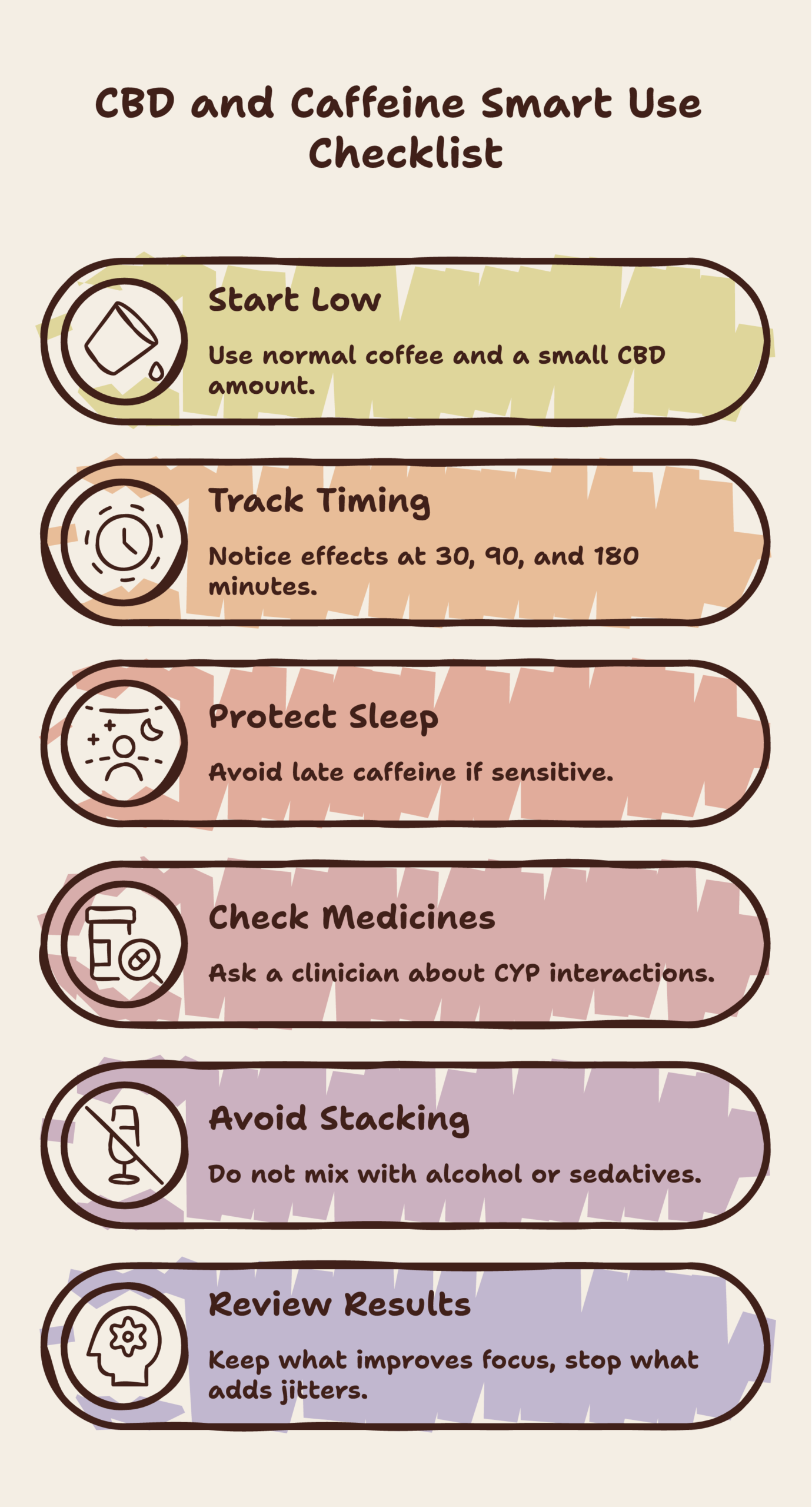
Use a simple plan instead of guessing. First, keep your caffeine familiar. Do not test a new CBD product on the same day you double your espresso. Second, use a low CBD amount and keep the product type consistent. Third, write down what happens at thirty minutes, ninety minutes, three hours, and bedtime. You are looking for focus, mood, body tension, stomach comfort, heart rate, and sleep quality.
Product format changes the experience. Oils allow smaller adjustments. Gummies are convenient but can be slower. Vapes act faster but raise separate respiratory and cartridge-quality concerns, which we cover in our CBD vape safety guide. If you prefer oils, options like CBD Oil 10 10ml, CBD Oil 20 Full Spectrum 10ml, and Anti Stress 20 Broad Spectrum CBD Oil make it easier to compare routines without changing everything at once.
A good first test might be half your usual coffee with breakfast and a small CBD serving, then no additional caffeine for at least two hours. If the result is calm focus, repeat the same setup once or twice before changing dose. If the result is sleepiness, lower CBD or separate it from coffee. If the result is jitters, lower caffeine first. Caffeine is often the louder variable.
Choosing Products More Carefully
Quality matters more when you plan to use CBD regularly. Look for clear cannabinoid content, batch information, ingredient lists, and lab testing where available. Avoid products that make medical promises or hide basic details. The National Academies review on cannabis and cannabinoids is a reminder that cannabis science is nuanced, not a slogan.
Broad-spectrum products may suit people who want to avoid THC exposure, while full-spectrum products may contain trace cannabinoids. If you are choosing between formats, our CBD edibles vs oil guide explains onset and duration differences in more detail. For daytime use, simple formulas often beat complicated blends. You want to know whether CBD and caffeine works for you, not whether five ingredients created an unpredictable effect.
⚠️ Disclaimer
This article is for informational purposes only and does not constitute medical advice. The information provided about cannabis wellness and CBD safety is current as of June 2026 but may change. Always consult qualified healthcare professionals for medical advice, especially if you use medication, have liver or heart conditions, are pregnant, or are subject to drug testing. For our full disclaimer, visit cannastoreams.gr/disclaimer.
Frequently Asked Questions
Can I put CBD oil directly into coffee?
Many people do, but oils may not mix evenly into hot drinks. A more consistent approach is taking CBD separately, then drinking coffee normally, so you can track dose and timing.
Does CBD cancel out caffeine jitters?
Not reliably. Some adults feel calmer, but if your caffeine dose is too high, lowering caffeine is usually the cleaner fix.
Will CBD and caffeine make me sleepy?
It can happen, especially with higher CBD servings or poor sleep. Test on a quiet morning before using the combination during work, driving, or exercise.
Is CBD coffee safe with medication?
Ask a clinician or pharmacist first. CBD can interact with drug-metabolizing enzymes, and caffeine can also affect anxiety, heart rate, and sleep.
What is the best time to try CBD and caffeine?
Morning is best for most people. Avoid late-day caffeine if you care about sleep, and avoid testing any new CBD product before high-responsibility activities.
